

Quick Summary: Taking melatonin every night appears safe for short-term use according to the National Institutes of Health, but insufficient data exists about long-term safety and effectiveness. While melatonin helps some people fall asleep faster, it’s a hormone supplement that should be used thoughtfully, ideally under medical guidance, and not as a permanent solution for sleep problems.
More than 50% of adults struggle with falling or staying asleep at least a few times weekly. That’s a lot of tired people reaching for the supplement aisle.
Melatonin has become the go-to solution. The supplement jumped from 0.4% usage in 1999-2000 to 2.1% in 2017-2018 among American adults, according to National Institutes of Health data. It’s now the fourth most popular natural product adults take and the second most common supplement parents give their kids.
But here’s the thing: just because something’s popular doesn’t mean it’s meant for nightly use. So what does the research actually say?
What Is Melatonin and How Does It Work?
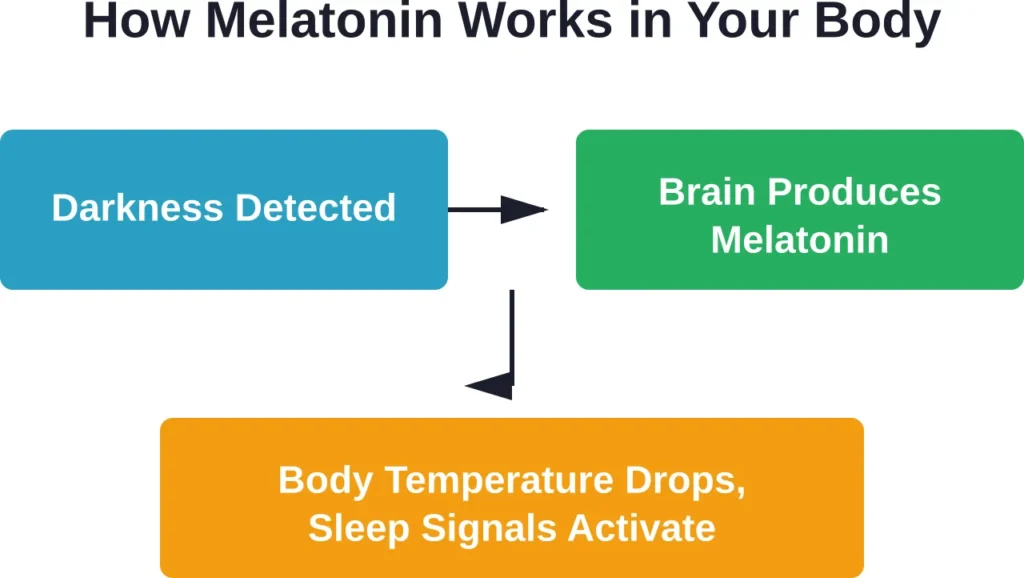
Melatonin is a hormone your brain produces naturally in response to darkness. It’s part of your circadian rhythm—that internal 24-hour clock that tells your body when to sleep and wake.
When the sun goes down, your brain ramps up melatonin production. When light hits your eyes in the morning, production drops. That’s why staring at screens before bed can mess with your sleep—the blue light blocks melatonin release.
Research suggests melatonin plays other important roles beyond sleep, though these effects aren’t fully understood yet. The supplement version is typically synthetic, though some products use animal-derived sources.
Does Melatonin Actually Help You Fall Asleep?
The research shows mixed results, depending on who’s taking it and why.
For people with delayed sleep-wake phase disorder—a condition where your internal clock runs significantly later than normal schedules—melatonin shows real promise. A 2016 review of 52 people found melatonin reduced the time to fall asleep by 22 minutes compared to placebo. A larger 2018 randomized controlled trial with 307 participants showed even better results: 34 minutes faster sleep onset.
Children with certain conditions respond particularly well. According to the National Institutes of Health:
- Children with autism spectrum disorder fell asleep 39.6 minutes earlier and slept 57.5 minutes longer
- Research shows melatonin may help with sleep onset in children with ADHD, but specific improvement times vary.
But here’s where it gets tricky. For people with Alzheimer’s disease, research found melatonin wasn’t an effective sleep aid based on objective sleep measurements. The supplement doesn’t work the same for everyone.
Is It Safe to Take Melatonin Every Night?
The short answer? We don’t actually know.
According to the National Institutes of Health, melatonin appears safe when used short-term. The most common side effects—drowsiness, headache, dizziness, and nausea—are uncommon but do occur.
The real issue is this: there’s insufficient data to draw conclusions about long-term safety and effectiveness. One 2009 study evaluated melatonin use in children with ADHD and insomnia for a mean duration of 3.7 years and found no serious adverse events. But that’s still a relatively small sample size and specific population.
Real talk: melatonin isn’t regulated by the FDA the same way prescription drugs are. It’s sold as a dietary supplement, which means manufacturers don’t have to prove safety or effectiveness before selling it.
The Quality Control Problem
Here’s something most people don’t know: what’s on the label might not match what’s in the bottle.
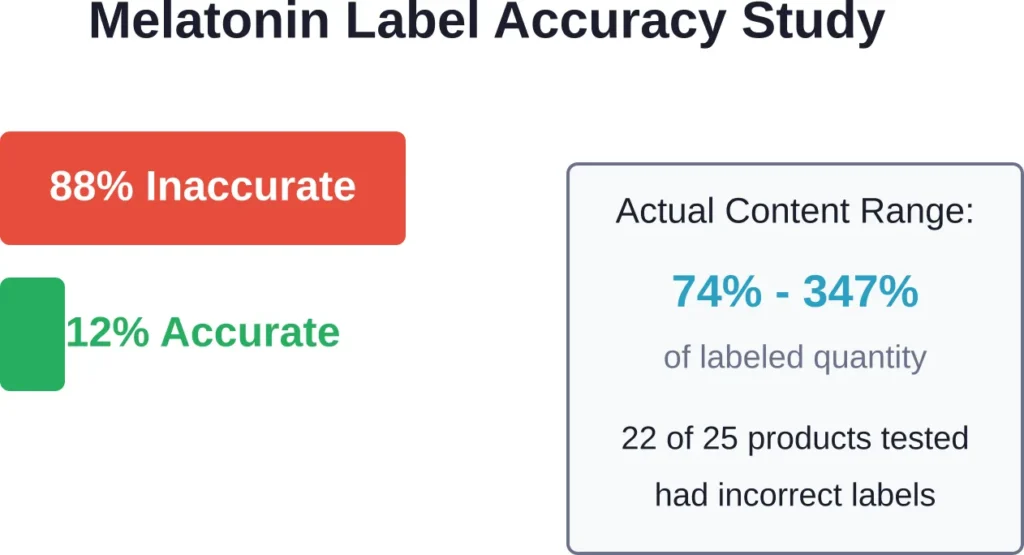
A 2023 study published by the American Medical Association tested over-the-counter melatonin gummies. The actual quantity ranged from 74% to 347% of the labeled amount. Researchers found that 88% of products—22 out of 25—were inaccurately labeled.
That’s a problem when you’re trying to take a consistent dose of a hormone that affects your brain chemistry.
What Dosage Should You Take?
Typical over-the-counter melatonin comes in 2mg slow-release tablets. The NHS notes that some people may gradually increase to 2-3 tablets before bedtime, depending on effectiveness.
But timing matters just as much as dosage. Melatonin has a relatively short half-life—the time it takes your body to eliminate half of what you took—of about 20 to 50 minutes. Your body absorbs it fairly rapidly.
Most guidelines recommend taking melatonin 30 minutes to 1 hour before bedtime. Taking it too early or too late can disrupt your circadian rhythm rather than help it.
When Melatonin Makes Sense (and When It Doesn’t)
Melatonin isn’t a one-size-fits-all sleep solution. It works better for some situations than others.
Good Candidates for Melatonin
The supplement shows the most promise for:
- Delayed sleep-wake phase disorder
- Jet lag recovery
- Shift work sleep adjustment
- Children with ADHD or autism spectrum disorder (under medical supervision)
- Short-term insomnia during stressful periods
When to Skip It
Melatonin probably won’t help if:
- Your sleep problems stem from anxiety, depression, or chronic stress
- Sleep apnea or another sleep disorder is the root cause
- Poor sleep hygiene is the real issue (screen time, irregular schedule, uncomfortable bedroom)
- You’re already sleeping well but want to optimize further
The supplement treats symptoms, not underlying causes. If you’ve got poor sleep habits, no amount of melatonin will fix that long-term.
Alternatives Worth Trying First
Before reaching for supplements every night, these strategies often work better:
| Strategy | How It Helps | Timeline |
|---|---|---|
| Consistent sleep schedule | Reinforces natural circadian rhythm | 1-2 weeks |
| Screen-free hour before bed | Prevents blue light from blocking melatonin | Immediate |
| Cool, dark bedroom | Supports natural melatonin production | Immediate |
| Regular exercise | Increases sleep pressure and quality | 2-4 weeks |
| Cognitive behavioral therapy for insomnia | Addresses thought patterns disrupting sleep | 4-8 weeks |
Cognitive behavioral therapy for insomnia (CBT-I) is considered the most strongly recommended treatment for insomnia. Relaxation techniques sometimes accompany CBT-I, though they have only a small amount of low-quality evidence for helping with insomnia on their own.
Special Considerations for Children
Parents increasingly turn to melatonin for their kids. It’s now the second most popular natural product given to children.
Harvard Health issued warnings in 2022 about melatonin overdoses in children, emphasizing that because it’s sold as a dietary supplement, it lacks the regulation of prescription medications.
Before giving melatonin to children, experts recommend trying these approaches first:
- Establishing a consistent bedtime routine
- Limiting screen time for at least an hour before bed
- Creating a calm, dark sleep environment
- Addressing any anxiety or stress affecting sleep
If those don’t work, consult a pediatrician. For children with specific conditions like ADHD or autism spectrum disorder, melatonin may be appropriate under medical supervision. A 2020 review of the literature concluded that melatonin supplementation is both safe and efficacious for children with autism spectrum disorder.
A 2017 randomized controlled trial with 125 children and adolescents with ASD or ADHD insomnia tested prolonged-release melatonin. After 13 weeks, melatonin increased sleep duration by 57.5 minutes versus 9.14 minutes for placebo, and decreased sleep latency by 39.6 minutes versus 12.5 minutes for placebo.
What Healthcare Providers Actually Recommend
Most sleep specialists view melatonin as a short-term tool, not a permanent solution.
The recommendation typically goes like this: use melatonin for specific situations—jet lag, occasional insomnia during stressful periods, or temporarily resetting your sleep schedule. But don’t rely on it every single night indefinitely.
Why? Because your body already makes melatonin. Taking it nightly as a supplement might affect your natural production, though research on this remains limited. The goal should be supporting your body’s natural sleep mechanisms, not replacing them.
If sleep problems persist beyond a few weeks, that’s a signal to investigate deeper causes rather than mask symptoms with supplements.
The Bottom Line on Nightly Melatonin Use
Can you take melatonin every night? Technically, short-term use appears safe for most people.
Should you take it every night? That’s a different question.
The lack of long-term safety data, quality control issues with supplements, and the reality that melatonin doesn’t address underlying sleep problems all suggest a more measured approach makes sense.
If you’ve been taking melatonin nightly for more than a few weeks without improvement, it’s time to talk to a healthcare provider. Persistent sleep issues often have treatable causes—sleep apnea, anxiety disorders, medication side effects, or poor sleep hygiene—that melatonin can’t fix.
Think of melatonin as a temporary sleep aid for specific situations, not a lifelong nightly ritual. Your sleep deserves a more comprehensive solution than a supplement bottle can provide.
Frequently Asked Questions
Melatonin has a half-life of 20 to 50 minutes, meaning your body eliminates half the dose in that timeframe. Most of the supplement clears your system within a few hours, which is why timing matters—taking it too early won’t help you stay asleep through the night.
Current research doesn’t show physical dependence or withdrawal symptoms from melatonin. However, psychological dependence can develop—believing you can’t sleep without it. A study on ramelteon, a melatonin receptor agonist, found no rebound insomnia or withdrawal symptoms after six months of nightly use and discontinuation.
Research on tolerance to melatonin remains limited. Some people report it stops working as well after regular use, while others maintain effectiveness. The lack of long-term studies means we can’t say definitively whether tolerance develops with extended nightly use.
Melatonin can interact with blood thinners, diabetes medications, immune suppressants, and birth control pills. It may also interact with other sedatives or supplements. Always check with a healthcare provider or pharmacist before combining melatonin with other medications.
Regular melatonin works quickly but wears off fast, helping with falling asleep. Extended-release versions deliver melatonin gradually over several hours, potentially helping with staying asleep. The NHS typically prescribes 2mg slow-release tablets. Which works better depends on whether your problem is falling asleep or staying asleep.
Some people report more vivid dreams or occasional nightmares when taking melatonin, though this isn’t listed among the common side effects by the National Institutes of Health. The mechanism isn’t well understood, but if you experience disturbing dreams, that’s a reason to stop or reduce your dose.
Pregnant and breastfeeding women should avoid melatonin unless specifically recommended by their healthcare provider. The safety data for melatonin use during pregnancy remains insufficient, and because it’s a hormone, it could potentially affect fetal development. Always consult your obstetrician about sleep issues during pregnancy.