

Quick Summary: Taking vitamin D at night is generally safe, though research suggests morning supplementation may be optimal for some individuals due to vitamin D’s potential effects on sleep regulation and melatonin production. The most important factor is consistent daily intake with a fat-containing meal to enhance absorption, regardless of timing. If nighttime supplementation disrupts your sleep quality, switching to morning doses may help.
Vitamin D supplementation has become increasingly common, with over 50% of the global population experiencing vitamin D insufficiency, according to Nature Made research. But when it comes to timing, the question keeps coming up: does it matter if you take vitamin D at night?
The short answer? For most people, nighttime vitamin D supplementation is perfectly fine. But there’s a bit more to the story.
Research published by the National Institutes of Health indicates that vitamin D plays both direct and indirect roles in sleep regulation. This connection has prompted healthcare professionals to examine whether supplement timing affects sleep quality or overall effectiveness.
Understanding Vitamin D’s Role in Your Body
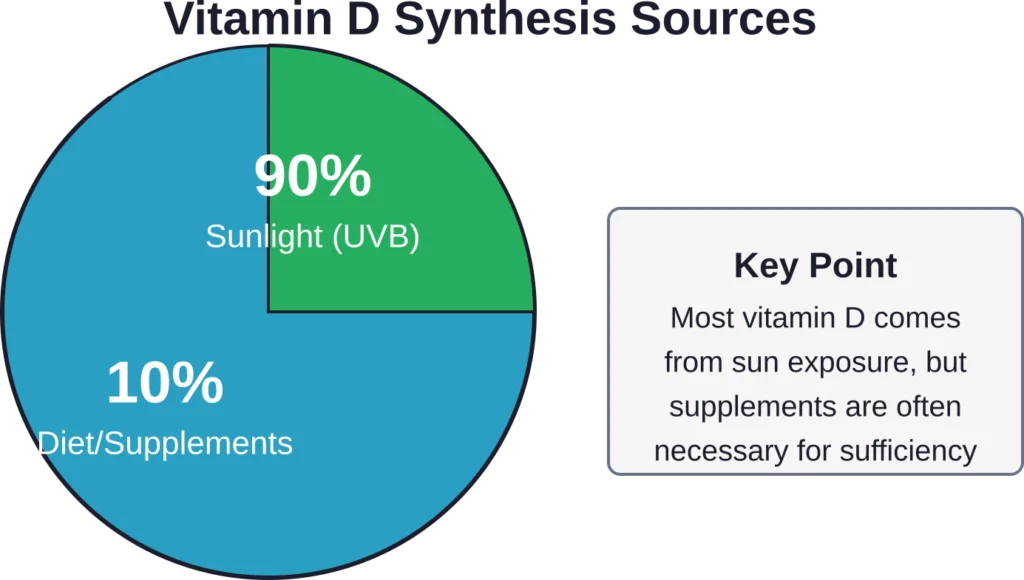
Vitamin D functions more like a hormone than a traditional vitamin. Your body produces it naturally when skin is exposed to ultraviolet B (UVB) radiation from sunlight, accounting for approximately 90% of vitamin D synthesis under ideal conditions.
The remaining 10% typically comes from dietary sources, though food fortification practices vary significantly across regions.
Here’s what makes vitamin D critical: it regulates calcium absorption, supports immune function, promotes bone health, and influences inflammatory responses. According to WHO standards, healthy vitamin D concentrations for the general population should maintain serum 25(OH)D levels at or above 50 nanomoles per liter (nmol/L).
Values below 30 nanomoles per liter indicate high risk of deficiency.
The Vitamin D and Sleep Connection
Medical research has established links between vitamin D status and sleep disorders, though the mechanisms remain under investigation.
Studies examining vitamin D’s relationship with sleep have found that deficiency correlates with poor sleep quality, shorter sleep duration, and disrupted sleep patterns. One investigation into non-24-hour sleep-wake disorder specifically identified vitamin D deficiency as a contributing factor.
The biological clock connection matters here. Vitamin D receptors exist throughout the brain, including regions that regulate circadian rhythms. This suggests vitamin D may influence the timing systems that control your sleep-wake cycles.
But does supplementation timing actually matter?
Research remains inconclusive. Systematic reviews examining vitamin D supplementation and sleep outcomes show mixed results, with some studies reporting improved sleep quality while others find no significant changes.
Should You Avoid Taking Vitamin D at Night?
Community discussions and some supplement manufacturers suggest avoiding nighttime vitamin D supplementation due to potential sleep disruption. The theory centers on vitamin D’s possible interference with melatonin production.
Since natural vitamin D synthesis occurs during daylight hours, some researchers hypothesize that evening supplementation might send conflicting signals to the body’s internal clock.
That said, clinical evidence directly supporting this recommendation remains limited.
A more practical concern involves absorption. Research indicates that taking vitamin D with meals containing healthy fats significantly increases blood absorption compared to empty stomach supplementation. Since dinner is often the main meal for many people, nighttime supplementation with food can actually optimize absorption.
Real talk: individual responses vary considerably. Some people report no sleep issues with nighttime supplementation, while others notice improved sleep quality after switching to morning doses.
Morning vs. Night: When’s the Best Time?
The optimal timing for vitamin D supplementation depends on several factors, and the answer isn’t universal.
Morning Supplementation Benefits
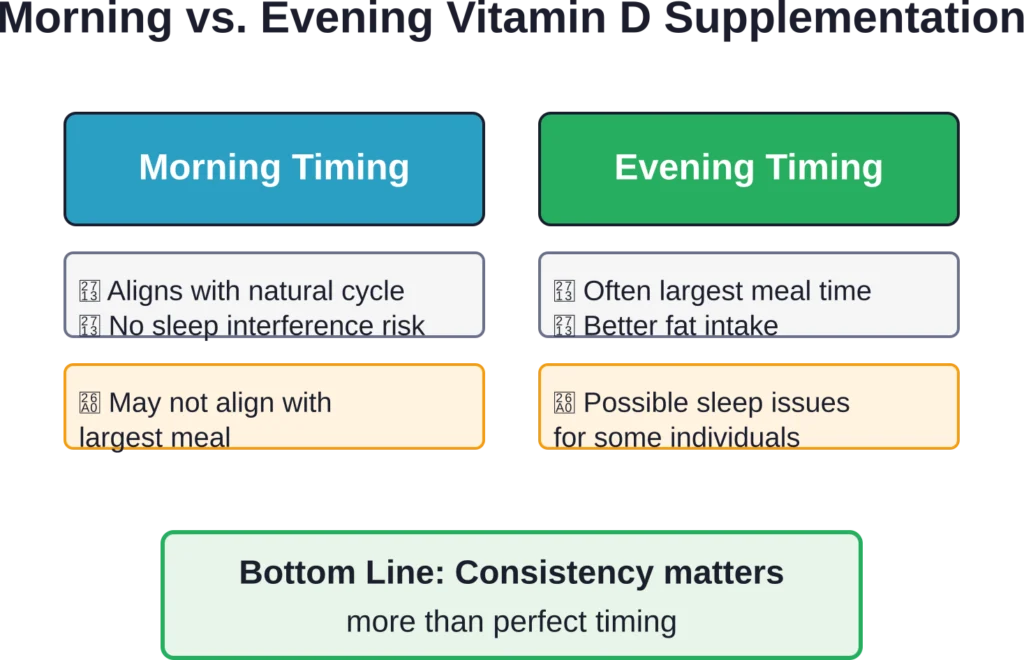
Taking vitamin D in the morning aligns with the body’s natural production cycle. Sunlight exposure triggers vitamin D synthesis during daylight hours, so morning supplementation mimics this natural rhythm.
For people sensitive to sleep disruption, morning doses eliminate any theoretical risk of interfering with evening melatonin production. Morning routines also tend to be more consistent, which helps maintain the regular supplementation schedule essential for maintaining adequate vitamin D status.
Evening Supplementation Considerations
Nighttime supplementation offers practical advantages for many individuals. People who take multiple morning medications may prefer spreading supplements throughout the day to avoid pill fatigue.
If dinner represents your largest meal with the most dietary fat, evening supplementation ensures optimal absorption. Vitamin D is fat-soluble, meaning it requires dietary fat for proper uptake in the intestines.
Over 50% of the global population experiences vitamin D insufficiency, making consistent supplementation more important than perfect timing.
Maximizing Vitamin D Absorption
Timing matters less than these absorption fundamentals:
| Factor | Impact on Absorption | Recommendation |
|---|---|---|
| Dietary Fat | Critical for absorption | Take with meals containing healthy fats (avocado, nuts, olive oil, fatty fish) |
| Consistency | Maintains steady blood levels | Same time daily, whether morning or night |
| Magnesium Status | Required for vitamin D metabolism | Ensure adequate magnesium intake through diet or supplementation |
| Dosage | Higher doses may reduce frequency needs | Follow healthcare provider recommendations; typical range 1000-4000 IU daily |
The fat-soluble nature of vitamin D means absorption improves significantly when taken with dietary lipids. Research demonstrates that vitamin D consumed with a fat-containing meal produces substantially higher blood levels compared to supplementation on an empty stomach.
Magnesium deserves special mention. This mineral activates vitamin D in the body, converting it to its active form. Without adequate magnesium, vitamin D supplementation proves less effective regardless of timing.
When Nighttime Supplementation Might Disrupt Sleep
While systematic reviews haven’t established definitive conclusions about vitamin D supplementation timing and sleep, individual experiences vary.
Some mechanisms potentially explain sleep disruption in sensitive individuals. Vitamin D influences neurotransmitter synthesis and may affect melatonin production pathways. Since the human circadian cycle averages about 12 minutes longer than 24 hours for most people, any factor that influences internal timing mechanisms could theoretically impact sleep.
Research into vitamin D’s role as a biological clock regulator suggests it may influence circadian gene expression. For individuals with circadian rhythms that are shorter than 24 hours, evening vitamin D supplementation might prove more disruptive than for others.
Signs that nighttime vitamin D supplementation might be affecting your sleep include difficulty falling asleep on supplementation days, restless sleep patterns, or feeling unusually alert in the evening after taking your supplement.
If these symptoms occur consistently, switching to morning supplementation represents a simple solution worth trying.
Special Considerations for Different Populations
Infants and Children
Vitamin D supplementation recommendations for infants typically suggest 5 to 10 micrograms daily, beginning within the first month after birth. According to WHO guidelines, healthy vitamin D concentrations for infants should maintain serum levels at or above 50 nmol/L.
Body stores can decline by 50% over less than a month in infants without adequate vitamin D intake, making consistent supplementation critical. For infants, timing typically aligns with feeding schedules rather than specific times of day.
Pregnant Women
Maternal vitamin D supplementation during pregnancy supports both maternal health and fetal development. Some research explores high-dosage maternal supplementation strategies to prevent vitamin D deficiency in newborn infants, though these approaches aren’t yet part of standard public health recommendations.
Older Adults
Aging affects vitamin D metabolism and synthesis capacity. Older adults often have reduced ability to produce vitamin D through sun exposure and may require higher supplementation doses. For this population, taking vitamin D with the most substantial meal of the day typically proves most practical for ensuring adequate fat intake alongside supplementation.
Creating Your Optimal Vitamin D Routine
Building an effective vitamin D supplementation routine comes down to several key principles.
First, consistency trumps timing. Whether morning or night, taking your supplement at the same time daily maintains steady blood levels and establishes a sustainable habit.
Second, pair supplementation with dietary fat. This doesn’t require a large fatty meal—even a handful of nuts, a tablespoon of olive oil, or a slice of cheese provides sufficient fat for absorption.
Third, monitor your response. If nighttime supplementation coincides with sleep difficulties, experiment with morning timing. Give any timing change at least two weeks before evaluating results, as circadian adjustments don’t happen overnight.
Fourth, consider medication interactions. The FDA notes that certain dietary supplements can affect medication absorption, metabolism, or excretion. Vitamin D specifically may interact with some medications, so review timing with healthcare providers if taking prescription drugs.
Finally, verify your status periodically. Blood testing remains the only reliable way to confirm adequate vitamin D levels. Healthcare providers can assess whether your supplementation routine effectively maintains healthy status.
Frequently Asked Questions
For most people, nighttime vitamin D supplementation doesn’t cause insomnia. However, individual responses vary, and some people report better sleep when taking vitamin D in the morning. Research hasn’t definitively established whether vitamin D timing affects sleep quality, though the vitamin does play a role in sleep regulation. If you consistently experience sleep difficulties after nighttime supplementation, trying morning doses may help.
Morning supplementation aligns with the body’s natural vitamin D production cycle from sunlight exposure, but this doesn’t necessarily mean superior absorption or effectiveness. The most important factors for vitamin D effectiveness are consistent daily intake and taking it with dietary fat, regardless of time of day. Morning timing may benefit people whose circadian rhythms are sensitive to evening supplementation.
Research indicates that taking vitamin D with meals containing healthy fats significantly increases blood absorption compared to empty stomach supplementation. However, reaching optimal vitamin D status typically requires consistent supplementation over several weeks to months, depending on baseline deficiency severity and dosage. Most healthcare providers recommend retesting vitamin D levels after 8-12 weeks of supplementation.
Take vitamin D with whichever meal contains the most dietary fat, as this fat-soluble vitamin requires lipids for optimal absorption. For many people, dinner represents the largest meal with the most fat content, making evening supplementation practical. However, if breakfast includes foods like eggs, avocado, or nut butter, morning supplementation works equally well.
Excessive vitamin D intake can lead to toxicity, with symptoms including nausea, weakness, and kidney problems, though sleep disturbances aren’t typically the primary concern. Vitamin D toxicity usually occurs with very high doses sustained over time, far exceeding typical supplementation recommendations. If you’re taking high-dose vitamin D supplements and experiencing sleep issues, consult a healthcare provider to verify appropriate dosage.
Research indicates that correcting vitamin D deficiency may improve sleep quality in people with inadequate vitamin D status. Studies examining vitamin D supplementation and sleep show mixed results, with some finding improvements in sleep duration and quality while others show no significant changes. Vitamin D deficiency has been associated with sleep disorders, suggesting adequate vitamin D status supports healthy sleep patterns.
Missing a few days of vitamin D supplementation won’t cause immediate health problems, as vitamin D is fat-soluble and stored in body tissues for extended periods. However, body stores can decline over time without regular intake. Simply resume your normal supplementation schedule rather than taking extra doses to “catch up.” Consistency over weeks and months matters more than perfection on any single day.
The Bottom Line on Vitamin D Timing
So, is it okay to take vitamin D at night? Absolutely—for most people.
The science doesn’t support strict timing restrictions for vitamin D supplementation. While vitamin D plays a role in sleep regulation and biological clock function, research hasn’t established that nighttime supplementation causes sleep problems for the general population.
What matters more than timing: taking vitamin D consistently, pairing it with dietary fat for optimal absorption, and maintaining adequate dosage based on individual needs.
If nighttime supplementation disrupts your sleep, switching to morning doses represents a simple adjustment. But if you’ve been taking vitamin D at night without issues, there’s no compelling reason to change your routine.
The goal is building a sustainable supplementation habit that maintains healthy vitamin D status year-round. Whether that happens at breakfast or bedtime matters far less than making it happen consistently.
Check your vitamin D levels through blood testing, work with healthcare providers to determine appropriate supplementation doses, and choose a timing strategy that fits seamlessly into your daily routine. That’s the formula for long-term vitamin D sufficiency.