
Quick Summary: Washing your hair every day is perfectly fine, according to the American Academy of Dermatology—as long as you’re using the right shampoo for your hair type. The frequency depends on factors like oiliness, texture, age, and activity level: oily, straight hair often benefits from daily washing, while dry or curly hair typically needs shampooing only every 7-10 days.
The question of how often to wash hair has sparked countless debates in salons, online forums, and bathroom mirrors everywhere. Some swear by the once-a-week routine, while others can’t imagine skipping a daily wash.
Here’s the thing though—there’s no universal answer. But the good news? Board-certified dermatologists have clear guidelines that cut through the noise.
The American Academy of Dermatology confirms that washing hair daily is absolutely fine for many people. What matters more than frequency is using the right products for your specific hair type and scalp condition.
The Daily Washing Myth: What Science Actually Says
For years, beauty influencers and hair care blogs have warned against daily shampooing, claiming it strips natural oils and damages hair. Community discussions across haircare forums show countless people worried they’re ruining their hair by washing it too often.
But wait. Dermatologists have consistently challenged this narrative.
The truth is more nuanced. Daily washing itself doesn’t damage hair—harsh cleansers and improper techniques do. Using gentle, pH-balanced shampoos formulated for your hair type makes daily washing perfectly safe for most people.
The scalp produces sebum, an oil that protects hair and keeps it moisturized. How quickly this oil builds up varies dramatically from person to person based on genetics, hormones, activity level, and environmental factors. Sebum production is primarily controlled by genetics and hormones, particularly androgens.
Hair Type and Washing Frequency: The Real Guidelines
According to the American Academy of Dermatology, washing frequency should be tailored to individual characteristics rather than following one-size-fits-all rules.
Oily, Straight Hair
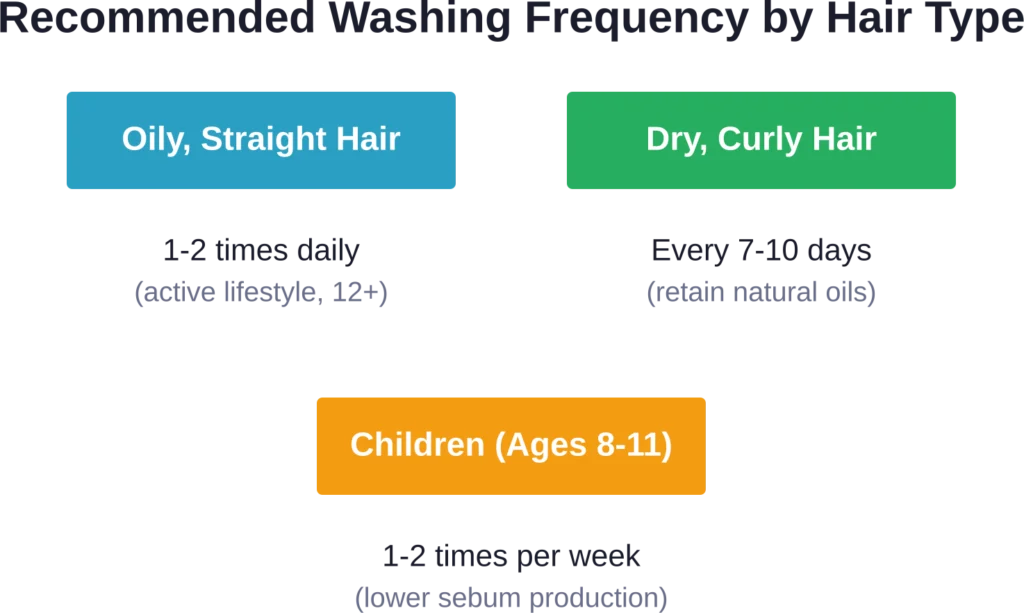
People with oily, straight hair—especially those who are physically active—may need to shampoo 1-2 times per day. For teens and adults (ages 12+) with this hair type who exercise regularly, the American Academy of Dermatology recommends shampooing every other day or daily.
Straight hair allows sebum to travel down the hair shaft more easily than curly hair, which is why it looks greasy faster.
Dry and Curly Hair
The recommendation flips dramatically for dry and curly hair. Every 7-10 days is the suggested frequency for this hair type.
Curly hair has a harder time distributing natural oils from root to tip because of its shape. This means the scalp may be oily while the ends remain dry and prone to breakage.
Over-washing curly hair strips away the limited natural oils that do reach the hair shaft, leading to frizz, breakage, and dullness.
Children’s Hair (Ages 8-11)
For children between ages 8 and 11, the American Academy of Dermatology recommends shampooing 1-2 times per week for most hair types. This accounts for lower sebum production in younger children compared to teenagers and adults.
Four Key Factors That Determine Washing Frequency
Beyond hair type, several factors influence how often shampooing is needed.
Activity Level and Sweat
Exercise and physical activity increase sebum production and introduce sweat, dirt, and environmental pollutants to the scalp. Athletes and people with active lifestyles typically need more frequent washing regardless of hair type.
Sweat can mix with scalp oils and bacteria, potentially leading to scalp irritation or odor if left too long.
Environmental Factors
Humidity, pollution, and climate play major roles. Hot, humid environments increase oil production. Polluted urban areas deposit particles on hair and scalp that may require more frequent cleansing.
Conversely, dry climates or indoor heating in winter can reduce the need for frequent washing by slowing sebum production.
Hair Treatments and Styling
Chemical treatments like coloring, perming, or relaxing can alter hair’s porosity and moisture needs. Treated hair often benefits from less frequent washing with moisturizing formulas.
Heat styling also affects washing needs. People who use blow dryers, straighteners, or curling irons daily may find their hair becomes drier, requiring adjusted washing schedules and deeper conditioning.
Scalp Conditions
Dandruff, seborrheic dermatitis, psoriasis, and other scalp conditions often require specific washing protocols. For dandruff, dermatologists may recommend medicated shampoos used several times per week.
The American Academy of Dermatology notes that dandruff shampoo may need to sit on the scalp for 5-10 minutes before rinsing to be effective. Some scalp conditions improve with more frequent washing, while others require gentler, less frequent cleansing.
| Factor | Impact on Washing Frequency | Recommendation |
|---|---|---|
| High activity level | Increases need | Wash after workouts or daily |
| Humid climate | Increases need | May need daily washing |
| Dry climate | Decreases need | Extend time between washes |
| Chemical treatments | Decreases need | Use sulfate-free, moisturizing formulas |
| Dandruff | May increase need | Medicated shampoo 2-3x weekly |
Product Selection: The Real Game-Changer
Here’s what most people miss: the shampoo formula matters far more than washing frequency.
Harsh sulfates like sodium lauryl sulfate can strip hair of protective oils, leading to dryness, breakage, and color fading. These ingredients are particularly problematic for people who wash daily.
Modern sulfate-free formulas provide effective cleansing without over-stripping. The CeraVe Anti-Dandruff Hydrating Shampoo and similar products were developed with dermatologist expertise and help eliminate up to 10 of visible flakes while maintaining scalp moisture.
Look for shampoos labeled as gentle, pH-balanced, or formulated for daily use if washing frequently. Ingredients like hyaluronic acid, ceramides, and glycerin help retain moisture during cleansing.
Matching Shampoo to Hair Type
Volumizing shampoos work primarily by cleaning thoroughly without adding heavy moisturizers that weigh hair down. These suit fine, oily hair that needs frequent washing.
Moisturizing and hydrating shampoos contain oils, butters, and humectants that replenish moisture. These work best for dry, coarse, or curly hair washed less frequently.
Clarifying shampoos provide deep cleansing to remove product buildup but should only be used occasionally—once every week or two—even for oily hair types, as they can be quite stripping.
The “Train Your Scalp” Myth: Does It Work?
Real talk: the idea that you can train your scalp to produce less oil by washing less frequently isn’t supported by dermatological science.
Sebum production is primarily controlled by genetics, hormones (particularly androgens), and overall health. While sudden changes in washing frequency might temporarily affect how oily hair appears, sebaceous glands don’t fundamentally alter their output based on how often shampoo is applied.
What actually happens when someone extends time between washes isn’t sebum reduction—it’s adaptation to the appearance and feel of oilier hair. Some people become comfortable with a different texture, but the underlying oil production remains largely unchanged.
That said, harsh over-washing can irritate the scalp, potentially triggering temporary increases in oil production as a protective response. Using gentle products prevents this reactive cycle.
Signs You’re Washing Too Much or Too Little
How can someone tell if their current routine needs adjustment?
Over-Washing Indicators
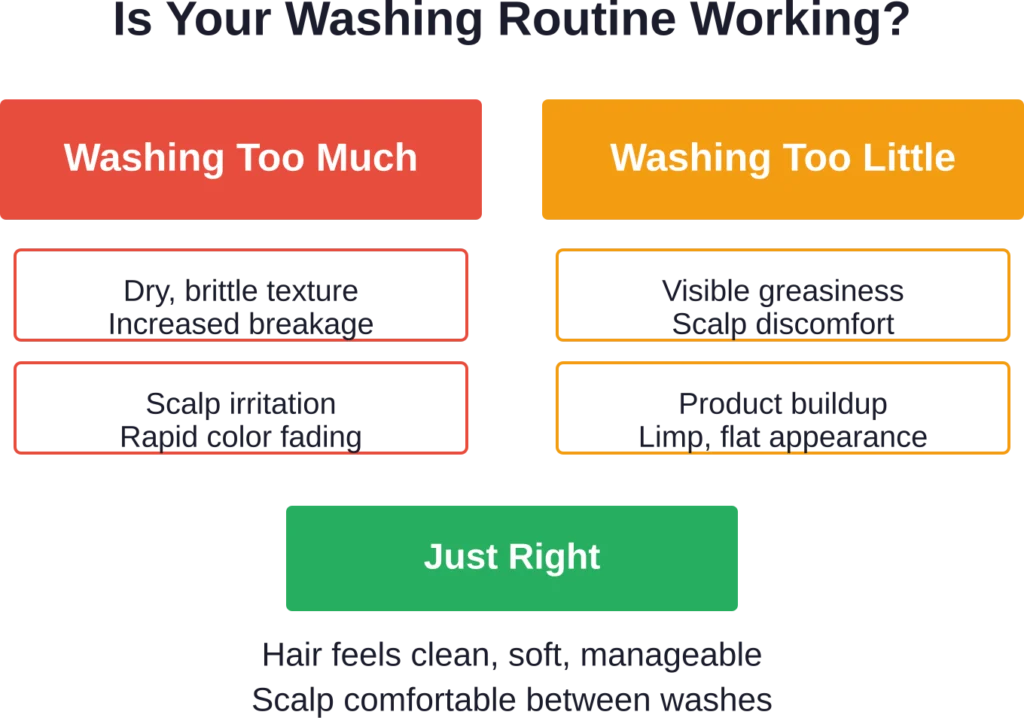
- Hair feels dry, brittle, or straw-like
- Increased breakage and split ends
- Scalp feels tight, itchy, or irritated
- Color-treated hair fades rapidly
- Hair looks dull or lacks shine despite conditioning
Under-Washing Indicators
- Visible greasiness at roots within 12-24 hours
- Scalp itching or discomfort
- Flaking (which can result from oil buildup, not just dryness)
- Limp, flat hair that won’t hold styles
- Unpleasant scalp odor
- Product buildup that makes hair feel heavy or sticky
Proper Shampooing Technique Matters
Even with the right frequency and products, technique affects results.
Focus shampoo application on the scalp, not the hair length. The scalp is where oil, sweat, and product buildup accumulate. Massaging shampoo into the scalp with fingertips (not nails) stimulates circulation and ensures thorough cleansing.
The lather that rinses through the hair length is typically sufficient to clean the strands without applying shampoo directly to ends, which can cause dryness.
For dandruff or medicated shampoos, the American Academy of Dermatology recommends letting the product sit on the scalp for 5-10 minutes before rinsing to allow active ingredients to work effectively.
Water temperature matters too. Hot water can strip natural oils and irritate the scalp. Lukewarm water cleanses effectively while being gentler on hair and scalp.
Dry Shampoo: A Useful Tool, Not a Replacement
Dry shampoo has become incredibly popular for extending time between washes. It absorbs excess oil at roots, adding volume and making hair look fresher.
But here’s the catch—dry shampoo doesn’t actually clean hair. It temporarily masks oil and can help after workouts or for quick refreshes, but it doesn’t remove dirt, sweat, or product buildup.
According to dermatologists, dry shampoo should be spread evenly over the scalp, left on for the recommended time, then brushed or combed out thoroughly. Buildup from excessive dry shampoo use without proper shampooing can clog follicles and potentially contribute to scalp issues.
Many people use dry shampoo primarily to extend salon blowouts and color treatments rather than as a permanent substitute for washing.
Special Considerations for Active Lifestyles
People who exercise daily face a common dilemma: hair gets sweaty and flat, but washing twice daily seems excessive.
The solution often lies in adjusting technique rather than frequency. After workouts, rinsing hair thoroughly with water alone or using a very gentle, diluted shampoo can remove sweat without the full stripping effect of regular shampooing.
Alternatively, washing only the roots and scalp while conditioning the lengths maintains cleanliness where needed most while protecting the ends from over-processing.
For swimmers, rinsing immediately after pool or ocean exposure is critical. Chlorine and salt can damage hair and irritate scalps if left on. Many swimmers use a clarifying shampoo weekly and a gentle daily shampoo for regular washes.
When to Consult a Dermatologist
Some scalp and hair concerns require professional evaluation beyond adjusting washing frequency.
Persistent flaking that doesn’t respond to over-the-counter dandruff shampoos may indicate seborrheic dermatitis or psoriasis requiring prescription treatment.
Sudden changes in hair texture, increased shedding beyond normal daily loss, or painful scalp conditions warrant dermatological assessment.
Dermatologists can identify underlying conditions affecting scalp health, from hormonal imbalances to nutritional deficiencies, and recommend targeted treatment plans.
The Bottom Line on Daily Hair Washing
So, is it okay to wash hair every day?
Absolutely—if you’re using gentle, appropriate products for your hair type and following proper technique. Daily washing is particularly suitable for people with oily, straight hair and active lifestyles.
But it’s not necessary for everyone. Dry, curly, or textured hair thrives with less frequent washing, typically every 7-10 days.
The key takeaway from dermatologists is simple: match washing frequency to individual needs rather than following arbitrary rules. Pay attention to how hair and scalp feel, watch for signs of over- or under-washing, and adjust accordingly.
There’s no single right answer because hair care isn’t one-size-fits-all. What matters is finding the routine that keeps hair healthy, manageable, and looking its best based on unique characteristics and lifestyle.
Frequently Asked Questions
No, washing hair daily does not cause hair loss when done properly with gentle products. Hair shed during washing is typically hair that was already in the shedding phase of the growth cycle. People naturally lose approximately 50-100 hairs daily, and many of these come out during washing regardless of frequency. However, aggressive scrubbing, very hot water, or harsh chemicals can damage hair and cause breakage, which is different from actual hair loss at the follicle level.
No, reducing shampooing frequency doesn’t train sebaceous glands to produce less oil. Sebum production is controlled primarily by genetics and hormones, not by washing habits. What changes is adaptation to the appearance and feel of oilier hair between washes. Some people become comfortable with a different texture, but the underlying oil production remains largely the same. The exception is when harsh products cause scalp irritation that temporarily increases oil production as a protective response.
Signs of over-washing include dry, brittle hair texture, increased breakage and split ends, tight or irritated scalp, rapid fading of hair color, and dull appearance despite conditioning. If hair feels like straw or the scalp becomes flaky and irritated, these indicate the need to reduce washing frequency or switch to gentler, more moisturizing products.
Dry shampoo is useful for extending time between washes and adding volume, but it doesn’t replace actual shampooing. It absorbs surface oil without removing dirt, sweat, product buildup, or thoroughly cleansing the scalp. Excessive dry shampoo use without regular washing can lead to clogged follicles and scalp issues. Use it as a temporary solution between proper washes rather than as a long-term substitute.
Several strategies work for active individuals: rinse hair thoroughly with water only after workouts without using shampoo every time; use a very gentle, diluted shampoo just on the scalp and roots; apply shampoo only to the scalp while conditioning the lengths; or alternate between full washes and water-only rinses. Choose sulfate-free formulas designed for daily use if full daily washing is necessary. The key is removing sweat and oil from the scalp without over-processing the entire hair length.
Color-treated hair generally benefits from less frequent washing with sulfate-free, color-safe shampoos to prevent rapid fading. The exact frequency depends on hair type—oily hair may still need washing every 2-3 days with gentle formulas, while dry or curly colored hair might only need washing once weekly. Using dry shampoo between washes and cool water when washing helps preserve color. Conditioning after every shampoo is especially important for color-treated hair to maintain moisture and prevent damage.
No, children between ages 8 and 11 typically need shampooing only 1-2 times per week because they produce less sebum than teenagers and adults. Once puberty begins (usually around age 12), hormonal changes increase oil production, and most teens with oily, straight hair benefit from shampooing every other day or daily, especially if they’re active. Hair type and activity level should guide frequency adjustments for children just as they do for adults.