
Quick Summary: Watching pornography is a personal choice, but research shows it can have both positive and negative effects depending on frequency, content, and individual circumstances. While moderate consumption may not harm everyone, evidence indicates that excessive use is linked to relationship difficulties, sexual dysfunction, and mental health challenges in many individuals. Understanding your own patterns and their impact on your well-being is key to making informed decisions.
The question of whether watching porn is okay doesn’t have a simple yes-or-no answer. It’s one of those topics where context matters enormously.
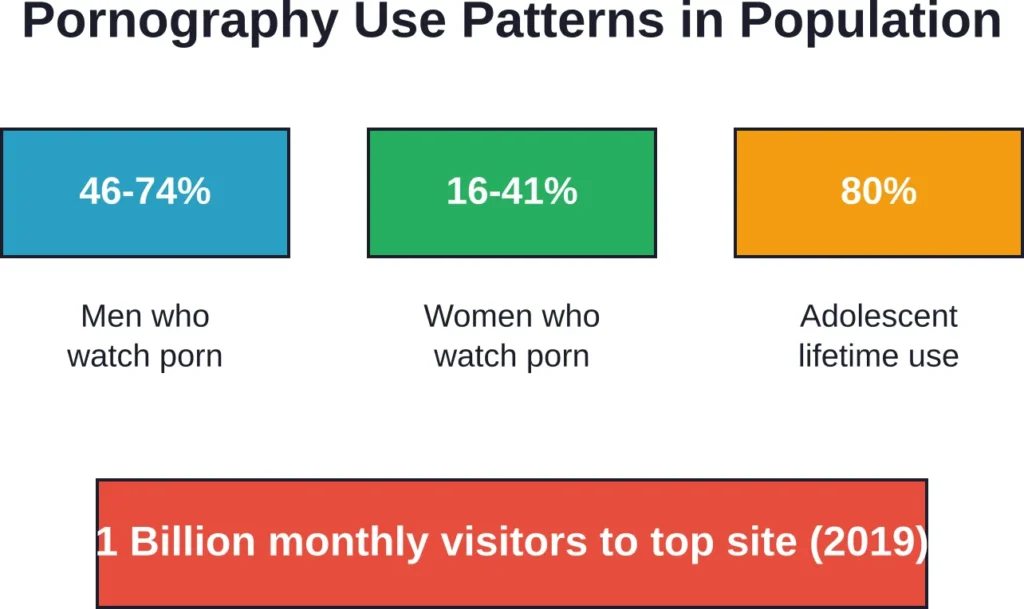
Pornography consumption has become remarkably commonplace. According to medical research, 46-74% of men and 16-41% of women watch porn regularly. The world’s top pornography site attracted 1 billion visitors per month in 2019, placing it among the most-visited websites globally.
But does that widespread use mean it’s harmless? Not necessarily. Recent research paints a more complicated picture than many people realize.
Understanding Pornography Consumption Patterns
Before diving into effects, it’s worth understanding how prevalent pornography use has become in modern society.
According to medical research, 46-74% of men and 16-41% of women watch porn regularly. Lifetime pornography use among adolescents reaches approximately 80%. These aren’t fringe behaviors—they represent mainstream patterns across demographics.
The accessibility of internet pornography has fundamentally changed consumption patterns. Where previous generations might have encountered adult content sporadically, current technology provides unlimited access at any moment.
Why People Watch Pornography
Research identifies several primary motivations for pornography consumption. Research indicates that some men experience pornography as relaxation that decreases tension.
Research documents that adolescent men report pornography viewing as a personal habit. The reasons vary widely—from sexual curiosity and arousal to boredom, stress relief, and exploration of sexual interests.
Understanding motivation matters because it influences whether consumption becomes problematic. Someone watching occasionally out of curiosity faces different risks than someone using pornography as the primary coping mechanism for stress or loneliness.
The Mental Health Connection
Here’s where things get complicated. The relationship between pornography consumption and mental health isn’t straightforward—it depends heavily on frequency, individual vulnerabilities, and existing mental health conditions.
Research published in medical journals shows associations between pornography consumption and cognitive-affective distress. But correlation doesn’t always mean causation. The question becomes: does pornography cause mental health problems, or do people with existing mental health challenges turn to pornography more frequently?
Likely, both dynamics are at play.
Anxiety and Depression Links
Studies involving college students found that excessive pornography consumption can exacerbate existing mental health conditions. Research documents that 13.5% of students in one study reported severe or extremely severe levels of stress, anxiety, and depression that appeared connected to their pornography use patterns.
The mechanism isn’t fully understood. Some researchers suggest that compulsive behaviors—including excessive pornography consumption—may worsen underlying anxiety and depressive symptoms by creating shame, interfering with daily functioning, or replacing healthier coping strategies.
That said, moderate consumption doesn’t appear to cause mental health problems in individuals without pre-existing vulnerabilities. The dose and context matter enormously.
Compulsive Patterns and Behavioral Concerns
One significant concern centers on compulsive sexual behavior patterns. While controversial, some research frameworks treat excessive pornography consumption as potentially addictive.
The International Classification of Diseases (ICD-10) doesn’t specifically address excessive consumption of online pornography, and its category F52.7—which includes excessive sexual urge and hypersexuality—doesn’t contain detailed diagnostic criteria. This creates ongoing debate in the medical community.
What’s clear is that some individuals develop patterns where pornography use interferes with work, relationships, or daily responsibilities. When consumption becomes compulsive despite negative consequences, that’s when professional support becomes valuable.
Sexual Health and Function Effects
One of the most researched areas concerns pornography’s impact on sexual function—and the findings raise significant concerns.
Erectile dysfunction rates in young men have increased dramatically over recent decades, with research documenting increases from lower baseline rates to higher prevalence in more recent studies.
More recent research found that 21.48% of sexually active young men showed some degree of erectile dysfunction. That’s a remarkable increase from the 2-5% prevalence documented in 1999-2002 to the 20-30% seen in recent reports.
The Pornography-ED Connection
Researchers have identified online pornography consumption as a potential contributing factor to rising ED rates among young men. The mechanism involves neurological adaptation—essentially, the brain becomes conditioned to respond to the intense, novel stimulation of internet pornography rather than real-life sexual encounters.
Research shows that some adolescent men report reduced sexual interest in real-life partnerships, preferring virtual sex. This pattern suggests a rewiring of sexual response that can interfere with partnered intimacy.
The concern isn’t just physical function. Sexual satisfaction decreases when expectations become shaped by pornography’s unrealistic portrayals. Real sexual encounters involve communication, vulnerability, and mutual pleasure—dynamics quite different from pornography’s performance-focused scenarios.
Desensitization and Escalation
Another documented pattern involves desensitization. Frequent consumers may find they need increasingly explicit or novel content to achieve the same arousal response. This escalation can lead individuals towards content they wouldn’t have initially sought.
The brain’s reward system adapts to repeated intense stimulation by down-regulating dopamine receptors. This neurological change—similar to processes seen with other compulsive behaviors—means more stimulation becomes necessary to achieve the same effect.
Not everyone experiences this pattern, but research indicates it’s common enough to warrant attention, particularly among frequent consumers.
| Time Period | ED Rate in Young Men | Source Type |
|---|---|---|
| 1999-2002 | 2-5% | Medical research |
| 2011 | 14-28% | European studies |
| Recent reports | 20-30% | Multiple studies |
| Current research | 21.48% with some degree of ED | International web-based survey |
Impact on Relationships
Perhaps the most consistent finding across research involves pornography’s effects on romantic relationships. Studies show pornography use at any level can negatively impact relationship quality, with particularly pronounced effects on relationship stability.
Research from universities examining over 3,500 people in committed relationships found that pornography usage negatively affected relationship satisfaction regardless of use level. The effects weren’t limited to extreme consumption—even moderate use showed measurable impacts.
Trust and Intimacy Concerns
Why does pornography affect relationships? Several mechanisms appear to be at work.
First, many partners experience pornography use as a form of infidelity or betrayal, even when the user doesn’t view it that way. This perception creates trust issues that erode relationship foundations.
Second, pornography consumption can reduce sexual and emotional intimacy within the relationship. When sexual needs are being met through pornography, motivation to invest in partnered sexuality decreases. Some research indicates that adolescent men report reduced interest in real-life partnerships, preferring virtual sex.
Third, pornography creates unrealistic expectations about bodies, sexual performance, and what sex should look like. These expectations can make real-world intimacy feel disappointing or inadequate by comparison.
Communication Breakdowns
Pornography use often becomes a hidden behavior, creating secrecy within relationships. When partners discover use that was concealed, the secrecy itself causes damage even beyond the use itself.
Conversely, when couples discuss pornography openly and establish mutual understanding about boundaries and expectations, negative impacts tend to be smaller. Communication doesn’t eliminate all concerns, but transparency reduces the compounding effect of secrecy and discovered betrayal.
Some couples incorporate pornography into their shared sexual lives without negative effects. But research suggests this represents a minority pattern—for most relationships, individual pornography consumption creates distance rather than connection.
When Does Consumption Become Problematic?
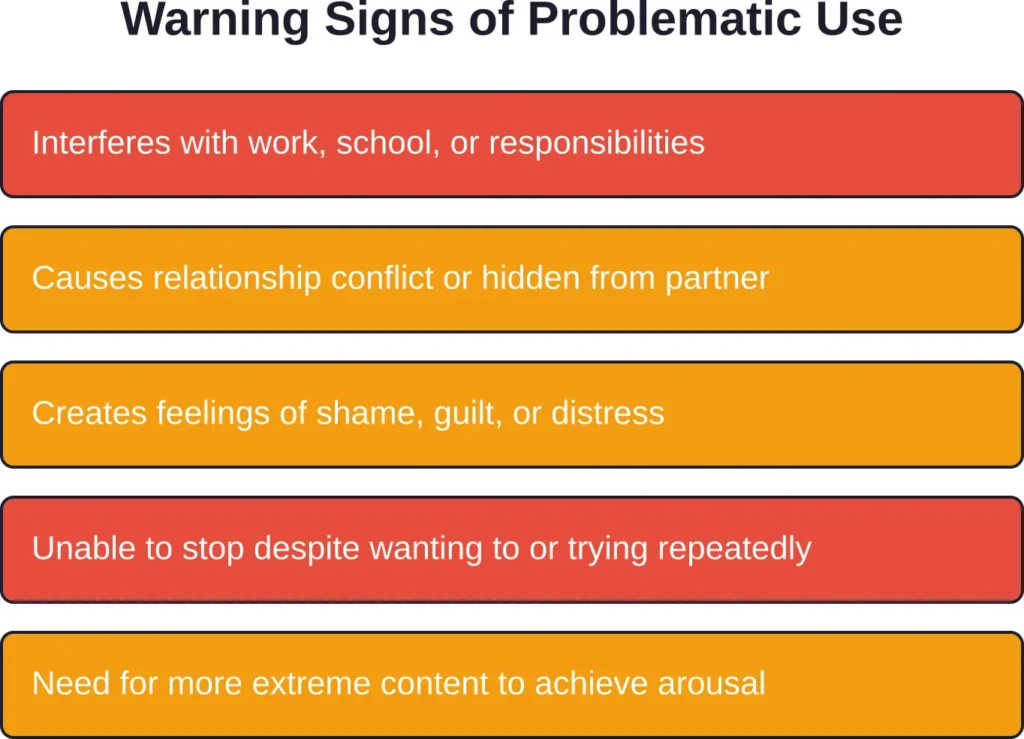
So when exactly does pornography use cross the line from acceptable to problematic? Several warning signs can help identify concerning patterns.
Look at interference with daily life. Does consumption take time away from work, responsibilities, or relationships? Do obligations get neglected because of time spent viewing pornography?
Consider emotional consequences. Does pornography use create feelings of shame, guilt, or distress? Are there repeated attempts to stop or reduce use that fail?
Examine relationship impacts. Has a partner expressed concern? Is pornography affecting sexual satisfaction or intimacy within a relationship?
The Frequency Question
There’s no universal threshold where pornography consumption becomes “too much.” Context matters enormously—the same frequency might be unproblematic for one person but destructive for another.
That said, daily or multiple-times-daily consumption warrants honest self-examination. Medical research indicates that the growing consumption of internet pornography, particularly in male populations, becomes an increasing problem when it reaches compulsive levels.
Ask this question: could you stop easily if you wanted to? If the answer is no, or if you’ve tried to stop and consistently failed, that suggests dependency that might benefit from professional support.
The Gender Difference Question
Research consistently shows different patterns of pornography use between genders, though the gap has narrowed somewhat in recent years.
Men consume pornography more frequently than women—46-74% of men compared to 16-41% of women. Men also tend to start viewing at younger ages and consume more frequently throughout their lives.
But women’s consumption patterns have increased notably with internet accessibility. Research from Sweden examining nationally representative surveys found that frequent pornography use was common among young men, but also documented increasing rates among women.
Different Effects by Gender
Some research suggests differential impacts by gender. Studies examining gender differences in pornography use and sexual health outcomes highlight the complexity of pornography’s impact and emphasize diverse needs in clinical settings.
Women who consume pornography may experience different psychological effects than men, potentially including body image concerns or altered expectations about sexual performance. However, research in this area remains less extensive than studies focusing on male consumption.
The bottom line: while patterns differ by gender, problematic use and negative effects can occur regardless of gender. Neither men nor women are immune to the potential downsides of excessive consumption.
Positive Effects and Nuanced Perspectives
It’s worth acknowledging that not all research on pornography is negative. Some studies document potential benefits, particularly around sexual exploration and arousal.
Research from Sweden found that reporting predominantly positive effects of pornography use on one’s sex life was more common than reporting predominantly negative effects. Some individuals credit pornography with helping them understand their sexual preferences or maintaining sexual interest.
For some couples, shared consumption can facilitate communication about desires or fantasies. In contexts where open discussion and mutual consent exist, pornography might serve as a tool rather than a threat.
The Moderation Argument
Many experts suggest that moderate, occasional consumption by adults in contexts that don’t interfere with relationships or functioning may not cause significant harm to many individuals.
The key factors appear to be frequency, the individual’s vulnerability to compulsive behaviors, relationship context, and whether consumption aligns with personal values. Someone who views pornography occasionally without guilt, whose partner is aware and comfortable, and who maintains satisfying real-life intimacy faces different risks than someone consuming daily while hiding it from a partner and experiencing sexual dysfunction.
Context determines outcome more than consumption itself.
Youth and Adolescent Exposure
One area of particular concern involves adolescent exposure to pornography. With 80% lifetime pornography use among adolescents, exposure often occurs before young people have developed mature understanding of sexuality, relationships, or consent.
Early and frequent exposure during formative years may shape sexual development in ways that later moderate adult consumption wouldn’t. The adolescent brain is particularly susceptible to conditioning and habit formation.
Research documents that adolescent men report pornography as a personal habit. Starting patterns of regular consumption during adolescence may establish trajectories that continue into adulthood.
Education and Open Communication
Comprehensive sexuality education that addresses pornography has become increasingly important. Rather than pretending adolescents won’t encounter pornography, education can help young people critically evaluate what they see and understand differences between pornography and real relationships.
The World Health Organization’s comprehensive sexuality education guidelines emphasize providing young people with accurate, age-appropriate information about sexuality and relationships. While these guidelines don’t specifically focus on pornography, they establish frameworks for discussions about media influence on sexual expectations.
Parents and educators face the challenge of addressing a topic many find uncomfortable. But research suggests that silence leaves young people to form understanding based solely on pornography itself—a problematic default sex educator.
Cultural and Religious Considerations
Personal values around pornography vary enormously based on cultural background, religious beliefs, and individual moral frameworks.
For individuals whose religious or cultural values categorize pornography as morally wrong, consumption often creates significant psychological distress regardless of frequency. The internal conflict between behavior and values can be as damaging as any direct effect of the content itself.
Research on pornography consumption and cognitive-affective distress shows that the meaning individuals attach to their consumption significantly influences psychological outcomes. Someone who views pornography as harmless relaxation experiences different mental health effects than someone who views the same behavior as moral failure.
Aligning Behavior with Values
Mental health often depends on coherence between values and actions. When behavior contradicts deeply held beliefs—whether about sexuality, relationships, or personal integrity—psychological distress follows.
For individuals struggling with this disconnect, addressing the behavior itself may be less important than exploring the underlying values and making conscious choices aligned with those values. Some may conclude that moderate consumption fits within their value system; others may decide abstinence is necessary for internal peace.
There’s no single right answer that applies to everyone. The question becomes: what decision allows for psychological integration and well-being for this particular individual?
Getting Help When Needed
If pornography consumption has become problematic, several effective approaches exist.
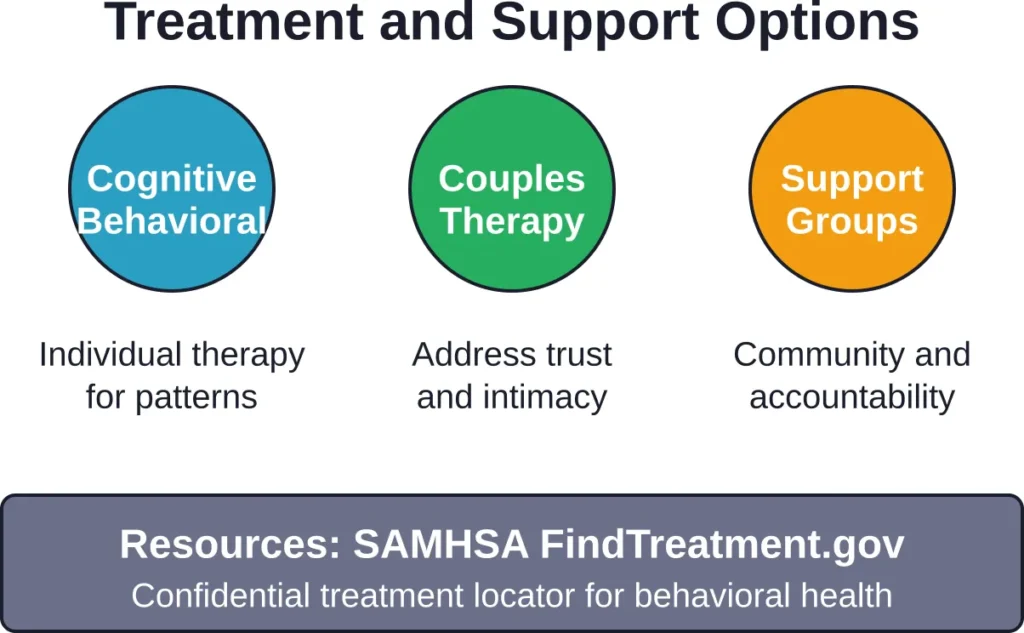
Cognitive-behavioral therapy (CBT) helps individuals identify triggers, develop coping strategies, and address underlying issues that drive compulsive behavior. Exposure and response prevention (ERP) therapy, particularly effective for OCD-related concerns, can address obsessive thoughts or compulsive behaviors around pornography.
Support groups—both in-person and online—provide community and accountability for individuals working to change consumption patterns. Programs modeled on 12-step approaches exist specifically for sexual compulsivity.
Professional Resources
Mental health professionals specializing in sexual health can provide assessment and treatment planning. Resources like SAMHSA’s treatment locator (FindTreatment.gov) help individuals find appropriate care for behavioral health concerns, including compulsive sexual behavior.
For relationship concerns, couples therapy can help partners navigate the impact of pornography use, rebuild trust, and develop shared understanding about boundaries and expectations.
The important thing is recognizing when self-management isn’t working. Repeated failed attempts to change consumption patterns signal the need for professional support rather than personal failure.
Making Personal Decisions
So, is it okay to watch porn? The honest answer is: it depends on your individual circumstances, values, relationship context, and consumption patterns.
For some individuals in some contexts, moderate consumption doesn’t appear to cause significant problems. For others—particularly those with compulsive patterns, relationship conflicts, sexual dysfunction, or value conflicts—pornography consumption creates real harm.
The research is clear that excessive consumption carries risks. Rising rates of erectile dysfunction among young men, documented relationship impacts, and associations with mental health concerns aren’t trivial. These represent real effects affecting real people.
Self-Assessment Questions
Consider these questions honestly:
- Does pornography consumption interfere with responsibilities, relationships, or daily functioning?
- Have attempts to reduce or stop consumption failed?
- Does viewing create feelings of shame, guilt, or distress?
- Has pornography affected sexual function or satisfaction in real-life encounters?
- Does a partner feel hurt, betrayed, or concerned about consumption?
- Is consumption aligned with personal values and the person you want to be?
Honest answers to these questions matter more than any external judgment about whether pornography is categorically “okay” or “not okay.”
Frequently Asked Questions
Yes, research shows a connection between frequent pornography consumption and erectile dysfunction in young men. ED rates in men under 40 have increased from 2-5% in 1999-2002 to 20-30% in recent studies, with pornography consumption identified as a contributing factor. The mechanism involves neurological adaptation where the brain becomes conditioned to respond to pornography’s intense stimulation rather than real-life encounters. However, not everyone who watches pornography experiences ED, and other factors contribute to sexual dysfunction as well.
There’s no universal threshold, but warning signs include: consumption that interferes with work, school, or responsibilities; relationship conflict or secrecy around viewing; feelings of shame or failed attempts to stop; reduced sexual interest in real-life partners; or need for increasingly extreme content. Daily or multiple-times-daily consumption warrants self-examination. If you’ve tried to stop and consistently can’t, or if consumption creates distress or problems in your life, that suggests it’s become excessive for you personally.
Research consistently shows that pornography use at any level can negatively impact romantic relationships. Studies examining over 3,500 people in committed relationships found that pornography usage affected relationship satisfaction and stability. Effects include reduced trust, decreased intimacy, unrealistic expectations, and communication breakdowns. Some research indicates that adolescent men report reduced interest in real-life partnerships, preferring virtual sex. However, impacts vary—some couples navigate pornography use without significant problems, particularly when communication is open and mutual understanding exists.
The medical community debates whether pornography “addiction” represents a true addiction in the clinical sense. The International Classification of Diseases (ICD-10) doesn’t specifically classify excessive pornography consumption as an addiction. However, some individuals clearly develop compulsive patterns where pornography use continues despite negative consequences, mirrors addiction-like behaviors, and involves similar neurological changes in the brain’s reward system. Whether termed “addiction” or “compulsive sexual behavior,” the pattern represents a real clinical concern that responds to treatment approaches used for behavioral compulsions.
Research shows associations between pornography consumption and mental health concerns including anxiety, depression, and cognitive-affective distress. Studies of college students found that 13.5% reported severe stress, anxiety, and depression connected to pornography use. However, causation is complex—pornography may worsen existing mental health conditions, or individuals with mental health challenges may turn to pornography more frequently. Moderate consumption doesn’t appear to cause mental health problems in individuals without pre-existing vulnerabilities, but excessive use can exacerbate underlying conditions.
If you’ve repeatedly tried to stop or reduce pornography consumption and failed, professional support can help. Cognitive-behavioral therapy (CBT) effectively addresses compulsive behaviors and underlying triggers. Exposure and response prevention (ERP) therapy works particularly well for OCD-related concerns. Support groups provide community and accountability. Mental health professionals specializing in sexual health can assess your situation and create a treatment plan. Resources like SAMHSA’s FindTreatment.gov help locate appropriate care. Repeated failed attempts to change don’t represent personal failure—they signal the need for professional help.
Whether pornography consumption constitutes infidelity depends on the specific relationship and the agreements within it. Many partners experience pornography use as a form of betrayal, even when the viewer doesn’t see it that way. Research shows that pornography affects relationship satisfaction regardless of use level. What matters most is communication—have you and your partner discussed boundaries and expectations? Hidden consumption that violates explicit or implicit agreements creates trust damage. Some couples establish mutual understanding where certain pornography use is acceptable; others define any consumption as a betrayal. The answer is relationship-specific, not universal.
Conclusion: Context Determines Impact
The question “is it okay to watch porn?” resists simple answers because outcomes depend entirely on context—individual vulnerability, relationship circumstances, frequency, personal values, and specific patterns matter enormously.
What the research makes clear is that pornography isn’t the harmless entertainment some claim. Evidence documents real effects on sexual function, mental health, and relationships, particularly with excessive consumption. Rising ED rates among young men, relationship instability, and associations with psychological distress represent legitimate concerns backed by medical research.
But the research also shows that moderate consumption doesn’t destroy everyone who engages with it. Some individuals report positive effects, and many consume pornography occasionally without apparent harm.
The critical factor is honest self-assessment. Does pornography consumption in your life create problems? Does it align with your values? Does it enhance or diminish your relationships and well-being?
If pornography use has become problematic—creating distress, interfering with life, affecting relationships, or resisting your attempts to change—effective help exists. Professional support, whether individual therapy, couples counseling, or support groups, can address compulsive patterns and underlying issues.
Ultimately, the decision is personal. But it should be an informed decision based on honest evaluation of actual impacts rather than assumptions about what “should” or “shouldn’t” be harmful. The science provides guidance; individual circumstances determine application.
Take time for real self-reflection. Be honest about effects. Align behavior with values. And seek help when needed. Those principles matter more than any universal judgment about pornography itself.