
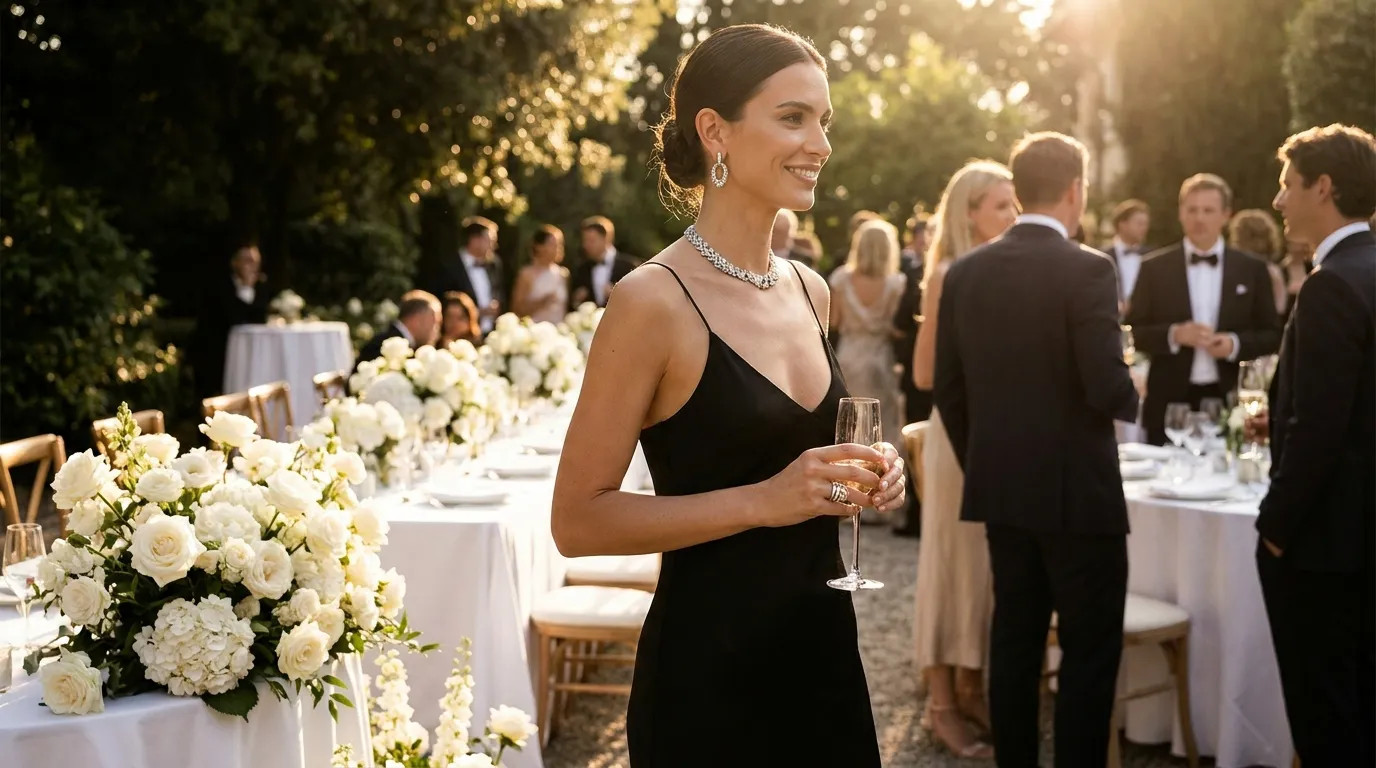
Quick Summary: Yes, wearing black to a wedding is perfectly acceptable in modern etiquette. Once associated with mourning, black is now seen as sophisticated and elegant for wedding guests. The key is choosing the right style—opt for festive fabrics, add colorful accessories, and consider the venue, season, and cultural context to ensure your black attire feels celebratory rather than somber.
The question “can you wear black to a wedding?” has puzzled guests for decades. For years, black wedding guest attire was considered taboo, reserved exclusively for funerals and mourning. But times have changed.
Modern wedding etiquette has evolved significantly. Black is no longer off-limits—it’s actually become one of the most popular choices for sophisticated wedding guests.
According to the Emily Post Institute, guests’ clothing should be “appropriate to an occasion that is, at its heart, a serious ceremony, and also often one that takes place in a house of worship as well as a time of celebration.” Black fits that bill perfectly when styled correctly. The shade reads as polished, intentional, and elegant rather than somber.
The History Behind the Black Wedding Attire Taboo
The restriction against wearing black to weddings has deep historical roots. During the Victorian era, strict mourning protocols dictated that widows wear black for at least one year after losing a spouse. Queen Victoria famously wore black for the remainder of her life after Prince Albert’s death.
This association between black clothing and grief made the color feel inappropriate for joyous celebrations like weddings. Guests worried that wearing black might bring bad luck to the newlyweds or appear disrespectful.
But that outdated notion has faded into irrelevance. Today, black reads as modern, sophisticated, and fashion-forward rather than mournful. The color has been reclaimed by minimalists and style enthusiasts who appreciate its versatility and elegance.
When It’s Perfectly Fine to Wear Black to a Wedding
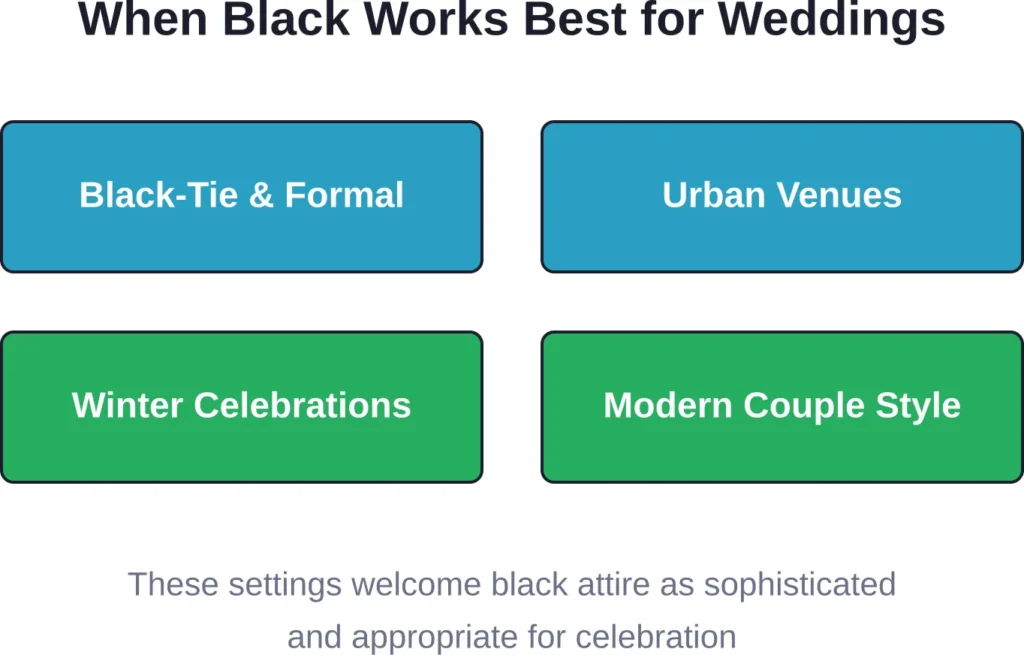
In most modern weddings, black attire is completely acceptable. Here’s when you can confidently wear black without any etiquette concerns:
Evening and Formal Weddings
Black-tie and formal evening weddings are ideal occasions for black attire. The Emily Post Institute notes that for black-tie attire, women may wear a “formal (floor length) evening gown” or “Your dressiest ‘little black dress’”
For these elegant affairs, black naturally aligns with the sophisticated atmosphere. A floor-length black gown with statement jewelry makes an appropriate and stunning choice.
Urban and Modern Venues
Weddings held in contemporary settings—art galleries, industrial lofts, chic restaurants, or boutique hotels—pair beautifully with black attire. The modern aesthetic of these venues complements the sleek sophistication of black.
City weddings especially welcome black guest attire. The color fits seamlessly into urban style sensibilities.
Winter Celebrations
Black works exceptionally well for winter weddings. The color feels seasonally appropriate for cold-weather celebrations, and heavier black fabrics like velvet or satin add warmth and luxury.
Winter’s darker, moodier palette makes black a natural fit. Pair it with jewel-toned accessories for a festive touch.
When the Couple Has a Modern Style
Consider the couple’s personal aesthetic. If they embrace contemporary fashion, minimalist design, or modern elegance, black attire aligns with their style.
Look at their wedding invitation design and venue choice for clues. Sleek, modern invitations suggest black will be welcomed.
When You Should Avoid Wearing Black
While black is generally acceptable, certain situations call for a different color choice. Here’s when to skip the black dress:
Daytime Summer Weddings
Outdoor weddings in bright daylight—especially beach, garden, or vineyard celebrations—feel more festive with lighter, brighter colors. Black can appear heavy and out of place against sunny, natural backdrops.
The color absorbs heat, making you uncomfortable in warm weather. Save black for evening affairs even during summer months.
Cultural or Religious Considerations
Some cultures maintain traditional associations between black and mourning. Research the couple’s cultural background if you’re unfamiliar with their traditions.
When in doubt, reach out to the couple or a member of the wedding party. They’ll appreciate your thoughtfulness and provide guidance.
Explicitly Stated Dress Codes
If the invitation specifies “bright colors,” “garden party attire,” “tropical,” or “festive” dress codes, honor that request. The couple is clearly signaling they want vibrant, celebratory colors.
Some invitations explicitly ask guests to avoid certain colors. Always respect these requests.
Very Traditional or Conservative Families
If the couple or their families hold traditional views about wedding etiquette, err on the side of caution. Older generations may still associate black with mourning.
Look for context clues. A formal church ceremony with traditional wording on the invitation suggests a more conservative approach.
How to Style Black for a Wedding
The key to wearing black successfully is making it feel festive and celebratory. Here’s how to style black attire to avoid looking like you’re attending a funeral:
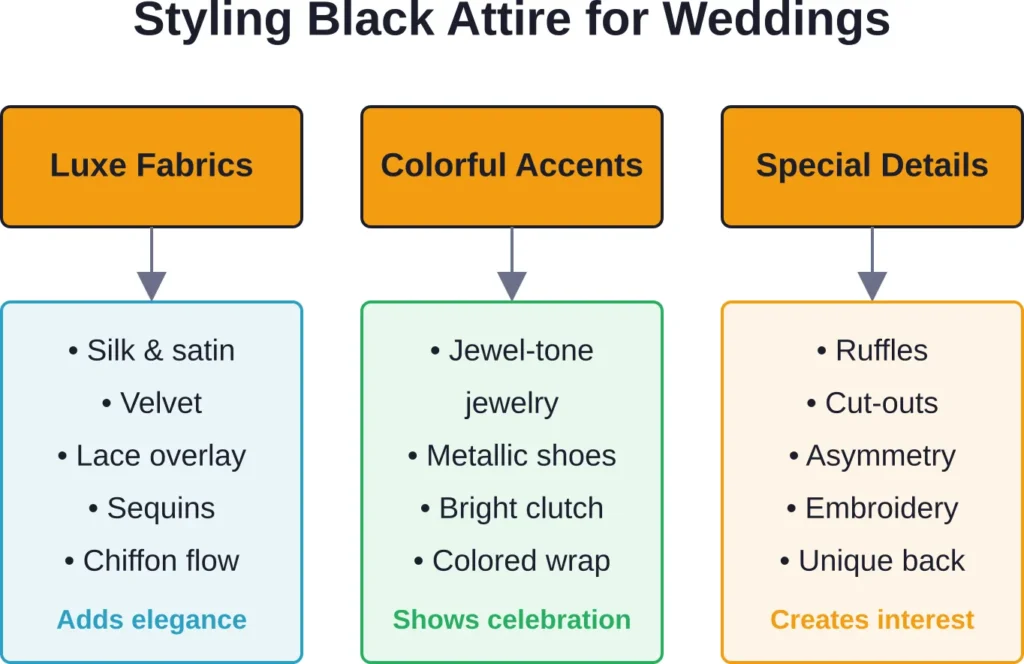
Choose Luxe, Festive Fabrics
Fabric choice makes all the difference. Select materials that catch light and add visual interest:
- Satin or silk for elegant sheen
- Velvet for winter richness
- Lace for romantic texture
- Sequins or beading for sparkle
- Chiffon for flowing movement
Avoid matte, heavy fabrics that read as somber. The goal is elegance and celebration, not simplicity.
Add Colorful Accessories
This is where black becomes truly wedding-appropriate. Bright, festive accessories transform a simple black dress into celebration attire:
- Statement jewelry in gold, emerald, ruby, or sapphire tones
- Colorful shoes—metallics, jewel tones, or pastels
- A vibrant clutch or handbag
- A printed or colorful shawl or wrap
- Fresh flowers in your hair or on a corsage
These pops of color signal you’re celebrating, not mourning. They also provide conversation starters and photo-worthy details.
Consider Prints and Patterns
A black dress with white polka dots, floral prints with black backgrounds, or geometric patterns adds visual interest while maintaining the sophistication of black.
These hybrid options feel more festive than solid black while still allowing you to wear your favorite dark palette.
Pay Attention to Silhouette
Choose styles that feel special and occasion-appropriate. Floor-length gowns work beautifully for formal weddings. Cocktail-length dresses with interesting details—asymmetrical hems, ruffles, or cut-outs—suit semi-formal celebrations.
Avoid anything too casual, like a simple sheath dress without embellishment. The silhouette should signal “special occasion.”
Black Dress Shopping Guide for Weddings
Finding the perfect black wedding guest dress doesn’t have to break the bank. Several retailers specialize in affordable, stylish options:
Budget-Friendly Options
Lulus offers a range of floor-length dresses and gowns, many of which ring up under $100. The retailer provides size ranges from XXS to 3X, ensuring options for various body types. Reviews and customer photos help visualize how dresses look in real life.
According to sources, Lulus offers wedding guest dresses at affordable price points, with formal floor-length options that look far more expensive than their price tags suggest.
Mid-Range Investment Pieces
Reformation specializes in sustainable, elegant dresses perfect for modern weddings. Their black options typically range around $300 and feature contemporary silhouettes with special details.
Anthropologie carries formal wedding attire from $150 to $400, with sizes up to 22W. Their curated selection includes unique prints and sophisticated black pieces.
Luxury Selections
Designer options for black-tie affairs typically range from $500 and above. Designer black dresses become wardrobe staples you’ll wear to multiple formal events, making the cost-per-wear reasonable.
| Retailer | Price Range | Size Range | Best For |
|---|---|---|---|
| Lulus | Under $100-$200 | XXS to 3X | Budget-conscious shoppers, trendy styles |
| Reformation | Around $300 | Standard sizing | Sustainable, modern silhouettes |
| Anthropologie | $150-$400 | Up to 22W | Unique prints, sophisticated options |
| Designer brands | $500+ | Varies | Investment pieces, black-tie events |
Dress Code Considerations for Black Attire
Different dress codes affect whether black is appropriate and what style to choose:
Black-Tie Weddings
Black-tie dress codes explicitly welcome black attire. The Emily Post Institute notes that black tie is “the most common formal dress code for events such as weddings” and specifically mentions the little black dress as appropriate.
For these events, choose floor-length gowns rather than cocktail dresses. Elegant fabrics and sophisticated accessories are essential.
Formal Weddings
Formal weddings (slightly less strict than black-tie) also welcome black. According to Vogue, formal attire differs from black-tie but still calls for elevated dress choices.
Floor-length or midi-length cocktail dresses work for formal celebrations. Add statement jewelry and dressy shoes.
Semi-Formal and Cocktail Attire
These mid-range dress codes offer the most flexibility. Black cocktail dresses with interesting details fit perfectly. Knee-length to midi-length hemlines work well.
This is where your little black dress shines. Dress it up with accessories appropriate to the venue and season.
Casual Wedding Attire
Even casual weddings can accommodate black, though lighter colors often feel more appropriate for daytime garden parties or beach celebrations. If choosing black for a casual wedding, keep the silhouette relaxed and add plenty of colorful, fun accessories.
Regional and Cultural Considerations
Wedding etiquette varies significantly across cultures and regions. While black has gained acceptance in Western weddings, other traditions maintain different standards.
In some cultures, black may remain associated with mourning. It is advisable to research specific cultural traditions before attending weddings.
When attending a wedding involving unfamiliar cultural traditions, research beforehand or ask someone close to the couple. Respecting cultural preferences shows thoughtfulness and care.
The Bottom Line on Wearing Black to Weddings
Modern wedding etiquette has evolved to embrace black as a sophisticated, elegant choice for guests. The old superstitions about mourning and bad luck have faded, replaced by appreciation for black’s timeless style.
The appropriateness of black depends on context—venue, season, dress code, and cultural considerations all play roles. Evening celebrations, formal affairs, urban settings, and winter weddings particularly welcome black attire.
The secret to wearing black successfully lies in styling. Choose luxurious fabrics, add colorful accessories, and select silhouettes with special details that signal celebration. Avoid anything too plain or somber.
When in doubt, consider the couple’s style and the overall wedding aesthetic. A modern, fashion-forward couple will appreciate your chic black ensemble. A traditional garden wedding might call for softer, lighter colors.
Trust your judgment and err on the side of respect. If you’re genuinely uncertain whether black is appropriate, reach out to the couple or choose a different color. They’ll appreciate your thoughtfulness far more than your outfit choice.
Ultimately, wearing black to a wedding is about confidence and intention. When styled with celebration in mind, black communicates elegance, sophistication, and respect for the occasion—exactly what wedding guest attire should convey.
Frequently Asked Questions
Yes, the little black dress is specifically mentioned by the Emily Post Institute as appropriate for black-tie weddings. Choose versions with special details—lace, sequins, interesting cuts—and style with festive accessories. The LBD works beautifully for cocktail and semi-formal dress codes.
No, this is an outdated superstition. The association between black and bad luck at weddings stems from Victorian mourning traditions, but modern etiquette no longer considers black unlucky. When styled appropriately with festive elements, black is perfectly acceptable.
Black works for evening summer weddings but can feel heavy for daytime outdoor celebrations. If choosing black for a summer wedding, opt for lightweight fabrics like chiffon or silk, keep the silhouette flowing, and add bright, summery accessories. Evening affairs are safer choices for black summer attire.
Avoid wearing white or anything that could be mistaken for a wedding dress, as that color is reserved for the bride. Also skip anything too casual (jeans, T-shirts, sneakers unless explicitly requested), overly revealing outfits, or clothing that violates stated dress codes. Respect cultural preferences and venue appropriateness.
Black and white combinations generally work well, as the black prevents the outfit from appearing bridal. Polka dots, geometric patterns, or floral prints with black backgrounds and white accents offer festive alternatives to solid black while maintaining sophistication.
Jewel tones (emerald, sapphire, ruby), pastels (blush, lavender, mint), earth tones (terracotta, sage, burgundy), and metallics (gold, silver, rose gold) all work beautifully for wedding guests. Choose colors that complement the season, venue, and your personal coloring.
Consider the dress code, venue, time of day, and season. Black-tie evening weddings in urban venues during fall or winter almost always welcome black. Daytime garden or beach weddings in summer call for lighter colors. When uncertain, check the invitation for dress code clues or reach out to the couple or wedding party.