

Quick Summary: True immunity to poison ivy doesn’t exist—most people (80-90%) develop a rash when exposed to urushiol, the allergenic oil in these plants. Some people appear immune initially because sensitivity develops over time with repeated exposure. While a small percentage remain non-reactive throughout life, there’s no reliable way to predict who will stay unaffected or to build permanent immunity.
Walk through the woods enough times and you’ll hear someone brag about their supposed immunity to poison ivy. They’ve rolled around in the stuff, pulled it bare-handed from their garden, and never gotten so much as a single itchy bump.
Are they superhuman? Lucky? Or is something else going on?
The answer involves some fascinating immunology, a potent plant oil called urushiol, and the uncomfortable truth that what looks like immunity today might disappear tomorrow.
The Urushiol Factor: Why Most People React
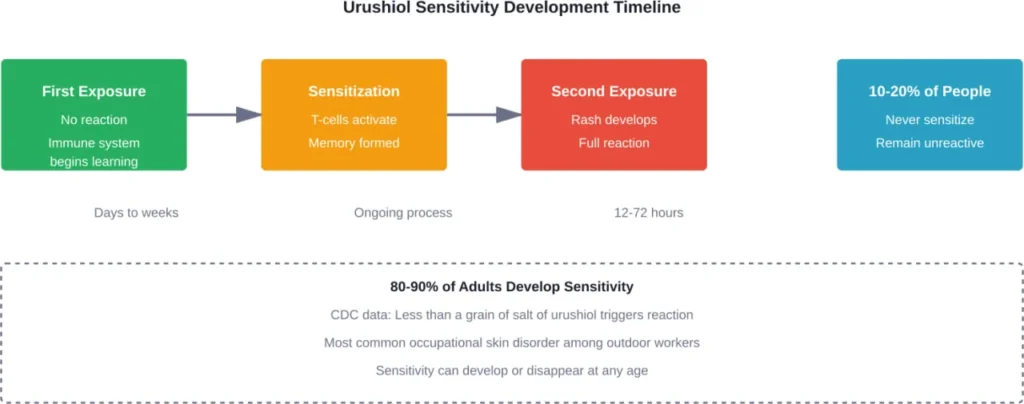
Poison ivy, poison oak, and poison sumac all produce urushiol—an oily sap that triggers allergic contact dermatitis in the vast majority of people who touch it. According to the CDC, exposure to an amount of urushiol less than a grain of salt causes a rash in 80-90 percent of adults.
That’s a staggering statistic. It means only 10-20% of the population might avoid the characteristic itchy, blistering rash after exposure.
But here’s where it gets interesting: you’re not born sensitive to urushiol. Sensitivity develops through a process called sensitization, which requires repeated exposure over time.
How Sensitization Works
The first time urushiol contacts your skin, your immune system might not react at all. Your body needs to “learn” that this substance is a threat—which isn’t actually accurate, since urushiol isn’t inherently dangerous.
After that initial exposure, specialized immune cells called T-cells begin recognizing urushiol as a foreign invader. The next time you encounter the plant, those primed T-cells trigger an inflammatory response: the classic poison ivy rash.
This explains why some people handle poison ivy for years without problems, then suddenly develop severe reactions. Their immune system finally decided to care.
Can You Actually Be Immune?
The short answer? Not really—at least not in the way we think about immunity to diseases like measles or chickenpox.
What some people experience is more accurately described as “non-reactivity” rather than true immunity. Their immune systems simply don’t mount an allergic response to urushiol, even after multiple exposures.
But this isn’t a permanent state for most people. Sensitivity can develop at any age, even in people who’ve handled poison ivy without problems for decades.
Why Some People Never React
The mechanisms behind true non-reactivity aren’t fully understood. Genetic factors likely play a role—some people may have T-cell variants that don’t recognize urushiol as a threat.
Others might produce suppressor T-cells that actively dampen the allergic response. Research on suppressor T cells has identified urushiol-specific immune regulation mechanisms in some individuals.
The percentage of people who remain non-reactive throughout their entire lives is relatively small, probably well under 10% of the population.
Does Sensitivity Change Over Time?
Absolutely. And this works in both directions.
You can develop sensitivity after years of safe exposure. Reports from hikers and outdoor workers describe sudden severe poison ivy reactions after decades without issues.
Conversely, sensitivity can also decrease with age. Some people report that their reactions became milder or disappeared entirely as they got older, though this pattern isn’t universal or predictable.
| Scenario | Likelihood | What Happens |
|---|---|---|
| Never exposed, first contact | High (80-90%) | May not react initially, but sensitization begins |
| Multiple exposures, no reaction yet | Moderate | Risk of developing sensitivity increases with each exposure |
| Previously reactive, now older | Low-Moderate | Some people experience reduced sensitivity, but not guaranteed |
| Never reactive after lifetime exposure | Very Low (<10%) | Likely genetic non-reactivity, but can still change |
Can You Build Immunity by Eating Poison Ivy?
This dangerous myth resurfaces regularly, often accompanied by anecdotes about people who supposedly desensitized themselves by consuming small amounts of poison ivy leaves.
Don’t try this. Ever.
While some historical studies attempted to induce tolerance through oral ingestion of urushiol, the results were inconsistent and the risks were significant. Ingesting poison ivy can cause severe internal reactions, including dangerous swelling of the throat and digestive tract.
The American Academy of Dermatology explicitly warns against attempting to build immunity through exposure or ingestion. The risks far outweigh any potential benefits.
Occupational Exposure and Risk
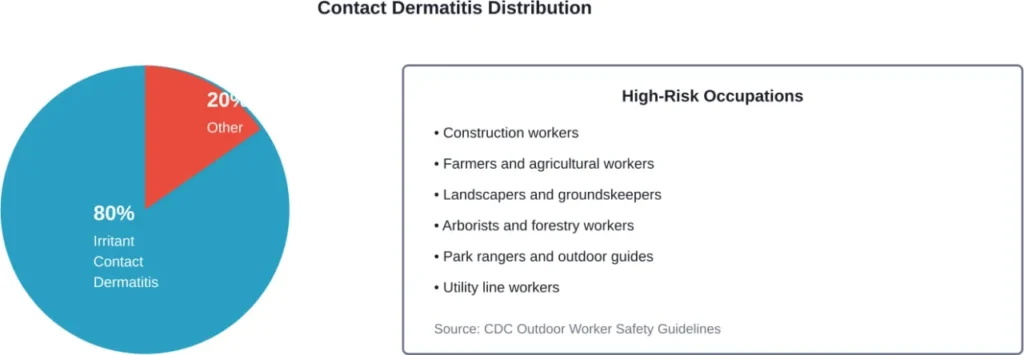
For outdoor workers—including construction workers, farmers, landscapers, and arborists—poison ivy exposure is a significant occupational hazard. According to the CDC, irritant dermatitis from plants like poison ivy makes up about 80% of all contact dermatitis cases and represents the most common occupational skin disorder.
Workers who experience repeated exposure face cumulative sensitization risk. Even those who’ve never reacted before can develop sensitivity after years on the job.
Employers should provide protective equipment and training on plant identification. The rash can significantly impede or prevent workers from performing their jobs, leading to lost productivity and medical costs.
Cross-Reactivity With Other Plants
Here’s something most people don’t know: urushiol isn’t unique to poison ivy, oak, and sumac. Other plants in the Anacardiaceae family also contain this compound—including mango trees.
Research published in medical journals documents cases of people developing mango dermatitis after previous poison ivy sensitization. The urushiol in mango skin and sap can trigger the same allergic response in sensitized individuals.
Cashews are another example. The shells contain urushiol-related compounds that can cause reactions in people sensitive to poison ivy.
Frequently Asked Questions
Yes. Sensitivity can develop at any age after repeated exposures. Many people handle poison ivy safely for years before their immune system becomes sensitized and triggers allergic reactions.
Not necessarily. You may simply not have been sensitized yet. With each exposure, your risk of developing sensitivity increases. Only a small percentage of people remain truly non-reactive throughout life.
Genetic factors likely influence susceptibility, but there’s no simple inheritance pattern. Having non-reactive parents doesn’t guarantee you’ll be non-reactive, though it may reduce your risk somewhat.
If done within 10-15 minutes, washing with soap and cool water can remove urushiol before it fully binds to skin. After 30 minutes, most of the oil has already penetrated and washing becomes less effective.
Standard allergy shots don’t work for poison ivy because it causes allergic contact dermatitis, not the type of allergy that responds to immunotherapy. Historical attempts at desensitization have shown inconsistent results and aren’t currently recommended.
Individual immune responses vary widely. Factors include genetics, degree of sensitization, amount of urushiol exposure, and which body parts contacted the plant. Previous severe reactions often predict future severe reactions.
It’s possible but unpredictable. Some people report reduced sensitivity with age, while others maintain or increase their reactivity. There’s no reliable way to predict whether your sensitivity will change.
The Bottom Line on Poison Ivy Immunity
True immunity to poison ivy doesn’t exist for most people. What appears to be immunity is usually just delayed sensitization—a ticking time bomb that could activate with the next exposure.
The CDC data is clear: 80-90% of adults will develop a rash from urushiol exposure. That means your odds of permanent non-reactivity are slim.
If you’ve been handling poison ivy without problems, don’t assume you’re invincible. Continue taking precautions: wear protective clothing, learn to identify the plants, and wash thoroughly after potential exposure.
And please, ignore any advice about eating poison ivy to build immunity. Your immune system doesn’t need that kind of “help.”
The safest approach remains simple avoidance. Learn what poison ivy, oak, and sumac look like in your region. Give these plants a wide berth. And if you do develop a reaction, treat it promptly—severe cases may require medical attention.
Your future self will thank you for the caution, especially if that seemingly bulletproof immunity suddenly disappears.