

Quick Summary: Europe’s top structural steel detailing companies combine advanced Tekla software expertise, rigorous quality assurance, and proven track records on complex projects. The best firms deliver precise shop drawings, 3D modeling, and seamless collaboration with fabricators and engineers across the continent. This guide profiles ten leading European agencies renowned for accuracy, efficiency, and technical excellence in structural steel detailing.
Selecting the right structural steel detailing partner can make or break a construction project. The difference between a mediocre firm and an elite one shows up in every bolt connection, every weld specification, and every fabrication drawing that hits the shop floor.
Steel detailing is the critical bridge between structural engineering design and physical fabrication. Detailers produce the shop drawings and erection plans that steel fabricators rely on to cut, weld, and assemble the framework for buildings, bridges, industrial facilities, and infrastructure projects. These aren’t just technical sketches—they’re comprehensive instructions covering every connection, dimension, material specification, and assembly sequence.
The European market for structural steel detailing has matured significantly. Competition is fierce, quality standards are high, and clients demand both precision and speed. But which companies truly stand out?
What Defines Elite Structural Steel Detailing Firms
Before diving into the list, it’s worth understanding what separates exceptional detailing companies from the rest of the pack.
Technical proficiency in software like Tekla Structures is table stakes. The best firms go further—they understand steel fabrication processes intimately, anticipate constructability issues before they reach the shop, and communicate proactively with engineers and fabricators throughout the project lifecycle.
According to industry discussions, turnaround time matters enormously. Projects run on tight schedules, and delays in detailing create cascading problems downstream. The top companies balance speed with accuracy, delivering drawings that require minimal revisions.
Quality assurance processes tell you a lot about a firm’s maturity. Elite detailing companies implement multi-stage checking procedures, maintain detailed standards libraries, and track error rates religiously. They catch mistakes internally rather than letting fabricators discover them.
The Non-Negotiables
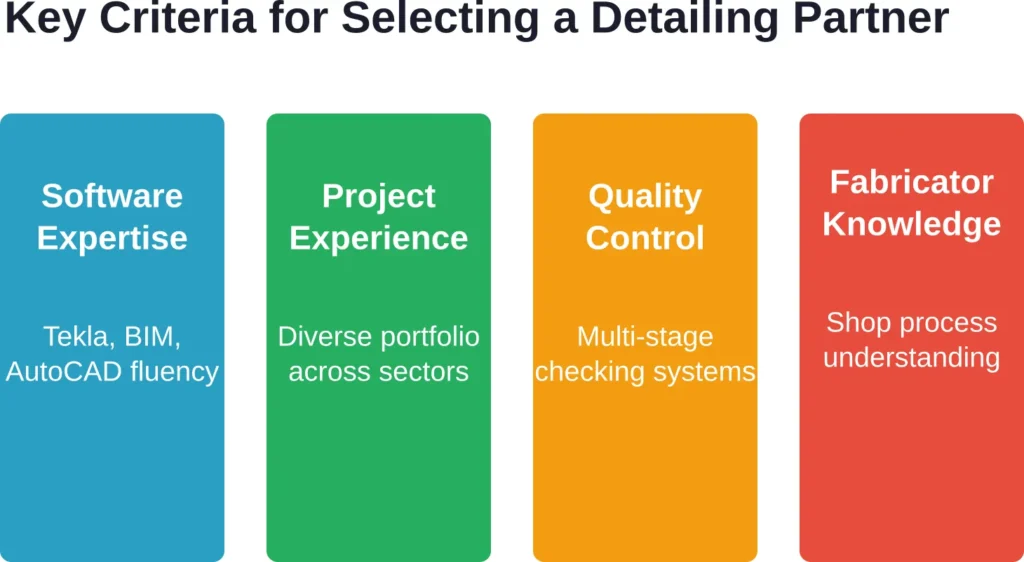
Several criteria appear consistently when evaluating structural steel detailing companies:
- Software expertise: Proficiency in Tekla Structures, AutoCAD, and increasingly BIM workflows
- Experience range: Proven capability across commercial, industrial, institutional, and infrastructure projects
- Communication protocols: Clear processes for coordination, RFIs, and revision management
- Quality control: Documented checking procedures and accuracy metrics
- Fabricator knowledge: Understanding of shop capabilities, material availability, and construction sequencing
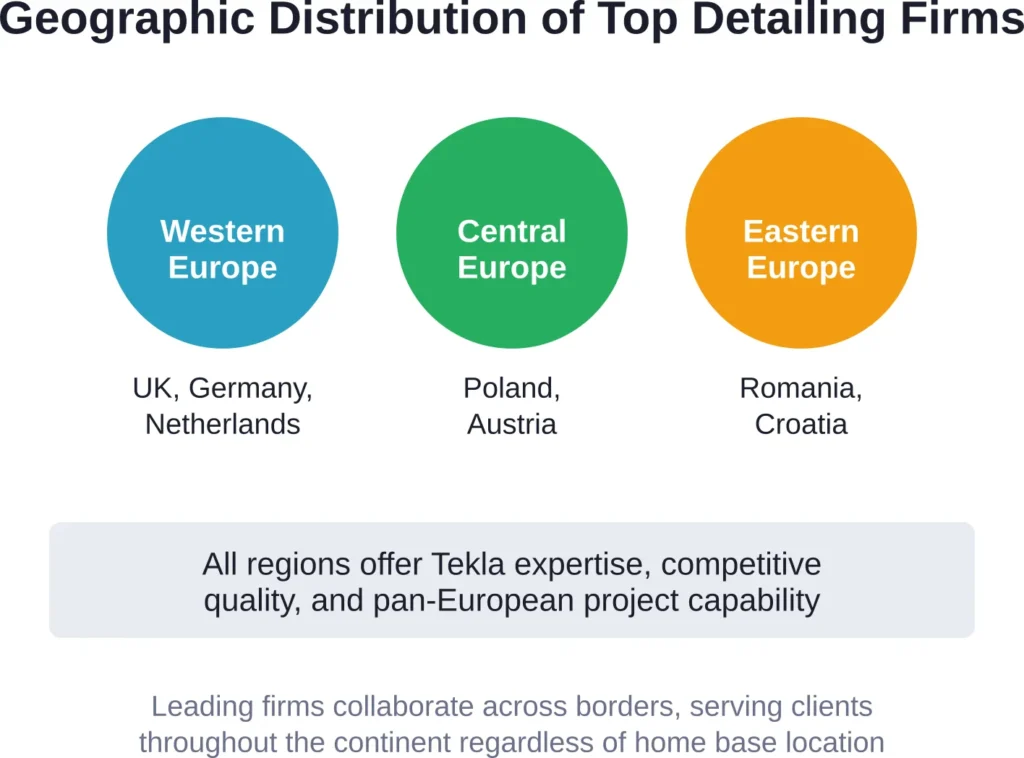
Geographic considerations matter too. Some clients prefer local detailers who understand regional construction practices and can visit sites easily. Others prioritize technical capability regardless of location, working with firms across borders through digital collaboration.
Europe’s Top 11 Structural Steel Detailing Companies
The following section profiles structural steel detailing firms operating in Europe. Each brings strengths and capabilities to various project types.
1. Powerkh

Powerkh is a UK-based BIM and VDC consultancy with offices in the United States and Ukraine, providing structural steel detailing and BIM coordination services for projects across Europe. The company works with contractors, fabricators, engineers, and consultants on commercial, industrial, and mixed-use developments that require fabrication-ready steel models, shop drawings, and coordination between structural, architectural, and MEP systems.
Powerkh uses Autodesk Revit, Tekla, and Navisworks to support structural steel detailing, clash detection, constructability review, and project coordination during design and construction stages. The company also provides scan-to-BIM services, point cloud modelling, and support for renovation and existing building projects. Their work focuses on accurate detailing, coordination between disciplines, and providing clear fabrication information for project teams and steel contractors.
Contact Information:
- Website: www.powerkh.com
- Email: [email protected]
- Facebook: www.facebook.com/100064039650167
- LinkedIn: www.linkedin.com/company/powerkh
- Instagram: www.instagram.com/powerkh_com
- Address: 3, Lavinia Walk, Taw Hill, Swindon SN25 1AP
- Phone: +44 7490 426678
2. Steelarch Designers

Steelarch Designers has established a strong reputation across Europe for delivering high-quality steel detailing services that emphasize precision, efficiency, and cutting-edge technology. The company positions itself as a reliable partner for architects, structural engineers, steel fabricators, and construction companies throughout the continent.
Their service portfolio spans comprehensive steel detailing and drafting, 3D modeling, shop drawings, and erection plans. Steelarch brings extensive experience and technical proficiency to every project, with particular strength in coordinating complex multi-stakeholder workflows.
The firm leverages advanced software platforms to ensure accuracy and maintains robust quality control procedures. Their client base includes major commercial, industrial, and infrastructure projects across multiple European countries.
3. Prozteel Design Solutions

Prozteel has carved out a niche by focusing on cost-effective, accurate detailed fabrication and erection drawings delivered on tight timelines. The company prides itself on quality, timely delivery, and open communication with clients—principles that resonate strongly with fabricators and contractors working under pressure.
Their structural steel detailing and drafting services cover industrial, commercial, and institutional projects. Prozteel emphasizes the importance of producing drawings that serve as definitive guiding documents for fabricators, with every minute detail clearly specified.
The firm’s approach centers on understanding that steel detailing functions as shop drawing documentation—layout instructions that guide fabricators through cutting, welding, and building steel frameworks for construction projects. This fabricator-centric perspective informs their entire workflow.
4. TJ Steel Detailers

TJ Steel Detailers is a detailing firm with experience across multiple markets and project types.
Their expertise spans the full spectrum of structural steel detailing requirements. TJ Steel Detailers emphasizes that selecting the right detailing company ranks among the most important decisions on any steel-intensive project—a philosophy that drives their quality standards and client service approach.
The firm maintains rigorous criteria for project execution and has documented clear red flags that indicate when a detailing partner won’t meet expectations. This transparency and industry knowledge make them a trusted advisor as well as a service provider.
5. CAD Crowd Steel Detailing Division

CAD Crowd operates a steel detailing service offering that connects clients with detailing professionals.
The company maintains standards for CAD drafting and steel detailing quality, ensuring that projects receive appropriate expertise regardless of size or complexity. Their network includes specialists in various software platforms and project types.
CAD Crowd’s approach appeals to clients who want access to top-tier talent without maintaining large in-house teams. The platform facilitates coordination, quality control, and project management while leveraging distributed expertise.
6. Tekla Structures Specialists – Ireland Operations
Detailing firms operate from Ireland, and industry discussions mention Tekla Structures expertise. These companies have become go-to partners for complex commercial and infrastructure projects.
Irish-based detailers benefit from English language proficiency, strong technical education systems, and geographic positioning that facilitates work across European time zones. Many maintain offices or partnerships in continental Europe to support local coordination.
Irish-based detailing firms offer services to European clients.
7. Romanian Steel Detailing Firms
Romania has emerged as a significant hub for structural steel detailing services in Europe. The country combines strong technical education, competitive operational costs, and growing expertise in advanced software platforms.
Romanian detailing companies serve clients across Western Europe, offering full-service capabilities from preliminary modeling through final shop drawings. Many have invested heavily in Tekla Structures training and BIM integration, positioning themselves as technology-forward partners.
Romanian detailing firms operate in the European market offering services across multiple project types.
8. German Precision Detailing Houses
German structural steel detailing companies emphasize precision and engineering standards in their services.
German firms excel at complex industrial projects, large-scale commercial structures, and infrastructure work where precision and coordination are paramount. They typically maintain close relationships with local fabricators and understand regional material specifications and construction practices intimately.
These companies often serve as the detailing partner of choice for major architectural and engineering firms on flagship projects. Their thoroughness and attention to detail command premium positioning in the market.
9. UK-Based Detailing Networks
Structural steel detailing companies operate in the United Kingdom serving various European projects. UK firms bring strong project management capabilities, extensive fabricator relationships, and deep experience across diverse project types.
British detailing companies have adapted to serve pan-European projects, maintaining coordination capabilities across languages and jurisdictions. Many have established partnerships or subsidiaries in EU countries to facilitate continued seamless collaboration.
UK detailers are particularly strong in commercial high-rise structures, complex facade systems, and heritage renovation projects where steel frameworks integrate with existing structures.
10. Polish Technical Detailing Groups

Poland’s steel detailing sector includes companies offering services across multiple European projects. Polish firms combine technical education, competitive positioning, and increasingly sophisticated software expertise.
These detailing groups serve a wide range of European clients, particularly in Central and Eastern Europe but increasingly across the continent. Their portfolios include industrial facilities, commercial buildings, and infrastructure projects.
Polish companies have invested in quality systems and certifications to compete for larger, more complex assignments. The sector continues to develop, attracting young technical talent and expanding service offerings.
11. Netherlands Engineering & Detailing Practices
Dutch structural steel detailing firms benefit from the Netherlands’ strong engineering culture and strategic European location. These companies excel at technically complex projects and maintain sophisticated digital workflows.
Netherlands-based detailers often work on cutting-edge architectural projects, infrastructure systems, and industrial facilities requiring advanced coordination. Their multilingual capabilities and European network positioning make them effective partners for international projects.
Dutch firms emphasize BIM integration, sustainability considerations, and whole-lifecycle thinking in their detailing work. They frequently collaborate with top-tier architectural and engineering practices on award-winning structures.
Understanding Steel Detailing Services and Deliverables
To evaluate detailing companies effectively, it helps to understand exactly what they deliver and how those deliverables fit into the construction workflow.
Steel detailing services produce detailed drawings that serve as guiding documents for fabricators. These aren’t the structural engineering calculations or load analysis—those come earlier in the design process. Detailing translates engineering intent into fabrication reality.
Core Deliverables
Shop drawings form the heart of steel detailing output. These comprehensive documents show every piece of steel, every connection, every bolt, every weld. Fabricators use shop drawings to program cutting equipment, plan welding sequences, and organize material procurement.
Erection drawings provide the roadmap for site assembly. They show how prefabricated steel components fit together, specify installation sequences, and identify temporary bracing requirements. Erection crews rely on these drawings to build structures safely and efficiently.
3D models increasingly complement traditional 2D drawings. Built in software like Tekla Structures, these models enable clash detection, coordination with other trades, and automated drawing generation. They also serve as the foundation for BIM workflows that connect design, fabrication, and construction.
Material lists and bolt lists extract from the detailed model, providing purchasing and tracking documentation. Connection details zoom in on complex joints, showing exactly how steel members connect. Anchor bolt plans coordinate with concrete work, ensuring proper embedment locations.
The Detailing Process
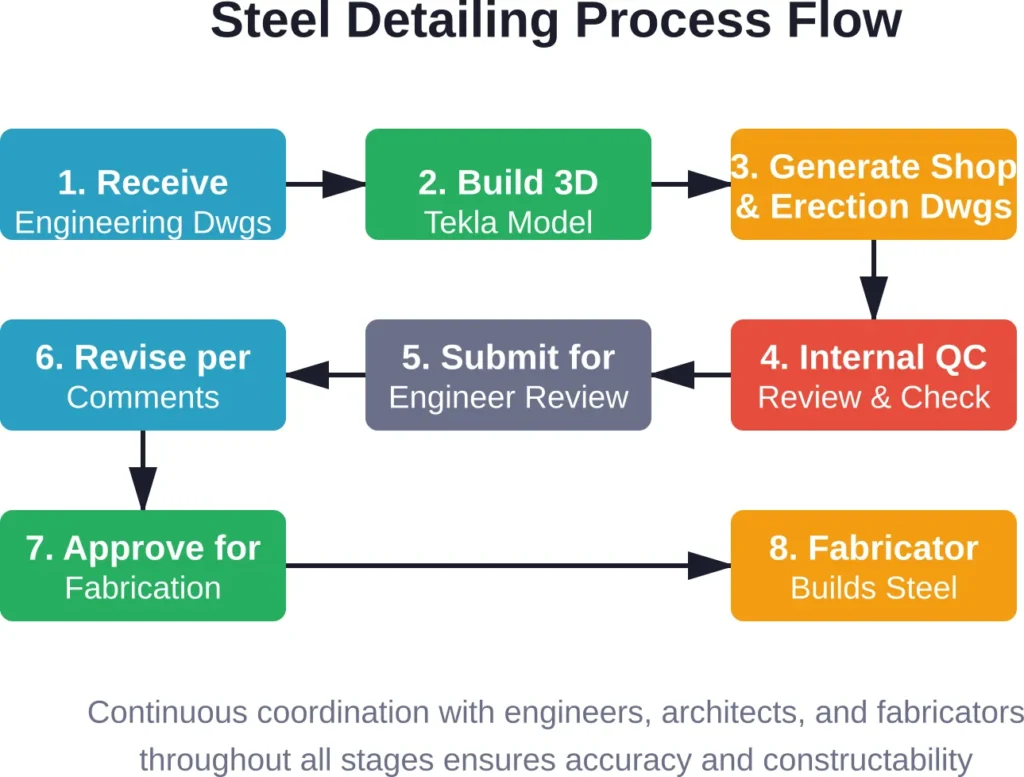
Most structural steel detailing projects follow a similar workflow. The process starts when detailers receive structural engineering drawings, architectural plans, and coordination information from mechanical, electrical, and other trades.
Detailers build a 3D model of the steel framework in Tekla or similar software, incorporating all structural members, connections, and details. This model becomes the single source of truth for the project.
From the model, detailers generate shop drawings for fabrication and erection drawings for site assembly. These go through internal quality checks before being submitted to the engineer of record and the steel fabricator for review.
The review process typically generates questions, comments, and requested revisions. Detailers address these, update the model and drawings, and resubmit. This cycle repeats until all parties approve the documents for fabrication.
Throughout the project, detailers coordinate with architects, engineers, fabricators, and general contractors. They attend coordination meetings, respond to RFIs, and issue revised drawings as the design evolves.
| Service Component | Purpose | Primary Users |
|---|---|---|
| Shop Drawings | Detailed fabrication instructions for every steel piece | Steel fabricators, welders, CNC operators |
| Erection Drawings | Assembly sequences and connection locations | Erection crews, site supervisors |
| 3D BIM Models | Coordination, clash detection, automated extraction | All project stakeholders |
| Connection Details | Specific welding and bolting specifications | Fabricators, inspectors, engineers |
| Material Lists | Procurement and tracking documentation | Fabricators, purchasing departments |
Software Expertise That Matters
Software capability separates competent detailing firms from exceptional ones. The right tools enable accuracy, efficiency, and seamless coordination.
Tekla Structures dominates the European structural steel detailing market. This BIM software allows detailers to create intelligent 3D models from which all drawings and lists automatically generate. Changes to the model propagate through all associated drawings, reducing errors and streamlining revisions.
Tekla’s strength lies in its steel-specific intelligence. The software understands connections, materials, and fabrication constraints. It can automatically detail standard connections, check for clashes, and generate CNC files for automated fabrication equipment.
The best detailing companies employ Tekla-certified professionals who understand not just how to operate the software but how to leverage its capabilities fully. They maintain extensive custom component libraries, standardized modeling practices, and quality check routines within Tekla.
AutoCAD remains relevant for certain applications, particularly when coordinating with architectural or civil engineering teams using Autodesk platforms. Top detailing firms maintain proficiency across multiple software ecosystems.
BIM Integration
Building Information Modeling has transformed how steel detailing integrates with the broader construction process. BIM workflows connect architects, engineers, detailers, fabricators, and contractors through shared digital models.
Leading detailing companies embrace BIM collaboration, working in Tekla while coordinating with Revit, Navisworks, and other platforms. They export and import IFC files, participate in federated model coordination, and contribute to clash detection processes.
This integration catches problems early—before steel gets fabricated, before conflicts reach the field. The coordination effort pays dividends in reduced rework, faster construction, and fewer surprises.
Project Types and Specializations
Different detailing companies develop expertise in particular project categories. Understanding these specializations helps match the right firm to specific needs.
Commercial Construction
Commercial buildings—offices, retail, mixed-use developments—form a large portion of structural steel detailing work. These projects typically feature repetitive framing systems, standardized connections, and coordination with architectural curtain walls.
Detailers specializing in commercial work excel at efficiency. They develop template systems for typical floors, maintain libraries of standard details, and streamline the coordination between structural steel and architectural enclosures.
High-rise construction adds complexity with increased loading, more sophisticated connections, and tight tolerances. The best high-rise detailers understand erection sequences, temporary stability requirements, and the critical path implications of steel delivery and installation.
Industrial Facilities
Industrial projects—manufacturing plants, warehouses, processing facilities—demand different expertise. These structures often feature heavy loading, large clear spans, and integration with process equipment.
Industrial detailing requires understanding of crane systems, equipment support structures, and the specialized connections these applications demand. Detailers must coordinate with mechanical and process engineers more extensively than on typical commercial projects.
Material handling systems, conveyor supports, and equipment platforms add layers of complexity. The best industrial detailers bring fabrication and erection experience that informs constructability decisions.
Infrastructure and Bridges
Infrastructure projects—bridges, transit structures, pedestrian systems—represent some of the most technically demanding steel detailing work. Complex geometries, high loads, stringent quality requirements, and public safety implications raise the stakes.
Bridge detailing demands specialized knowledge of connection types, fatigue considerations, and fabrication tolerances that differ from building structures. Detailers must understand camber calculations, field splices, and the unique erection methods bridges require.
Infrastructure detailers frequently work with structural engineers throughout the design process, providing fabrication and erection input that influences the engineering. This collaborative approach produces better outcomes than strictly sequential workflows.
Institutional Projects
Institutional work—schools, hospitals, government buildings—often combines commercial framing with specialized requirements for mechanical systems, seismic design, or security considerations.
These projects typically emphasize thorough coordination and extensive documentation. Detailers must navigate more stakeholders, more stringent approval processes, and more detailed review requirements than typical commercial work.
Quality Control and Accuracy Standards
Quality separates adequate detailing from exceptional work. The cost of errors is too high—fabrication rework, site delays, safety risks, and relationship damage.
Leading detailing companies implement multi-stage checking procedures. A different detailer reviews the work before it leaves the firm. Some companies employ dedicated checkers who do nothing but quality control.
These checks cover dimensional accuracy, connection feasibility, material specifications, and coordination with architectural and MEP elements. Checkers verify that drawings follow company standards and contractual requirements.
Many firms use automated checking tools within Tekla that flag common errors—missing bolts, impossible geometries, non-standard materials. These tools catch mechanical mistakes that human reviewers might miss.
Error Tracking and Continuous Improvement
The best companies track error rates and analyze root causes. When mistakes slip through, they conduct reviews to understand what failed and how to prevent similar issues.
This discipline creates learning organizations that continuously improve. Standards libraries get updated, checking procedures get refined, and training addresses recurring gaps.
Some firms share error metrics with clients, demonstrating transparency and commitment to quality. This builds trust and differentiates them from competitors who hide problems.
Communication and Collaboration
Technical capability alone doesn’t make a great detailing partner. Communication determines whether projects run smoothly or devolve into frustration.
The best detailing companies establish clear communication protocols at project start. They define who talks to whom about what, how RFIs get processed, and what constitutes an urgent issue requiring immediate attention.
Regular coordination meetings keep everyone aligned. Detailers present progress, flag upcoming challenges, and coordinate with other trades. These sessions catch problems early when solutions are easier and cheaper.
Responsiveness matters enormously. When fabricators have questions or engineers need clarification, delays create cascading schedule impacts. Top detailers prioritize quick turnaround on communications.
Working Across Borders and Languages
European projects often involve stakeholders from multiple countries speaking different languages. The best detailing firms navigate this complexity smoothly.
Many employ multilingual staff or maintain offices in multiple countries. They understand local construction practices, material availability, and regulatory requirements across European markets.
Cultural intelligence complements language capability. Effective detailers adjust communication styles, meeting structures, and documentation formats to match client preferences across different national contexts.
Red Flags to Watch For
Certain warning signs indicate a detailing company won’t meet expectations. Recognizing these early saves headaches later.
Vague responses about quality control procedures suggest the firm lacks robust systems. If they can’t clearly explain how they check work before submission, errors will likely reach clients and fabricators.
Reluctance to provide references or examples of similar work raises concerns. Reputable firms eagerly share portfolios and connect potential clients with satisfied customers.
Unrealistic promises about turnaround times often indicate the firm will miss deadlines or sacrifice quality to meet aggressive schedules. If the timeline sounds too good compared to other quotes, it probably is.
Poor communication during the sales process predicts worse problems during project execution. If getting clear answers is difficult before signing a contract, expect the same frustrations throughout the engagement.
Outdated software or lack of BIM capability limits coordination effectiveness. Firms still working primarily in 2D AutoCAD can’t participate fully in modern integrated project delivery.
Making the Selection Decision
With the landscape clarified and options identified, how should teams choose their structural steel detailing partner?
Start by defining project-specific requirements. What’s the project type? What level of complexity? What are the critical path implications of detailing timing? What coordination challenges are anticipated?
Evaluate candidates against the non-negotiable criteria: software expertise, relevant project experience, quality control systems, and communication capability. Request specific examples of similar work.
Check references thoroughly. Talk to fabricators who’ve used the drawings, engineers who’ve reviewed submissions, and general contractors who’ve worked with the firm on site.
Consider the relationship model that fits the project. Some situations benefit from local detailers who can visit the site easily. Others prioritize pure technical capability regardless of location.
Review proposed team members specifically. Who will actually work on the project? What’s their experience level? How loaded is their schedule?
Trust is earned over time, but initial impressions matter. Does the firm ask good questions about the project? Do they acknowledge challenges honestly? Do they demonstrate understanding of fabrication and erection implications?
| Evaluation Factor | What to Look For | Red Flags |
|---|---|---|
| Portfolio | Similar projects, diverse complexity, recent work | Vague descriptions, no verifiable examples, outdated projects |
| References | Enthusiastic recommendations, specific praise, multiple sources | Reluctance to provide contacts, lukewarm responses, negative feedback |
| Quality Systems | Multi-stage checks, error tracking, documented procedures | Can’t explain QC process, defensive about mistakes, no formal checks |
| Communication | Clear protocols, responsive, proactive updates | Slow responses, unclear processes, language barriers |
| Technology | Current software, BIM capability, automation tools | Outdated platforms, 2D-only workflow, no coordination capability |
Frequently Asked Questions
Structural engineers design the steel framework, performing load calculations, sizing members, and specifying connection types to ensure the structure meets strength and safety requirements. Steel detailers take those engineering designs and produce the detailed shop drawings, erection plans, and 3D models that fabricators and erectors use to physically build the framework. Detailing translates engineering intent into fabrication-ready documentation.
Timeframes vary significantly based on project size and complexity. A small commercial building might require 2-3 weeks for initial submissions, while a large complex structure could take several months. The process isn’t linear—it involves multiple submission and revision cycles as engineers review drawings and design refinements occur. Leading detailing firms provide realistic schedules during project planning and communicate proactively when changes impact timing.
Tekla Structures offers steel-specific intelligence that generic CAD or BIM platforms lack. It understands connections, materials, and fabrication processes natively. The software enables 3D modeling from which all drawings and lists automatically generate, ensuring consistency and streamlining revisions. Tekla’s strong presence in Europe, extensive training resources, and integration with fabrication equipment have made it the de facto standard across the continent.
Both approaches have merit. Local detailers offer easier site visits, familiarity with regional construction practices, and often smoother communication. However, many projects benefit from selecting the best technical capability regardless of location—modern collaboration tools make distance less relevant than they once were. Consider project complexity, coordination requirements, and whether local knowledge provides meaningful advantages for your specific situation.
Common error sources include incomplete or unclear engineering input, poor coordination with architectural and MEP elements, rushed schedules that skip proper checking, and detailers who lack fabrication and erection experience. The best detailing companies mitigate these risks through multi-stage quality control, proactive coordination, realistic scheduling, and employing staff with well-rounded construction knowledge beyond pure drafting skills.
Pricing models vary—some firms charge per ton of steel detailed, others use hourly rates, and some provide lump sum quotes for entire projects. Each approach has advantages depending on project characteristics. Rather than focusing primarily on cost, evaluate the total value proposition including accuracy, speed, coordination capability, and revision responsiveness. The cheapest option often proves most expensive when errors require fabrication rework or site delays occur.
Building Information Modeling transforms steel detailing from an isolated activity into an integrated process. BIM workflows connect architects, engineers, detailers, fabricators, and contractors through shared digital models. This enables clash detection before fabrication, better coordination with other building systems, and automated quantity extraction. Leading detailing firms work within BIM environments, contributing steel models to federated coordination models and participating in virtual design and construction processes.
The Path Forward
Selecting a structural steel detailing partner ranks among the most consequential decisions on steel-intensive construction projects. The right firm brings technical expertise, fabrication knowledge, quality discipline, and collaborative spirit that elevate project outcomes.
Europe offers excellent detailing resources across the continent. From established Western European firms to emerging Eastern European companies, capable partners exist to serve every project type and complexity level.
The key is matching specific project needs with firm capabilities. Take time to evaluate software expertise, review portfolios thoroughly, check references with fabricators and engineers, and assess quality control systems. Watch for red flags that predict problems, and trust initial impressions about communication and professionalism.
The ten companies profiled here represent strong options, each bringing proven track records and specialized strengths. But dozens of other capable firms operate throughout Europe. The evaluation framework matters more than any specific recommendation.
Steel detailing quality ripples through every downstream activity—fabrication efficiency, erection safety, schedule performance, and ultimate structural integrity. Investing effort in partner selection pays dividends throughout the project lifecycle and into the building’s operational life.
Start conversations early, before detailing becomes critical path. Build relationships with firms whose capabilities, culture, and communication style align with project requirements. The best detailing partnerships develop over multiple projects as trust builds and teams learn to work together efficiently.
For teams embarking on structural steel projects across Europe, the detailing partner decision deserves serious attention. Done right, it sets the foundation for successful fabrication, smooth erection, and structures built to last.