

Quick Summary: The top residential design companies in the USA combine architectural excellence with sustainable innovation. This curated list showcases 11 leading firms recognized by industry authorities including AIA and Forbes for producing notable residential work that balances aesthetic vision, environmental responsibility, and client-focused design across diverse project scales and regional contexts.
Finding the right residential design company can transform not just a house, but how people experience daily life within their homes. The architecture profession continues evolving despite challenges—architectural services employment increased, with 300 positions added in August according to AIA data, while the American Institute of Architects notes the AIA/Deltek Architecture Billings Index score for November 2025 was 45.3, marking the 13th consecutive month of declining billings.
But these market conditions haven’t dimmed the creative output of America’s best residential architects.
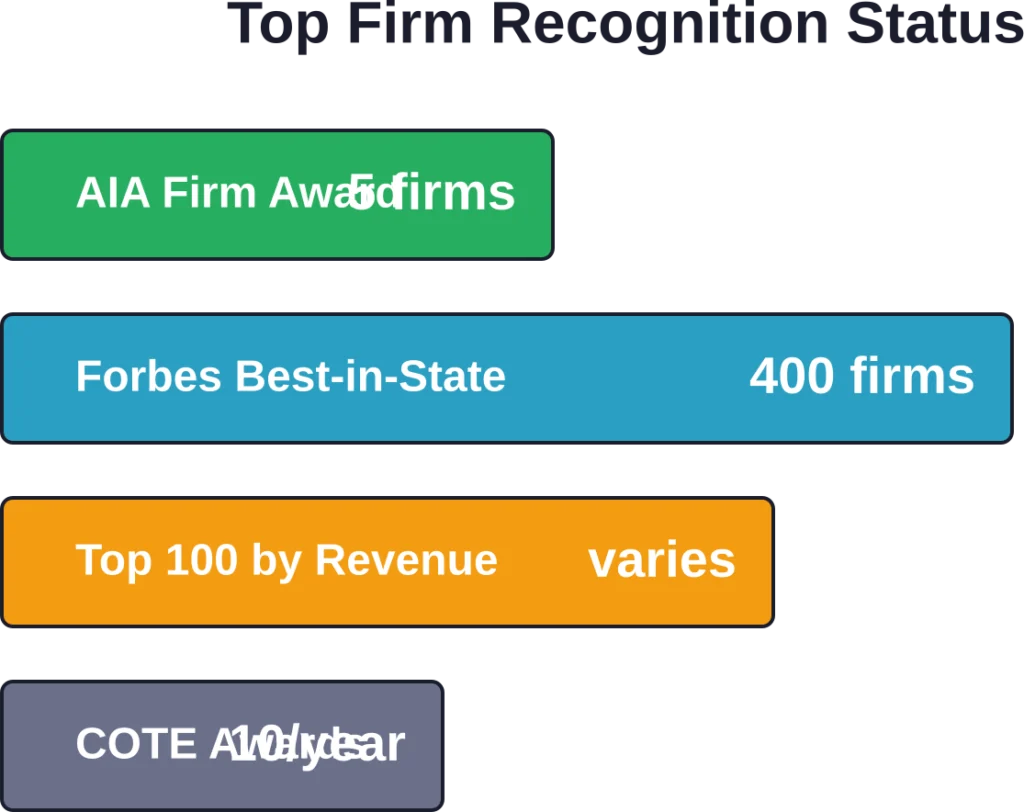
Forbes released its inaugural Best-in-State Residential Architects list in 2025, evaluating firms through a rigorous nationwide process. The American Institute of Architects annually awards its Architecture Firm Award to recognize firms that have produced notable architecture for at least a decade—placing honorees alongside past recipients like Ehrlich Architects, Eskew+Dumez+Ripple, and Tod Williams Billie Tsien Architects.
What separates exceptional residential design companies from the rest? It comes down to three core factors: proven design excellence over sustained periods, commitment to environmental stewardship, and ability to translate client visions into built reality.
What Defines Excellence in Residential Architecture
The best residential design firms share common characteristics that distinguish their work. They integrate innovative regenerative strategies within broader design concepts—an approach championed by the AIA Committee on the Environment through its annual COTE Top Ten awards.
These companies don’t just follow trends. They create environments that put people and the planet first, using design as a tool for change. Resilient design has become central to architectural practice, drawing on global insights about climate resilience, sustainable development, and infrastructure adaptation.
Top firms also maintain diverse teams with perspectives that mirror the communities they serve. This diversity supports more inclusive, innovative approaches to residential challenges.

The 11 Leading Residential Design Companies

1. Powerkh
Powerkh is a UK-based BIM and VDC consultancy with offices in the United States and Ukraine, supporting residential design and construction teams across the USA. The company provides BIM modelling, architectural visualization, Scan to BIM, and coordination services for residential developments, including single-family housing, apartment buildings, and mixed-use residential projects. Their work focuses on improving coordination between architectural, structural, and MEP systems during design and construction stages.
Powerkh uses Autodesk Revit, Navisworks, and point cloud-based workflows to support residential project coordination, clash detection, constructability review, and existing conditions modelling. The company also provides 3D renderings, shop drawings, as-built modelling, and BIM support for renovation and new-build residential projects. Their approach is focused on accurate modelling, practical coordination, and helping project teams manage design information throughout the project lifecycle.
Contact Information:
- Website: www.powerkh.com
- Email: [email protected]
- Facebook: www.facebook.com/100064039650167
- LinkedIn: www.linkedin.com/company/powerkh
- Instagram: www.instagram.com/powerkh_com
- Address: 3, Lavinia Walk, Taw Hill, Swindon SN25 1AP
- Phone: +44 7490 426678

2. Gensler
For the sixth consecutive year, Gensler commanded the top position among U.S. architecture firms by revenue in 2025. While known for large commercial projects, their residential studio brings the same comprehensive approach to high-end homes and mixed-use developments.
The firm’s strength lies in integrating architecture with interior design, planning, and consulting services under one roof. This interdisciplinary model allows seamless coordination across project phases.

3. Perkins&Will
Maintaining second place in national rankings, Perkins&Will has earned recognition for sustainable design leadership. The firm’s residential work emphasizes environmental performance without compromising aesthetic ambition.
Their projects demonstrate how regenerative strategies can be woven into broader design narratives—creating homes that actively contribute to ecological health rather than simply minimizing harm.

4. LPA Design Studios
The 2025 AIA Architecture Firm Award winner, LPA Design Studios ranked 28th nationally with $152 million in architecture revenue. This recognition places them among an elite group of firms honored for sustained design excellence.
LPA’s residential portfolio showcases innovative approaches to density, sustainability, and community integration. Their work proves exceptional design doesn’t require unlimited budgets.

5. Quinn Evans
The 2024 AIA Architecture Firm awardee, Quinn Evans specializes in preservation-focused residential design. They excel at adapting historic structures for contemporary living while respecting original architectural character.
This firm understands that sustainable design often means thoughtfully reusing existing buildings rather than defaulting to new construction.

6. Skidmore, Owings & Merrill (SOM)
SOM brings together architects, designers, engineers, and planners in an integrated practice model. While their skyscrapers dominate headlines, the residential division applies the same technical rigor to homes.
Their interdisciplinary approach mirrors educational partnerships—SOM collaborated with Cal Poly architecture and architectural engineering students on complex design challenges, demonstrating commitment to nurturing future talent.

7. Miró Rivera Architects
Based in Austin, Miró Rivera gives environmental and cultural contexts utmost respect across project scales. From public infrastructure to intimate residential commissions, they adapt design responses to specific site conditions.
The firm’s residential work demonstrates mastery of material, light, and spatial sequence—creating homes that feel simultaneously grounded and transcendent.

8. Ehrlich Architects
Past recipient of the AIA Architecture Firm Award, Ehrlich Architects maintains a residential focus that explores the relationship between built form and landscape. Their California-based practice has influenced sustainable residential design nationwide.
Ehrlich’s homes integrate seamlessly with topography, climate, and vegetation—blurring boundaries between interior and exterior spaces.

9. Tod Williams Billie Tsien Architects
Another AIA Firm Award honoree, this New York partnership is known for intensely crafted residential work. Every detail receives careful consideration, resulting in homes that reward sustained attention.
Their design process emphasizes direct client collaboration, ensuring each project reflects specific needs, preferences, and aspirations rather than imposing a house style.

10. Eskew+Dumez+Ripple
This New Orleans firm earned AIA Firm Award recognition for work deeply engaged with regional context. Their residential projects respond to Gulf Coast climate challenges while celebrating local building traditions.
Post-Hurricane Katrina recovery work shaped their approach to disaster resilience—demonstrating how design and community engagement strengthen both buildings and neighborhoods.

11. LMN Architects
According to industry rankings, LMN Architects was among top firms previously. While known for technical innovation in residential design, their current residential specialization should be verified.
The firm’s collaborative culture ensures mechanical, structural, and environmental considerations inform design from initial concepts through construction completion.
How These Firms Approach Residential Projects
Top residential design companies share common methodologies despite stylistic differences. They begin with thorough site analysis—understanding topography, solar orientation, prevailing winds, vegetation, views, and neighborhood context before sketching a single line.
Client engagement happens throughout the design process, not just at the beginning and end. Regular working sessions ensure the emerging design aligns with how occupants actually want to live.
Sustainability gets integrated from concept development rather than added as an afterthought. Passive strategies—building orientation, natural ventilation, daylighting, thermal mass—form the foundation, with active systems complementing rather than replacing these fundamentals.
Material selection balances aesthetic goals with environmental impact, durability, maintenance requirements, and local availability. The best firms specify materials that age gracefully rather than demanding constant intervention.
What to Consider When Selecting a Design Firm
Portfolio review should go beyond pretty pictures. Look for evidence the firm has successfully completed projects similar in scale, budget, and complexity to what’s being planned. Geographic experience matters—firms familiar with local climate, building codes, and construction practices navigate challenges more efficiently.
Award recognition provides useful signals but shouldn’t be the only criterion. A firm’s most recent honors matter more than accolades from decades ago. Forbes’ rigorous evaluation process and AIA’s selective awards identify current excellence.
Communication style deserves attention. Residential projects require ongoing collaboration over months or years. Chemistry between client and architect significantly impacts both process and outcome.
| Selection Factor | Why It Matters | How to Evaluate |
|---|---|---|
| Relevant Experience | Similar projects reduce learning curve | Review portfolio for comparable scale/type |
| Regional Knowledge | Understanding local context and codes | Ask about local project history |
| Sustainability Credentials | Demonstrates environmental commitment | Look for AIA COTE awards or similar |
| Communication Approach | Ensures smooth collaboration | Interview process reveals working style |
| Team Structure | Identifies who actually works on project | Meet the team, not just principals |
The Future of Residential Design
Climate resilience dominates forward-looking architectural discussions. World Bank leadership emphasizes that sustainable development and infrastructure must address climate adaptation across all building types, including residential.
The Federal Reserve’s December 10 interest rate adjustment—lowering rates by 0.25 basis points to the 3.50% to 3.75% range—aims to support economic activity as the Fed works toward its 2% inflation target. These economic conditions will shape residential design opportunities through 2026.
Regenerative design approaches are moving from niche to mainstream. Rather than simply doing less harm, architects increasingly ask how homes can actively restore ecological systems.
But trends come and go. What remains constant is that exceptional residential architecture begins with understanding how people want to live, respecting the environments where buildings sit, and possessing the technical skill to realize ambitious visions within real-world constraints.
Frequently Asked Questions
Residential design companies focus on architectural planning, spatial design, and creative problem-solving. They develop drawings and specifications that builders then execute. Builders handle construction itself—coordinating trades, managing materials, and physically constructing the home. Many projects involve both: architects design, builders build, though some architects offer design-build services integrating both functions.
Timeline varies dramatically based on project complexity. Simple renovations might take 2-3 months for design development. Custom homes typically require 4-6 months for complete design documentation before construction begins. Complex projects with extensive site challenges, multiple regulatory approvals, or highly customized systems can extend 8-12 months in design phases alone.
Not necessarily. While many prestigious firms handle high-end residential work, several including LPA Design Studios have earned recognition for projects across budget ranges. Award-winning design doesn’t require unlimited resources—it requires thoughtful problem-solving. Some firms specialize in accessible, sustainable design that proves good architecture serves all economic levels.
This award represents the American Institute of Architects’ highest firm honor, recognizing practices that have produced notable architecture consistently for at least a decade. Selection criteria emphasize design excellence, innovation, and contribution to the profession. Only one firm receives this award annually, making it extremely selective. Past honorees include Ehrlich Architects, Eskew+Dumez+Ripple, and Tod Williams Billie Tsien Architects.
Increasingly essential. Building performance affects long-term operating costs, occupant health, and environmental impact. Firms with AIA COTE awards or similar recognition demonstrate proven expertise integrating sustainable strategies. Even clients not prioritizing environmental goals benefit from architects who understand passive design, daylighting, natural ventilation, and energy efficiency—these create more comfortable, economical homes regardless of motivation.
Both approaches work, with tradeoffs. Local firms understand regional climate, building codes, contractor capabilities, and permitting processes—potentially streamlining the project. Distant firms require architectural licensure in the project state and may need local consultants. However, if a non-local firm has perfect expertise for specific needs, geography shouldn’t automatically disqualify them. Many top firms maintain multi-state licenses and remote collaboration tools make distance less limiting than previously.
Architects handle building structure, spatial layout, building systems, code compliance, and exterior design. They’re licensed to stamp construction documents for permitting. Interior designers focus on interior finishes, furnishings, lighting, color, and decorative elements—though some hold architectural degrees. The American Society of Interior Designers notes both professions can overlap in residential work. Many top architecture firms include interior design studios, providing integrated services throughout the project.
Choosing Excellence in Residential Design
The residential design companies featured here represent diverse approaches unified by commitment to design excellence. Whether pursuing AIA recognition, Forbes honors, or simply creating exceptional homes for clients, these firms demonstrate that great architecture balances vision with pragmatism.
Economic conditions remain challenging—architecture firm billings stayed below growth thresholds through late 2025. Yet talented architects continue producing innovative work that enriches how people experience daily life.
Selecting the right residential design partner requires looking beyond surface aesthetics to evaluate experience, process, values, and communication approach. The firm that’s perfect for one client may not suit another, even if both seek excellent design.
Start by reviewing portfolios of firms that have earned industry recognition. Schedule interviews to understand working styles. Ask detailed questions about similar projects, team structure, and design philosophy. The investment in finding the right match pays dividends throughout the design and construction process—and for decades of living in the resulting home.