

Quick Summary: The best Umbraco web development companies combine deep CMS expertise with strategic digital transformation capabilities. This guide profiles 15 leading agencies—including Lengreo, Gilzor, OSKI Solutions, A-listware, Mobian Studio, Moriyama, Bonsai Media Group, CTI Digital, Diagram, twoday, Webwonders, iO, New Orange, Crumpled Dog, and Lightburn—recognized for their technical excellence, community contributions, and successful enterprise implementations across diverse industries.
Choosing the right Umbraco development partner can transform your digital presence. But here’s the thing—not all agencies bring the same depth of expertise, technical capabilities, or strategic vision to the table.
The Umbraco ecosystem includes hundreds of certified partners worldwide. Some specialize in enterprise implementations, others excel at mid-market solutions, and a select few consistently push the boundaries of what’s possible with this flexible CMS platform.
This guide cuts through the noise. We’ve analyzed official Umbraco partner certifications, examined real project portfolios, and identified agencies with proven track records in delivering scalable, high-performance solutions.
What Makes an Exceptional Umbraco Development Agency
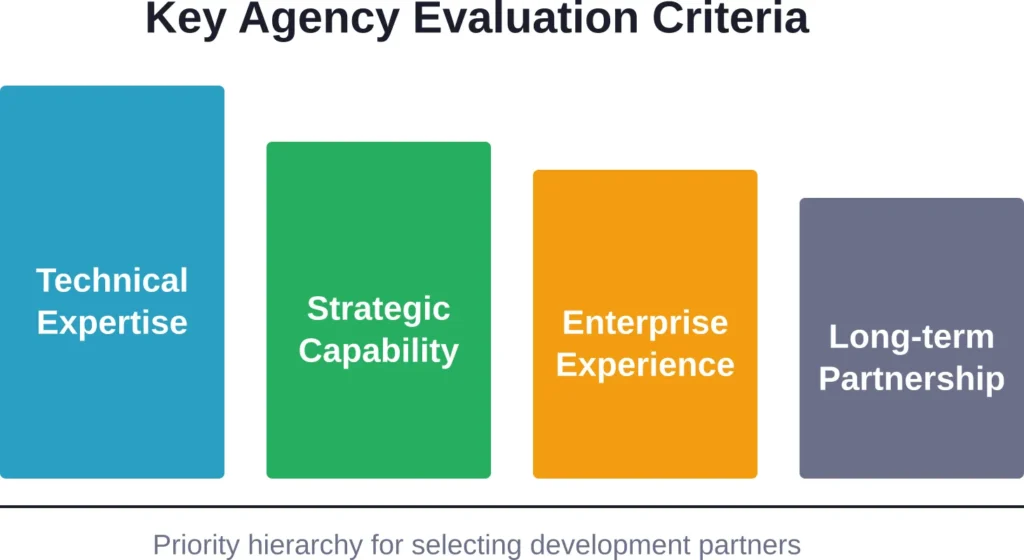
Real talk: certification badges don’t tell the whole story. The strongest Umbraco partners share several distinguishing characteristics that separate them from average service providers.
Technical depth matters. Top agencies maintain teams of certified Umbraco developers who contribute actively to the core platform and community ecosystem. They don’t just use Umbraco—they help shape its evolution through code contributions, package development, and documentation improvements.
Strategic capabilities extend beyond coding. The best agencies approach projects holistically, combining UX research, content strategy, digital marketing expertise, and technical architecture. They understand that successful implementations require more than technical execution.
Enterprise experience counts. Agencies working with large organizations navigate complex requirements: multi-site architectures, advanced personalization, integration with existing enterprise systems, and stringent security protocols. This experience translates into more robust solutions for projects of any size.
Partnership longevity indicates success. Strong Umbraco agencies maintain long-term client relationships, providing ongoing support, optimization, and strategic guidance years after initial launch. They view projects as the beginning of partnerships, not transactional engagements.
Top 15 Umbraco Web Development Companies
These agencies represent the strongest Umbraco partners operating in 2026. Each brings distinct strengths, but all share demonstrated excellence in delivering successful Umbraco implementations.
1. Oski
Oski stands out as a specialized Umbraco development partner delivering enterprise-grade CMS solutions with modern technology stacks. This agency focuses on building scalable, high-performance websites and digital platforms using Umbraco as the core content management system.
Their full-stack expertise sets them apart. Oski combines Umbraco implementations with advanced frontend frameworks, cloud architecture, and custom integrations, creating seamless digital experiences that align with business goals.
Strong technical delivery defines their approach. The team excels at complex Umbraco builds, migrations, and ongoing platform optimization, helping clients manage content efficiently while maintaining security and performance standards.
The agency’s client-centric methodology produces reliable long-term results. Organizations choose Oski for end-to-end Umbraco solutions that combine powerful content management with innovative design and scalable architecture.
Contact Information:
- Website: oski.site
- Phone: +48571282759
- Email: [email protected]
- Address: Kaupmehe tn 7, 10114 Tallinn, Estonia
- LinkedIn: www.linkedin.com/company/oski-solutions
2. Lengreo

Lengreo positions itself as a complete marketing and technology partner with deep Umbraco web development capabilities. The agency delivers integrated digital solutions that combine powerful CMS platforms with performance-driven marketing strategies.
Strategic website development distinguishes their service. Lengreo builds conversion-focused Umbraco websites and landing pages backed by data-driven SEO, lead generation, and digital marketing expertise.
Results-oriented delivery defines their reputation. Through tailored Umbraco implementations and ongoing optimization, they help clients improve visibility, generate qualified leads, and achieve measurable business growth.
The agency’s integrated approach creates true partnership. Clients work with Lengreo as an extension of their team, receiving Umbraco solutions that drive both technical excellence and marketing performance.
Contact Information:
- Website: Lengreo.com
- Phone: +31 686 147 566
- Email: [email protected]
- Address: Vrijstraat 9 C/D, 5611 AT Eindhoven, Netherlands
- LinkedIn: Lengreo
- Twitter: @Lengreo
- Instagram: @lengreo
3. Gilzor

Gilzor specializes in custom digital product development with strong expertise in Umbraco-based web solutions. The agency helps startups and established businesses launch and scale digital platforms that meet real market needs.
Full-cycle development sets them apart. From idea validation and UI/UX design to Umbraco implementation and post-launch support, Gilzor delivers complete web solutions tailored to client objectives.
Quality-focused engineering defines their process. They build secure, scalable Umbraco websites and applications with emphasis on clean architecture, performance optimization, and user-centric design.
The agency’s practical approach delivers functional results. Gilzor creates Umbraco solutions that connect businesses with their audiences through attractive, high-performing digital experiences.
Contact Information:
- Website: www.gilzor.com
- Email: [email protected]
- Address: Poland, Warsaw, Office 58, street Adama Mickiewicza 37, 01-625
- LinkedIn: www.linkedin.com/company/gilzor-softwaredevelopment
4. A-Listware

A-Listware operates as a trusted software development partner with dedicated Umbraco development teams. The agency provides flexible outsourcing and team augmentation specifically for Umbraco CMS projects and complex web implementations.
Seamless team integration distinguishes their model. A-Listware acts as an extension of client organizations, delivering experienced Umbraco developers who align with internal processes and deliver consistent quality.
Technical depth supports enterprise needs. Their teams handle custom Umbraco development, legacy migrations, cloud integrations, and ongoing platform maintenance with focus on security and scalability.
The agency’s reliable delivery builds long-term partnerships. Clients rely on A-Listware for high-quality Umbraco solutions that empower business growth without the overhead of building in-house teams.
Contact Information:
- Website: a-listware.com
- Phone: +1 (888) 337 93 73
- Email: [email protected]
- Address: North Bergen, NJ 07047, USA
- LinkedIn: www.linkedin.com/company/a-listware
- Facebook: www.facebook.com/alistware
5. Mobian Studio
Mobian Studio builds dedicated engineering teams specializing in Umbraco web development and digital product delivery. The European agency focuses on production-ready Umbraco solutions for companies that demand speed, quality, and reliability.
End-to-end delivery defines their strength. Mobian handles full Umbraco implementations, custom integrations, and scalable architecture while maintaining clean code and clear documentation.
Modern development practices set them apart. They combine Umbraco expertise with AI-enhanced workflows, cloud infrastructure, and performance optimization to create future-proof digital platforms.
The agency’s partnership model ensures lasting impact. Clients receive Umbraco solutions delivered on time and on budget, with continued support that keeps platforms evolving alongside business needs.
Contact Information:
- Website: mobian.studio
- Phone: [email protected]
- Address: Harju maakond, Tallinn, Kesklinnalinnaosa, Masina tn 22, 10113
- LinkedIn: www.linkedin.com/company/mobian-studio
6. Webwonders

Webwonders operates as a senior-only Umbraco Platinum Partner based in Brainport, Eindhoven. Their positioning emphasizes pragmatic, direct approaches without unnecessary overhead—appealing to organizations valuing efficiency and expertise.
Senior-only staffing differentiates their delivery model. By maintaining a team exclusively of experienced professionals, Webwonders eliminates common challenges associated with junior developers learning on client projects.
Scalability focus targets mid-size and large organizations. Webwonders specializes in building and maintaining scalable Umbraco Cloud platforms that grow with organizational needs and handle increasing complexity over time.
Located in Brainport—one of Europe’s leading technology regions—Webwonders draws from a strong local tech ecosystem while serving clients across the Netherlands and beyond.
7. iO

iO positions as an end-to-end agency with growing teams of experts in communication and digital transformation. They operate across strategy, creation, marketing, and technology, helping clients achieve business goals through integrated digital solutions.
Scale supports comprehensive service delivery. As a larger agency, iO maintains specialized teams across multiple disciplines, enabling them to handle complex, multi-faceted digital transformation initiatives.
Digital transformation expertise extends beyond technical implementation. iO combines strategic planning, creative execution, marketing activation, and technology development into cohesive programs that drive organizational change.
The agency’s client approach emphasizes partnership and long-term collaboration. They work alongside organizations not just to deliver projects but to achieve sustained business outcomes through digital channels.
8. New Orange
New Orange operates as a digital technology agency believing in collaboration and long-term partnerships. As an Umbraco Platinum Partner, they specialize in web content management and e-commerce platforms.
Partnership philosophy defines their client relationships. New Orange explicitly positions around long-term collaboration rather than project-based transactions, aligning with organizations seeking sustained strategic support.
Platform specialization focuses on content management and commerce. This combined expertise benefits organizations requiring integrated solutions where content and transactions intersect—a common requirement in modern digital experiences.
The agency’s mission centers on helping clients extract maximum value from their Umbraco investments through expert implementation, optimization, and ongoing evolution.
9. Crumpled Dog

Based in Shoreditch, London, Crumpled Dog operates as a long-term contributing Umbraco Gold Partner agency and consultancy. They focus on designing, scoping, building, and upgrading Umbraco implementations across diverse client types.
Contributing partner status reflects sustained ecosystem involvement. Crumpled Dog actively contributes to the Umbraco project through various community activities, demonstrating commitment beyond commercial client work.
London location places them at the heart of one of Europe’s most dynamic digital markets. This positioning provides access to diverse projects, talented professionals, and organizations with sophisticated digital requirements.
The agency’s consultancy approach combines technical delivery with strategic guidance. Crumpled Dog helps organizations make informed decisions about platform architecture, feature prioritization, and digital strategy.
10. Lightburn

Lightburn positions as a CX agency empowering organizations to reach their full digital potential through user-centered approaches and deep technical expertise. With over 25 years of experience, they craft practical yet impactful solutions.
Customer experience focus distinguishes their methodology. Lightburn approaches Umbraco implementations through a CX lens, ensuring platforms not only function well technically but deliver excellent experiences for end users.
Quarter-century experience brings perspective. Having operated for over 25 years, Lightburn has witnessed multiple technology cycles and platform evolutions, informing their approach with hard-won lessons about what actually works.
Practical impact drives their solution design. Rather than chasing trends or over-engineering implementations, Lightburn focuses on delivering solutions that solve real business problems effectively and efficiently.
11. Moriyama
Moriyama stands out as one of the pioneering Umbraco partners in the United States, celebrating over a decade of specialized expertise since 2012. This Platinum Partner focuses exclusively on enterprise Umbraco solutions, professional services, and Umbraco Cloud implementations.
The agency’s enterprise specialization sets them apart. Moriyama works with large organizations requiring complex, scalable platforms that integrate seamlessly with existing enterprise systems. Their team brings deep technical knowledge combined with strategic consulting capabilities.
Community contribution defines Moriyama’s approach. As a Contributing Platinum Partner, they actively give back through core pull requests, package development, and event organization. This involvement keeps their team at the cutting edge of platform capabilities.
The agency’s international recognition reflects consistent delivery excellence. Organizations across the United States partner with Moriyama not just for initial implementations but for ongoing platform enhancement, support, and strategic evolution.
12. Bonsai Media Group

Based in Seattle, Bonsai Media Group operates as a Global Platinum Partner with a mission of “unlocking the potential of the digital world.” Established in 2009, they’ve built a reputation for award-winning websites and consistently satisfied clients.
Certification depth distinguishes this agency. Their team includes certified Umbraco developers who maintain rigorous platform expertise. This technical foundation supports complex implementations across diverse industries and use cases.
Recognition validates their capabilities. Clutch ranked them as a Top Umbraco Developer in 2024, and they’ve earned recognition at the Umbraco Awards 2025 for Best Partner Solution. These accolades reflect consistent delivery quality.
Real talk: Bonsai’s strength lies in combining technical excellence with creative design thinking. They don’t just build functional platforms—they create digital experiences that engage users and drive measurable business results.
13. CTI Digital
CTI Digital operates as a multi-award-winning Platinum Umbraco Partner from the United Kingdom. With over 150 experts and continuous operation since 2004, they represent one of the most established full-service digital agencies in the Umbraco ecosystem.
Scale enables comprehensive service delivery. CTI combines strategic consultancy, development expertise, hosting and support, and digital marketing under one roof. This integrated approach benefits organizations seeking end-to-end digital transformation support.
Enterprise credibility comes from ISO certifications. CTI holds ISO 9001 and ISO 27001 credentials, demonstrating commitment to quality management and information security standards critical for enterprise clients.
The agency’s two-decade track record includes countless successful projects spanning platform migrations, enterprise-level builds, and strategic redesigns. They operate as an extension of client teams, bringing depth across multiple sectors.
14. Diagram

Diagram positions itself around digital transformation, partnering with forward-thinking organizations to create impactful, data-informed digital experiences. This United States-based Platinum Partner emphasizes strategic planning and measurable results.
People-centered methodology defines their approach. Diagram puts users at the center of every project, employing dedicated cross-functional product teams that expand client in-house capabilities rather than operating in isolation.
Collaborative process distinguishes their delivery model. Clients become co-creators on every project, ensuring alignment between technical execution and business objectives. This partnership approach typically produces better outcomes than traditional vendor relationships.
The agency’s sector specialization spans associations, membership organizations, B2B companies, education institutions, and finance. This focus allows them to bring industry-specific insights to technical implementations.
15. twoday
Operating from Denmark, twoday serves as a certified Platinum Partner with the tagline “Digitize tomorrow.” They’ve provided digital solutions since 1999, bringing over 25 years of experience to Umbraco implementations.
Comprehensive capabilities cover the full digital spectrum. twoday offers PIM integration, website and e-commerce development, and marketing and branding services. This breadth supports organizations seeking consolidated partner relationships.
Contributing Gold Partner status reflects their ecosystem involvement. twoday dedicates agency time toward community activities including core pull requests, package development, and event organizing, strengthening the broader Umbraco platform.
The agency’s dedication to propelling client business forward shows in their solution approach. They focus on user-friendly platforms that drive visibility, memorability, and concrete business advancement.
Industry Specialization and Sector Expertise
While most top Umbraco agencies serve clients across multiple industries, several have developed particular depth in specific sectors. This specialization translates into faster implementations and better strategic guidance.
Education represents a strong Umbraco sector. Diagram explicitly lists education among their core verticals, and many universities and educational institutions have selected Umbraco for its flexibility and user-friendliness at scale.
Enterprise B2B commands significant attention. Multiple agencies—including Diagram and CTI Digital—emphasize B2B capabilities, reflecting Umbraco’s strength in complex corporate websites requiring advanced personalization and integration.
Finance and professional services adoption continues growing. The platform’s security features, compliance capabilities, and enterprise-grade reliability make it attractive for regulated industries with stringent requirements.
Associations and membership organizations find Umbraco particularly suitable. The platform’s flexibility supports complex member portals, content access controls, and integration with membership management systems.
Technical Capabilities and Specializations
The strongest Umbraco agencies don’t just implement standard platform features. They bring specialized technical capabilities that enable advanced use cases and complex requirements.
Umbraco Cloud expertise has become increasingly important. Several top agencies—notably Moriyama and Webwonders—specialize in Cloud implementations, helping organizations leverage managed hosting, automated deployments, and streamlined development workflows.
E-commerce integration represents a key capability. Agencies like New Orange and twoday combine Umbraco CMS with commerce platforms, creating integrated experiences where content and transactions work seamlessly together.
Personalization and analytics depth separates advanced partners. The strongest agencies implement sophisticated personalization strategies, A/B testing frameworks, and analytics integration that transform websites from static presences into dynamic engagement platforms.
API and headless implementations expand Umbraco’s reach. Several agencies have developed deep expertise in headless CMS architectures, enabling organizations to manage content centrally while delivering it across web, mobile, IoT, and other channels.
Real talk: media offloading optimization matters more than many organizations realize. When media files are served directly from web servers, performance drops, leading to slow load times and lost conversions. By offloading media to cloud storage, websites can achieve significantly faster load speeds, improving both user experience and business results.
Community Contribution and Ecosystem Involvement
Contributing partners distinguish themselves from agencies that simply use Umbraco as a tool. Active ecosystem participation demonstrates commitment, keeps teams at the cutting edge, and ultimately benefits client implementations.
Core platform contributions improve Umbraco for everyone. Several agencies—including Moriyama, Bonsai Media Group, and twoday—contribute code directly to the core platform through pull requests, bug fixes, and feature enhancements.
Package development extends platform capabilities. Top agencies create and maintain open-source packages that solve common problems, sharing solutions with the broader community while demonstrating technical expertise.
Event organization strengthens the community. Contributing partners often organize meetups, conferences, and training events that bring Umbraco practitioners together and advance collective knowledge.
Documentation creation helps newcomers. Agencies contributing to open-source documentation make the platform more accessible and reduce the learning curve for organizations evaluating or implementing Umbraco.
Now, this is where it gets interesting. The Contributing Partner badge explicitly recognizes agencies that dedicate time to these activities beyond client work. This investment signals long-term commitment to the platform and confidence in its future.
How to Select the Right Umbraco Agency
Choosing among strong candidates requires evaluating fit beyond technical capabilities. Several factors influence whether an agency partnership will succeed for your specific situation.
Project scope alignment matters first. Some agencies excel at large enterprise implementations requiring months of work and cross-functional teams. Others specialize in mid-market projects with faster timelines. Match agency experience to project scale.
Industry experience accelerates delivery. While strong agencies can work across sectors, those with deep experience in your industry bring pre-built understanding of common requirements, regulatory constraints, and user expectations.
Service breadth determines partner consolidation. Organizations seeking integrated digital marketing, hosting, and ongoing optimization may prefer full-service agencies like CTI Digital or iO. Those with strong internal teams might prefer specialized technical partners.
Geographic and time zone considerations influence collaboration. While most work happens asynchronously, projects requiring frequent real-time collaboration benefit from reasonable time zone overlap and occasional in-person meetings.
Cultural fit drives partnership success. Technical capabilities alone don’t guarantee good outcomes. Look for agencies whose communication style, decision-making approach, and values align with your organization’s culture.
Portfolio relevance provides proof points. Review agency case studies and client lists for projects similar to yours in scope, complexity, and requirements. Past success predicts future capability.
| Evaluation Criteria | Key Questions to Ask | Red Flags |
|---|---|---|
| Technical Expertise | How many certified developers? What’s your Cloud experience? | No certified staff, limited Umbraco focus |
| Project Experience | Show similar projects. What challenges did you encounter? | No relevant case studies, vague examples |
| Support Model | What happens after launch? How are updates handled? | Project-only focus, unclear maintenance terms |
| Communication | Who’s the day-to-day contact? How often do we meet? | Unclear ownership, infrequent communication |
Understanding Umbraco Partner Certification Levels
Umbraco maintains a tiered partner program recognizing different levels of commitment and expertise. Understanding these distinctions helps evaluate agency credentials.
Platinum Partners represent the highest certification tier. These agencies demonstrate significant Umbraco expertise, maintain certified developers, complete ongoing training, and meet minimum project volume requirements.
Gold Partners show solid capabilities and commitment. They maintain certified developers and demonstrate Umbraco focus, though perhaps with lower project volumes or shorter partnership history than Platinum partners.
Contributing Partners go beyond commercial work. This designation recognizes agencies that actively give back to the Umbraco project through code contributions, package development, event organizing, or documentation creation.
The short answer? Higher certification levels generally correlate with greater expertise and commitment. But they don’t tell the whole story—evaluate actual project experience and cultural fit alongside certification badges.
Enterprise Umbraco Implementation Considerations
Large organizations evaluating Umbraco face specific considerations that smaller implementations don’t encounter. The strongest enterprise agencies understand these requirements deeply.
Security and compliance take priority. Enterprise deployments require robust security architectures, compliance with industry regulations, and sophisticated access controls. Look for agencies with ISO certifications and enterprise security experience.
Integration complexity increases at scale. Enterprise Umbraco implementations typically integrate with CRM systems, marketing automation platforms, analytics tools, identity providers, and legacy systems. Integration expertise becomes critical.
Multi-site architecture requires specialized knowledge. Organizations managing multiple brands, regions, or business units need multi-site capabilities with shared infrastructure, centralized governance, and localized flexibility.
Performance at scale demands optimization. Enterprise websites serving millions of visitors require careful architecture, caching strategies, CDN integration, and performance optimization that go beyond standard implementations.
Governance and workflow sophistication grows with organization size. Large teams need sophisticated approval workflows, content governance frameworks, and role-based permissions that support collaboration without creating bottlenecks.
Umbraco Cloud vs. Self-Hosted Considerations
One of the first architectural decisions involves hosting approach. Top agencies help organizations evaluate trade-offs between Umbraco Cloud and self-hosted deployments.
Umbraco Cloud offers managed hosting benefits. The platform provides automated deployments, development environments, built-in DevOps workflows, and managed infrastructure that reduces operational overhead.
Self-hosted deployments provide maximum control. Organizations with specific infrastructure requirements, existing hosting investments, or unique security constraints may prefer hosting Umbraco on their own infrastructure or chosen cloud provider.
Cost considerations differ by scale. Cloud pricing works well for many mid-market implementations but may become expensive at high traffic volumes. Self-hosting requires infrastructure expertise but can prove more economical at scale.
Agency expertise varies by approach. Some agencies—notably Moriyama and Webwonders—specialize in Cloud implementations. Others bring deep infrastructure and DevOps expertise for self-hosted deployments.
The Future of Umbraco Development
The strongest agencies don’t just respond to current requirements—they anticipate where the platform and market are heading. Several trends shape the future of Umbraco development.
Headless and API-first architectures gain adoption. While traditional coupled CMS implementations remain common, more organizations adopt headless approaches to deliver content across multiple channels and devices from a central Umbraco repository.
Personalization capabilities continue advancing. The platform’s personalization features grow more sophisticated, enabling agencies to implement advanced targeting, A/B testing, and dynamic content strategies that were previously only accessible to enterprise platforms.
Cloud-native architectures become standard. As Umbraco Cloud matures and adds capabilities, more implementations adopt cloud-native approaches with automated scaling, improved resilience, and simplified operations.
AI and automation integration accelerates. Leading agencies experiment with AI-powered content recommendations, automated optimization, intelligent search, and other capabilities that augment human content management with machine intelligence.
Composable architecture thinking spreads. Organizations increasingly view Umbraco as one component in composable digital experience platforms, integrating best-of-breed solutions for commerce, search, personalization, and other capabilities.
Common Umbraco Implementation Challenges
Even with strong agency partners, Umbraco implementations face predictable challenges. Awareness helps organizations prepare and mitigate risks.
Scope creep threatens timelines and budgets. The platform’s flexibility tempts stakeholders to continuously add features during implementation. Strong agencies help maintain discipline while accommodating necessary changes.
Content migration complexity often gets underestimated. Moving content from legacy systems involves mapping content types, cleaning data, handling redirects, and validating migration quality—work that requires significant effort.
Custom development balances against standard features. Organizations must decide which requirements warrant custom development versus adapting processes to platform capabilities. The strongest agencies guide these decisions strategically.
Training and adoption require dedicated focus. Technology implementations fail when users don’t adopt new systems. Successful agencies build training, documentation, and change management into project plans.
Performance optimization continues post-launch. Initial implementations focus on functionality. Ongoing optimization—caching strategies, code profiling, database tuning—typically happens after launch based on real usage patterns.
The thing is, these challenges aren’t unique to Umbraco. They affect most CMS implementations. Experienced agencies anticipate them and build appropriate mitigation strategies into project approaches.
Beyond Implementation: Long-Term Success Factors
Launch represents the beginning of an Umbraco platform’s lifecycle, not the end. Long-term success requires ongoing attention across several dimensions.
Platform updates need regular attention. Umbraco releases new versions with security patches, performance improvements, and new features. Staying current requires planned upgrade cycles and testing processes.
Content strategy evolution matches organizational change. As business priorities shift, content strategies and site architectures must adapt. Strong agency partners help organizations evolve platforms strategically rather than through ad-hoc changes.
Performance monitoring reveals optimization opportunities. Continuous monitoring of load times, user behavior, and system performance identifies bottlenecks and opportunities for improvement.
Security vigilance protects organizational reputation. Regular security reviews, penetration testing, and vulnerability scanning help maintain platform security as threat landscapes evolve.
User feedback drives iterative improvement. The strongest implementations incorporate continuous user feedback loops, A/B testing, and iterative enhancement rather than treating launches as final states.
Frequently Asked Questions
Prioritize agencies with official Platinum or Gold Partner certification, certified developers on staff, and relevant project experience in your industry and scale. Evaluate their portfolio for similar projects, ask about their support and maintenance approach, and assess cultural fit through discovery conversations. Contributing Partner status indicates agencies that actively invest in the Umbraco ecosystem beyond client work.
Umbraco project costs vary significantly based on complexity, customization requirements, integrations, and project scope. Mid-market implementations typically start around $25,000 to $50,000, while enterprise projects often exceed $100,000. The agencies featured in this guide work across various project scales. Check their official websites for current engagement models and project sizing guidance.
Platinum Partners represent the highest Umbraco certification tier, demonstrating greater project volume, more certified developers, deeper platform expertise, and longer partnership history than Gold Partners. Both certifications indicate legitimate Umbraco expertise, but Platinum status generally correlates with more extensive capabilities and experience handling complex implementations.
Umbraco Cloud offers managed hosting, automated deployments, and simplified DevOps workflows—ideal for organizations without dedicated infrastructure teams or those prioritizing speed to market. Self-hosted deployments provide maximum control and can prove more economical at high traffic volumes but require infrastructure expertise. The best choice depends on your technical capabilities, budget, traffic expectations, and specific requirements. Top agencies help evaluate this decision based on your situation.
Implementation timelines vary by project scope. Straightforward mid-market websites might launch in 8-12 weeks, while complex enterprise implementations requiring custom integrations, multi-site architecture, and extensive customization can take 6-12 months or longer. Discovery and planning phases typically require 2-4 weeks before development begins.
Most top Umbraco agencies serve clients globally regardless of their headquarters location. While some specialize in specific geographic markets, the nature of digital work enables remote collaboration across time zones. Many agencies maintain distributed teams and established processes for working with international clients. Time zone overlap and occasional travel may benefit some projects but aren’t strictly necessary.
Post-launch needs typically include hosting and infrastructure management, regular platform updates and security patches, content editor training and support, performance monitoring and optimization, feature enhancements as requirements evolve, and strategic guidance for platform evolution. Most top agencies offer retainer-based support programs covering these ongoing needs. Define support requirements during agency selection to ensure alignment.
Making Your Agency Selection Decision
The 15 agencies profiled here represent proven Umbraco expertise across different geographies, industries, and implementation scales. But the “best” agency for your organization depends on specific requirements, culture, and objectives.
Start with clear requirements definition. Document your functional needs, technical constraints, timeline expectations, budget parameters, and success criteria before approaching agencies. Clear requirements enable more productive discovery conversations.
Evaluate multiple agencies through discovery processes. Most strong agencies offer discovery or assessment engagements that explore requirements, demonstrate their approach, and build mutual understanding before committing to full implementations.
Request relevant case studies and references. Don’t just review what agencies present—ask for specific examples of projects similar to yours and speak with reference clients about their experience.
Assess beyond technical capabilities. Communication style, project management approach, strategic thinking, and cultural alignment often matter as much as technical skills for partnership success.
Consider long-term partnership potential. The strongest agency relationships extend years beyond initial launches, evolving into strategic partnerships that support continuous platform improvement and business growth.
The right Umbraco development partner transforms your CMS from a technical platform into a strategic asset driving digital experience excellence. These 15 agencies have demonstrated the expertise, commitment, and track records to deliver that transformation.
Visit the official Umbraco partner directory for additional agencies, detailed partner profiles, and direct contact information. And remember: the strongest partnerships begin with clear communication about objectives, constraints, and expectations.