

Quick Summary: This comprehensive guide highlights 15 leading web hosting and design companies in 2026, spanning full-service agencies, development studios, and hosting providers. Each company is evaluated based on design quality, technical capabilities, client reviews, and industry reputation, helping businesses find the right partner for their digital needs.
Choosing the right web hosting and design partner can make or break a digital presence. The difference between a website that converts and one that bounces visitors often comes down to who built it and where it lives.
But here’s the thing—the landscape has shifted dramatically. What worked in 2023 doesn’t cut it anymore. AI-driven design, serverless architecture, and conversion-focused UX research have become table stakes rather than nice-to-haves.
This guide cuts through the noise. It focuses on 15 companies that consistently deliver results across hosting infrastructure, design execution, and long-term support. No fluff, no fabricated rankings—just agencies and providers that have earned their reputation through measurable client outcomes.
What Makes a Web Hosting and Design Company Stand Out in 2026
The bar has risen. Companies that merely “build websites” are getting left behind by those that architect digital experiences with performance, scalability, and conversion metrics baked in from day one.
Several factors separate the best from the rest. Technical infrastructure matters—uptime guarantees approaching 100% are no longer optional. Design thinking has evolved beyond aesthetics into strategic product development, where every pixel serves a business goal.
Client reviews reveal patterns. The companies that rank highest tend to share common traits: transparent communication, realistic timelines, and a willingness to challenge client assumptions when data suggests a better path.
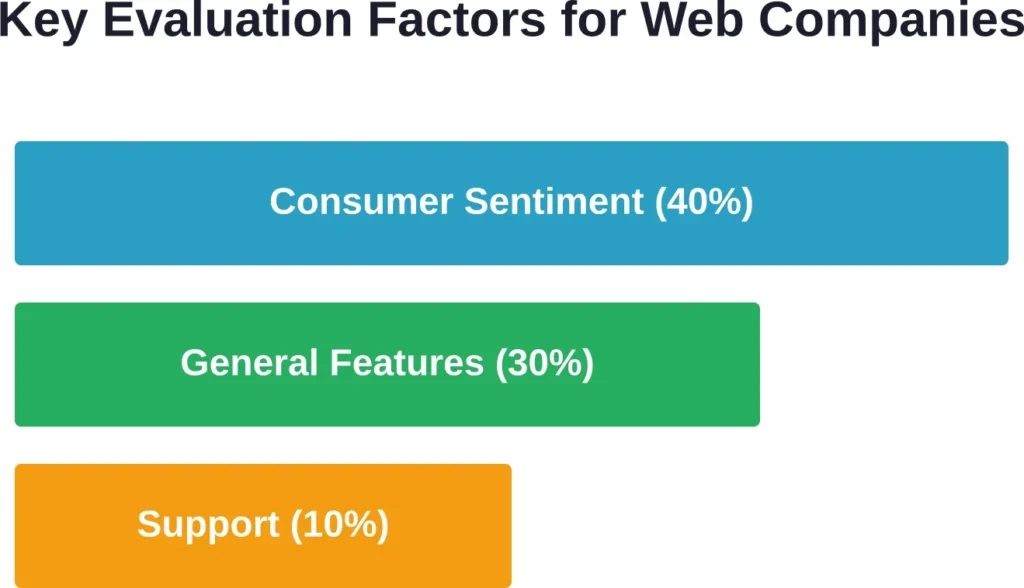
According to industry analyses, consumer sentiment weighs heavily at 40% when evaluating hosting providers. General features account for 30%. Support considerations represent 10% of the evaluation criteria.
Real-world execution trumps portfolio polish every time. The agencies listed here have demonstrated their ability to deliver under pressure, adapt to changing requirements, and stand behind their work long after launch day.
The 15 Best Web Hosting and Design Companies in 2026
This curated list represents diverse approaches to web development and hosting. Some specialize in enterprise-scale infrastructure, others in conversion-focused design for growth-stage startups. What they share is a track record of excellence validated by client outcomes.
1. Gilzor

Gilzor approaches digital product development through a full-cycle, user-centric lens. The company specializes in turning ideas into functional, attractive products that connect with audiences and deliver business value.
By combining idea validation, UI/UX design, web and mobile development, research & development, quality assurance, and go-to-market strategy, Gilzor creates solutions that reduce risk and accelerate growth. Their process starts with thorough business analysis and user feedback before moving into development and launch.
The agency has earned strong recognition for delivering secure, scalable applications with excellent user experiences. They maintain a high rate of recurring clients through post-launch support and continuous optimization.
Gilzor works with startups, small and medium businesses, and product studios across industries such as airlines, e-commerce, and cognitive training applications.
Contact Information:
- Website: www.gilzor.com
- Email: [email protected]
- Address: Poland, Warsaw, Office 58, street Adama Mickiewicza 37, 01-625
- LinkedIn: www.linkedin.com/company/gilzor-softwaredevelopment
2. A-listware

A-listware operates as a trusted software development and IT consulting partner. The company excels at providing skilled teams and comprehensive solutions that empower businesses through high-quality, secure, and responsive digital products.
Their offerings include software development, UX/UI design, testing & QA, dedicated development teams, data analytics, infrastructure services, and cybersecurity. A-listware focuses on seamless integration with client teams and end-to-end management of complex IT ecosystems.
The agency stands out through its solution-focused approach, emphasizing clear communication, flexibility, and consistent delivery of results across outsourcing, team augmentation, and managed services.
A-listware supports enterprises, small and medium businesses, and startups in industries ranging from fintech and healthcare to manufacturing and professional services.
Contact Information:
- Website: a-listware.com
- Phone: +1 (888) 337 93 73
- Email: [email protected]
- Address: North Bergen, NJ 07047, USA
- LinkedIn: www.linkedin.com/company/a-listware
- Facebook: www.facebook.com/alistware
3. Mobian
Mobian builds dedicated engineering teams that deliver production-ready software on time and on budget. The studio specializes in mobile and AI solutions for companies that demand technical excellence.
By offering both full outsourcing and outstaffing models, Mobian provides end-to-end product development, AI & automation systems, scalable architecture, and legacy integration. Their process ensures clean code, clear documentation, and senior-level execution with strong domain knowledge.
What sets Mobian apart is their focus on sustainable partnerships and post-launch support. They create systems designed to scale from small user bases to large enterprise loads while maintaining regulatory compliance and performance.
The agency primarily works with companies in IT, healthcare, fintech, and logistics seeking reliable mobile applications and intelligent automation.
Contact Information:
- Website: mobian.studio
- Phone: [email protected]
- Address: Harju maakond, Tallinn, Kesklinnalinnaosa, Masina tn 22, 10113
- LinkedIn: www.linkedin.com/company/mobian-studio
4. Lengreo
Lengreo positions itself as a complete marketing and tech partner for ambitious B2B companies. The agency delivers integrated solutions that combine strategy, execution, and continuous optimization to drive measurable business growth.
Their approach focuses on deep listening to client needs rather than offering pre-packaged solutions. Lengreo builds custom digital ecosystems through B2B digital marketing strategy, SEO, website development, paid ads, lead generation, demand generation, and social media & content marketing.
What sets Lengreo apart is their results-driven integration. They combine hyper-personalized outreach, data-backed strategy development, and full-cycle website creation that converts, creating unified systems focused on qualified leads and ROI.
The agency serves software development companies, IT services providers, architecture & design firms, event technology companies, and sports tech providers looking to scale client acquisition and optimize conversion rates.
Contact Information:
- Website: lengreo.com
- Phone: +31 686 147 566
- Email: [email protected]
- Address: Vrijstraat 9 C/D, 5611 AT Eindhoven, Netherlands
- LinkedIn: www.linkedin.com/company/lengreo
- Instagram: www.instagram.com/lengreo.agency
- Twitter: x.com/Lengreo
5. Oski
Oski builds smart, well-engineered software solutions for tech-forward enterprises and ambitious startups. The company focuses on designing, developing, deploying, and maintaining high-quality digital products that drive operational excellence.
Their expertise spans cloud solutions, frontend development, artificial intelligence, and content management systems. Oski emphasizes innovative design, seamless integration, scalability, security, and AI-powered efficiency to help businesses reimagine their operations.
What sets Oski apart is their ability to deliver 3× faster development through AI-accelerated engineering while maintaining robust architecture and intuitive user experiences. Every solution is tailored to specific industry requirements and business objectives.
The agency serves companies in traveling, logistics & transportation, e-commerce, education, fintech, and insurance sectors seeking reliable technology partners.
Contact Information:
- Website: oski.site
- Phone: +48571282759
- Email: [email protected]
- Address: Kaupmehe tn 7, 10114 Tallinn, Estonia
- LinkedIn: www.linkedin.com/company/oski-solutions
6. Lounge Lizard

Lounge Lizard describes itself as a “brandtenders” agency—mixing marketing, design, and technology into cohesive digital experiences. Operating since 1998, they’ve adapted through multiple waves of web evolution while maintaining core principles of strategic creativity.
The agency serves a diverse client roster, from startups to Fortune 500 companies, with particular strength in e-commerce platforms and mobile app development alongside traditional web design.
Lounge Lizard’s longevity speaks to adaptability. They’ve successfully transitioned from Flash-based websites to responsive design to modern JavaScript frameworks without losing clients along the way—a rare feat in an industry that chews through agencies rapidly.
Their approach balances aesthetic ambition with practical constraints, producing work that pushes creative boundaries while respecting timelines and budgets.
7. GoDaddy (Hosting & Web Services)
GoDaddy dominates the hosting landscape worldwide, managing over 46,952,259 domains. While often associated with domain registration, the company offers comprehensive hosting solutions from shared plans to dedicated servers.
Their strength is accessibility. GoDaddy makes web hosting approachable for non-technical users through simplified interfaces, one-click installations, and extensive support documentation. For businesses just starting their digital journey, this reduces friction significantly.
The platform includes built-in security tools and SSD hard drives across hosting plans. However, some service tiers include non-refundable setup fees for monthly billing, and certain cancellation processes have received criticism in user discussions.
GoDaddy ranks first globally by Semrush metrics with over 512 million backlinks, reflecting massive market penetration. The company supports multiple platforms including Windows and Linux, with price ranges from on request to $219.99.
8. Huemor

Huemor positions itself as a growth-focused design agency that measures success in business metrics, not design awards. Their tagline—”We design brands people love”—reflects a philosophy centered on emotional connection and brand loyalty.
The agency specializes in redesigns for companies that have outgrown their current web presence. They excel at diagnosing why existing sites underperform and architecting solutions that address root causes rather than applying cosmetic fixes.
Huemor’s process incorporates extensive user testing and A/B experimentation. Design decisions are validated through data before full implementation, reducing risk and improving outcomes.
Their client base skews toward B2B companies and service providers who need websites to support complex sales cycles and nurture prospects through extended consideration periods.
9. Bop Design
Bop Design focuses exclusively on B2B web design and marketing. This specialization allows deep expertise in the unique challenges of business-to-business digital experiences—longer sales cycles, multiple decision-makers, and content-heavy information architectures.
The agency understands that B2B websites serve different purposes than consumer sites. They emphasize lead generation, thought leadership content, and tools that help prospects self-educate before engaging sales teams.
Bop Design’s approach integrates web design with content strategy and inbound marketing. Websites launch with content frameworks, SEO foundations, and conversion paths already optimized for typical B2B buyer journeys.
Their client roster includes professional services firms, manufacturing companies, and technology providers—organizations where website credibility directly impacts deal closure rates.
10. Dotlogics Inc.
Dotlogics combines web design with custom development capabilities, serving clients who need technical complexity alongside visual polish. The company handles everything from enterprise web applications to e-commerce platforms with custom functionality.
Their development team works across modern frameworks and languages, allowing technical architecture choices to be driven by project requirements rather than constrained by limited expertise.
Dotlogics emphasizes long-term partnerships over one-off projects. Many clients return for ongoing development work, optimization cycles, and strategic consulting as their digital needs evolve.
The agency serves mid-market companies that have outgrown template solutions but aren’t ready for the overhead of enterprise-tier agencies. They occupy a sweet spot of custom capability without enterprise bureaucracy.
11. Thrive Internet Marketing Agency
Thrive has positioned itself as a full-service digital marketing and web design powerhouse. The agency doesn’t just build websites—it architects them as conversion engines integrated with broader marketing strategies.
Their approach combines technical SEO, user experience research, and data-driven design decisions. On the AI front, Thrive achieved substantial growth in referral traffic from generative AI platforms using innovative AI SEO strategies. From January to October of 2025, total traffic from all AI platforms grew by 4,302%.
What sets Thrive apart is integration. Web design projects connect seamlessly with their SEO, PPC, and content marketing services, creating a unified digital ecosystem rather than isolated deliverables.
The agency serves businesses across industries, from healthcare to e-commerce, with a particular strength in helping companies scale their online presence through measurable performance improvements.
12. Excited Agency

Excited approaches web design through a product-first lens. The agency focuses relentlessly on clarity, structure, and conversion rather than surface-level aesthetics that look good in screenshots but fail in the market.
By combining UX research, web design, branding, and motion design, Excited creates websites that scale with the product and support long-term growth. Their process begins with understanding user behavior patterns and business objectives before a single wireframe gets drawn.
The agency has earned a strong reputation among product companies and SaaS platforms that need websites to serve as active sales and onboarding tools, not passive brochures.
Clutch ratings for Excited stand at 5.0 based on 52 reviews. Hourly rate: $50–$100. Minimum project cost: $10,000+. The company operates with dedicated attention on client projects.
13. Digital Silk

Digital Silk specializes in custom web solutions for mid-market and enterprise clients. Their strength lies in blending strategic branding with technical execution, ensuring websites reflect brand identity while performing flawlessly under load.
The agency’s process emphasizes discovery. Before development begins, Digital Silk conducts extensive stakeholder interviews, competitive analysis, and user research to inform design decisions with data rather than assumptions.
Their portfolio spans industries from finance to consumer goods, with a particular expertise in creating websites that serve dual audiences—customers and investors—with distinct user journeys that don’t compromise each other.
Digital Silk takes a holistic view of digital presence, often advising clients on content strategy, information architecture, and post-launch optimization cycles that extend value well beyond the initial build.
14. Code and Theory
Code and Theory operates at the intersection of creativity and technology for enterprise clients. With a team exceeding 500 employees, the agency handles complex, multi-stakeholder projects that demand both design excellence and technical sophistication.
Their work emphasizes digital transformation—helping established brands reimagine their digital presence for modern user expectations. Projects often involve custom development, API integrations, and scalable architectures that support millions of users.
The agency’s estimated minimum project cost starts around $250,000+, reflecting their focus on large-scale initiatives. This isn’t a shop for simple brochure sites—it’s for companies betting significant resources on their digital strategy.
Code and Theory’s strength is orchestration. They excel at coordinating large teams, managing complex timelines, and delivering cohesive experiences across multiple touchpoints and platforms.
15. Clay
Clay has built its reputation on UI design, branding, and product experience. The agency attracts clients who view design as a competitive differentiator, not a commodity service.
Their process is intensely collaborative. Clay embeds designers directly with client product teams, functioning more as an extension of internal capabilities than an external vendor. This approach yields designs that feel native to the brand rather than imposed from outside.
The agency focuses heavily on interaction design and micro-animations that guide users intuitively through complex interfaces. These aren’t decorative flourishes—they’re functional elements that reduce cognitive load and improve task completion rates.
Clay works primarily with tech companies and startups that need to differentiate in crowded markets through superior user experience and memorable brand expression.
How to Choose Between Hosting Providers and Design Agencies
The choice between a hosting-focused provider and a design-centric agency depends on where the greatest challenges lie. Companies with existing websites needing reliable infrastructure gravitate toward hosting specialists. Those building from scratch or undergoing major redesigns need design expertise first.
But here’s where it gets interesting—many businesses need both, just not simultaneously. The typical pattern involves hiring a design agency for the build, then migrating to an optimized hosting environment once the site launches.
Some agencies bundle hosting into their service packages. This simplifies vendor management but can create lock-in situations. Community discussions suggest evaluating whether bundled hosting meets long-term technical requirements or if it’s merely convenient for the agency.
When to Prioritize Hosting Infrastructure
Hosting becomes the priority when performance issues undermine business goals. Sites experiencing downtime, slow load times, or scaling problems need infrastructure attention before design improvements.
E-commerce businesses particularly feel hosting pain. Every second of page load time correlates with conversion rate drops. For these companies, hosting infrastructure with uptime guarantees approaching 100% isn’t optional—it’s existential.
Security requirements also drive hosting decisions. Companies handling sensitive data or operating in regulated industries need hosting partners with robust security protocols, compliance certifications, and incident response capabilities.
When to Prioritize Design Excellence
Design takes priority when the website itself is the problem. High bounce rates, low conversion rates, and poor user engagement signal design issues that no amount of hosting horsepower will fix.
Rebranding initiatives demand design-first approaches. When brand identity shifts, the website needs to reflect that change coherently. This isn’t about tweaking colors—it’s about realigning the entire digital experience with repositioned brand values.
Product launches often require design expertise. New products need websites that communicate value propositions clearly, address buyer objections preemptively, and guide prospects through consideration efficiently.
Key Services to Evaluate When Comparing Companies
Not all web companies offer the same service mix. Understanding which capabilities matter for specific business needs prevents mismatched partnerships and project disappointment.
| Service Category | What It Includes | Who Needs It Most |
|---|---|---|
| Strategic Design | UX research, user testing, conversion optimization, information architecture | Companies with complex products or multiple user types |
| Visual Design | Brand expression, UI design, motion graphics, illustration | Brands competing on experience and emotional connection |
| Development | Custom coding, CMS implementation, API integrations, performance optimization | Businesses needing custom functionality beyond templates |
| Hosting & Infrastructure | Server management, CDN, security, backups, scaling | High-traffic sites, e-commerce, businesses with uptime requirements |
| Ongoing Support | Maintenance, updates, optimization, content changes | Companies without in-house technical teams |
Custom Development vs. Template Solutions
The custom-versus-template question splits along complexity lines. Template solutions work for straightforward websites with standard functionality—company information, contact forms, basic content management.
Custom development becomes necessary when business requirements exceed template capabilities. E-commerce with complex product configurations, membership sites with tiered access, or applications requiring third-party integrations all push toward custom builds.
Real talk: custom development costs more and takes longer. The tradeoff is getting exactly what the business needs rather than adapting processes to fit template constraints. This decision should be driven by business model, not aesthetic preferences.
Managed Hosting vs. Self-Managed Infrastructure
Managed hosting providers handle server maintenance, security patches, and technical optimization. This makes sense for companies lacking dedicated IT resources or those preferring to focus on business operations rather than server administration.
Self-managed infrastructure offers more control and potentially lower costs for technical teams comfortable with server management. This approach suits companies with specific technical requirements or existing DevOps capabilities.
The decision often comes down to opportunity cost. What’s more valuable—internal team time spent managing servers, or external costs for managed services? For most small-to-medium businesses, managed solutions win this calculation.
Red Flags to Watch for When Evaluating Companies
Certain warning signs predict problematic partnerships. Spotting these early saves time, money, and frustration.
Overpromising on timelines is a classic red flag. Companies that guarantee aggressive delivery schedules without understanding project scope are either inexperienced or dishonest. Neither bodes well.
Reluctance to provide references or case studies suggests limited success stories. Reputable companies eagerly connect prospects with satisfied clients. Those who deflect these requests often have reasons to avoid scrutiny.
Lack of process transparency creates downstream problems. Companies that can’t clearly articulate their development methodology, communication cadence, and approval workflows often lack these processes entirely, leading to chaotic project execution.
Price as a Signal
Extremely low bids relative to market rates signal trouble. Quality web work requires skilled professionals, and skilled professionals cost money. Lowball pricing indicates corner-cutting, offshore outsourcing, or inexperienced teams.
But the highest price doesn’t guarantee the best outcome. Some agencies price based on brand rather than capability. The goal is finding the intersection of proven expertise and reasonable value.
According to industry evaluation standards, service and support considerations represent 10% of the evaluation criteria, though their importance magnifies when problems arise post-launch.
Technical Capability Verification
Marketing materials often exaggerate technical capabilities. Dig deeper by asking specific technical questions relevant to project requirements.
Request examples of similar projects, not just impressive portfolio pieces. A beautiful agency website doesn’t prove they can build a complex e-commerce platform or integrate with obscure APIs.
Check their technology stack. Companies specializing in outdated platforms may lack expertise in modern frameworks that offer better performance and maintainability.
Regional Considerations and Remote Collaboration
Geography matters less than it used to, but it still matters. Remote collaboration tools have made distributed teams viable, yet timezone alignment and cultural context remain factors.
Companies in the United States dominate many “best of” lists, reflecting market concentration and client base size. However, excellent agencies exist globally, often offering better value without sacrificing quality.
For projects requiring frequent real-time collaboration, timezone overlap improves efficiency. Asynchronous communication works well for straightforward projects with clear specifications but struggles with complex initiatives requiring frequent alignment.
The Value of Local Partnership
Local agencies understand regional market dynamics, customer preferences, and competitive landscapes. This context informs design decisions in subtle but meaningful ways.
In-person meetings, while less essential than before, still facilitate certain conversations—particularly strategic discussions, stakeholder alignments, and conflict resolution.
Local partnerships also simplify legal and payment logistics, avoiding international contract complexities and currency conversion issues.
Integration with Existing Marketing Efforts
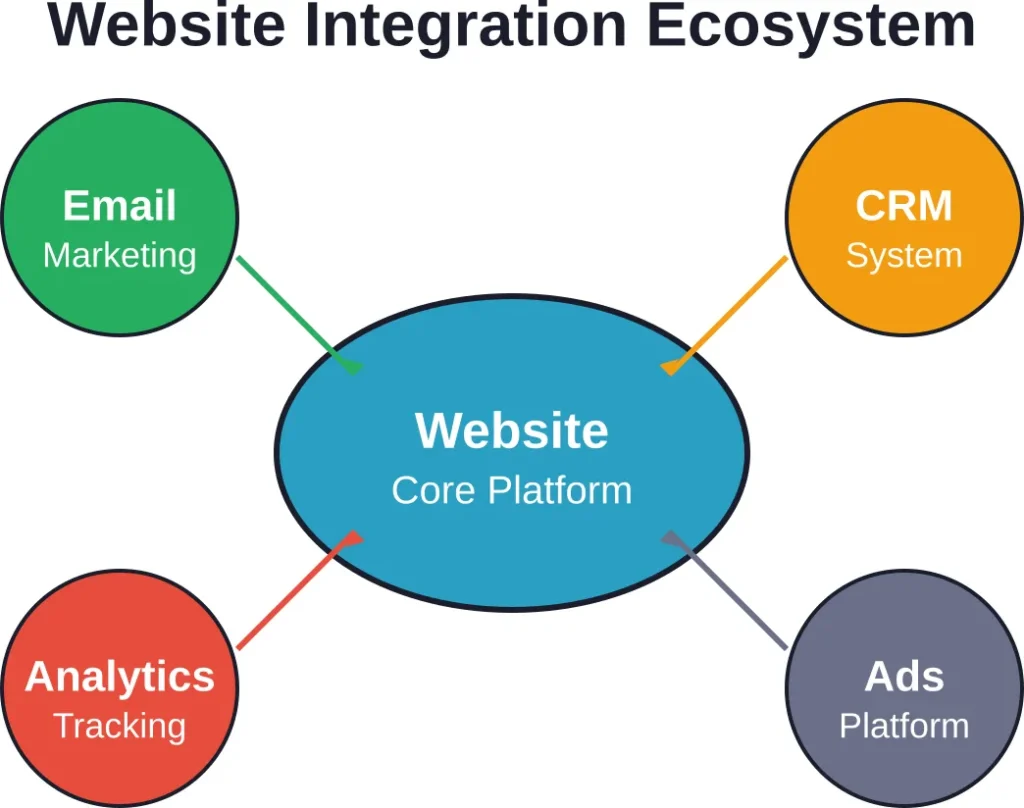
Websites don’t exist in isolation. They connect to email marketing, advertising campaigns, CRM systems, and analytics platforms. Companies that understand these connections deliver more cohesive solutions.
Full-service agencies like Thrive excel at integration because they manage multiple marketing channels. Websites they build connect naturally to campaigns they run, creating unified data flows and consistent user experiences.
Specialist agencies may require more coordination but often provide deeper expertise in their focus areas. The tradeoff is intentional—accepting integration complexity in exchange for superior execution within specific domains.
Data Flow and Attribution
Attribution becomes critical as marketing gets more sophisticated. Understanding which channels drive conversions requires proper tracking implementation from the start.
Companies with marketing expertise build this tracking architecture during development rather than bolting it on afterward. This foresight prevents data gaps that undermine optimization efforts later.
The best agencies challenge assumptions about attribution models and recommend tracking strategies aligned with specific business models and customer journeys.
Post-Launch Support and Long-Term Partnership
Launch day isn’t the finish line—it’s the starting line. Websites require ongoing attention: content updates, security patches, performance optimization, and feature additions as business needs evolve.
Some companies specialize in builds and hand off maintenance to others. This works if the handoff is smooth and documentation comprehensive. More often, it creates support gaps and finger-pointing when issues arise.
Long-term partnerships with single providers ensure continuity. The team that built the site understands its architecture, making troubleshooting faster and optimization more effective.
Maintenance Models
Retainer arrangements provide predictable monthly costs in exchange for defined support hours. This suits businesses needing regular updates and quick issue resolution.
Project-based support bills hourly for specific requests. This costs less for companies with minimal maintenance needs but can surprise with unexpected expenses when problems arise.
Managed hosting often includes basic maintenance—security updates, backups, uptime monitoring—while leaving content and feature changes to separate contracts.
Industry-Specific Considerations
Different industries bring unique requirements that generic web companies struggle to address effectively.
E-commerce demands specific technical capabilities: payment gateway integration, inventory management, shipping calculators, and security compliance. Agencies without e-commerce expertise often underestimate complexity.
Healthcare websites face HIPAA compliance requirements that fundamentally shape architecture decisions. Hosting must meet specific security standards, and forms handling patient information need encryption and audit trails.
Financial services encounter similar regulatory constraints plus heightened security expectations from users who rightfully worry about data protection.
B2B vs. B2C Design Philosophy
B2B websites serve different purposes than consumer sites. They emphasize thought leadership, detailed product information, and lead nurturing over immediate transactions.
Agencies like Bop Design specialize in B2B dynamics—understanding that website visitors often research extensively before contacting sales, requiring content depth that would overwhelm consumer sites.
B2C design prioritizes simplicity, emotion, and rapid conversion paths. The best consumer sites remove friction relentlessly, while B2B sites provide friction deliberately to qualify leads.
Making the Final Decision
Choosing among qualified companies often comes down to chemistry and communication style as much as technical capability.
Request proposals from 3-5 shortlisted companies. Compare not just scope and cost, but how thoroughly they understood requirements and how thoughtfully they proposed solutions.
Check references obsessively. Past client experiences predict future project outcomes more accurately than marketing materials. Ask about communication responsiveness, problem-solving when issues arose, and whether projects delivered on promises.
Trust instinct on cultural fit. Projects spanning months require genuine partnership. If initial conversations feel forced or adversarial, imagine how that dynamic plays out under deadline pressure.
| Evaluation Criteria | What to Look For | Red Flags |
|---|---|---|
| Portfolio Quality | Diverse projects, measurable results, modern design standards | Dated examples, template-heavy work, no case studies |
| Process Clarity | Defined stages, clear deliverables, reasonable timelines | Vague methodology, no project plan, unrealistic speed |
| Communication | Responsive, asks questions, challenges assumptions | Slow replies, yes-man attitude, no pushback |
| Technical Depth | Specific technology recommendations, scalability discussion | Buzzword bingo, generic tech talk, no architecture plan |
| Pricing Transparency | Detailed estimates, clear assumptions, change order process | Vague numbers, hidden fees, no scope boundaries |
Frequently Asked Questions
Web hosting companies provide the server infrastructure where websites live—storage, bandwidth, security, and uptime management. Web design agencies create the actual website—visual design, user experience, content strategy, and technical development. Many businesses need both: an agency to build the site and a hosting provider to run it. Some agencies bundle hosting into their services, while others recommend separate hosting partners.
Timeline varies dramatically based on complexity. Simple brochure websites with template customization might complete in 4-6 weeks. Custom designs with moderate functionality typically run 8-12 weeks. Complex sites with custom development, integrations, and extensive content can take 4-6 months or longer. The timeline depends on scope, client responsiveness with feedback and content, and the number of stakeholders involved in approvals.
Smaller businesses often get better results with boutique firms sized 10-50 people. These companies provide senior-level attention and flexibility that large agencies reserve for enterprise clients. Large agencies bring deeper resources and specialized departments but often staff smaller projects with junior team members. The exception is when brand-name credibility matters—some clients value saying they worked with a prestigious agency regardless of actual team composition.
Ask about their process: How do they approach discovery and research? What’s their design revision policy? How do they handle scope changes? Request references from similar projects and actually call them. Inquire about post-launch support: Who handles updates and how quickly? Ask about ownership: Who owns the design files and code? Clarify communication: Who’s the point person and how often do they update clients? Finally, understand their technology recommendations and why they suggest specific platforms.
Industry specialization helps when the sector has unique requirements—regulatory compliance for healthcare or finance, complex product configurations for manufacturing, or specialized user journeys for SaaS. However, specialization isn’t always necessary. Sometimes outside perspective produces more innovative solutions than agencies entrenched in industry conventions. Balance domain expertise with fresh thinking. For regulated industries or highly technical products, lean toward specialists. For straightforward business sites, general expertise often suffices.
Maintenance typically covers security updates, software patches, backups, uptime monitoring, minor content updates, and performance optimization. Yes, businesses need it—unmaintained sites become security vulnerabilities and break as underlying technology updates. The question is whether to handle it internally, hire the original design agency, or use a dedicated maintenance service. For non-technical teams, managed maintenance prevents problems cheaper than fixing breaches or outages after they occur.
Template solutions work when the business model fits standard website patterns: informational sites, basic e-commerce, blogs, portfolios, or simple service offerings. Custom development becomes necessary when requirements include unique user workflows, complex data relationships, specialized integrations with other systems, or functionality that doesn’t exist in template plugins. If you’re describing desired features and repeatedly hearing “that’s not possible with this platform,” custom development likely makes sense. Cost difference is significant though—custom projects often start at multiples of template builds.
Conclusion
The web hosting and design landscape in 2026 offers more options than ever, but that abundance makes thoughtful selection more important, not less.
The 15 companies highlighted here represent different philosophies and specializations. Thrive and Digital Silk excel at integrated marketing and web design. Excited and Clay push boundaries on user experience and visual innovation. Code and Theory handles enterprise complexity. GoDaddy provides accessible hosting infrastructure at massive scale. Specialized agencies like Bop Design serve specific markets with deep domain expertise.
No single “best” company exists—only the best fit for particular business needs, budget constraints, and project requirements.
The selection process demands diligence. Look beyond marketing materials to portfolio results. Talk to references about real project experiences. Evaluate process clarity and communication responsiveness as carefully as technical capability.
Most importantly, remember that websites are never truly finished. They evolve with businesses, audiences, and technology. The right partner isn’t just someone who builds well—it’s someone who supports growth through that evolution.
Take time with this decision. The website often becomes the hardest-working employee in the business, generating leads and revenue 24/7. Invest in getting it right.
Ready to move forward? Start by clarifying requirements, establishing budget parameters, and reaching out to 3-5 companies that align with project needs. The perfect partner is out there—finding them just requires asking the right questions and listening carefully to the answers.