
Quick Summary: Finding the right web page design company can transform your online presence. This comprehensive guide spotlights 15 top-rated web page design agencies in 2026, from boutique studios to enterprise-level firms, covering their specialties, design philosophies, and what makes each stand out—all without diving into pricing details.
Your website is often the first impression potential customers have of your business. And according to industry data, nearly three-quarters of businesses have a website, while 43% of small businesses plan to invest in website performance.
But here’s the thing though—not all web page design companies are created equal.
Some agencies specialize in eCommerce platforms, others in SaaS applications, and still others focus on branding-first experiences. Choosing the wrong partner can mean wasted budgets, missed deadlines, and a website that doesn’t convert.
This guide breaks down 15 of the most respected web page design companies operating in 2026. Each agency has been evaluated based on client reviews, design portfolio quality, service offerings, and real-world execution.
No fluff. No invented rankings. Just the agencies that consistently deliver exceptional web page design work.
What Makes a Great Web Page Design Company?
Before diving into the list, it’s worth understanding what separates outstanding web page design agencies from mediocre ones.
A great web page design company doesn’t just make pretty websites. They combine multiple disciplines—UX research, visual design, front-end development, SEO strategy, and conversion optimization—into a cohesive product.
Here’s what to look for:
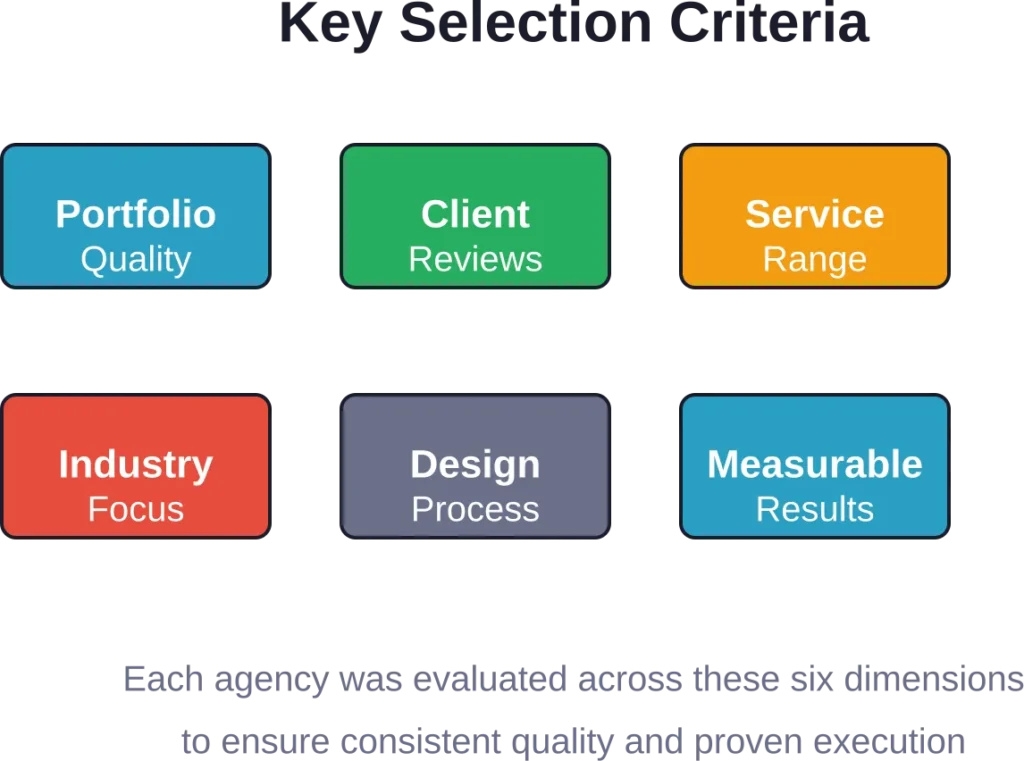
- Portfolio depth: Real projects with measurable results, not just mockups
- Client reviews: Verified testimonials on platforms like Clutch showing both strengths and honest feedback
- Service integration: Whether the agency offers branding, development, and ongoing support or just design
- Industry specialization: Some agencies excel at B2B SaaS, others at eCommerce or nonprofit work
- Design process: Structured methodology including discovery, wireframing, testing, and iteration
The agencies featured below meet these criteria. They’ve earned their reputations through consistent execution and client satisfaction.
The 15 Best Web Page Design Companies in 2026
Now, here’s the full breakdown. Each agency description includes their specialty, notable client work, and what makes them stand out in the crowded web page design marketplace.
1. Lengreo
Lengreo acts as a complete marketing and tech partner with a strong emphasis on website development that drives measurable business growth. They combine deep business analysis, strategic planning, and technical implementation to create websites and digital experiences that generate leads and increase conversions. The team delivers full-cycle website development — from discovery and research through prototyping, design, and ongoing support. Their approach integrates SEO, paid ads, and lead generation tactics directly into the web solution. What sets Lengreo apart is their focus on tangible outcomes: turning websites into active sales channels rather than static brochures. Best for: B2B companies and tech businesses that need high-converting websites backed by strong digital marketing strategy and lead generation systems.
Contact Information:
- Website: Lengreo.com
- Phone: +31 686 147 566
- Email: [email protected]
- Address: Vrijstraat 9 C/D, 5611 AT Eindhoven, Netherlands
- LinkedIn: Lengreo
- Twitter: @Lengreo
- Instagram: @lengreo
2. Gilzor
Gilzor specializes in custom digital product development with a sharp focus on web and mobile solutions that improve user experience and conversion rates. They combine UI/UX design, full-cycle web development, and business analysis to build websites and web applications that solve real user problems. Their process includes idea validation, user-centric design, quality assurance, and go-to-market strategy — ensuring every website not only looks good but performs effectively in the market. Clients value their ability to create clean, functional, and scalable web solutions tailored to specific business needs. Best for: Startups and small-to-medium businesses looking for custom web development paired with strong UI/UX design and product strategy.
Contact Information:
- Website: www.gilzor.com
- Email: [email protected]
- Address: Poland, Warsaw, Office 58, street Adama Mickiewicza 37, 01-625
- LinkedIn: www.linkedin.com/company/gilzor-softwaredevelopment
3. Oski
Oski builds smart, well-engineered web solutions for tech-forward enterprises and ambitious startups. They focus on frontend development, modern web technologies, and seamless user experiences across React, Vue, Angular, and other frameworks. The agency integrates UI/UX design, cloud architecture, and performance optimization to deliver websites and web applications that scale efficiently and provide excellent user experiences. What distinguishes Oski is their emphasis on quality engineering and AI-accelerated development that results in fast, reliable, and visually compelling digital products. Best for: Enterprises and growth-stage startups that need robust, modern web solutions with strong technical architecture and intuitive design.
Contact Information:
- Website: oski.site
- Phone: +48571282759
- Email: [email protected]
- Address: Kaupmehe tn 7, 10114 Tallinn, Estonia
- LinkedIn: www.linkedin.com/company/oski-solutions
4. A-Listware

A-Listware delivers software development and UX/UI design services with a focus on creating high-quality, responsive web solutions. They combine custom software development, user interface design, and technical consulting to build websites and web applications that meet complex business requirements. Their expertise covers enterprise software, cloud applications, and dedicated development teams — allowing them to create tailored web experiences from concept to deployment. Clients appreciate their structured approach to building secure, scalable, and user-friendly digital products. Best for: Enterprises, SMBs, and startups that require custom web development with professional UX/UI design and reliable technical implementation.
Contact Information:
- Website: a-listware.com
- Phone: +1 (888) 337 93 73
- Email: [email protected]
- Address: North Bergen, NJ 07047, USA
- LinkedIn: www.linkedin.com/company/a-listware
- Facebook: www.facebook.com/alistware
5. Mobian Studio
Mobian Studio creates dedicated engineering teams that deliver production-ready digital products with a strong emphasis on web and mobile development. They specialize in end-to-end product development, including scalable web architecture, modern frontend solutions, and seamless user interfaces. The studio combines clean code practices, user-centric design, and domain expertise to build web solutions that perform under real business conditions. What sets them apart is their focus on delivering fast, reliable results without compromising on quality or long-term maintainability. Best for: IT, fintech, healthcare, and logistics companies that need high-quality custom web development and dedicated technical teams.
Contact Information:
- Website: mobian.studio
- Phone: [email protected]
- Address: Harju maakond, Tallinn, Kesklinnalinnaosa, Masina tn 22, 10113
- LinkedIn: www.linkedin.com/company/mobian-studio
6. Instrument

Instrument is a digital product agency that creates websites for iconic brands. Their client list includes names like Google, Nike, and Levi’s—companies that demand exceptional craft and innovative thinking.
The agency approaches web page design as product design, which means they focus heavily on user experience, interaction design, and technical execution. Their websites often feature custom animations, immersive storytelling, and cutting-edge front-end development.
Instrument works on projects that push the boundaries of what’s possible on the web. They’re not afraid to experiment with new technologies or interaction patterns, but they ground experimentation in user research and testing.
Their work tends to be visually striking and technically sophisticated. They’re a good fit for brands that want their website to make a statement and set them apart from competitors.
Best for: Established brands and well-funded companies that want cutting-edge web experiences with custom development and innovative interaction design.
7. Fantasy
Fantasy creates brand experiences that live at the intersection of culture, technology, and design. They’re known for building websites that feel less like corporate homepages and more like immersive brand worlds.
The agency works primarily with consumer brands, entertainment companies, and creative studios. Their design philosophy emphasizes emotion, storytelling, and cultural relevance over traditional conversion metrics.
Fantasy’s websites often feature bold typography, dynamic layouts, and rich multimedia content. They excel at translating brand personality into digital experiences that feel alive and engaging.
Client work spans product launches, brand campaigns, and platform redesigns. They’re particularly strong at creating websites that generate buzz and social sharing.
Best for: Consumer brands, entertainment companies, and creative studios that want websites focused on brand expression and cultural impact rather than traditional lead generation.
8. Lounge Lizard
Lounge Lizard has been designing websites since 1998, which gives them a depth of experience few agencies can match. They’ve seen design trends come and go, and they focus on timeless principles that deliver results.
The agency offers comprehensive services including web page design, mobile app development, branding, and digital marketing. This breadth allows clients to consolidate multiple vendors into a single partnership.
Their portfolio spans industries—restaurants, healthcare, finance, real estate, and more. They’re comfortable working with both small businesses and enterprise clients.
Client reviews emphasize their reliability, transparent communication, and ability to deliver projects on schedule. Lounge Lizard isn’t chasing design trends—they’re building solid, effective websites that stand the test of time.
Best for: Businesses that value experience and reliability over cutting-edge experimentation, and companies that want a full-service digital partner.
9. The Creative Momentum (a CloudMellow Company)
The Creative Momentum focuses on small-to-midsize businesses that need professional web page design without enterprise-level complexity or budgets. They’ve built a reputation for delivering quality work efficiently.
The agency handles the full spectrum of web services—design, development, hosting, and ongoing maintenance. This all-in-one approach simplifies vendor management for smaller companies.
Their process emphasizes collaboration and education, helping clients understand the design decisions and how to manage their website post-launch. They’re particularly strong at working with clients who haven’t been through a professional web page design process before.
Reviews highlight their customer service, responsiveness, and ability to translate business goals into functional websites. They’re not the flashiest agency on this list, but they consistently deliver solid work.
Best for: Small-to-midsize businesses seeking professional web page design with straightforward processes and responsive customer service.
10. Locomotive
Locomotive is an agency known for technically impressive websites with smooth animations and interactive elements. They specialize in building custom web experiences using modern development frameworks.
The agency’s work often features scroll-based animations, parallax effects, and dynamic content loading—all executed with performance optimization in mind. They understand that impressive effects mean nothing if the website loads slowly.
Their client roster includes cultural institutions, technology companies, and consumer brands. Locomotive excels at projects that require both creative ambition and technical sophistication.
Community discussions and developer forums frequently reference Locomotive’s open-source contributions to front-end development. They share their technical knowledge, which has earned them respect in the web development community.
Best for: Brands that want technically sophisticated websites with custom animations and interactions, backed by solid performance optimization.
11. Excited Agency
Excited Agency takes a product-first approach to web page design, which means they prioritize function over decoration. Instead of designing websites that simply look beautiful, they focus on clarity, structure, and conversion optimization.
The agency combines UX research, web page design, branding, and motion design into cohesive digital products that scale with business growth. Their process emphasizes understanding user behavior before a single pixel gets designed.
Clients consistently praise their ability to distill complex products into clean, navigable interfaces. They’ve worked with B2B SaaS companies, fintech startups, and enterprise software providers.
What sets Excited apart is their commitment to websites that support long-term growth rather than short-term aesthetics. They’re not chasing design awards—they’re building tools that convert visitors into customers.
Best for: B2B SaaS companies and product-focused businesses that need websites optimized for conversion and user experience.
12. Clay
Clay operates at the intersection of branding and digital design. They’re known for creating cohesive brand identities and then translating those identities into stunning web experiences.
Their portfolio includes work for major tech companies, consumer brands, and venture-backed startups. Clay doesn’t just design websites—they build entire brand ecosystems.
The agency’s strength lies in their holistic approach. When they take on a project, they often start with brand strategy, move into visual identity development, and culminate with a website that feels like a natural extension of the brand.
Client reviews highlight their collaborative process and ability to capture brand essence in visual form. They’re particularly strong at creating websites that feel premium and memorable.
Best for: Companies undergoing rebrands or launching new products that need both brand identity and web page design handled by a single team.
13. Huemor
Huemor focuses on data-driven web page design for mid-market and enterprise clients. They combine creative design with rigorous analytics to build websites that perform.
The agency has a strong track record in B2B markets, particularly for companies that need to generate leads through their website. Their process includes competitor analysis, user research, and conversion rate optimization strategies built into the design phase.
Clients appreciate their transparent communication and structured project management. Huemor delivers websites on WordPress, which makes ongoing content management accessible for non-technical teams.
Their work tends to balance visual appeal with practical business goals. They’re not pushing experimental design—they’re creating reliable, high-converting websites that deliver ROI.
Best for: B2B companies prioritizing lead generation and businesses that need WordPress-based solutions with strong analytics integration.
14. Digital Silk

Digital Silk positions itself as a full-service digital agency, offering web page design, branding, and digital marketing under one roof. This integration allows them to build websites with marketing strategy baked in from day one.
They work across industries—healthcare, finance, eCommerce, professional services—and scale their approach based on client needs. Their portfolio includes both enterprise-level projects and mid-market website redesigns.
The agency emphasizes custom design over templates, which means every website gets built specifically for the client’s brand and audience. They handle everything from information architecture to custom illustration and photography art direction.
Client testimonials frequently mention their ability to manage complex projects with multiple stakeholders. Digital Silk excels at keeping large teams aligned through structured processes and regular communication.
Best for: Mid-to-large enterprises that want a single partner for web page design, branding, and digital marketing strategy.
15. Bop Design
Bop Design specializes in B2B marketing and web page design, particularly for firms in professional services, manufacturing, and technology sectors. Their niche focus means they understand the unique challenges of B2B buyers and decision-making processes.
The agency builds websites designed to move prospects through longer sales cycles. That means clear messaging, strategic content placement, and calls-to-action optimized for lead capture.
They also offer content marketing services, which allows them to populate websites with SEO-optimized content that attracts organic traffic from day one. This integrated approach helps clients get faster ROI from their web page design investment.
Client reviews highlight their expertise in B2B marketing and their ability to translate complex services into clear, compelling website copy.
Best for: B2B companies in professional services, manufacturing, or technology that need web page design integrated with content marketing and SEO strategy.
How to Choose the Right Web Page Design Company
With so many excellent agencies available, how do you actually make a decision?
Start by clarifying your goals. Are you focused on lead generation? Brand awareness? eCommerce transactions? User retention for a SaaS product?
Different agencies excel at different outcomes. A B2B marketing specialist like Bop Design will approach a project differently than a brand-focused agency like Clay.
Define Your Project Scope
Be clear about what you need beyond just “a new website.” Do you need branding work? Content creation? Ongoing marketing support? Technical integrations with existing systems?
Some agencies offer comprehensive services, while others focus purely on design and hand off development to partners. Understanding your full scope helps you evaluate whether an agency can handle everything or whether you’ll need multiple vendors.
Review Portfolios Critically
Don’t just look at pretty screenshots. Dig into case studies that show results. Look for agencies that publish detailed project breakdowns including the business problem, their approach, and measurable outcomes.
Visit the actual websites in their portfolio. How do they perform on mobile? How fast do they load? How intuitive is the navigation?
Pay attention to whether the portfolio shows variety or repetition. Some agencies have a signature style, which can be good if you love that style—but problematic if you want something different.
Check Client Reviews
Platforms like Clutch aggregate verified client reviews for web page design agencies. These reviews often reveal how agencies handle challenges, communication issues, and project changes.
Look for patterns in feedback. If multiple clients mention missed deadlines, that’s a red flag. If clients consistently praise responsiveness, that’s a green light.
Don’t dismiss negative reviews automatically—see how the agency responded. Great agencies acknowledge mistakes and explain how they’ve improved their process.
Evaluate Their Process
Ask potential agencies to walk you through their design process. How do they approach discovery? What research methods do they use? How do they handle feedback and revisions?
Structured processes indicate professional project management. Ad-hoc approaches can lead to scope creep, budget overruns, and misaligned expectations.
Consider Communication Style
You’ll be working closely with your chosen agency for weeks or months. Pay attention to how they communicate during the sales process.
Do they ask insightful questions about your business? Do they listen to your concerns? Are they transparent about their capabilities and limitations?
The sales process is usually the best version of an agency’s communication. If it’s already frustrating, it won’t improve once you’re a paying client.
Common Web Page Design Services Explained
Understanding what different agencies offer helps you evaluate whether they’re the right fit. Here’s a breakdown of common web page design services.
UX/UI Design
User Experience design focuses on how a website works—navigation structure, information architecture, user flows, and interaction patterns. User Interface design handles the visual layer—colors, typography, buttons, and layout.
Most agencies bundle these together, but they’re technically different disciplines requiring different skill sets.
Responsive Design
Responsive design ensures websites work across all device sizes—desktop, tablet, and mobile. This is standard practice in 2026, but the quality of responsive implementation varies widely.
Some agencies design mobile-first, creating the mobile experience before scaling up to desktop. Others start with desktop and adapt downward. Mobile-first tends to produce better mobile experiences.
Front-End Development
Front-end development translates designs into working code—HTML, CSS, and JavaScript that runs in web browsers. Some design agencies handle development in-house, while others partner with development shops.
Agencies that integrate design and development tend to produce more cohesive results. Communication between designers and developers stays tight, reducing the “lost in translation” problem.
Content Strategy
Content strategy defines what content appears where, how it’s organized, and what tone it takes. This includes website copy, page hierarchy, calls-to-action, and content governance.
Some agencies provide content strategy but expect clients to write the actual copy. Others offer full content creation including copywriting, photography art direction, and video production.
SEO Foundation
SEO-focused web page design builds search optimization into the site architecture—proper heading hierarchy, semantic HTML, fast load times, mobile optimization, and clean URL structures.
This is different from ongoing SEO services like content creation, link building, and technical optimization. Many agencies offer SEO foundation work but refer ongoing SEO to specialists.
CMS Integration
Content Management Systems let non-technical users update website content without developer help. WordPress, Webflow, Contentful, and Drupal are common options.
The right CMS depends on your technical capabilities and content needs. WordPress offers maximum flexibility but requires more maintenance. Webflow provides visual editing but less extensibility. Custom CMS implementations offer complete control at higher cost.
| Service | What It Includes | Who Needs It |
|---|---|---|
| UX/UI Design | User research, wireframes, visual design, prototyping | Everyone—core web page design service |
| Front-End Development | HTML/CSS/JS coding, responsive implementation, browser testing | Everyone—required to build the site |
| Content Strategy | Information architecture, content planning, messaging framework | Companies without clear website messaging |
| Branding | Logo design, color palette, typography, brand guidelines | New companies or businesses rebranding |
| SEO Foundation | Technical optimization, site structure, performance tuning | Companies relying on organic search traffic |
| CMS Integration | Platform setup, custom templates, editor training | Teams that need to update content regularly |
Red Flags to Watch For
Not every agency that claims to be a top web page design company actually delivers top-tier work. Here are warning signs to watch for during your vetting process.
Vague Process Descriptions
If an agency can’t clearly explain their design process, that’s a problem. Professional agencies have documented methodologies they can walk you through.
Vague answers like “we collaborate closely with clients” or “we’re flexible and adapt to each project” often indicate they’re making it up as they go.
Portfolio Without Results
Pretty screenshots prove nothing. Look for case studies that include business outcomes—increased conversions, higher engagement, more leads, improved user satisfaction scores.
If an agency’s portfolio is just visual mockups without live URLs or measurable results, they may be more focused on winning design awards than delivering business value.
Pressure Tactics
Legitimate agencies don’t need to pressure you into signing contracts. If someone’s pushing hard for a decision “this week only” or offering steep discounts for immediate commitment, walk away.
Quality agencies have full pipelines and can afford to let prospects make thoughtful decisions.
Guaranteed Rankings or Traffic
No one can guarantee SEO rankings or specific traffic numbers. Search algorithms change constantly, and hundreds of factors influence rankings.
Agencies that promise guaranteed results are either lying or planning to use black-hat tactics that will eventually get your site penalized.
Ownership Issues
Some agencies retain ownership of design files or even the website code itself. This locks you into ongoing relationships even if you’re unhappy with their service.
Clarify ownership terms before signing contracts. You should own all design assets, source code, and content created for your project.
Industry Trends Shaping Web Page Design in 2026
The web page design industry continues to evolve. Understanding current trends helps you evaluate whether an agency stays current or relies on outdated approaches.
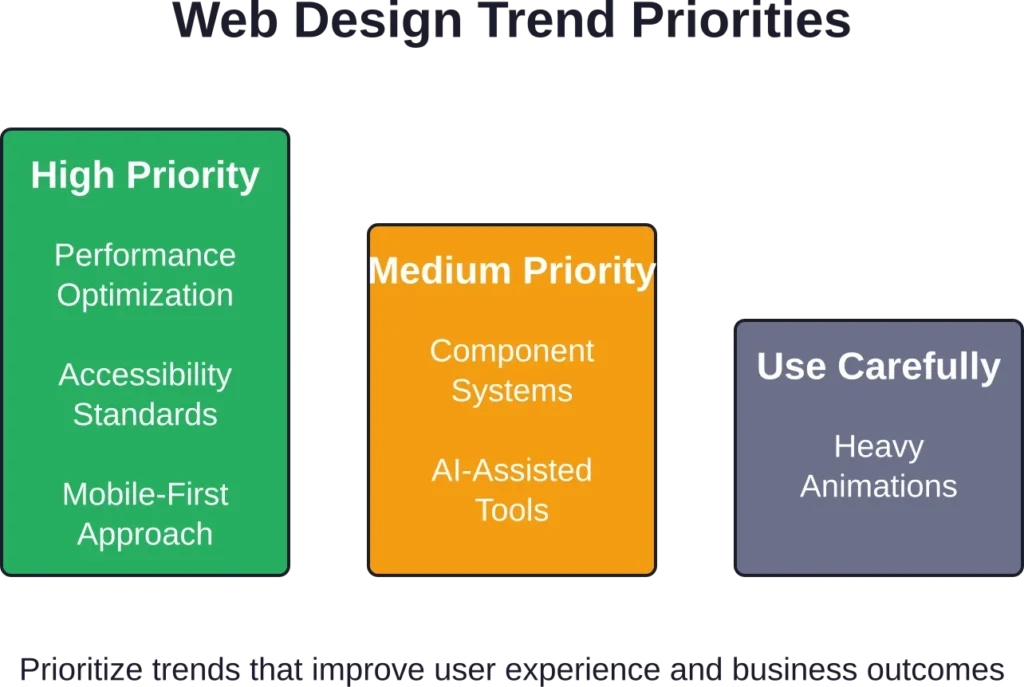
Performance-First Design
Website speed directly impacts both user experience and search rankings. Modern web page design prioritizes performance from the beginning rather than trying to optimize slow sites after launch.
This means smaller images, efficient code, careful use of animations, and lazy loading for below-the-fold content. The best agencies balance visual richness with fast load times.
Accessibility as Standard
Web accessibility—designing sites that work for users with disabilities—has moved from optional nice-to-have to essential requirement. Legal requirements like ADA compliance in the United States push this forward.
But beyond legal concerns, accessible design reaches broader audiences and generally improves usability for everyone. Modern agencies build accessibility into their process rather than treating it as an add-on.
AI-Assisted Design Tools
Artificial intelligence tools are changing how designers work. AI can generate design variations, write initial copy drafts, optimize images automatically, and even suggest layout improvements based on user behavior data.
However, AI augments human designers rather than replacing them. The best agencies use AI to handle repetitive tasks, freeing designers to focus on strategic thinking and creative problem-solving.
Component-Based Design Systems
Rather than designing individual pages, modern agencies build component libraries—reusable design elements that can be combined in various configurations.
This approach scales better, maintains consistency across large sites, and makes future updates easier. It’s particularly valuable for companies with multiple products or extensive content libraries.
Motion and Micro-Interactions
Subtle animations and micro-interactions make websites feel responsive and alive. A button that changes color on hover, a loading animation that entertains during wait times, or smooth transitions between pages all contribute to perceived quality.
But there’s a balance. Excessive animation can slow down sites and annoy users. The best agencies use motion purposefully to guide attention and provide feedback.
Questions to Ask Before Hiring
When you’re down to a shortlist of agencies, these questions help you make the final decision.
About Their Process
- What does your typical design process look like from kickoff to launch?
- How do you handle revisions and feedback?
- What deliverables will we receive at each project stage?
- Who will be our primary point of contact?
- How do you handle unexpected challenges or scope changes?
About Their Experience
- Have you worked with companies in our industry before?
- Can you share case studies with measurable results?
- What’s the typical team composition for projects like ours?
- Do you handle development in-house or work with partners?
- Can we speak with past clients as references?
About Timelines and Logistics
- What’s a realistic timeline for a project of our scope?
- What could delay the project, and how do you prevent that?
- How much of our team’s time will this require?
- What assets or information do you need from us?
- What happens after launch—do you offer support?
About Ownership and Rights
- Who owns the design files and source code?
- Can we make changes ourselves after launch, or are we locked into your services?
- What happens if we’re unhappy with the final product?
- Are there any ongoing fees beyond the project cost?
What to Expect During the Design Process
Understanding typical project phases helps set realistic expectations. Here’s how most professional web page design projects unfold.
Discovery Phase
Discovery typically takes one to three weeks. The agency learns about your business, target audience, competitors, and goals. They might conduct stakeholder interviews, user research, or competitive analysis.
You’ll likely complete questionnaires, share brand guidelines, and provide access to analytics data. This phase sets the foundation for everything that follows.
Strategy and Planning
Based on discovery insights, the agency develops a strategic plan. This includes site architecture, content strategy, feature requirements, and technical specifications.
You’ll review and approve the strategic direction before design work begins. Changes are much easier now than after visual design starts.
Wireframing
Wireframes are basic layouts showing where content, navigation, and interactive elements appear—without visual design applied. Think of them as blueprints.
This stage focuses on user experience and information hierarchy. Feedback should address whether the structure makes sense, not whether you like the colors.
Visual Design
Once wireframes are approved, designers apply your brand identity—colors, typography, imagery, and style. They typically start with key pages like the homepage and one interior page to establish the visual direction.
After you approve the design direction, they extend it to remaining pages. This phase usually involves multiple revision rounds.
Development
Developers translate approved designs into functional code. This includes front-end work, CMS integration, form functionality, and any custom features.
You’ll typically review progress on a staging server where you can click through the developing site. Testing happens throughout development, not just at the end.
Testing and Quality Assurance
Before launch, the agency tests across browsers, devices, and screen sizes. They check for broken links, form errors, loading issues, and accessibility problems.
This is your final chance to catch issues before the site goes live. Be thorough—test everything you can think of.
Launch and Post-Launch
Launch involves moving the site from the staging server to your production domain. The agency monitors performance closely for the first few days to catch any issues that only appear with real traffic.
Most agencies offer post-launch support for 30-90 days to address any bugs or minor adjustments needed.
Maintaining Your Website After Launch
Your website isn’t a “set it and forget it” asset. It requires ongoing maintenance to stay secure, fast, and effective.
Technical Maintenance
Websites built on platforms like WordPress require regular updates—core software updates, plugin updates, and security patches. Neglecting updates creates security vulnerabilities and compatibility issues.
Many agencies offer maintenance retainers to handle this. Alternatively, specialized maintenance services exist specifically for keeping sites updated and secure.
Content Updates
Fresh content keeps your site relevant for both users and search engines. This might mean publishing blog posts, updating product information, adding case studies, or refreshing outdated pages.
A good CMS makes content updates manageable for non-technical team members. If you don’t have in-house resources, content services can handle this for you.
Performance Monitoring
Analytics data shows how users interact with your site. Track metrics like traffic sources, bounce rates, conversion rates, and popular pages.
This data reveals what’s working and what needs improvement. Many businesses make regular site improvements based on what analytics reveal about user behavior.
Periodic Redesigns
Most websites need significant updates every 3-5 years. Design trends evolve, user expectations change, and business offerings expand.
But not every update requires a complete rebuild. Sometimes strategic updates to key pages deliver similar benefits at lower cost.
Frequently Asked Questions
Timeline varies based on project scope, but most professional website projects take 8-16 weeks from kickoff to launch. Simple brochure sites might complete in 6-8 weeks, while complex eCommerce platforms or custom web applications can take 4-6 months. Factors that extend timelines include multiple stakeholder approvals, extensive custom functionality, content creation needs, and client availability for feedback rounds.
Location matters less than capability and fit. Remote collaboration tools make geography largely irrelevant—many businesses work successfully with agencies across the country or internationally. That said, if you prefer in-person meetings or work in an industry where local market knowledge matters, local agencies offer advantages. Evaluate agencies based on their portfolio, process, and communication style rather than location alone.
Agencies offer full teams including designers, developers, project managers, and strategists. This means broader expertise but typically higher costs. Freelancers provide more direct communication and often lower rates, but they may lack specialized skills in areas like development or SEO. For complex projects requiring multiple disciplines, agencies generally deliver better results. For simpler projects or tight budgets, talented freelancers can be excellent choices.
It depends on the agency and your budget. Some agencies include content creation in their services—copywriting, photography, video production. Others provide content strategy and structure but expect clients to supply the actual content. Still others offer content services as optional add-ons. Clarify this during initial conversations, as content creation significantly impacts project timelines and budgets. Many businesses underestimate how much work content creation requires.
Consider a complete redesign if your site has serious usability problems, looks outdated compared to competitors, doesn’t work properly on mobile devices, has poor performance, or no longer reflects your brand. Strategic updates work well when the core structure is solid but specific pages underperform, your brand has evolved slightly, or you need new functionality added. An experienced agency can audit your current site and recommend the right approach based on your goals and budget.
Reputable agencies build revision rounds into their process. Most include 2-3 rounds of feedback at each stage. The key is providing specific, actionable feedback rather than vague reactions. If fundamental problems emerge, good agencies will revisit the strategic direction rather than just tweaking colors. Before signing contracts, understand the revision policy and what happens if you’re truly dissatisfied. Some agencies offer satisfaction guarantees or milestone-based payments that protect both parties.
WordPress offers maximum flexibility, extensive plugins, and easy content management, making it ideal for content-heavy sites, blogs, and businesses that want complete control. Webflow provides visual editing without code, resulting in cleaner builds and better performance, but with less extensibility for complex functionality. Custom-built sites offer complete control and optimization but require developer involvement for updates and cost significantly more. Your choice depends on budget, technical resources, content needs, and how much flexibility you need for future changes.
Conclusion
Choosing the right web page design company is one of the most important decisions you’ll make for your digital presence. Your website serves as your always-on salesperson, brand ambassador, and first impression for countless potential customers.
The agencies featured in this guide represent diverse approaches to web page design—from product-focused studios like Excited Agency to brand-forward firms like Clay to technically sophisticated shops like Locomotive. Each brings unique strengths to the table.
The key is matching an agency’s specialty with your specific needs. A B2B SaaS company has different requirements than a consumer brand. An enterprise with complex integrations needs different expertise than a small business launching its first professional site.
Take time to review portfolios thoroughly. Check client reviews on platforms like Clutch. Ask detailed questions about process, timeline, and ownership. Most importantly, trust your instincts about communication and cultural fit.
Remember that the cheapest option rarely delivers the best value. Web Page Design is an investment in your business growth. The right agency doesn’t just create a beautiful website—they build a digital platform that drives measurable business results.
Ready to start your web page design project? Review the agencies in this guide, visit their portfolios, and reach out to those that align with your needs. Most agencies offer free consultations where they can assess your project and provide initial recommendations.
Your next great website is closer than you think.