

Quick Summary: The best website security companies in 2026 range from global enterprise platforms like Palo Alto Networks and CrowdStrike to specialized agencies like Atlant Security, each serving distinct needs. Selecting the right partner depends on company size, compliance requirements, and whether you need comprehensive EDR solutions or targeted penetration testing. This list covers 15 leading agencies with proven track records in protecting digital assets against evolving cyber threats.
Choosing a website security company isn’t about finding the biggest name. It’s about matching your specific threat profile, budget constraints, and operational complexity with a partner who actually understands your environment.
Here’s the reality: According to Harvard Extension School research from 2025, organizations face significant cybersecurity risks from multiple threat vectors. That recognition should change how you evaluate security partners. The vendor you choose becomes part of your attack surface.
This guide cuts through marketing noise to present 15 website security companies worth considering in 2026. No invented data, no inflated claims—just what each agency actually delivers, who they serve best, and the honest trade-offs you’ll face.
Understanding the Security Vendor Landscape
The cybersecurity industry has splintered into distinct categories, and mixing them up wastes time and money.
Some vendors provide comprehensive platforms with endpoint detection, network monitoring, and incident response. Others specialize narrowly in penetration testing, compliance audits, or application security. Then there are managed security service providers who operate your defenses for you.
Before evaluating specific companies, identify which type aligns with your needs. A startup building its first security program requires different capabilities than a healthcare provider maintaining HIPAA compliance or a retailer processing millions of transactions.
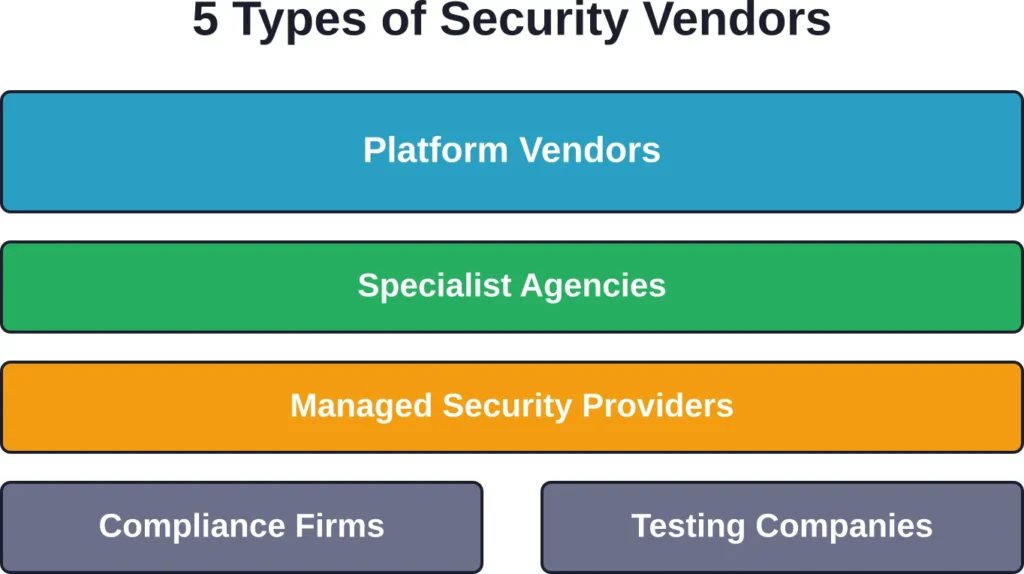
The Five Security Vendor Types
Platform vendors offer integrated suites covering multiple security domains. These work well for organizations consolidating tools or building enterprise-wide programs.
Specialist agencies focus on specific domains like web application security, cloud infrastructure protection, or industrial control systems. They bring deep expertise but require integration with other tools.
Managed security service providers handle security operations for clients who lack internal teams or need 24/7 monitoring capabilities.
Compliance-focused firms help organizations meet regulatory requirements like NIST SP 800-53, which provides control frameworks for system security protection. These excel at audit preparation and documentation.
Testing and validation companies perform penetration tests, red team exercises, and security assessments to identify vulnerabilities before attackers do.
Top 15 Website Security Companies for 2026
The following agencies represent diverse approaches to website and application security. Each entry includes what they do best, realistic fit profiles, and honest limitations.
1. A-listware

A-listware is a software development and consulting company providing skilled developers, dedicated teams, and comprehensive IT services. They focus on delivering high-quality, secure, and responsive digital solutions through outsourcing and team augmentation.
Services include custom and enterprise software development, UX/UI design, testing & QA, IT consulting, data analytics, infrastructure management, help desk, and cybersecurity. They support full project lifecycles and act as seamless extensions of client teams with 24/7 expert access and smooth integration.
A-listware emphasizes cost-effective yet exceptional development, modern technologies, and end-to-end management of applications and infrastructure.
Best for: Companies needing dedicated development teams, application modernization, or full IT ecosystem support
Realistic fit: Enterprises, SMBs, and startups looking for reliable outsourcing partners capable of handling complex software projects and ongoing operations
Contact Information:
- Website: a-listware.com
- Phone: +1 (888) 337 93 73
- Email: [email protected]
- Address: North Bergen, NJ 07047, USA
- LinkedIn: www.linkedin.com/company/a-listware
- Facebook: www.facebook.com/alistware
2. Lengreo

Lengreo operates as a complete marketing and tech partner, delivering B2B digital marketing strategies, lead generation, and website development services tailored to ambitious companies. They combine data-driven tactics with personalized outreach to drive measurable growth in client acquisition and conversions.
Their services span full-funnel execution: SEO (local, technical, link building, content strategy), paid advertising across Meta and LinkedIn, hyper-personalized lead generation through LinkedIn outreach, email, and cold calling, plus demand generation and social media content. They also build eCommerce, business, and portfolio websites with end-to-end discovery, design, development, and ongoing support.
Lengreo stands out by listening to client needs instead of applying generic solutions, integrating deeply with client teams, and focusing relentlessly on qualified leads and ROI.
Best for: B2B companies in IT, software development, architecture, biotech, and tech services seeking scalable lead generation and digital presence
Realistic fit: Mid-market businesses and startups ready to invest in strategic, results-oriented marketing and web development partnerships
Contact Information:
- Website: Lengreo.com
- Phone: +31 686 147 566
- Email: [email protected]
- Address: Vrijstraat 9 C/D, 5611 AT Eindhoven, Netherlands
- LinkedIn: Lengreo
- Twitter: @Lengreo
- Instagram: @lengreo
3. Gilzor

Gilzor delivers custom software development for startups, small and medium businesses, and product studios. They help clients launch, scale, and evolve digital products through full-cycle services from idea validation to post-launch maintenance.
The team specializes in mobile and web development (iOS, Android, full-stack web), UI/UX design with user-centric focus, quality assurance, research & development for PoCs, business analysis, consulting on architecture and technology choices, plus go-to-market strategy support. They emphasize secure, scalable, high-performance solutions and smooth delivery processes.
Gilzor works across industries with a practical approach to turning ideas into functional, attractive products that connect with target audiences and deliver business value.
Best for: Startups validating and launching MVPs, SMBs adding digital channels or automation, product companies seeking feature expansion and modernization
Realistic fit: Organizations needing reliable full-cycle custom development with strong emphasis on quality, user experience, and market readiness
Contact Information:
- Website: www.gilzor.com
- Email: [email protected]
- Address: Poland, Warsaw, Office 58, street Adama Mickiewicza 37, 01-625
- LinkedIn: www.linkedin.com/company/gilzor-softwaredevelopment
4. Oski

Oski builds smart, well-engineered software solutions for tech-forward enterprises and ambitious startups. They handle design, development, deployment, and ongoing maintenance across cloud, frontend, AI, and CMS platforms.
Their expertise includes scalable cloud architectures (serverless, hybrid, multi-cloud), modern frontend frameworks (React, Vue, Angular, etc.), artificial intelligence and machine learning integrations, and reliable CMS implementations (Umbraco, WordPress). They deliver solutions for industries including travel, logistics, e-commerce, education, fintech, and insurance.
Oski accelerates development through experienced teams and innovative practices while maintaining focus on quality, security, and seamless business integration.
Best for: Enterprises and startups requiring custom web and cloud solutions, AI-powered features, or industry-specific digital platforms
Realistic fit: Organizations with complex requirements in regulated or high-growth sectors that value robust architecture and long-term support
Contact Information:
- Website: oski.site
- Phone: +48571282759
- Email: [email protected]
- Address: Kaupmehe tn 7, 10114 Tallinn, Estonia
- LinkedIn: www.linkedin.com/company/oski-solutions
5. Mobian

Mobian builds dedicated engineering teams for production-ready software delivery in mobile and AI domains. They support both full outsourcing (end-to-end delivery) and outstaffing (embedding senior engineers) models for companies in IT, healthcare, fintech, and logistics.
Their capabilities cover end-to-end product development (mobile iOS/Android/Flutter, backend, APIs, cloud, QA), custom AI and automation systems (agents, LLMs, computer vision), scalable architecture design, legacy integration, and post-launch partnership with ongoing support.
Mobian maintains high standards in clean architecture, documentation, and clear communication, enabling clients to ship faster without compromising quality or control.
Best for: Companies in regulated or complex industries needing senior mobile/AI engineering capacity or complete product builds
Realistic fit: Organizations scaling digital products who require reliable, senior-level execution and long-term technical partnership
Contact Information:
- Website: mobian.studio
- Phone: [email protected]
- Address: Harju maakond, Tallinn, Kesklinnalinnaosa, Masina tn 22, 10113
- LinkedIn: www.linkedin.com/company/mobian-studio
6. Cisco Security
Cisco leverages its dominance in networking to deliver integrated security solutions. Cisco’s security portfolio includes firewalls, email security, secure access service edge capabilities, and extended detection and response platforms.
Organizations already standardized on Cisco networking equipment often extend into Cisco security for unified management and seamless integration. SecureX provides a unified interface across Cisco’s security products and selected third-party tools.
Cisco Secure Email and Secure Web Appliance protect against phishing, malware, and data loss through email and web channels. Their adoption in large enterprises is extensive, particularly where email remains a primary attack vector.
The company’s Talos threat intelligence team ranks among the industry’s most respected, analyzing billions of daily telemetry points to identify emerging threats.
Best for: Organizations already invested in Cisco networking, enterprises seeking vendor consolidation, businesses prioritizing email and web security
Realistic fit: Mid-market to large enterprises with Cisco infrastructure and security operations teams
7. Rapid7
Rapid7 specializes in vulnerability management, application security, and security operations. Their InsightVM platform provides comprehensive vulnerability assessment across networks, while InsightAppSec focuses on dynamic application security testing.
The company’s products emphasize risk-based prioritization. Rather than generating lists of thousands of vulnerabilities, Rapid7 helps security teams focus on exposures that represent actual business risk based on asset criticality, threat intelligence, and exploit availability.
Rapid7’s InsightIDR platform provides security information and event management and user behavior analytics for detecting compromises. The cloud-native architecture simplifies deployment compared to legacy SIEM solutions.
Their Metasploit penetration testing framework remains widely used by security professionals for vulnerability validation and exploit development. Rapid7 maintains Metasploit as open source while offering commercial versions with additional capabilities.
Best for: Organizations building vulnerability management programs, development teams needing application security testing, companies seeking modern SIEM alternatives
Realistic fit: Mid-market companies to enterprises with security or development teams capable of acting on vulnerability findings
8. Qualys

Qualys operates a cloud platform for security and compliance solutions, with particular strength in vulnerability management and policy compliance.
Their cloud-based architecture eliminates the need for on-premises scanning infrastructure. Organizations deploy lightweight sensors or agents across their environment, with all processing and data storage occurring in Qualys’s cloud.
The platform includes vulnerability scanning, web application scanning, policy compliance assessment, and certificate management. Qualys’s continuous monitoring approach provides near-real-time visibility into security posture changes.
For regulated industries, Qualys offers compliance scanning mapped to frameworks like PCI-DSS, HIPAA, and NIST. This accelerates audit preparation and helps maintain ongoing compliance.
Best for: Organizations in regulated industries, companies seeking cloud-based vulnerability management, businesses managing certificate inventories
Realistic fit: Any organization needing systematic vulnerability scanning and compliance monitoring
9. Tenable
Tenable provides exposure management through their Nessus vulnerability scanner and Tenable.io cloud platform. Their approach focuses on understanding the complete attack surface, including IT assets, cloud resources, operational technology, and industrial control systems.
Nessus remains one of the most widely deployed vulnerability scanners globally, known for comprehensive vulnerability coverage and reliable scanning. Tenable.io extends these capabilities to the cloud with continuous monitoring and risk-based prioritization.
Tenable.ot specifically addresses operational technology and industrial control system security, an increasingly critical domain as cyber threats target critical infrastructure.
The platform’s predictive prioritization uses data science to identify vulnerabilities most likely to be exploited, helping security teams focus remediation efforts where they matter most.
Best for: Organizations with extensive attack surfaces, critical infrastructure operators, companies managing OT environments, security teams overwhelmed by vulnerability volumes
Realistic fit: Mid-market to enterprise organizations with diverse infrastructure including IT and OT assets
10. Cloudflare

Cloudflare protects websites and applications through their global network. Their web application firewall, DDoS protection, bot management, and content delivery network serve millions of websites.
The platform’s strength lies in scale. Cloudflare’s network processes enormous traffic volumes daily, providing visibility into attack patterns and enabling rapid mitigation of emerging threats.
Their WAF blocks common web attacks like SQL injection and cross-site scripting while allowing legitimate traffic through. Bot management distinguishes between helpful bots, malicious bots, and human visitors to prevent credential stuffing, scraping, and fraud.
Cloudflare’s Zero Trust platform extends protection beyond the website itself to secure internal applications and remote workforce access. This addresses the modern reality where perimeter security no longer suffices.
Best for: Organizations operating public websites or web applications, companies facing DDoS threats, businesses implementing Zero Trust architectures
Realistic fit: Any organization with internet-facing web properties, from startups to enterprises
11. Atlant Security
Atlant Security operates as a boutique security firm specializing in comprehensive penetration testing, security architecture reviews, and compliance consulting. They work with companies of any size but excel when clients need customized security strategies rather than off-the-shelf platforms.
Their approach emphasizes practical security that accounts for operational realities. Instead of generating 500-page reports filled with low-priority findings, they focus on exploitable vulnerabilities and provide remediation guidance development teams can actually implement.
The firm’s testing methodology covers web applications, APIs, mobile apps, cloud infrastructure, and internal networks. They also offer security training for development teams and ongoing advisory services for organizations building security programs from scratch.
Atlant Security fits organizations that need flexible, project-based security expertise without the overhead of enterprise platforms. Their analysts typically have offensive security backgrounds, which means they think like attackers rather than just running automated scanners.
Best for: Mid-market companies, startups with complex applications, organizations building security programs, development teams needing security training
Realistic fit: Companies of any size willing to invest in thorough security assessments rather than checkbox compliance
12. Palo Alto Networks

Palo Alto Networks provides enterprise-grade security platforms spanning network security, cloud security, and endpoint protection. Their next-generation firewalls and Prisma Cloud platform serve large organizations with complex, distributed infrastructures.
The company’s strength lies in integration across security domains. Their platforms correlate data from network traffic, endpoint behavior, and cloud workloads to detect sophisticated attacks that evade single-layer defenses.
Palo Alto’s security operations platform includes advanced threat intelligence, automated response capabilities, and managed threat hunting services. They also offer extensive training and certification programs for security teams.
Implementation requires significant resources. Organizations need dedicated security staff to deploy, configure, and maintain Palo Alto platforms effectively. The learning curve is steep, but the platform scales to protect global enterprises.
Best for: Large enterprises, organizations with distributed infrastructure, companies requiring advanced threat detection
Realistic fit: Organizations with security teams of 5+ dedicated staff and budgets supporting enterprise-grade platforms
13. CrowdStrike

CrowdStrike pioneered cloud-native endpoint detection and response. Their Falcon platform monitors endpoint behavior, detects anomalies indicating compromise, and provides tools for rapid incident response.
The platform’s architecture allows for rapid deployment across thousands of endpoints without traditional antivirus overhead. Detection relies on behavioral analytics and threat intelligence rather than signature-based scanning.
CrowdStrike’s threat intelligence team, Counter Adversary Operations, tracks active threat actors and campaigns. This intelligence feeds directly into the Falcon platform, enabling proactive defense against emerging threats.
Their managed threat hunting service adds human analysts who proactively search for sophisticated attackers already inside networks. This addresses a critical gap—most breaches aren’t discovered by automated tools.
Best for: Organizations prioritizing endpoint security, companies experiencing or recovering from breaches, businesses with remote workforces
Realistic fit: Mid-market to enterprise organizations with 100+ endpoints needing advanced detection capabilities
14. Fortinet

Fortinet delivers integrated security solutions through their Security Fabric architecture. The platform combines network security, endpoint protection, and cloud security with centralized management and visibility.
Their FortiGate next-generation firewalls are deployed widely across enterprises and service providers. FortiGate appliances integrate firewall, VPN, intrusion prevention, web filtering, and antivirus capabilities in unified devices.
Fortinet’s SD-WAN capabilities integrate directly with security functions, appealing to organizations modernizing network architectures while maintaining security controls.
The company’s breadth creates both advantages and challenges. Organizations can build comprehensive security infrastructure from a single vendor, simplifying procurement and integration. But the scope requires careful planning to avoid deploying features that never get properly configured.
Best for: Organizations seeking integrated security infrastructure, companies deploying SD-WAN, businesses with distributed locations
Realistic fit: Mid-market and enterprise organizations with network security staff capable of managing complex configurations
15. Check Point Software Technologies
Check Point provides enterprise security platforms with focus on threat prevention. Their approach emphasizes stopping attacks before they execute rather than detecting breaches after compromise.
The Infinity architecture unifies network security, cloud security, mobile security, and endpoint protection. Check Point’s threat prevention engine blocks known and unknown malware using a combination of signature detection, sandboxing, and behavioral analysis.
Their security gateways protect on-premises networks, while CloudGuard secures public cloud infrastructure across AWS, Azure, and Google Cloud. The platforms share consistent policy frameworks and centralized management.
Check Point invests heavily in threat research through their research division, which discovers zero-day vulnerabilities and analyzes emerging attack techniques. This research feeds into product capabilities and threat intelligence services.
Best for: Enterprises prioritizing prevention over detection, organizations with hybrid on-premises and cloud infrastructure, security teams seeking unified policy management
Realistic fit: Large organizations with established security programs and dedicated network security staff
Critical Factors in Vendor Selection
Most companies fixate on features and miss the factors that determine long-term success.
Contract flexibility matters more than most buyers realize. Security needs evolve rapidly, but three-year contracts with auto-renewal clauses lock organizations into solutions that no longer fit. Project-based or annual agreements preserve flexibility.
Integration capability determines whether a security tool strengthens your infrastructure or creates a new silo. Vendors should support standard protocols, offer robust APIs, and demonstrate successful integrations with your existing stack.
Support quality shows up when incidents occur. A platform with impressive features but 48-hour response times fails during active breaches. Evaluate escalation paths, guaranteed response times, and whether support staff possess actual security expertise.
Compliance alignment saves massive effort if you operate in regulated industries. Vendors familiar with HIPAA, PCI-DSS, or SOC 2 requirements accelerate audit preparation and reduce documentation burden.
The Questions That Actually Matter
Before scheduling demos, get clear answers to these questions:
- What’s the realistic implementation timeline, including integration with existing systems?
- Who owns the data your tools collect, and where is it stored?
- What happens to service levels if you get acquired or pivot to a new market?
- Can you trial the product in your actual environment before committing?
- What’s the total cost including hidden fees for data ingestion, API calls, or additional users?
Vendors who can’t answer these directly either lack operational maturity or aren’t being honest about limitations.
The Real Cost Beyond Licensing
Security tools cost more than their license fees. Hidden costs determine whether an investment delivers value or drains resources.
Implementation effort varies dramatically. Cloud-native tools like Cloudflare deploy in hours, while enterprise platforms require weeks or months of professional services. Budget for integration work, configuration tuning, and testing.
Operational overhead matters. Some platforms require dedicated staff for daily operation, alert triage, and maintenance. Others operate with minimal ongoing attention. Match operational requirements to available team capacity.
Training represents a significant hidden cost. New platforms require security teams to develop proficiency. Factor in training time, certification costs, and reduced productivity during the learning period.
Data egress and usage fees catch organizations off guard with cloud-based tools. Understand pricing models fully—some vendors charge based on protected endpoints, others on data volume processed, and some on API calls or user seats.
Total Cost of Ownership Factors
| Cost Factor | Typical Range | When It Applies |
|---|---|---|
| Professional services | 20-100% of license cost | Complex enterprise deployments |
| Annual support and maintenance | 15-25% of license cost | Most enterprise software |
| Training and certification | Varies by vendor | Platforms requiring specialized skills |
| Integration development | Varies by complexity | Custom integrations with existing systems |
| Ongoing operational staff | Largest long-term cost | All solutions requiring active management |
Compliance and Regulatory Considerations
Regulated industries face mandatory security requirements. Selecting vendors familiar with relevant frameworks saves substantial effort.
NIST SP 800-53 provides control frameworks for federal systems and many private sector organizations. Vendors supporting NIST controls accelerate compliance for government contractors and critical infrastructure operators.
Healthcare organizations must maintain HIPAA compliance. According to EC-Council University research, healthcare organizations faced significant cybersecurity threats in 2024-2025, making security vendor selection particularly critical for this sector.
Payment card processing requires PCI-DSS compliance. Security vendors offering PCI-specific scanning, monitoring, and attestation support streamline ongoing compliance.
ISO 27001 certification demonstrates information security management system maturity. Organizations pursuing ISO certification benefit from vendors who understand the standard’s requirements.
Matching Vendors to Compliance Needs
Different vendors emphasize different compliance frameworks.
Qualys and Tenable excel at compliance scanning and reporting, making them strong choices for organizations in regulated industries requiring regular compliance attestation.
Palo Alto Networks, Check Point, and Cisco provide comprehensive documentation mapping their controls to regulatory frameworks, supporting compliance audit processes.
Atlant Security offers compliance consulting alongside technical security assessments, helping organizations understand requirements and implement appropriate controls.
When evaluating vendors for compliance needs, request specific evidence of their experience with your required frameworks. Generic compliance claims provide limited value—look for detailed control mappings and customer references in similar industries.
The Emerging Threat Landscape
Cyber threats evolved significantly in 2025 and continue changing in 2026. Security vendors must adapt to address new attack patterns.
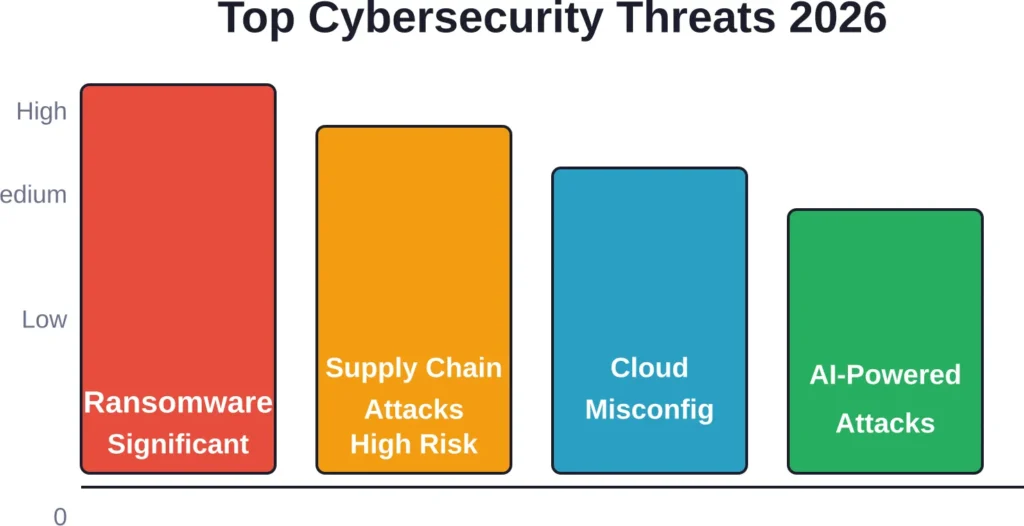
Ransomware remains a dominant threat. According to EC-Council University research, ransomware attacks in 2025 significantly impacted education sector organizations. This threat category demands immediate attention from security programs and vendors alike.
Supply chain attacks exploit trust relationships between organizations and vendors. Organizations face significant cybersecurity risks from vendor relationships. This makes vendor security posture as important as internal controls.
Cloud misconfigurations create exposure as organizations migrate workloads. Security vendors now emphasize cloud security posture management to identify and remediate configuration errors before exploitation.
AI-powered attacks increase in sophistication. Attackers leverage generative AI for social engineering, malware development, and vulnerability discovery, forcing defensive tools to incorporate AI-based detection.
Vendor Response to Emerging Threats
Leading security companies invest heavily in threat research to stay ahead of evolving attacks.
CrowdStrike’s Counter Adversary Operations team tracks active threat actors, providing customers with intelligence about campaigns targeting their industries.
Cloudflare’s global network visibility allows rapid identification of attack patterns and DDoS campaigns, enabling proactive protection.
According to Harvard Extension School cybersecurity research from 2025, security expert David Cass noted that some companies lose upward of $25 million in under 30 minutes during cyberattacks. This underscores the importance of vendors providing rapid detection and response capabilities.
When evaluating vendors, assess their threat intelligence capabilities, research team investments, and how quickly they respond to zero-day vulnerabilities and emerging attack techniques.
Red Flags When Evaluating Vendors
Certain warning signs indicate vendors who won’t deliver promised value.
Vague implementation timelines signal vendors who haven’t accurately scoped the work. Realistic vendors provide specific timeframes with clear dependencies and milestone definitions.
Resistance to trials or proof-of-concept deployments suggests products that don’t perform as marketed. Confident vendors welcome opportunities to demonstrate capability in actual customer environments.
Aggressive sales tactics with artificial urgency indicate vendors prioritizing deals over customer fit. Quality security vendors invest time understanding requirements before proposing solutions.
Inability to provide customer references in similar industries raises concerns. Established vendors should readily connect prospects with satisfied customers facing comparable challenges.
Unclear data ownership and portability terms create risk. Organizations must retain ownership of security data and ability to export it if changing vendors.
Questions That Reveal Vendor Quality
Ask these questions during evaluation to separate capable vendors from pretenders:
- What percentage of implementations require scope expansion due to unforeseen complexity?
- How do you handle situations where your product doesn’t meet customer needs post-purchase?
- What’s your average customer retention rate, and what are the primary reasons customers leave?
- Can you describe a recent failure or limitation of your product and how you addressed it?
- What happens to my data if your company gets acquired or goes out of business?
Honest, direct answers demonstrate vendor maturity and customer focus. Evasive responses warrant caution.
Building Effective Vendor Combinations
No single vendor addresses every security need. Effective security programs combine specialized tools.
A typical mid-market security stack might include Cloudflare for web application protection and DDoS mitigation, CrowdStrike for endpoint detection and response, and Atlant Security for periodic penetration testing and compliance consulting.
Enterprise organizations often deploy Palo Alto Networks or Cisco for network security, CrowdStrike or similar for endpoints, Qualys or Tenable for vulnerability management, and specialized tools for application security and cloud security posture management.
The key lies in integration. Tools that can’t share data or coordinate responses create operational burden without proportional security improvement.
When building security stacks, prioritize vendors supporting standard protocols, offering robust APIs, and demonstrating successful integrations with complementary tools.
Making the Final Decision
After narrowing options, structured evaluation prevents costly mistakes.
Conduct proof-of-concept deployments with finalists. Deploy tools in representative portions of your actual environment, not vendor demo systems. Test against real workloads, configurations, and use cases.
Involve the teams who’ll operate the tools daily. Security operations staff should evaluate management interfaces, alert quality, and investigation workflows. Network teams should assess integration with existing infrastructure.
Validate vendor claims independently. Don’t rely solely on vendor-provided case studies or references. Research customer experiences through community discussions and independent reviews.
Negotiate contract terms carefully. Push for shorter initial terms with renewal options rather than multi-year commitments. Ensure clear data ownership, exportability, and termination clauses.
Plan implementation thoroughly. Security tool deployments frequently run over schedule and budget. Account for integration complexity, testing requirements, and staff training needs.
Beyond Technology: The Human Element
Security tools only deliver value when operated by capable teams.
The most sophisticated platform fails without staff who understand its capabilities, monitor its outputs, and respond to its alerts. Before buying tools, assess whether there’s a team to operate them effectively.
For organizations lacking internal security expertise, managed security service providers handle operations on behalf of clients. This outsourcing model works well for companies unable to recruit or retain security staff.
Security awareness training for all employees remains critical. Technical controls can’t prevent every attack—educated users who recognize phishing attempts and suspicious activity form an essential defense layer.
According to research published by Harvard Extension School in 2025, AI is transforming both offensive and defensive cybersecurity. Organizations must invest in continuous learning to keep pace with evolving threats and defensive capabilities.
Looking Forward: Security Trends Shaping 2026
Several trends influence security vendor selection in 2026 and beyond.
Zero Trust architectures continue displacing perimeter-focused security. Vendors supporting Zero Trust principles—verify explicitly, least privilege access, assume breach—align with modern security thinking.
Cloud-native security tools gain preference over legacy on-premises solutions. Cloud platforms offer faster deployment, lower operational overhead, and consumption-based pricing that scales with usage.
Security automation and orchestration reduce manual work. Vendors providing automated response capabilities help organizations address threats faster than manual processes allow.
Extended detection and response platforms correlate signals across multiple security layers. This consolidated approach improves threat detection while reducing tool sprawl.
CISA released a guide in February 2026 to help critical infrastructure users adopt more secure communication in operational technology environments. Security vendors focusing on OT and industrial control systems address this growing concern.
Frequently Asked Questions
Website security focuses specifically on protecting web applications, websites, and web-facing infrastructure from attacks like SQL injection, cross-site scripting, DDoS, and bot attacks. General cybersecurity encompasses broader concerns including endpoint protection, network security, email security, and physical security. Organizations need both—website security addresses public-facing attack surfaces while general cybersecurity protects internal systems and data.
Realistic annual budgets for comprehensive website security vary widely based on company size, complexity, and risk profile. Industry analyses suggest mid-sized companies typically allocate between $50,000 and $200,000 annually for web security tools, services, and staff when building mature programs. Startups might begin with $15,000-$50,000 for basic protection through services like Cloudflare and periodic penetration testing. Enterprise organizations often spend substantially more depending on transaction volumes, compliance requirements, and risk tolerance.
Most organizations benefit from combining specialized vendors rather than relying on a single provider. While comprehensive platforms from Palo Alto Networks, Cisco, or Fortinet address many needs, no vendor excels at everything. Typical security stacks combine a web application firewall provider, endpoint protection platform, vulnerability scanner, and periodic penetration testing from specialists. This layered approach provides better coverage than any single vendor delivers alone.
Testing frequency depends on how rapidly your environment changes. Organizations with frequent code deployments and infrastructure changes should test quarterly. Companies with stable environments may test annually or semi-annually. Compliance frameworks often mandate specific testing frequencies—PCI-DSS requires annual testing plus after significant changes. Major application releases, infrastructure migrations, or security incidents warrant immediate testing regardless of schedule.
The most critical factor is fit—alignment between vendor capabilities and your specific needs, existing infrastructure, team skills, and operational constraints. The best vendor isn’t necessarily the largest or most comprehensive, but rather the one whose strengths match your vulnerabilities, whose complexity matches your operational capacity, and whose business model aligns with your budget and growth trajectory.
Request proof-of-concept deployments in your actual environment rather than vendor demo systems. Ask for customer references in similar industries facing comparable challenges, then actually contact them. Research independent reviews and community discussions about real-world experiences. Check whether vendors hold relevant certifications and compliance attestations. Review third-party testing results from organizations like NSS Labs, AV-Comparatives, or Gartner where available.
Security vendor contracts must clearly define data ownership—you own all security data generated. Include specific service level agreements with response time guarantees for support and incident assistance. Define termination clauses and data exportability to avoid vendor lock-in. Specify update and maintenance schedules. For cloud services, clarify where data is stored and processed to address compliance requirements. Include provisions addressing vendor acquisition scenarios and service discontinuation.
Conclusion: Making Security Investments That Matter
Selecting website security companies requires matching specific threats and constraints to vendor capabilities.
The 15 agencies covered here—Lengreo, Gilzor, OSKI Solutions, A-listware, Mobian Studio, Atlant Security, Palo Alto Networks, CrowdStrike, Fortinet, Check Point, Cisco Security, Rapid7, Qualys, Tenable, and Cloudflare—represent diverse approaches serving different organizational needs. None is universally best. Each excels in particular contexts.
The decision process matters more than any specific vendor choice. Organizations that clearly define requirements, involve operational teams in evaluation, conduct thorough testing, and plan implementation carefully achieve better outcomes than those chasing analyst rankings or competitor choices.
Security remains a continuous process, not a one-time purchase. The vendor relationship extends beyond initial implementation through ongoing operations, threat response, and program evolution. Choose partners you can work with long-term.
Start by assessing your current security posture honestly. Identify the gaps representing actual business risk. Then match those specific needs to vendors with proven capabilities in those domains. This targeted approach delivers better protection than broad platform purchases that never get properly configured.
Ready to strengthen your website security? Begin with a clear-eyed assessment of what you’re actually protecting, who’s trying to compromise it, and what capabilities you need to defend effectively. The right vendor emerges from that analysis.