
Quick Summary: Calling your own phone number typically results in a busy signal or an error message, as phone networks aren’t designed to route calls back to the originating device. However, if you receive a call from what appears to be your own number, it’s almost certainly a scam using caller ID spoofing technology to trick you into answering.
Ever wondered what would happen if you dialed your own phone number? The reality is simpler than most people expect—but there’s a darker side to this phenomenon that everyone needs to know about.
What Actually Happens When You Dial Your Own Number
When attempting to call your own mobile or landline number, the phone network generally won’t complete the connection. Most carriers block these calls at the network level.
Depending on the carrier and network configuration, callers typically experience one of these outcomes:
- A busy signal or fast busy tone
- An error message stating the call cannot be completed
- An automated message saying the number is unavailable
- The call immediately disconnecting
Phone networks weren’t designed to route calls in a loop back to the originating device. It’s a technical limitation that prevents this self-calling scenario from working.
The Dangerous Scam: Receiving Calls from Your Own Number
Here’s where things get seriously concerning. If your own phone number appears on caller ID as an incoming call, that’s not you calling yourself—it’s a scam.
A new scam is tricking victims into giving away precious information by calling them from what appears to be their own phone numbers. According to CBS Local and other consumer reports nationwide, scammers use ‘number spoofing’ technology to manipulate caller ID systems.
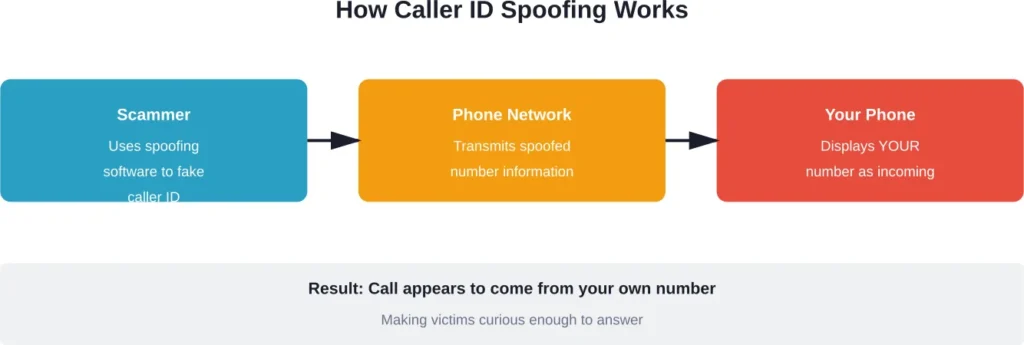
According to CBS Local reports, one woman in South Carolina reported being curious to find out how her own cell number was calling her and picked up. That curiosity is exactly what scammers count on.
The scam works because people are naturally intrigued when they see their own number calling. Most folks answer out of sheer curiosity—and that’s when the trouble starts.
Why Scammers Use This Tactic
Number spoofing exploits human psychology. When something seems impossible or mysterious, people want answers.
Scammers know that calls from unknown numbers often get ignored. But a call from your own number? That’s bizarre enough to get attention. The goal is simple: get victims on the line, then extract personal information, financial details, or install malware through social engineering.
| Scammer Goal | Common Tactic | What They Want |
|---|---|---|
| Identity Theft | Claim account compromise | Social Security number, DOB |
| Financial Fraud | Fake urgent payment needed | Credit card or bank info |
| Account Takeover | Request verification codes | Two-factor authentication codes |
| Malware Installation | Tech support impersonation | Remote access to device |
How to Protect Yourself
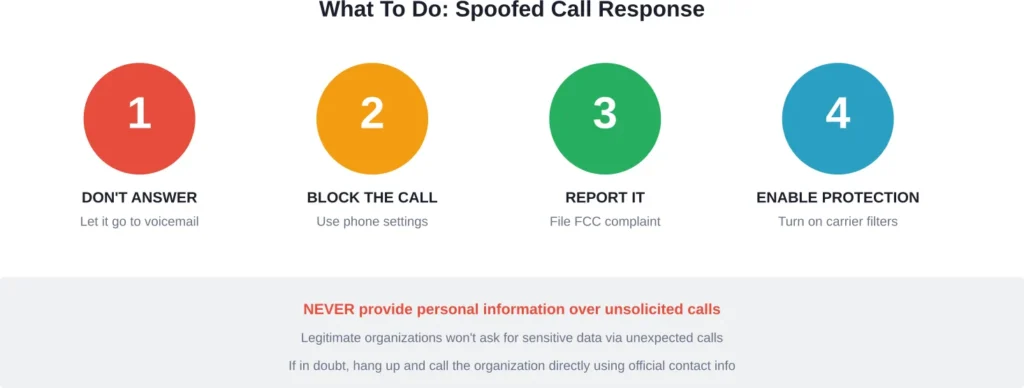
Never answer calls from your own number. There’s no legitimate reason your actual number would call you.
If curiosity gets the better of someone and they do answer, hang up immediately. Don’t press any buttons, don’t speak, don’t engage. Community discussions across platforms consistently emphasize this point—engagement of any kind signals to scammers that the number is active.
Consider these additional protective measures:
- Enable spam call blocking features through your mobile carrier
- Register with the National Do Not Call Registry
- Use third-party call screening apps
- Never share personal information over unsolicited calls
- Report spoofed calls to the FCC at fcc.gov
The Technology Behind Spoofing
Caller ID systems weren’t built with robust security. The technology relies on trust between carriers, making it relatively easy to manipulate.
VoIP services and certain telecommunication tools allow users to set custom caller ID information. While this has legitimate business uses, scammers exploit these capabilities. According to VoIP industry documentation, advanced origination providers offer features like Direct Inward Dialing (DID), automatic failover routing, and real-time analytics—features that can be abused.
The FCC has implemented regulations requiring voice service providers to adopt call authentication technology, but spoofing remains widespread as scammers continuously adapt.
Frequently Asked Questions
No, phone networks generally block calls to the same number they originate from. Attempting to dial your own number typically results in a busy signal, error message, or immediate disconnection. The network infrastructure isn’t designed to route calls in a self-referencing loop.
It’s a scam. Scammers use caller ID spoofing technology to make it appear as though your own number is calling you. This tactic exploits curiosity to get people to answer, at which point scammers attempt to extract personal information or money through various social engineering techniques.
Don’t answer it. If already answered, hang up immediately without providing any information or pressing any buttons. Block the number if possible, and report the incident to the FCC. Never engage with these calls, as any interaction confirms your number is active.
Yes, spoofing caller ID with intent to defraud or cause harm is illegal under the Truth in Caller ID Act. However, enforcement is challenging because scammers often operate internationally or use sophisticated techniques to hide their true location and identity.
Carriers have implemented call authentication technologies and spam filtering, but scammers continuously evolve their methods. Enable spam call blocking features through carrier settings, but understand that no system catches 100% of spoofed calls. User vigilance remains the best defense.
Scammers typically seek Social Security numbers, banking information, credit card details, account passwords, or two-factor authentication codes. They may impersonate government agencies, tech support, or financial institutions to create urgency and pressure victims into providing sensitive data.
Simply answering generally won’t compromise the device itself, but it confirms the number is active—leading to more scam attempts. The real danger comes from providing information, following instructions to download software, or pressing buttons that might trigger premium charges or connect to fraudulent services.
Stay Safe in 2026
The bottom line? Calling your own number won’t work due to network limitations. But receiving a call from your own number is a major red flag.
As spoofing technology becomes more sophisticated, awareness remains the strongest defense. Share this information with family and friends—especially older adults who may be more vulnerable to these scams.
Trust your instincts. If something seems off about a call, it probably is. Legitimate organizations won’t contact people using spoofed numbers that match the recipient’s own phone number. When in doubt, hang up and verify through official channels.