
Quick Summary: Cutting Invisigal from the Z-Team in Dispatch Episode 7 leads to a confrontation where she reveals destroying Mecha Cop, but it does not guarantee the villain ending. Defending her maintains team cohesion but carries moral implications. The decision primarily affects character relationships and specific dialogue rather than determining the final ending outcome.
Episode 7 of Dispatch drops one of the game’s most agonizing decisions on players: whether to cut Invisigal from the Z-Team or defend her actions. This choice carries significant weight, affecting both character dynamics and how the story unfolds. But does it actually lock you into the villain ending?
Here’s the thing though—community discussions reveal widespread confusion about the actual consequences. Let’s break down what happens with each path.
The Context Behind the Decision
Before the choice materializes, Invisigal’s actions raise serious red flags. Players discover her involvement in questionable activities that threaten team integrity. The game forces this decision at a critical narrative junction, making it feel like everything hangs in the balance.
The choice appears during a tense confrontation. You’ll see two distinct options: cut her from the team immediately or defend her despite the evidence.
Consequences of Cutting Invisigal
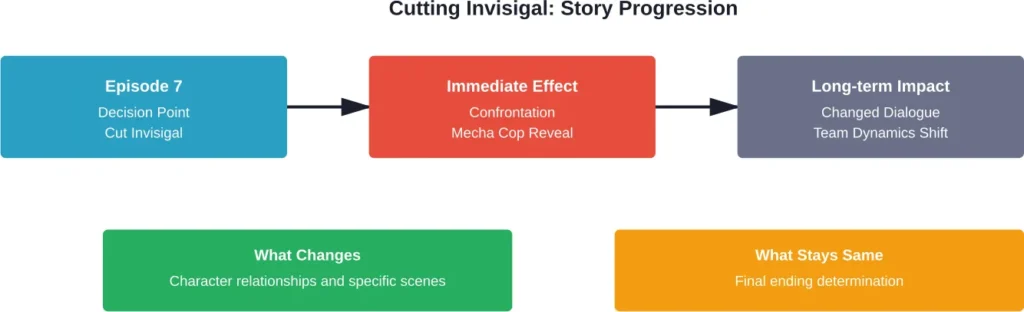
When you choose to cut Invisigal from the team, the confrontation intensifies. She doesn’t take the dismissal quietly. Instead, she reveals a bombshell: she destroyed Mecha Cop.
This revelation changes team dynamics substantially. Other Z-Team members react to both your decision and her confession, creating ripple effects throughout subsequent episodes.
Here’s what specifically changes:
- Invisigal becomes hostile and reveals critical information about Mecha Cop
- Team morale takes a hit, affecting certain character interactions
- Specific dialogue changes in later episodes reference your decision
- You lose access to Invisigal-specific story branches
But wait. Does this guarantee the villain ending? According to community discussions, the answer is no. The final ending depends on accumulated choices throughout the game, not this single decision.
What Happens When You Defend Invisigal
Defending Invisigal maintains team cohesion but carries moral weight. Other team members question your judgment, creating tension that persists through remaining episodes.
The team stays intact, but trust becomes a recurring theme. Invisigal remains available for her character arc, which provides additional story content unavailable on the cutting path.
| Aspect | Cutting Invisigal | Defending Invisigal |
|---|---|---|
| Team Composition | Reduced roster | Full team maintained |
| Mecha Cop Revelation | Revealed during confrontation | Discovered through other means |
| Character Development | Loses Invisigal’s arc | Access to complete arc |
| Team Trust | Decisiveness respected | Loyalty questioned |
| Ending Impact | Influences but doesn’t determine | Influences but doesn’t determine |
The defending route provides more content overall. You’ll experience additional scenes and dialogue that flesh out Invisigal’s motivations. Some players find this path more satisfying narratively.
Does This Decision Determine Your Ending?
Real talk: this is where player confusion peaks. Community discussions show players worried that cutting Invisigal locks them into the villain ending.
It doesn’t work that way. Dispatch uses a cumulative decision system. Your final ending reflects choices made across all episodes, not individual moments.
That said, cutting Invisigal does contribute to the overall calculation. It’s one data point among many. Players have reported achieving various endings regardless of their Episode 7 choice.
Making the Best Decision for Your Playthrough
So which choice serves your playthrough better? Consider these factors:
Choose to cut if: You prioritize team integrity over individual loyalty, want the dramatic confrontation scene, or plan multiple playthroughs to see different paths.
Choose to defend if: You want maximum story content, prefer maintaining all character relationships, or find Invisigal’s character arc compelling enough to overlook her actions.
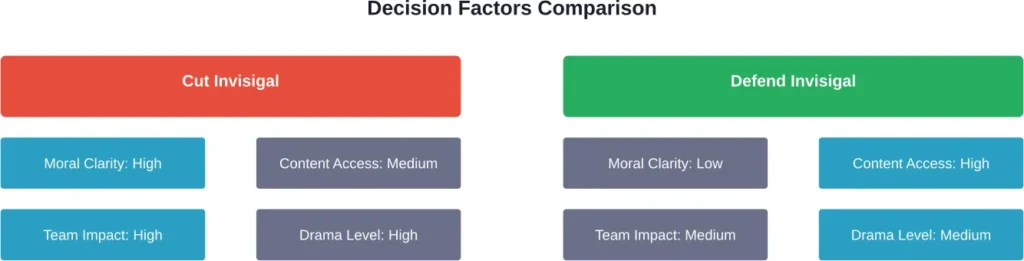
Neither choice is objectively wrong. Dispatch rewards different playstyles and moral frameworks. The game’s design accommodates both approaches.
Frequently Asked Questions
No, cutting Invisigal does not guarantee the villain ending. The final ending depends on accumulated choices throughout all episodes, not this single decision in Episode 7.
No, cutting Invisigal from the team ends her romance path. Defending her maintains access to romance options in later episodes.
When cut from the team, Invisigal reveals that she destroyed Mecha Cop. This information comes out during the confrontation scene immediately following your decision.
Yes, defending Invisigal causes other team members to question your judgment. This creates tension that affects specific dialogue and interactions in subsequent episodes.
Defending Invisigal provides more overall story content, including access to her complete character arc and additional scenes unavailable on the cutting path.
No, the decision to cut or defend Invisigal is permanent. The game saves immediately after your choice, and you cannot reverse it without loading an earlier save.
This ranks among Dispatch’s most impactful decisions for character relationships, but several other choices throughout the game carry equal or greater weight for the final ending determination.
Final Thoughts
The Invisigal decision represents Dispatch at its best—morally complex, narratively significant, and genuinely difficult. Neither path is clearly superior, and both offer distinct story experiences.
Your choice should reflect your playstyle and narrative priorities. Want dramatic confrontation? Cut her. Prefer complete character development? Defend her. Either way, the game adapts and delivers a compelling experience.
Ready to make your decision? Consider what matters most for your playthrough, then commit. That’s what makes Dispatch memorable—choices with real weight and lasting consequences.