
Quick Summary: Drinking alcohol while taking metronidazole can potentially cause a disulfiram-like reaction with symptoms including nausea, vomiting, flushing, and headaches, though recent research questions how common this reaction truly is. Medical guidance recommends avoiding alcohol during treatment and for 48-72 hours after the last dose. While serious reactions are rare, the combination remains contraindicated to minimize any risk.
Metronidazole, commonly sold under the brand name Flagyl, is an antibiotic prescribed for various bacterial and parasitic infections. If your doctor has prescribed this medication, chances are you’ve received a warning about avoiding alcohol. But what actually happens if you mix the two?
The standard medical advice is clear: don’t drink alcohol while taking metronidazole. This warning appears on medication labels, in pharmacy counseling sessions, and across medical literature. The concern centers on something called a disulfiram-like reaction, which can cause a range of uncomfortable and potentially dangerous symptoms.
Here’s the thing though—recent research has started questioning just how common and severe these reactions really are.
Understanding the Disulfiram-Like Reaction
The interaction between metronidazole and alcohol is often compared to what happens when someone taking disulfiram (Antabuse) consumes alcohol. Disulfiram is specifically prescribed to help people with alcohol use disorder by making drinking extremely unpleasant.
The theory behind the metronidazole-alcohol interaction suggests that metronidazole inhibits aldehyde dehydrogenase, an enzyme responsible for breaking down acetaldehyde—a toxic byproduct of alcohol metabolism. When this enzyme is blocked, acetaldehyde accumulates in the bloodstream, triggering unpleasant symptoms.
According to medical literature, acetaldehyde accumulation is hepatotoxic and cardiotoxic, meaning it can damage the liver and heart.
How the Reaction Supposedly Works
When alcohol enters the body, it’s metabolized in two main steps. First, alcohol dehydrogenase converts ethanol into acetaldehyde. Second, aldehyde dehydrogenase converts acetaldehyde into harmless acetic acid.
Metronidazole allegedly interrupts the second step, causing acetaldehyde to build up rather than being efficiently cleared. This buildup triggers the characteristic symptoms of a disulfiram-like reaction.
That said, the actual mechanism remains somewhat controversial in medical research.

Symptoms of Mixing Metronidazole and Alcohol
If a disulfiram-like reaction occurs, symptoms typically appear within 15-30 minutes of alcohol consumption. The severity can range from mild discomfort to serious medical distress.
Common symptoms include:
- Flushing – redness and warmth in the face and neck
- Headaches – often described as throbbing
- Nausea and vomiting
- Abdominal cramps and stomach pain
- Rapid heartbeat
- Dizziness and lightheadedness
- Sweating
More severe reactions may include:
- Difficulty breathing
- Chest pain
- Hypotension (low blood pressure)
- Confusion or altered mental state
According to medical reports, there has been one documented death associated with the metronidazole-alcohol interaction, though such severe outcomes remain extremely rare.
An interesting case reported in medical literature involved a 14-year-old patient who experienced severe abdominal pain while taking metronidazole alongside an alcohol-containing medication (Prednisone Intensol solution, which contains 30% alcohol). This highlights that the interaction isn’t limited to alcoholic beverages—medications containing alcohol can also trigger reactions.
What the Research Actually Shows
Now, this is where it gets interesting. While the metronidazole-alcohol warning is widespread, recent research has questioned whether the reaction is as common or well-established as traditionally believed.
A review published in medical literature examined multiple case reports of supposed metronidazole-ethanol reactions. The researchers found that while eight cases were reported, only four were considered serious (including one death). Critically, the authors noted that none of the reports provided solid evidence that could justify their conclusions—they all simply presumed the metronidazole-ethanol reaction to be an established fact.
Another study specifically examined patients in acute care settings who had recent ethanol use while receiving metronidazole. The data supported a lack of disulfiram-like reactions in this patient population.
Research examining the interaction continues to show mixed results, with some experts suggesting the risk may be overstated.
The Evidence Gap
Real talk: controlled clinical studies demonstrating the metronidazole-alcohol interaction are surprisingly sparse. Most of the evidence comes from case reports and theoretical mechanisms rather than rigorous clinical trials.
Some researchers have suggested that the warning persists more out of caution and tradition than robust scientific evidence. That doesn’t mean the risk is zero—it means the actual incidence and severity may be lower than commonly assumed.
How Long Should You Avoid Alcohol?
Medical guidance consistently recommends avoiding alcohol not just during metronidazole treatment, but for a period after completing the medication.
The standard recommendation is to abstain from alcohol for at least 72 hours after taking the last dose of metronidazole. Medical sources recommend waiting 72 hours to ensure the drug has been adequately cleared from the system.
Metronidazole reaches peak concentrations within one to two hours after dosing. However, it may take up to 48 hours before infection-related symptoms start to improve, and the drug continues to be metabolized and eliminated during this time.
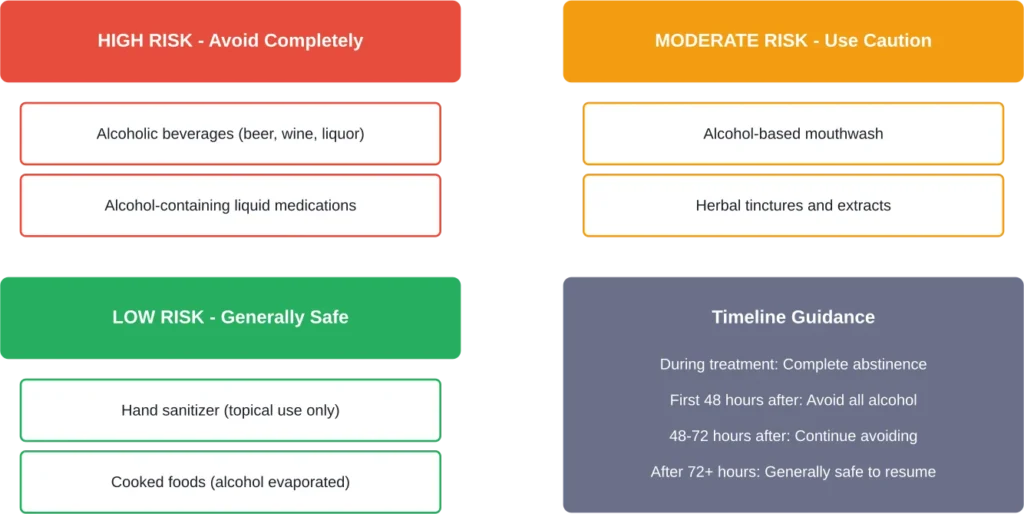
| Timeframe | Recommendation | Reason |
|---|---|---|
| During treatment | Complete abstinence | Highest drug concentration in system |
| 0-72 hours after last dose | Avoid all alcohol | Drug still being metabolized and cleared |
| 48-72 hours after last dose | Continue avoiding alcohol | Conservative safety margin for complete clearance |
| After 72 hours | Generally safe to resume | Medication fully cleared from most systems |
Hidden Sources of Alcohol to Avoid
Alcoholic beverages aren’t the only concern. Alcohol appears in numerous products that might catch people off guard.
Products containing alcohol that should be avoided include:
- Liquid medications – many cough syrups, cold remedies, and oral solutions contain significant alcohol percentages
- Mouthwash – some formulations contain 20% alcohol or more
- Cooking wines and vinegars – though cooking typically evaporates most alcohol
- Certain herbal supplements – tinctures often use alcohol as a base
- Hand sanitizers – topical use is generally safe, but avoid ingestion
The case of the adolescent patient experiencing a reaction to Prednisone Intensol demonstrates how easily overlooked medication ingredients can cause problems. Always check medication labels for alcohol content when taking metronidazole.
Special Considerations and Risk Factors
While anyone taking metronidazole should avoid alcohol, certain populations may face additional considerations.
People with Alcohol Use Disorder
For individuals struggling with alcohol addiction who receive a metronidazole prescription, the situation requires careful management. Healthcare providers should be informed about alcohol use patterns so appropriate support and monitoring can be provided.
In some cases, alternative antibiotics may be considered if alcohol abstinence isn’t feasible, though this depends on the specific infection being treated.
Genetic Variations
Individual responses to medications vary based on genetic factors affecting drug metabolism. Some people may metabolize metronidazole more slowly, potentially extending the period during which alcohol should be avoided.
Liver Function
Both metronidazole and alcohol are metabolized primarily in the liver. People with compromised liver function face increased risks when combining the two, as their ability to process and clear both substances is reduced.
What to Do If You Accidentally Drink Alcohol
Mistakes happen. If alcohol is consumed while taking metronidazole, here’s what to do:
Stop drinking immediately. Don’t consume any additional alcohol.
Monitor for symptoms. Watch for flushing, nausea, vomiting, headache, rapid heartbeat, or difficulty breathing. Symptoms typically appear within 15-30 minutes if they’re going to occur.
Stay hydrated. Drink water to help flush both substances through the system.
Contact a healthcare provider if symptoms develop, especially if they’re severe. Seek immediate medical attention for chest pain, severe breathing difficulty, or signs of a serious reaction.
Continue taking metronidazole as prescribed unless a healthcare provider advises otherwise. Don’t stop the antibiotic without medical guidance, as this could lead to treatment failure or antibiotic resistance.
For most people who accidentally consume a small amount of alcohol while on metronidazole, no reaction occurs. But medical consultation remains wise to ensure safety.
Understanding Metronidazole Treatment
Metronidazole is prescribed for various conditions including bacterial vaginosis, trichomoniasis, certain parasitic infections, and serious anaerobic bacterial infections affecting the abdomen, skin, and other body systems.
Treatment duration varies but commonly ranges from 5-10 days. For some infections, a single large dose may be prescribed instead of a multi-day course.
Common side effects of metronidazole (unrelated to alcohol) include a metallic taste in the mouth, nausea, and headaches. According to medical data, about 10% of women experience vaginal yeast infections after metronidazole treatment due to disruption of normal bacterial balance.
Frequently Asked Questions
Medical guidance recommends waiting at least 48-72 hours after the last dose of metronidazole before consuming alcohol. This allows adequate time for the medication to be metabolized and cleared from the body, minimizing any risk of interaction.
Not necessarily. While medical guidance advises complete abstinence, research shows that not everyone experiences a reaction. The severity and likelihood vary significantly between individuals. However, because reactions can be serious when they do occur, avoiding alcohol entirely remains the safest approach.
This is generally discouraged as a precaution. While topical absorption through the mouth is minimal compared to drinking alcohol, using alcohol-free mouthwash alternatives eliminates any potential risk during the treatment period.
Stop drinking immediately and monitor yourself for symptoms including flushing, nausea, vomiting, or rapid heartbeat for the next few hours. Stay hydrated with water. If symptoms develop or you’re concerned, contact a healthcare provider. Continue taking metronidazole as prescribed unless advised otherwise.
No. All types of alcoholic beverages—beer, wine, spirits, and cocktails—contain ethanol that can potentially interact with metronidazole. The type of beverage doesn’t matter; it’s the alcohol content that creates the risk.
Yes. Metronidazole can interact with blood thinners like warfarin, certain seizure medications, and lithium among others. Always inform healthcare providers and pharmacists about all medications and supplements being taken to check for potential interactions.
While extremely rare, there has been one documented death associated with the metronidazole-alcohol interaction according to medical literature. Serious reactions are uncommon, but the potential for severe symptoms including cardiovascular effects makes the warning medically justified despite debate about how frequently reactions occur.
The Bottom Line on Metronidazole and Alcohol
The interaction between metronidazole and alcohol remains a subject of ongoing research and some debate within the medical community. While recent studies question how common and severe reactions truly are, the potential for a disulfiram-like reaction with uncomfortable and potentially dangerous symptoms means the standard recommendation remains clear: avoid alcohol.
The safest approach is complete abstinence from alcohol during metronidazole treatment and for 48-72 hours after the final dose. This applies not just to alcoholic beverages but also to medications, mouthwashes, and other products containing alcohol.
If alcohol is accidentally consumed, monitor for symptoms and contact a healthcare provider if concerns arise. Most importantly, complete the full course of metronidazole as prescribed to effectively treat the underlying infection.
When in doubt, consult with a pharmacist or healthcare provider about specific situations and concerns. They can provide personalized guidance based on individual health factors, the dosage being taken, and other medications in use.
The temporary inconvenience of avoiding alcohol is a small trade-off for effective treatment and peace of mind about potential reactions.