
Quick Summary: Drinking bad wine is rarely dangerous—spoiled wine may taste unpleasant (vinegary, flat, or oxidized) but won’t typically cause serious illness. The worst outcome is usually mild stomach upset. However, wine contaminated during production or storage could carry harmful bacteria, though this is extremely rare in commercially produced bottles.
You’ve just poured a glass from that bottle sitting in your cabinet for who knows how long. The smell hits you first—something’s off. Maybe it’s vinegary. Maybe it’s flat. Maybe it just doesn’t smell like wine anymore.
So what happens if you drink it anyway?
The short answer? You’ll probably survive just fine. But there’s more to the story than that simple reassurance. Understanding what makes wine go bad, how to recognize the warning signs, and what actual risks exist can save you from an unpleasant experience.
Why Does Wine Go Bad?
Wine is a living product. Once bottled, it continues to evolve through chemical reactions and, in some cases, microbial activity. When these processes accelerate or go wrong, the wine deteriorates.
The primary culprits behind wine spoilage are oxygen exposure, temperature fluctuations, and microbial contamination. Oxygen is both wine’s friend and enemy—small amounts help certain wines develop complexity during aging, but too much causes oxidation that strips away fresh fruit flavors and creates flat, brownish wine that tastes like vinegar or burnt marshmallows.
Temperature swings cause even more problems. Wine stored in hot conditions or exposed to repeated heating and cooling cycles ages prematurely. Heat accelerates chemical reactions that break down delicate flavor compounds, while cold temperatures can push tartrate crystals out of solution (though these harmless crystals won’t hurt you).
Microbial spoilage is rarer but more concerning. Bacteria like Acetobacter convert alcohol into acetic acid—basically turning your wine into vinegar. According to Harvard’s Nutrition Source, vinegar production traces back to 5000 B.C.E. in Babylon, where it was used not just for cooking but as medicine, a preservative, and a strength-promoting drink. When it happens accidentally to your wine, though, it’s not a happy discovery.
The Real Health Risks: What Science Says
Here’s what most people actually want to know: will bad wine make you sick?
Generally speaking, no—not in the way spoiled food does. The alcohol content in wine (typically 12-15%) creates an inhospitable environment for most harmful pathogens. The U.S. food supply is among the safest globally, and according to the Federal government, there are approximately 48 million cases of foodborne illness annually in the United States. Wine-related illnesses represent an extremely small fraction of these cases.
Medical News Today reports that in rare cases, spoiled wine can make a person sick, but this typically involves only mild stomach upset—nausea, cramping, or brief digestive discomfort. These symptoms usually resolve quickly without medical intervention.
The bigger concern isn’t spoilage per se, but contamination during production. If wine is produced or stored under unsanitary conditions, harmful bacteria could theoretically survive. However, commercial wineries follow strict safety protocols, making this scenario exceptionally unlikely.
According to discussions on platforms like Reddit, some people who have accidentally consumed oxidized or vinegary wine report nothing worse than an unpleasant taste and perhaps mild queasiness from the off-putting flavor.
When Bad Wine Could Be Dangerous
There are limited scenarios where consuming compromised wine poses genuine health risks:
- Wine stored in damaged containers that allowed bacterial contamination
- Homemade wine produced without proper sanitation
- Wine exposed to toxic substances during storage (pesticides, cleaning chemicals)
- Individuals with compromised immune systems consuming wine with active microbial growth
The CDC emphasizes that contaminated food or drinks can cause illness, particularly for travelers. While their guidance focuses primarily on food safety during travel, the same principles apply: when in doubt, don’t consume something that shows clear signs of contamination.
How to Tell If Your Wine Has Gone Bad
Recognizing spoiled wine doesn’t require sommelier training. The human senses evolved to detect dangerous or spoiled substances, and wine broadcasts its condition pretty clearly.
Smell: Your First Line of Defense
The nose knows. Before you even consider tasting, smell the wine.
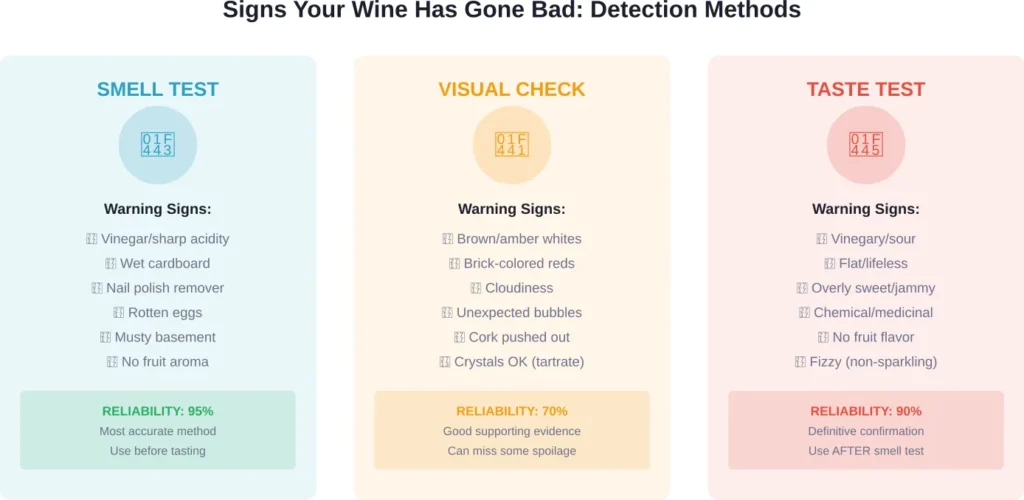
Bad wine announces itself through distinctive aromas: sharp vinegar notes (acetic acid), wet cardboard or musty basement smells (cork taint from TCA contamination), nail polish remover (ethyl acetate), rotten eggs or burnt rubber (hydrogen sulfide), or simply a complete absence of fruit aroma.
Oxidized wine often smells like bruised apples, sherry, or caramelized nuts—pleasant in an actual sherry, decidedly unpleasant in a Sauvignon Blanc.
Visual Inspection
Pour the wine into a clear glass and examine its appearance. White wines that have turned brown or amber (unless it’s a deliberately oxidized style) have likely oxidized. Red wines that look brick-colored, brownish, or cloudy may be past their prime.
Bubbles in a non-sparkling wine indicate unintended secondary fermentation. Small crystals at the bottom of the bottle are harmless tartrate deposits, not a sign of spoilage.
Taste Test
If the smell passes inspection but you’re still uncertain, a small taste won’t hurt you. Spoiled wine tastes sharp, vinegary, flat, or simply unpleasant. Trust your palate—if it doesn’t taste like wine should, it’s gone bad.
That said, some wines develop funk during aging that enthusiasts actually appreciate (certain natural wines, for instance). Context matters. If you bought a conventional grocery store Pinot Grigio and it smells like a barnyard, that’s spoilage. If you bought an experimental natural wine from a boutique shop, that might be intentional character.
| Spoilage Type | Smell | Taste | Appearance |
|---|---|---|---|
| Oxidation | Bruised apple, sherry, caramel | Flat, nutty, lacking fruit | Brown/amber (whites), brick (reds) |
| Acetification | Vinegar, nail polish | Sour, sharp, acidic | May appear normal |
| Cork Taint (TCA) | Wet cardboard, musty basement | Muted, stripped of fruit | Normal appearance |
| Heat Damage | Cooked fruit, jammy, caramel | Overly sweet, flat | May see seepage around cork |
| Refermentation | Yeasty, bread-like | Slightly fizzy, yeasty | Bubbles, cloudiness |
What Actually Happens When You Drink Spoiled Wine
Okay, so you’ve taken a sip before realizing the wine’s gone bad. Now what?
Most likely? Absolutely nothing. You’ll grimace at the unpleasant taste, perhaps spit it out, and move on with your evening. Your body processes the alcohol and acetic acid just fine—after all, people intentionally consume vinegar in salad dressings without issue.
Some people report mild nausea or stomach discomfort after drinking oxidized or vinegary wine. This typically stems from the unpleasant taste triggering a mild digestive reaction rather than actual toxicity. The symptoms, when they occur, usually resolve within a few hours.
The alcohol content itself remains largely unchanged during spoilage, so drinking bad wine doesn’t increase or decrease intoxication compared to fresh wine of the same alcohol percentage.
The Worst-Case Scenario
In extremely rare cases involving severely contaminated wine (we’re talking homemade wine with serious sanitation failures or wine stored in compromised containers), bacterial contamination could theoretically cause foodborne illness symptoms: vomiting, diarrhea, fever, or cramping.
But commercial wine? The risk approaches zero. The combination of alcohol content, acidity, and sulfites creates an environment where dangerous pathogens simply don’t survive.
How Long Does Wine Last?
The lifespan of wine depends entirely on whether the bottle’s been opened and how it’s stored.
Unopened Wine
Properly stored unopened wine lasts years. Most everyday wines hit their peak within 1-3 years of release. Premium wines designed for aging can improve for decades under ideal conditions (55-57°F, 70% humidity, darkness, horizontal storage).
However, wine stored upright in a warm kitchen cabinet deteriorates much faster. Heat is the enemy—bottles exposed to temperatures above 70°F age prematurely and develop cooked flavors.
Opened Wine
Once opened, the clock starts ticking. Oxygen exposure initiates chemical changes that gradually degrade the wine’s character.
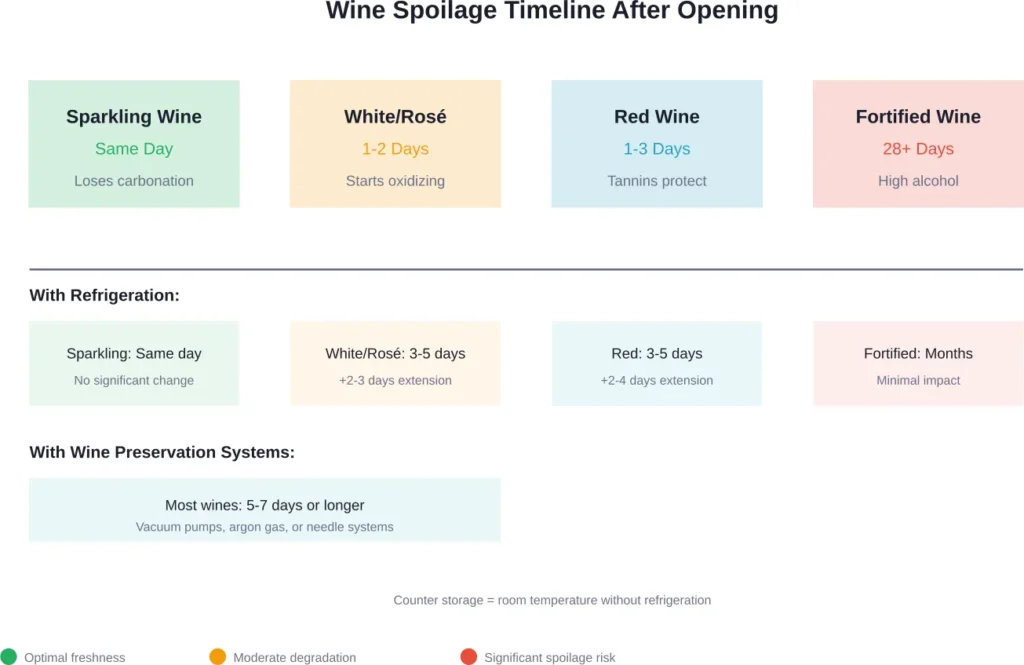
Based on data from multiple wine experts, here’s how long opened wine typically lasts:
- Sparkling wine: Same day (loses carbonation within hours)
- Light white and rosé wines: 1-2 days at room temperature, 3-5 days refrigerated
- Full-bodied white wines: 2-3 days at room temperature, 3-5 days refrigerated
- Red wines: 1-3 days at room temperature, 3-5 days refrigerated
- Fortified wines (Port, Sherry, Madeira): 28+ days due to higher alcohol content
Wine preservation systems—vacuum pumps, inert gas sprays, or needle-based systems—can extend these timelines to 5-7 days or longer by minimizing oxygen exposure.
How to Prevent Wine from Going Bad
Prevention beats detection. Proper storage dramatically extends wine’s lifespan and maintains quality.
Before Opening
Store bottles horizontally in a cool, dark place. The ideal temperature range sits between 45-65°F, with 55°F being optimal. Temperature stability matters more than hitting an exact number—avoid locations with daily temperature swings.
Keep wine away from direct sunlight and vibration. UV light degrades wine compounds, while constant movement disturbs sediment and accelerates aging.
For long-term storage, maintain 70% humidity to prevent corks from drying out. Dry corks shrink, allowing oxygen to seep in.
After Opening
Recork the bottle immediately after pouring and refrigerate it—yes, even red wine benefits from refrigeration once opened. The cold temperature slows oxidation dramatically. Just let the red wine warm up for 15-20 minutes before serving.
Consider investing in wine preservation tools. Vacuum pumps remove air from partially consumed bottles. Inert gas sprays (argon or nitrogen) create a protective blanket over the wine. Needle-based systems like Coravin allow pouring without removing the cork, preserving the remaining wine indefinitely.
Transfer wine to smaller containers if drinking only a portion. A half-full bottle contains lots of oxygen; transferring the wine to a half-bottle reduces exposure.
| Storage Method | Cost | Effectiveness | Best For |
|---|---|---|---|
| Simple recorking + fridge | Free | Moderate (3-5 days) | Casual drinkers |
| Vacuum pump | $10-20 | Good (5-7 days) | Regular wine drinkers |
| Inert gas spray | $10-15/can | Very good (7+ days) | Multiple open bottles |
| Needle preservation system | $100-200 | Excellent (months) | Wine collectors, by-the-glass |
Can Unopened Wine Go Bad?
Yes, even sealed bottles deteriorate under poor conditions.
Heat damage is the most common culprit. Wine stored in hot garages, attics, or even warm kitchens cooks over time. The liquid expands, sometimes pushing the cork out slightly and allowing oxygen infiltration. Heat-damaged wine develops cooked, jammy flavors and loses freshness.
Cork taint (TCA contamination) can affect bottles sealed with natural cork. This occurs when chlorine-based cleaning compounds interact with cork material, creating 2,4,6-trichloroanisole. The result? Wine that smells like wet cardboard and tastes muted.
Light exposure causes “light strike” in white and sparkling wines, creating unpleasant sulfur compounds. This is why many quality wines come in dark glass bottles.
Research on Sherry wine vinegar aging shows that significant phenolic composition differences exist between Sherry vinegars aged less than 2 years and more than 2 years, including compounds like gallic acid and hydroxymethylfuraldehyde. While this research focused on intentional aging processes, it demonstrates how wine chemistry evolves over time even in sealed containers.
The Bottom Line on Drinking Bad Wine
Will drinking spoiled wine kill you? No. Will it make you violently ill? Almost certainly not. Will it taste terrible and possibly cause mild stomach upset? Quite possibly.
The overwhelming majority of wine spoilage involves oxidation, acetification, or cork taint—none of which pose serious health risks beyond temporary digestive discomfort. Commercial wine’s alcohol content, acidity, and sulfite content create an inhospitable environment for dangerous pathogens.
That doesn’t mean you should chug that vinegary Chardonnay. Instead, learn to recognize the signs of spoilage and store wine properly to prevent deterioration in the first place.
When in doubt, smell first, look second, and taste last. Trust your senses—they’re remarkably good at detecting when something’s off.
Frequently Asked Questions
Spoiled wine rarely causes true food poisoning. The alcohol content prevents most harmful bacteria from surviving. At worst, drinking oxidized or vinegary wine might cause mild nausea or stomach upset that resolves quickly. Serious foodborne illness from commercial wine is exceptionally rare.
Most wines last 1-3 days at room temperature after opening. Refrigeration extends this to 3-5 days for whites, rosés, and reds. Sparkling wines lose carbonation within hours. Fortified wines can last 28+ days due to higher alcohol content. Wine preservation systems can extend these timelines to a week or more.
Spoiled wine typically tastes vinegary, flat, or unpleasantly sharp. Oxidized wine loses fruit flavors and develops nutty, caramelized, or sherry-like notes (unwelcome in non-fortified wines). Cork-tainted wine tastes muted and stripped of character. Heat-damaged wine tastes overly sweet and jammy.
Cooking with slightly oxidized wine is generally safe—the heat drives off volatile compounds and the wine adds acidity to dishes. However, severely spoiled wine (vinegary, moldy, or off-smelling) won’t improve with cooking and will impart unpleasant flavors to food. If the wine isn’t drinkable, it probably isn’t cookable either.
Age alone doesn’t make wine dangerous. Well-stored old wine remains perfectly safe to drink, though it may have passed its flavor peak. Poorly stored old wine may taste unpleasant due to oxidation or heat damage but still won’t cause illness. The concern is quality, not safety.
The nose detects spoilage first. Warning smells include vinegar, nail polish, wet cardboard, rotten eggs, or absence of fruit aroma. Visual cues follow: browning in white wines, brick coloring in reds, cloudiness, or unexpected bubbles. Taste confirms spoilage with sharp, flat, or chemical flavors.
Refrigeration slows wine deterioration, not accelerates it. Opened wine lasts 3-5 days refrigerated versus 1-3 days at room temperature. Long-term fridge storage of unopened wine isn’t ideal (too cold, potential vibration, low humidity) but won’t make wine dangerous—just potentially less flavorful over many months.
Conclusion
Drinking bad wine won’t land you in the hospital, but it won’t provide an enjoyable experience either. Spoiled wine announces itself through distinct sensory signals—trust your nose, eyes, and palate to guide decisions.
The best approach combines prevention (proper storage, preservation tools) with detection (sensory evaluation before drinking). Store unopened bottles in cool, dark conditions. Refrigerate opened wine and use preservation methods to extend its life.
When you encounter wine that smells or tastes off, pour it down the drain without guilt. Life’s too short for bad wine, and your wallet isn’t worth risking an unpleasant evening over a bottle that’s past its prime.
Keep these principles in mind, and your wine experiences will stay consistently enjoyable—no mystery smells, strange flavors, or worried mornings after required.