

Quick Summary: Drinking isopropyl alcohol (rubbing alcohol) is extremely dangerous and can be fatal. Even small amounts cause rapid intoxication, central nervous system depression, and severe poisoning that requires immediate medical attention. Unlike ethanol, isopropyl alcohol is metabolized into toxic acetone and can cause organ damage, respiratory failure, and death.
Rubbing alcohol sits in medicine cabinets and first aid kits across the country. It’s cheap, readily available, and effective for cleaning wounds and disinfecting surfaces.
But here’s the thing: isopropyl alcohol is not meant for human consumption under any circumstances.
Despite this clear danger, isopropanol poisoning occurs more frequently than most people realize. Some individuals accidentally ingest it after transferring the substance to unmarked containers. Others, particularly those struggling with alcohol addiction, intentionally drink it as a substitute for ethanol.
The consequences can be devastating. According to medical research published by the NIH, isopropyl alcohol toxicity presents unique challenges because it metabolizes into acetone, creating a dual toxic burden on the body. Case studies have documented severe metabolic acidosis requiring hemodialysis after isopropyl alcohol ingestion, including reports from 2025.
This article covers what actually happens when someone drinks rubbing alcohol, the symptoms of poisoning, emergency treatment protocols, and why this substance is so much more dangerous than drinking alcohol.
What Is Isopropyl Alcohol and Where Is It Found
Isopropyl alcohol, also called isopropanol or 2-propanol, is a colorless, flammable chemical compound with a strong odor. The substance rapidly evaporates at room temperature.
Most retail rubbing alcohol contains 70-91% isopropyl alcohol, though concentrations vary by product and brand. Some products labeled as “rubbing alcohol” actually contain denatured ethanol rather than isopropyl alcohol.
Healthcare settings commonly use 70 percent solutions for antiseptic purposes. Higher concentrations appear in industrial and laboratory applications.
Common household products containing isopropyl alcohol include:
- Rubbing alcohol and antiseptic wipes
- Hand sanitizers (some formulations)
- Window and glass cleaners
- Electronic device cleaners
- Some cosmetics and personal care products
- Certain antifreeze solutions
- Paint thinners and solvents
The substance is highly flammable, making proper storage essential for safety.
How Isopropyl Alcohol Differs From Drinking Alcohol
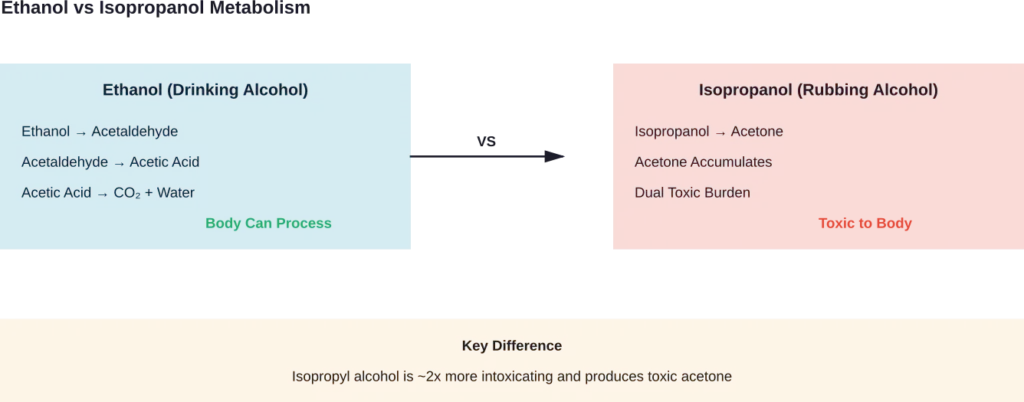
The critical difference between isopropyl alcohol and ethanol (drinking alcohol) lies in how the body processes each substance.
Ethanol metabolizes primarily into acetaldehyde, then acetic acid, which the body can eventually convert to carbon dioxide and water. The liver enzyme alcohol dehydrogenase handles this process.
Isopropyl alcohol follows a different metabolic pathway. The same enzyme converts isopropanol into acetone—the same chemical found in nail polish remover. Acetone is toxic and accumulates in the bloodstream.
This metabolic difference creates several dangerous effects:
Isopropyl alcohol is approximately twice as intoxicating as ethanol. Someone drinking a small amount experiences severe impairment rapidly.
The acetone metabolite causes additional toxicity beyond the initial isopropanol exposure. According to NIH research, hemodialysis facilitates rapid removal of both isopropanol and acetone, but this intervention requires hospitalization and specialized equipment.
Recovery from isopropyl alcohol poisoning takes longer because acetone remains in the system even after isopropanol levels decrease.
Symptoms of Isopropyl Alcohol Poisoning
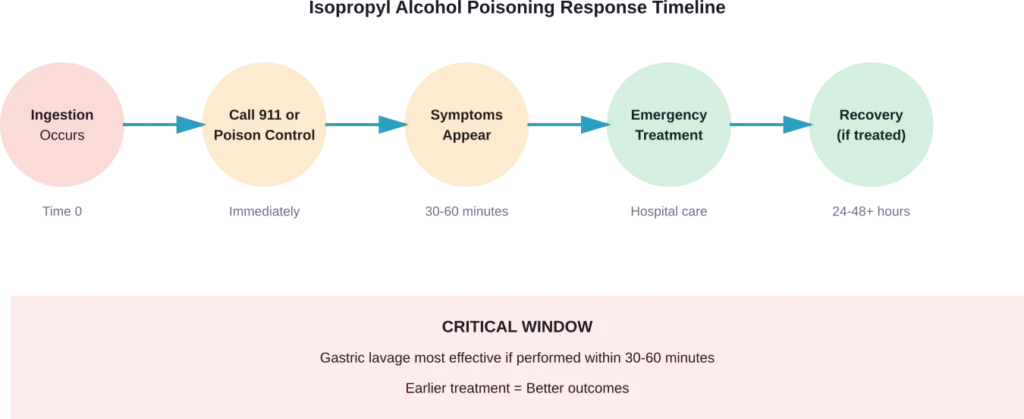
Symptoms appear quickly after ingestion—often within 30 minutes to an hour. The severity depends on the amount consumed and the person’s body weight.
Mild to Moderate Symptoms
A small accidental sip might cause:
- Nausea and upset stomach
- Vomiting and abdominal pain
- Dizziness and confusion
- Slurred speech
- Lack of coordination
- Drowsiness
These symptoms mirror alcohol intoxication but appear more rapidly and intensely.
Severe Poisoning Symptoms
Intentional ingestion or larger amounts produce life-threatening symptoms:
- Severe central nervous system depression
- Loss of consciousness or coma
- Respiratory depression or failure
- Dangerously low blood pressure (hypotension)
- Hypothermia (abnormally low body temperature)
- Seizures
- Metabolic acidosis
- Kidney failure
According to medical case reports, severe anion gap metabolic acidosis from isopropyl alcohol has required hemodialysis. In documented cases, patients’ hemodynamic stability and mental status improved significantly within 24 hours of initiating treatment, though initial presentations were critical.
Unique Indicators of Isopropyl Alcohol Toxicity
Medical professionals look for specific signs that distinguish isopropanol poisoning from ethanol intoxication:
A fruity or acetone odor on the breath indicates acetone accumulation. Blood tests show elevated acetone levels without the typical ketones seen in diabetic ketoacidosis.
Laboratory findings reveal an osmolal gap—a discrepancy between measured and calculated blood osmolality. This helps confirm toxic alcohol ingestion.
What Happens Inside Your Body
The physiological effects of isopropyl alcohol create a cascade of dangerous reactions.
Rapid absorption occurs through the gastrointestinal tract. Peak blood concentrations appear within 30 minutes to 3 hours after ingestion.
Central nervous system depression happens because isopropanol acts as a sedative. At sufficient doses, this depression can progress to respiratory arrest—breathing simply stops.
Gastrointestinal irritation causes the nausea, vomiting, and abdominal pain. Severe cases involve hemorrhagic gastritis (bleeding in the stomach lining).
Cardiovascular effects include low blood pressure and irregular heart rhythms. The heart struggles to maintain adequate blood flow to vital organs.
Metabolic acidosis develops as toxic metabolites accumulate. The blood becomes too acidic, disrupting cellular function throughout the body. According to NIH research on isopropanol toxicity, this acid-base disturbance represents one of the most dangerous complications.
Kidney damage can occur through multiple mechanisms: direct toxicity, reduced blood flow from hypotension, and metabolic derangements. Some patients require temporary or permanent dialysis.
Emergency Response and Treatment
Time matters critically with isopropyl alcohol poisoning. Immediate action can prevent death.
If Someone Swallows Isopropyl Alcohol
Call Poison Control immediately at 1-800-222-1222 or emergency services (911). Expert guidance is free, confidential, and available 24 hours daily.
Do not make the person vomit unless specifically instructed by poison control or emergency personnel. Vomiting can cause aspiration (breathing vomit into the lungs) or further damage to the esophagus.
If the person is conscious and poison control advises, give small sips of water or milk. This may help dilute the substance in the stomach.
If isopropyl alcohol contacted skin or eyes, flush with large amounts of water for at least 15 minutes. Remove contaminated clothing.
Gather information for medical personnel: what product was ingested, approximate amount, time of ingestion, and the person’s weight.
Hospital Treatment Protocols
Emergency room treatment for isopropanol poisoning includes:
Gastric lavage: A tube inserted through the nose into the stomach can empty stomach contents if the person arrives within 30-60 minutes after swallowing and consumed more than one swallow.
Activated charcoal: Generally not effective for isopropyl alcohol, so medical teams typically skip this intervention.
Supportive care: IV fluids maintain blood pressure and hydration. Oxygen therapy supports breathing. Mechanical ventilation may be necessary if respiratory depression occurs.
Hemodialysis: Reserved for severe cases with extremely high isopropanol levels, profound acidosis, or kidney failure. This treatment rapidly removes both isopropanol and acetone from the bloodstream.
Monitoring: Blood tests track isopropanol and acetone levels, kidney function, acid-base balance, and electrolytes. Cardiac monitoring detects dangerous heart rhythms.
| Treatment Component | Purpose | When Used |
|---|---|---|
| Gastric Lavage | Remove stomach contents | Within 30-60 minutes if large amount ingested |
| IV Fluids | Maintain blood pressure and hydration | All cases |
| Oxygen/Ventilation | Support breathing | When respiratory depression occurs |
| Hemodialysis | Remove isopropanol and acetone | Severe poisoning, high levels, organ failure |
| Laboratory Monitoring | Track toxin levels and organ function | All hospitalized cases |
Prognosis and Recovery Timeline
Outcome depends heavily on the amount consumed and how quickly treatment begins.
Small accidental ingestions with prompt treatment generally have favorable outcomes. Most individuals recover fully within 24-48 hours with supportive care.
Larger ingestions requiring hemodialysis have variable outcomes. NIH case reports from 2025 documented significant improvement within 24 hours of initiating dialysis, with complete recovery in some patients.
Death can occur from respiratory failure, cardiovascular collapse, or multi-organ failure. Prognosis worsens significantly if treatment is delayed or if the person consumed a very large quantity.
Long-term complications are possible even after apparent recovery. Rare cases involve persistent neurological damage or kidney impairment, particularly after severe poisoning episodes.
Why People Drink Rubbing Alcohol
Understanding the circumstances helps prevent future incidents.
Accidental Ingestion
Most accidental poisonings involve children who find improperly stored bottles or adults who transfer rubbing alcohol into unmarked containers (like water bottles or drinking glasses).
Never store isopropyl alcohol in anything other than its original labeled container. Keep all such products locked away from children.
Intentional Consumption
Some individuals with alcohol addiction drink rubbing alcohol when unable to access ethanol. The desperation driving this behavior indicates severe substance use disorder requiring professional treatment.
Others mistakenly believe rubbing alcohol is similar enough to drinking alcohol to be “safe” in small amounts. This misconception is deadly wrong.
Adolescents sometimes consume isopropyl alcohol on dares or due to peer pressure, not understanding the serious health consequences.
Prevention Strategies
Simple precautions prevent most isopropyl alcohol poisonings.
Storage: Keep all rubbing alcohol and similar products in their original containers with labels intact. Store them in locked cabinets out of reach of children. Never place them near food or beverages.
Labeling: If transferring to smaller containers for specific uses (like workshop applications), label clearly with “POISON – NOT FOR CONSUMPTION.”
Education: Teach children that household chemicals are dangerous. Ensure teenagers understand the difference between rubbing alcohol and drinking alcohol.
Supervision: Monitor young children closely during bath time and first aid situations where rubbing alcohol might be present.
For individuals in recovery: Those with alcohol addiction should remove all isopropyl alcohol from their homes or have trusted individuals control access. Professional addiction treatment addresses the underlying issues driving substance use.
Getting Help for Alcohol Addiction
Drinking rubbing alcohol represents a sign of severe alcohol use disorder requiring immediate professional intervention.
Addiction treatment programs provide:
- Medical detoxification in safe, supervised environments
- Evidence-based therapies addressing underlying causes of addiction
- Medication-assisted treatment when appropriate
- Peer support and group counseling
- Life skills training and relapse prevention strategies
- Aftercare planning for long-term recovery
Recovery is possible. Thousands of people successfully overcome alcohol addiction each year with proper treatment and support.
If someone is struggling with alcohol addiction to the point of considering non-beverage alcohols, contact the Substance Abuse and Mental Health Services Administration (SAMHSA) National Helpline at 1-800-662-4357. This free, confidential service operates 24/7, providing referrals to local treatment facilities and support groups.
Frequently Asked Questions
A single small sip is unlikely to be fatal for most adults, but it can cause nausea, vomiting, dizziness, and stomach upset. The danger increases dramatically with larger amounts. Children face greater risk from even small quantities due to their lower body weight. Any ingestion requires calling poison control immediately for guidance.
The estimated lethal dose of 70% isopropyl alcohol for adults is roughly 240–300 mL, though ingesting as little as 8 ounces can be fatal depending on individual factors. However, serious toxicity and life-threatening symptoms can occur with much smaller amounts. Because the toxic dose is so variable and unpredictable, any intentional ingestion should be treated as a medical emergency.
Isopropyl alcohol produces intoxication approximately twice as potent as ethanol, meaning severe impairment occurs rapidly from small amounts. However, this “drunk” feeling comes with serious poisoning symptoms including vomiting, respiratory depression, and potential organ damage. The intoxication is not worth the life-threatening risks.
Call poison control at 1-800-222-1222 immediately. Many hand sanitizers contain ethanol rather than isopropyl alcohol, but some contain isopropanol. Both can be dangerous for children. Do not induce vomiting unless instructed. Provide poison control with information about the product (check the label for alcohol type and percentage) and approximate amount consumed.
No specific antidote exists for isopropanol poisoning. Treatment focuses on supportive care: maintaining breathing and blood pressure, correcting metabolic acidosis, and supporting organ function. Hemodialysis can rapidly remove isopropanol and acetone in severe cases, but this is a treatment method rather than an antidote. Early medical intervention significantly improves outcomes.
The body eliminates isopropyl alcohol more slowly than ethanol. Peak blood levels occur 30 minutes to 3 hours after ingestion. The half-life ranges from 3 to 7 hours, meaning it takes that long for blood levels to decrease by half. Complete elimination can take 24-48 hours or longer depending on the amount consumed. Acetone, the toxic metabolite, persists even longer in some cases.
Yes, severe isopropyl alcohol poisoning can cause permanent organ damage. Kidneys are particularly vulnerable, with some patients requiring temporary or permanent dialysis. Neurological damage from prolonged oxygen deprivation during respiratory depression can cause lasting effects. The gastrointestinal tract can suffer severe damage including hemorrhagic gastritis. Early treatment reduces the risk of permanent complications, but outcomes vary based on exposure severity.
The Bottom Line
Isopropyl alcohol is a toxic substance never intended for human consumption. Even small amounts cause serious poisoning that can progress to respiratory failure, organ damage, and death.
The metabolic conversion to acetone creates a dual toxic burden that makes isopropanol poisoning particularly dangerous compared to ethanol intoxication. Treatment requires immediate medical intervention, with severe cases needing hemodialysis to remove the toxins.
Prevention through proper storage, labeling, and education prevents most accidental poisonings. For individuals drinking rubbing alcohol due to addiction, professional treatment offers the path to recovery and safety.
If someone ingests isopropyl alcohol, call poison control at 1-800-222-1222 or 911 immediately. Fast action saves lives. Do not wait to see if symptoms develop—the window for effective intervention is narrow, and early treatment dramatically improves outcomes.