
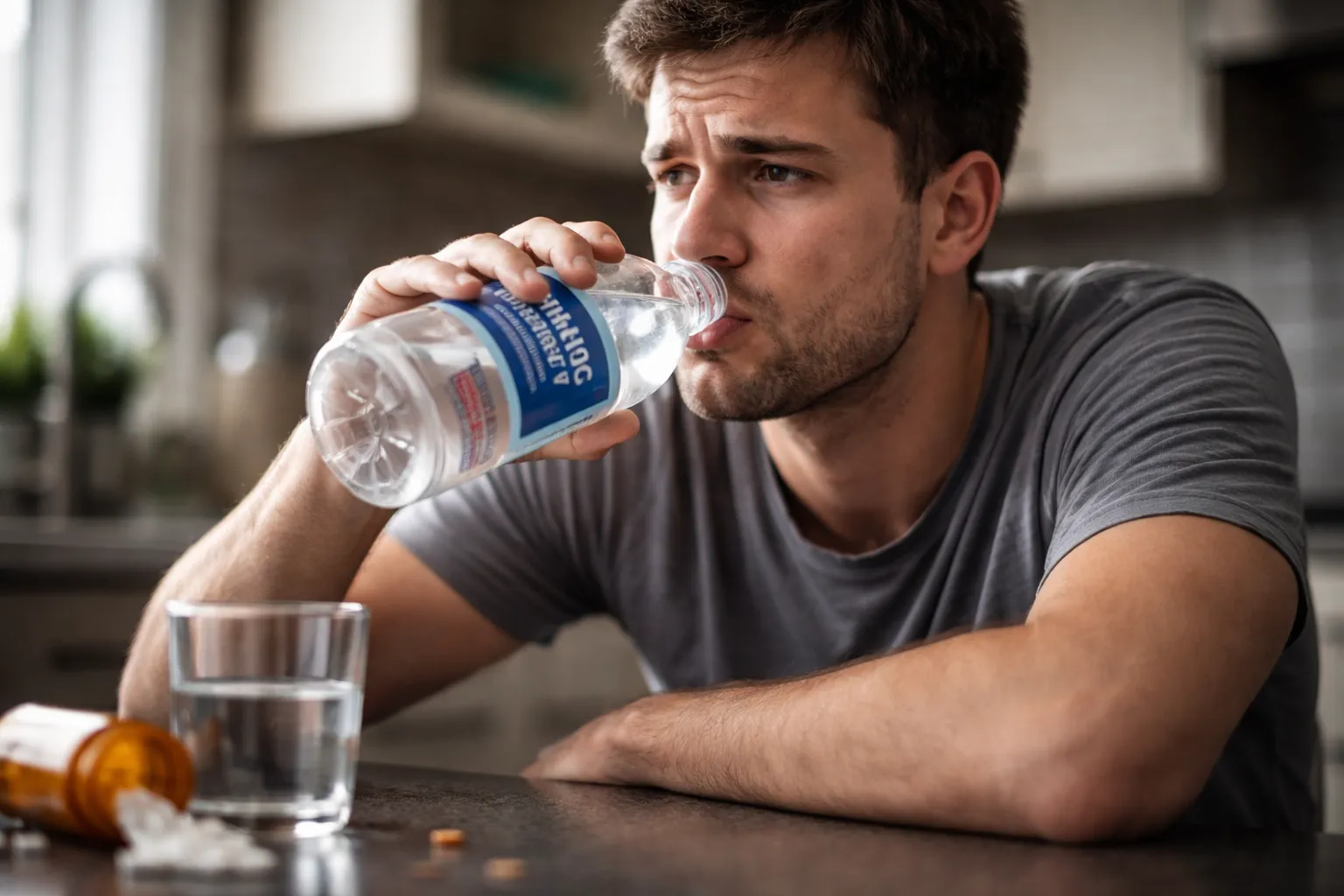
Quick Summary: Drinking rubbing alcohol (isopropyl alcohol) is extremely dangerous and can be fatal. Even small amounts cause poisoning with symptoms including vomiting, confusion, and breathing problems. According to the NIH, isopropyl alcohol is toxic when swallowed and requires immediate emergency treatment—it’s never safe to consume.
Rubbing alcohol sits in medicine cabinets and cleaning supply closets across the country. Most household rubbing alcohol is 70% isopropyl alcohol, though concentrations can range up to 99%.
But here’s the critical thing: it’s absolutely not meant for human consumption.
Despite both being called “alcohol,” rubbing alcohol and the ethanol in beer or wine are completely different substances. Swallowing even small amounts of isopropyl alcohol can lead to serious poisoning that requires emergency medical treatment.
Let’s break down exactly what happens when someone drinks rubbing alcohol, why it’s so dangerous, and what medical response looks like.
What Is Rubbing Alcohol?
Rubbing alcohol is the common term for isopropyl alcohol (also called isopropanol). Most household rubbing alcohol is 70% isopropyl alcohol, though concentrations can range up to 99%.
The substance appears as a clear, colorless liquid with a distinctive smell resembling acetone. It’s found in numerous household products beyond the familiar brown bottle, including hand sanitizers, cleaning agents, antiseptic solutions, and paint thinners.
Unlike ethanol—the type of alcohol in alcoholic beverages—isopropyl alcohol is not safe for consumption at any dose. According to NIH research, isopropanol ingestion is the second most common alcohol ingestion following ethanol, but it carries significantly higher toxicity risks.
Why Rubbing Alcohol Is Toxic
The human body processes isopropyl alcohol differently than drinking alcohol. When someone swallows rubbing alcohol, the liver metabolizes it into acetone—the same chemical found in nail polish remover.
This metabolic process creates severe problems. According to NIH research, isopropyl alcohol acts as a central nervous system depressant that’s roughly twice as potent as ethanol. The acetone byproduct accumulates in the bloodstream, causing what’s known as ketosis without acidosis.
Real talk: your body has no safe way to handle this substance internally. The toxicity affects multiple organ systems simultaneously, creating a medical emergency that escalates quickly.
Immediate Effects of Drinking Rubbing Alcohol
Symptoms appear rapidly after ingestion—often within 30 to 60 minutes. The severity depends on the amount consumed and the person’s body weight, but even small quantities cause noticeable effects.
Common initial symptoms include:
- Nausea and vomiting
- Abdominal pain and cramping
- Dizziness and confusion
- Slurred speech
- Headache
- Flushing of the skin
These symptoms can appear similar to ethanol intoxication at first. But the progression is different and more dangerous.
Progression to Severe Poisoning
As the body continues metabolizing isopropyl alcohol, symptoms worsen. According to the National Institutes of Health, severe isopropanol poisoning results in CNS and respiratory depression along with circulatory collapse.
Advanced symptoms include:
- Severe drowsiness or unconsciousness
- Slow or irregular breathing
- Decreased heart rate
- Dangerously low blood pressure
- Hypothermia (low body temperature)
- Seizures
- Coma
Treatment of isopropanol ingestions is typically supportive therapy, and ingestions are rarely lethal compared to other toxic alcohols.

How Much Rubbing Alcohol Is Dangerous?
There’s no safe amount to drink. Period.
Even a small swallow can cause symptoms, particularly in children. Poison Control reports cases where children experienced significant toxicity from amounts as small as a “taste” or “sip.”
Body weight plays a role in severity. Smaller individuals—especially children—face higher risk from the same volume. But adults aren’t protected either. According to medical case reports, adults have experienced severe poisoning requiring intensive care from relatively modest ingestions.
The concentration matters too. A 70% solution is already highly concentrated, but 99% isopropyl alcohol poses even greater immediate danger.
Medical Treatment for Rubbing Alcohol Poisoning
Treatment focuses on supportive care since there’s no specific antidote for isopropyl alcohol poisoning.
Emergency Room Procedures
Medical teams in the emergency department will likely perform several interventions:
- Airway protection and oxygen support
- Intravenous fluids to maintain blood pressure
- Continuous monitoring of vital signs
- Blood tests to measure isopropanol and acetone levels
- Gastric lavage (stomach pumping) if the person arrives within 30-60 minutes of a large ingestion
The stomach may be emptied through a tube if treatment begins quickly enough and the amount consumed was significant. This is especially important for children, where even small amounts can be dangerous.
When Hemodialysis Is Needed
In severe cases, hemodialysis may be considered to remove isopropanol and acetone from the system, though it should only be used in life-threatening situations.
Most cases resolve with supportive care alone. Medical case reports show that many patients improve significantly within 12-24 hours with proper treatment.
Long-Term Health Consequences
Survivors of isopropyl alcohol poisoning typically recover fully if they receive prompt medical treatment. Unlike methanol or ethylene glycol poisoning—which can cause permanent organ damage—isopropanol rarely leaves lasting effects.
That said, severe cases can potentially cause complications:
- Kidney damage from prolonged low blood pressure
- Aspiration pneumonia if vomiting occurs while unconscious
- Brain damage from oxygen deprivation in extreme cases
These complications underscore why immediate medical attention is absolutely critical.
Why People Drink Rubbing Alcohol
Understanding why ingestions happen helps with prevention. The CDC’s research on hand sanitizer ingestions provides insight into common scenarios.
Accidental ingestions occur most often with:
- Young children who mistake it for water or another beverage
- Elderly individuals with vision or cognitive impairment
- Storage in unmarked or inappropriate containers
Intentional ingestions happen for different reasons. Some individuals struggling with alcohol use disorder consume rubbing alcohol when other alcohol is unavailable. This represents a medical and psychiatric emergency requiring specialized intervention.
The CDC documented cases in Arizona and New Mexico during May-June 2020 where individuals ingested alcohol-based hand sanitizers containing methanol, resulting in 15 cases with 4 deaths and 3 cases of visual impairment.
Rubbing Alcohol vs. Drinking Alcohol: Key Differences
| Characteristic | Rubbing Alcohol (Isopropyl) | Drinking Alcohol (Ethanol) |
|---|---|---|
| Chemical formula | C₃H₈O | C₂H₆O |
| Common concentration | 70% or 99% | 3-40% in beverages |
| Metabolism byproduct | Acetone (no acidosis) | Acetaldehyde |
| Toxicity level | Approximately 2x more toxic than ethanol | Lower toxicity, regulated for consumption |
| Safe to drink | Never | In moderation for adults |
| Medical treatment if ingested | Emergency care required | Supportive care for intoxication |
What to Do If Someone Drinks Rubbing Alcohol
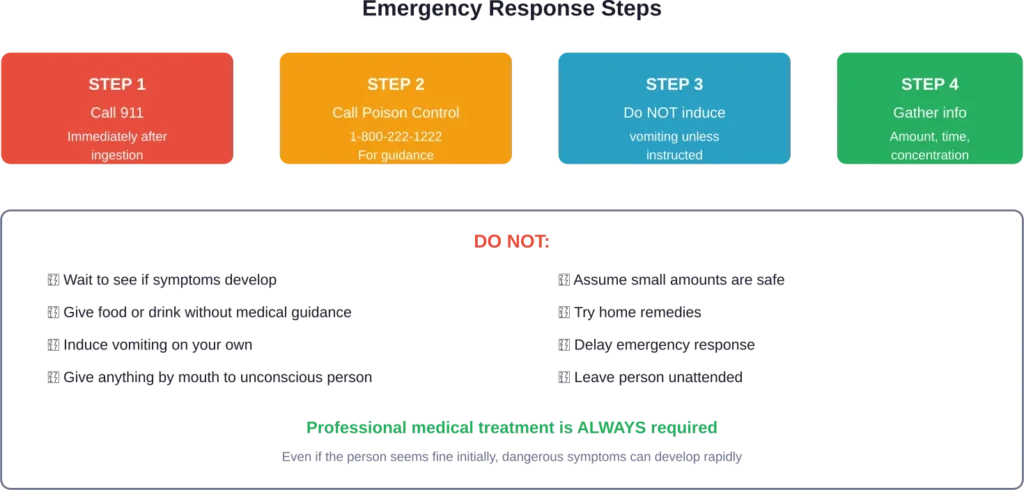
Time matters critically. Here’s what to do immediately:
Call emergency services (911) right away. Don’t wait to see if symptoms develop.
While waiting for help, contact Poison Control at 1-800-222-1222. They can provide specific guidance for the situation.
Do NOT make the person vomit unless specifically instructed by poison control or medical personnel. Vomiting can cause additional complications, including aspiration.
If the rubbing alcohol got on skin or in eyes, flush with water for at least 15 minutes.
If the person is conscious and poison control advises it, small amounts of water or milk might be given. But never give anything by mouth to someone who’s drowsy or unconscious.
Gather information for emergency responders: how much was consumed, what concentration, when it happened, and the person’s approximate weight.
Prevention: Keeping Rubbing Alcohol Safe
Most poisonings are preventable with proper storage and handling. According to Poison Control and medical sources:
Storage matters. Keep rubbing alcohol up and away from children’s reach. A locked cabinet is ideal, particularly in homes with young children or individuals with cognitive impairment.
Never transfer to other containers. Leaving rubbing alcohol in its original, labeled bottle prevents confusion with beverages or other liquids. Cases documented by the CDC show transfers to water bottles or drink containers leading to accidental ingestions.
Dispose of it properly. Old or unneeded rubbing alcohol shouldn’t sit around. Check local hazardous waste guidelines for proper disposal.
Educate household members. Make sure everyone in the home—including older children—understands that rubbing alcohol is toxic and never for consumption.
Frequently Asked Questions
Yes, survival is possible with prompt medical treatment. According to NIH research, isopropanol ingestions are rarely lethal compared to other toxic alcohols. However, severe cases can be fatal without emergency care. The outcome depends on the amount consumed, how quickly treatment begins, and the individual’s overall health. All rubbing alcohol ingestions require immediate medical attention.
Rubbing alcohol does cause intoxication because it’s a central nervous system depressant, but the effects are more dangerous than ethanol intoxication. The “drunk” feeling happens alongside severe toxicity including vomiting, breathing problems, and potential loss of consciousness. The NIH notes isopropyl alcohol is approximately twice as potent as ethanol, making it far riskier. This is never a safe way to achieve intoxication.
The body metabolizes isopropyl alcohol relatively quickly. Peak blood levels typically occur within 30 minutes to 2 hours after ingestion. With supportive medical treatment, most patients show significant improvement within 12-24 hours. However, complete elimination of the substance and its acetone byproduct can take longer depending on the amount consumed and individual metabolism.
Isopropyl alcohol (rubbing alcohol) and ethanol (drinking alcohol) are different chemical compounds. Isopropyl alcohol has three carbon atoms while ethanol has two. When metabolized, isopropyl alcohol converts to acetone, while ethanol converts to acetaldehyde. According to medical research, isopropyl alcohol is roughly twice as toxic as ethanol and should never be consumed. Only ethanol is safe for human consumption in regulated beverage form.
Most people who receive prompt medical treatment recover fully without permanent damage. However, severe poisoning can potentially cause lasting complications including kidney damage from prolonged low blood pressure, aspiration pneumonia, or brain damage from oxygen deprivation. These outcomes are rare but highlight why immediate emergency care is critical for any rubbing alcohol ingestion.
No. The CDC recommends hand sanitizers contain at least 60% alcohol—most contain 60-95% ethanol or isopropyl alcohol. While ethanol-based sanitizers are slightly less toxic than isopropyl-based ones, both pose serious ingestion risks. The CDC documented cases of severe poisoning and death from drinking hand sanitizers, particularly when products contained methanol. Hand sanitizers are for external use only and should never be consumed.
Call Poison Control immediately at 1-800-222-1222, even if it was just a taste. According to Poison Control case reports, even small amounts can cause symptoms in children due to their lower body weight. Don’t wait to see if symptoms develop. Follow the guidance provided by poison control, which may include monitoring at home for very small tastes or going to the emergency room for larger amounts. Never induce vomiting unless specifically instructed.
The Bottom Line on Drinking Rubbing Alcohol
Rubbing alcohol is toxic when swallowed. There’s no safe amount, no situation where consuming it makes sense, and no home remedy that makes it okay.
The medical facts are clear: isopropyl alcohol poisoning is a serious emergency that requires professional treatment. Symptoms can progress rapidly from mild intoxication to life-threatening respiratory depression.
But here’s the good news—with immediate medical intervention, most people recover fully. The key is acting fast and getting proper emergency care.
If you or someone you know has ingested rubbing alcohol, don’t hesitate. Call 911 and Poison Control right away. Those calls could save a life.
Keep rubbing alcohol stored safely, in its original container, away from anyone who might accidentally or intentionally consume it. Prevention remains the best protection against this dangerous type of poisoning.