

Quick Summary: Drinking too much coffee can lead to caffeine overdose, causing symptoms like rapid heartbeat, anxiety, digestive issues, and sleep disruption. According to the FDA, most healthy adults can safely consume up to 400mg of caffeine daily (about 4-5 cups of coffee), but excessive intake can trigger serious health complications including cardiovascular problems, muscle breakdown, and in rare cases, fatal outcomes.
Coffee keeps millions of people alert and focused every day. That morning cup (or three) feels essential, almost sacred. But there’s a line between beneficial and harmful caffeine consumption, and crossing it can trigger some genuinely unpleasant—and occasionally dangerous—consequences.
According to the FDA, caffeine can be part of a healthy diet for most people. The problem starts when consumption tips into excess territory. And with energy drinks, specialty coffees, and concentrated caffeine products flooding the market, that’s easier than ever to do accidentally.
So what actually happens when you drink too much coffee? The short answer involves your nervous system, cardiovascular function, digestive tract, and sleep architecture—pretty much every major system in your body.
How Much Coffee Is Actually Too Much?
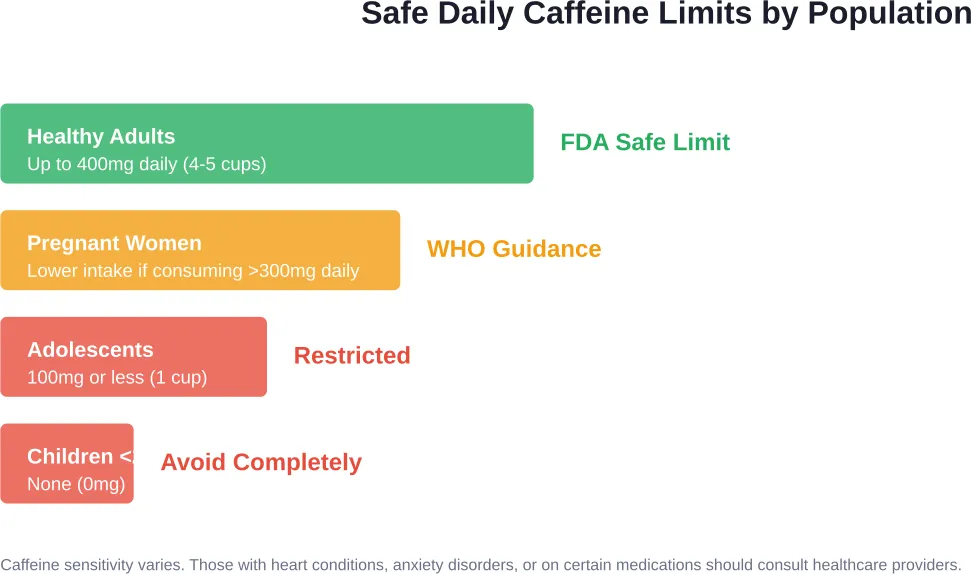
The FDA states that up to 400 milligrams of caffeine daily appears safe for most healthy adults. That translates to roughly four to five cups of regular brewed coffee.
But here’s the thing—coffee strength varies wildly. A regular brewed non-specialty coffee contains anywhere from 113 to 247 milligrams of caffeine per cup, according to FDA data. Specialty coffees can pack even more punch.
Some products marketed as “Death Coffee” contain caffeine levels three times higher than conventional brews, making them the strongest commercially available options. Just one cup could push you close to—or past—the daily recommended limit.
| Beverage Type | Typical Caffeine Content |
|---|---|
| Caffeinated soft drink | 23-83 mg |
| Green tea | 37 mg |
| Black tea | 71 mg |
| Regular brewed coffee | 113-247 mg |
| Energy drinks | Varies widely, up to 300+ mg |
Approximately 85% of Americans consume caffeine daily, according to research published in StatPearls. But individual tolerance varies based on body weight, medications, existing health conditions, and genetic factors.
Immediate Symptoms of Drinking Too Much Coffee
Caffeine overdose isn’t just about feeling a bit jittery. The symptoms can escalate quickly and range from uncomfortable to medically serious.
Nervous System Overload
Caffeine blocks adenosine receptors in your brain. Adenosine normally promotes relaxation and sleepiness—when it’s blocked, your nervous system goes into overdrive.
This triggers the release of adrenaline, which explains why excessive coffee consumption causes anxiety, nervousness, and restlessness. Some people experience full-blown panic attacks after consuming too much caffeine, particularly those already prone to anxiety disorders.
Tremors and muscle twitching are common. Your hands might shake noticeably, making detailed work difficult.
Cardiovascular Complications
Your heart rate increases with caffeine intake. That’s normal at moderate doses, but excessive consumption can cause rapid or irregular heartbeat—what medical professionals call tachycardia.
Research on cardiovascular effects published by the National Institutes of Health shows caffeine directly affects vascular smooth muscle cells and can cause both vasoconstriction and vasodilation depending on dose and individual response.
Blood pressure typically rises temporarily. For most people, this isn’t problematic. But research from the American Heart Association found that people with severely high blood pressure who drink two or more cups of caffeinated coffee daily could double their risk of dying from cardiovascular disease.
Digestive System Distress
Coffee stimulates stomach acid production and speeds up intestinal contractions. A cup or two might just help things move along. But excessive amounts trigger diarrhea, stomach cramps, and nausea.
Vomiting can occur in severe caffeine overdose cases. This is actually your body’s protective mechanism trying to expel the excess stimulant.
Sleep Architecture Destruction
Caffeine has a half-life of about 5-6 hours in most adults. That means half the caffeine from your afternoon coffee is still in your system at bedtime.
Excessive coffee consumption increases the time it takes to fall asleep and reduces total sleep duration. Deep sleep stages get disrupted, leaving you feeling unrested even after technically sleeping for hours.
This creates a vicious cycle—poor sleep leads to more coffee consumption, which further degrades sleep quality.
Serious Health Risks of Chronic Overconsumption
Daily excessive coffee intake can trigger problems beyond immediate discomfort.
Caffeine Toxicity and Fatal Outcomes
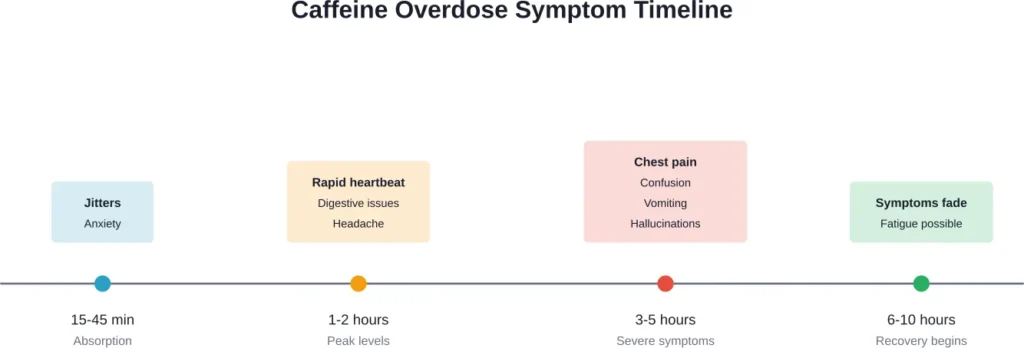
Research has examined fatal caffeine intoxication cases, including studies on the distinction between suicide and unintentional overdose. Caffeine is almost completely absorbed within 45 minutes, with plasma levels peaking between 15 minutes to 2 hours after ingestion.
A single teaspoon of pure powdered caffeine equals roughly 28 cups of coffee. The FDA has warned specifically about pure and highly concentrated caffeine products, which have contributed to at least two deaths in otherwise healthy individuals in the United States.
These deaths weren’t from regular coffee consumption—they involved dietary supplements with concentrated caffeine in powder or liquid forms. But they highlight how dangerous excessive caffeine can be.
Muscle Breakdown (Rhabdomyolysis)
In extreme cases, caffeine toxicity can cause rhabdomyolysis—a condition where damaged muscle tissue releases proteins into the bloodstream. These proteins can damage the kidneys and lead to kidney failure.
While rare with regular coffee consumption, cases have been documented with extremely high caffeine intake from multiple sources (coffee plus energy drinks plus caffeine pills).
Pregnancy and Developmental Concerns
The World Health Organization recommends restricting caffeine intake during pregnancy. Caffeine clearance from the mother’s blood slows down significantly during pregnancy.
Observational studies suggest excess caffeine intake may be associated with growth restriction, reduced birth weight, preterm birth, or stillbirth. The Dietary Guidelines for Americans state that caffeinated drinks should be avoided for children younger than age 2.
Special Populations at Higher Risk
Not everyone processes caffeine the same way.
People taking certain medications may experience drug interactions. Caffeine can interfere with medications for anxiety, sleep disorders, heart conditions, and psychiatric treatments.
Children and adolescents are more sensitive to caffeine’s effects. A study of 1,620 nursing students found 78.1% reported energy drink use, consuming an average of 1.6 cans per week. For younger populations, even moderate amounts can be problematic.
Those with existing anxiety disorders, heart conditions, or high blood pressure face amplified risks. What might be tolerable for someone without these conditions could trigger serious complications for those with underlying health issues.
Hidden Caffeine Sources That Push You Over the Limit
Coffee isn’t the only culprit. Caffeine hides in products people don’t always expect.
Energy drinks contain wildly variable caffeine amounts—some pack 300mg or more per can. The energy drink industry has been valued at $73.99 billion, with consumption raising serious cardiovascular concerns.
Over-the-counter medications often contain caffeine. Painkillers, appetite suppressants, cold medications, and migraine treatments frequently include 65-130mg of caffeine per dose.
Even “decaffeinated” coffee isn’t caffeine-free. It still contains small amounts—typically 2-15mg per cup. If someone drinks multiple cups thinking it’s completely caffeine-free, those amounts add up.
Chocolate, particularly dark chocolate, contains caffeine. Some specialty chocolate products rival a cup of tea in caffeine content.
Warning Signs You’re Drinking Too Much
The FDA lists several signs that caffeine consumption has crossed into problematic territory:
- Insomnia or significant sleep disruption
- Jitters, nervousness, or anxiety
- Fast heart rate or irregular heartbeat
- Upset stomach, nausea, or diarrhea
- Headaches (either during consumption or when trying to cut back)
- Feeling dysphoric, unhappy, or anxious
- Muscle tremors or twitching
If caffeine withdrawal causes severe headaches, extreme fatigue, or mood changes when consumption stops, that indicates dependence has developed.
What to Do If You’ve Had Too Much
Mild overconsumption usually resolves on its own as the body metabolizes the caffeine. Drinking water helps with hydration, since caffeine has diuretic effects.
Light exercise might help burn off some of the excess energy, though anyone experiencing heart palpitations should avoid strenuous activity.
But severe symptoms—chest pain, difficulty breathing, confusion, hallucinations, or vomiting—require immediate medical attention. Don’t try to treat a serious caffeine overdose at home.
Medical professionals can provide supportive care, monitor cardiac function, and administer activated charcoal in some cases to prevent further absorption.
Reducing Coffee Intake Without the Misery
Cutting back abruptly often backfires. Caffeine withdrawal triggers headaches, fatigue, irritability, and difficulty concentrating.
A gradual reduction works better. Cut consumption by about 25% every few days rather than going cold turkey. Someone drinking six cups daily might drop to four or five for a few days, then down to three, and so on.
Switching to half-caff (a mix of regular and decaf) helps transition without the full withdrawal hit. Green tea provides some caffeine—37mg per cup—but significantly less than coffee, making it a useful step-down option.
Timing matters too. Avoiding caffeine after 2 PM improves sleep quality for most people, which reduces the next-day fatigue that drives excessive consumption.
Frequently Asked Questions
According to the FDA, most healthy adults can safely consume up to 400mg of caffeine daily, which equals about 4-5 cups of regular brewed coffee. However, individual tolerance varies based on body weight, medications, and health conditions. Pregnant women with high daily caffeine intake (more than 300 mg per day) are recommended to lower their intake during pregnancy. Children should avoid or severely restrict caffeine consumption.
Early signs include jitteriness, rapid heartbeat, anxiety, restlessness, and upset stomach. These typically appear within 15-45 minutes of consumption as caffeine gets absorbed. More severe symptoms like chest pain, confusion, vomiting, or hallucinations indicate serious overdose requiring immediate medical attention.
While extremely rare with regular coffee consumption, fatal caffeine toxicity is possible. The FDA has documented deaths related to pure and highly concentrated caffeine products. A single teaspoon of powdered caffeine equals roughly 28 cups of coffee. Death from regular brewed coffee alone would require consuming an impractically large volume in a short timeframe, but combining multiple caffeine sources (coffee, energy drinks, supplements) increases risk.
Mild to moderate symptoms typically improve as the body metabolizes caffeine over 6-10 hours. Caffeine has a half-life of about 5-6 hours in most adults, meaning half is eliminated in that timeframe. Severe overdose symptoms may last longer and require medical intervention. Complete recovery can take 24 hours or more depending on the amount consumed.
Moderate coffee consumption (1-3 cups daily) is generally safe and may even offer cardiovascular benefits according to American Heart Association research. However, people with severely high blood pressure who drink two or more cups daily could double their risk of cardiovascular death. Those with existing heart conditions should consult healthcare providers about safe consumption levels.
Caffeine blocks adenosine receptors and triggers adrenaline release, which activates your nervous system. This causes the jitters, tremors, and shaky hands associated with too much coffee. The effect is more pronounced in caffeine-sensitive individuals or when consumption exceeds personal tolerance levels. Eating food with coffee can help reduce this effect.
No. Decaffeinated coffee still contains small amounts of caffeine—typically 2-15mg per cup compared to 113-247mg in regular coffee. While significantly lower, people who drink large quantities of decaf or are extremely sensitive to caffeine should be aware it’s not entirely caffeine-free.
The Bottom Line on Coffee Consumption
Coffee isn’t inherently dangerous. For most healthy adults, moderate consumption provides genuine benefits—improved alertness, enhanced focus, and potential long-term health advantages.
The problems emerge when consumption exceeds individual tolerance or safe limits. And with caffeine creeping into more products at higher concentrations, that threshold gets easier to cross unintentionally.
Pay attention to total caffeine intake from all sources, not just coffee. Track symptoms like sleep disruption, anxiety, or digestive issues that might indicate overconsumption. And respect individual variation—what works for one person might be too much for another.
When in doubt, consult a healthcare provider, especially if you have existing health conditions, take medications, or experience concerning symptoms. They can provide personalized guidance based on your specific situation.
Coffee can be part of a healthy lifestyle. Just keep it in check, stay hydrated, and remember that more isn’t always better. Your nervous system will thank you.