

Quick Summary: Eating bad ground beef can cause food poisoning from bacteria like E. coli, Salmonella, or Staphylococcus aureus. Symptoms typically include nausea, vomiting, diarrhea, stomach cramps, and fever, usually appearing within 30 minutes to 8 hours after consumption. Most cases resolve within a few days, but severe infections can lead to bloody diarrhea, dehydration, and in rare cases, life-threatening complications like hemolytic uremic syndrome (HUS).
Ground beef ranks among the most popular proteins in American kitchens. It’s versatile, affordable, and shows up in everything from burgers to tacos.
But here’s the thing—ground beef is also one of the most perishable meats available. The grinding process exposes more surface area to bacteria, making contamination easier and spoilage faster than whole cuts.
According to the FDA, the Federal government estimates that there are about 48 million cases of foodborne illness annually in the United States—the equivalent of sickening 1 in 6 Americans each year. These illnesses result in an estimated 128,000 hospitalizations and 3,000 deaths.
So what actually happens if that ground beef in the back of the fridge wasn’t as fresh as it looked? The answer depends on what type of bacteria contaminated it, how much was consumed, and individual health factors.
Let’s break down the real risks, symptoms, and science behind eating spoiled ground beef.
The Bacteria Behind Bad Beef
When ground beef goes bad, it’s not just about unpleasant odors or discoloration. Harmful bacteria multiply rapidly on contaminated meat, and these pathogens are what cause illness.
E. Coli: The Most Notorious Culprit
Escherichia coli O157:H7 is a type of Shiga toxin-producing E. coli (STEC) that can cause severe gastrointestinal illness. According to the FDA, while most E. coli strains are harmless bacteria living in the intestines of people and animals, certain pathogenic types can be life-threatening.
Ground beef is particularly susceptible because bacteria from the animal’s intestines can contaminate the meat during processing. When that meat is ground, the bacteria get distributed throughout instead of staying on the surface.
The WHO notes that most patients recover within 10 days, but in a small proportion of cases—particularly young children and the elderly—the infection may lead to hemolytic uremic syndrome (HUS). According to the WHO, HUS is characterized by acute renal failure, hemolytic anemia, and thrombocytopenia, occurring in a small proportion of patients with STEC infection, potentially causing permanent loss of kidney function.
Salmonella: The Common Contaminant
Salmonella is another major threat in contaminated ground beef. According to the CDC, Salmonella can spread through contaminated food, and most infections are linked to chicken, fruits, pork, and seeded vegetables—but beef certainly isn’t immune.
A 1994 outbreak in Wisconsin linked to raw ground beef resulted in 107 confirmed and 51 probable cases of Salmonella Typhimurium infection. Of all cases identified (158 total), 17 (16%) were hospitalized. Predominant symptoms included diarrhea (98%), abdominal cramps, nausea, and fever.
Staphylococcus Aureus: The Fast-Acting Toxin
Unlike E. coli and Salmonella, which multiply in the intestines, Staphylococcus aureus produces toxins directly in the contaminated food. According to CDC data, Staphylococcus aureus food poisoning symptoms include nausea, vomiting, stomach cramps, and diarrhea, typically appearing within 30 minutes to 8 hours after consumption.
The rapid onset makes Staph poisoning particularly unpleasant, though it’s usually not as severe or long-lasting as other bacterial infections.

Timeline: When Symptoms Appear
One of the most confusing aspects of food poisoning is the timing. That stomach ache might not be from the burger eaten an hour ago—it could be from contaminated meat consumed days earlier.
The incubation period varies significantly depending on the pathogen involved.
| Bacteria Type | Symptom Onset | Typical Duration | Peak Severity |
|---|---|---|---|
| Staphylococcus aureus | 30 minutes – 8 hours | 1-3 days | First 12-24 hours |
| Salmonella | 6 hours – 6 days (usually 12-72 hours) | 4-7 days | Days 2-4 |
| E. coli O157:H7 | 3-4 days (range 1-10 days) | 5-10 days | Days 3-5 |
According to the CDC, the most common symptoms of food poisoning include diarrhea, stomach pain or cramps, nausea, vomiting, and fever. But the specific presentation depends heavily on which germ was swallowed.
Real talk: if symptoms appear within a few hours of eating, it’s more likely Staph. If it’s been a couple days, think Salmonella or E. coli.
What Your Body Goes Through
Food poisoning isn’t just an upset stomach. Understanding what’s happening inside the body can help determine when symptoms are normal versus when medical attention is needed.
The Initial Phase: Nausea and Vomiting
When the body detects harmful bacteria or toxins in the digestive system, the first defense mechanism is often vomiting. This is the body’s attempt to expel the contaminated food before it causes more damage.
With Staph food poisoning, vomiting can be particularly violent and frequent because the toxins produced by the bacteria directly irritate the stomach lining.
The Intestinal Phase: Diarrhea and Cramping
As bacteria or toxins move through the digestive tract, they cause inflammation in the intestinal lining. This triggers several responses:
- The intestines increase fluid secretion to flush out pathogens (causing watery diarrhea)
- Intestinal muscles contract more forcefully (causing cramps)
- The inflammatory response can damage blood vessels (potentially causing bloody diarrhea)
According to CDC documentation on a 1994 Wisconsin Salmonella outbreak, diarrhea occurred in 98% of confirmed cases, making it the most consistent symptom.
Systemic Response: Fever and Weakness
When bacteria invade beyond the gut lining, the immune system responds systemically. Fever is a deliberate response—the body raises its temperature to create an inhospitable environment for bacteria.
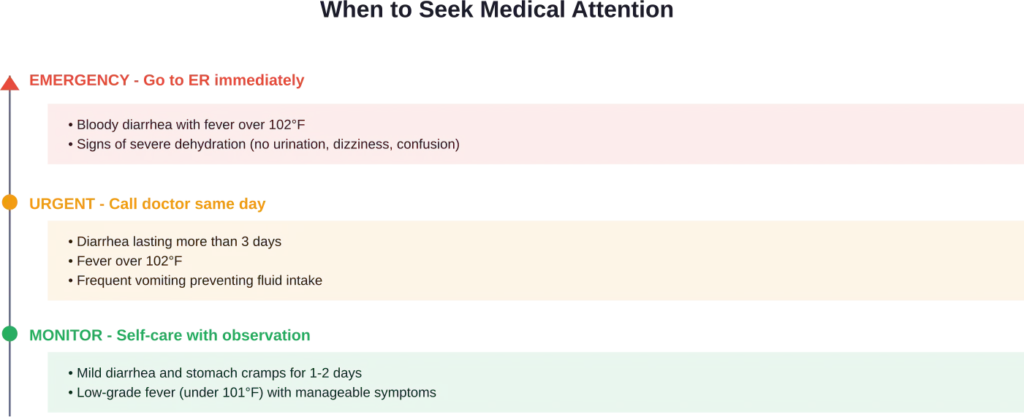
But here’s where it gets tricky. According to the CDC, severe food poisoning can cause fever over 102°F. Anything above this threshold warrants medical attention, as it may indicate a more serious infection.
Dehydration: The Hidden Danger
The combination of vomiting and diarrhea rapidly depletes the body’s fluid reserves. Dehydration can develop quickly, especially in children, elderly individuals, and those with compromised immune systems.
Signs of dehydration include:
- Decreased urination or dark urine
- Dry mouth and throat
- Dizziness when standing
- Fatigue and weakness
The CDC lists dehydration as one of the signs requiring immediate medical attention.
When Bad Beef Becomes Dangerous
Most cases of food poisoning from ground beef resolve on their own within a week. But some situations can turn life-threatening.
Hemolytic Uremic Syndrome (HUS)
This is the most severe complication associated with E. coli O157:H7 infection. According to the WHO, HUS is characterized by acute renal failure, hemolytic anemia, and thrombocytopenia, occurring in a small proportion of patients with STEC infection.
Research cited by CDC sources indicates that HUS occurs in up to 15% of hemorrhagic colitis victims and can lead to permanent loss of kidney function. The very young and elderly are at highest risk.
Early warning signs of HUS include:
- Decreased frequency of urination
- Extreme fatigue and pale skin
- Unexplained bruising or bleeding
- Swelling in face, hands, or feet
Bloody Diarrhea That Won’t Stop
According to the CDC, bloody diarrhea or diarrhea lasting more than 3 days is considered severe food poisoning requiring medical evaluation.
Bloody stools indicate that the intestinal lining has been damaged enough to cause bleeding. This creates additional risks for secondary infections and severe dehydration.
High Fever and Persistent Vomiting
The CDC identifies fever over 102°F and frequent vomiting that prevents keeping liquids down as warning signs of severe illness.
These symptoms suggest the infection has become systemic or that dehydration has reached dangerous levels.
Who’s at Highest Risk
While anyone can get food poisoning from contaminated ground beef, certain groups face significantly higher risks of severe complications.
Young Children
According to the WHO, children under 5 years of age carry 40% of the foodborne disease burden, with 125,000 deaths every year.
Children are more vulnerable because:
- Their immune systems are still developing
- They have smaller body mass, making dehydration more rapid
- They’re at higher risk for HUS from E. coli infections
Older Adults
The elderly face similar risks to young children. Aging immune systems are less effective at fighting off bacterial infections, and older adults often have underlying health conditions that complicate recovery.
The WHO specifically notes that the elderly are at increased risk for life-threatening complications from E. coli infections.
Immunocompromised Individuals
People with weakened immune systems—whether from HIV/AIDS, cancer treatment, organ transplants, or certain medications—are particularly vulnerable to severe foodborne illness.
For these individuals, even mild bacterial contamination can lead to serious, systemic infections.
Pregnant Women
Pregnancy naturally suppresses certain immune responses, making expectant mothers more susceptible to foodborne pathogens. Some bacterial infections can also affect the developing fetus.
How to Tell If Ground Beef Has Gone Bad
Prevention beats treatment every time. Knowing how to identify spoiled ground beef before cooking it can prevent food poisoning entirely.
The Color Test
Fresh ground beef should be bright red on the outside. The interior may appear slightly brown or gray due to lack of oxygen exposure—this is normal.
But here’s something important: according to USDA research presented in 1998, more than 25 percent of fresh ground beef patties turned brown prematurely before reaching the safe temperature of 160 degrees F. This means color alone isn’t a reliable indicator of doneness or safety.
Discard ground beef if:
- The exterior has turned brown or gray throughout
- There are green or blue patches (indicating mold)
- The meat has a slimy sheen
The Smell Test
Fresh ground beef has a mild, slightly metallic smell. Spoiled beef develops a distinct sour or ammonia-like odor that’s unmistakable once you’ve smelled it.
If the beef smells off, trust that instinct. No amount of cooking will make contaminated meat safe if it’s already spoiled.
The Texture Check
Fresh ground beef should feel slightly moist but not slimy or sticky. If the meat has developed a tacky or slippery coating, bacteria have multiplied to dangerous levels.
The Date Matters (But Isn’t Everything)
Use-by dates provide a guideline, but proper storage matters more. Ground beef can spoil before the date if stored improperly, or remain safe slightly past the date if kept at correct temperatures.
According to USDA guidelines, refrigerated ground beef should be used within 1-2 days of purchase. Frozen ground beef maintains quality for 3-4 months.
Safe Handling Practices That Actually Matter
The USDA’s Food Safety and Inspection Service emphasizes that proper food safety practices prevent situations that promote bacterial growth, cross-contamination, and foodborne illness.
Temperature Control Is Everything
According to USDA Safe Minimum Internal Temperature guidelines, ground beef must be cooked to 160°F. This temperature is critical because it’s high enough to destroy harmful bacteria like E. coli and Salmonella.
A meal preparation study from the USDA’s Food Safety and Inspection Service revealed that only 55% of people use a food thermometer to verify if their food is safe to consume, despite 88% of participants reporting that they own a thermometer. Instead, people relied on visual cues like color and firmness.
But visual cues don’t work. Ground beef can appear fully cooked while still harboring dangerous bacteria at its center.
The Danger Zone
Bacteria multiply rapidly between 40°F and 140°F. This temperature range is known as the “danger zone” in food safety.
Ground beef left at room temperature for more than 2 hours (or 1 hour if ambient temperature exceeds 90°F) should be discarded. The bacteria can double in number every 20 minutes in ideal conditions.
Proper Thawing Methods
According to USDA guidelines on ground beef safety, there are three safe ways to defrost ground beef:
- Refrigerator thawing: The safest method. Place frozen beef in the refrigerator 24 hours before cooking.
- Cold water thawing: To defrost in cold water, put the meat in a watertight plastic bag and submerge in cold water. Change the water every 30 minutes. Cook immediately after thawing.
- Microwave thawing: Use the defrost setting and cook immediately, as some areas may begin cooking during defrosting.
Never thaw ground beef on the counter at room temperature.
Cross-Contamination Prevention
Raw ground beef can contaminate surfaces, utensils, and other foods. The WHO’s “Five Keys to Safer Food” include separating raw and cooked foods as a fundamental principle.
Essential practices include:
- Using separate cutting boards for raw meat and other foods
- Washing hands thoroughly after handling raw beef
- Cleaning and sanitizing all surfaces that contacted raw meat
- Never placing cooked food on plates that held raw meat
Treatment and Recovery
So what happens if prevention failed and food poisoning has already set in?
The First 24 Hours
Most food poisoning cases are self-limiting, meaning they resolve without medical intervention. The primary goals in the first day are:
- Stay hydrated: Sip water, clear broths, or oral rehydration solutions frequently
- Rest: The body needs energy to fight the infection
- Avoid solid foods initially: Wait until vomiting subsides
Contrary to popular belief, anti-diarrheal medications aren’t always recommended. Diarrhea is the body’s way of expelling pathogens. Stopping it can actually prolong the infection in some cases.
Days 2-3: The Recovery Phase
As symptoms begin improving, gradually reintroduce bland foods:
- Toast and crackers
- Rice
- Bananas
- Applesauce
Avoid dairy, caffeine, alcohol, and fatty or spicy foods until fully recovered, as these can irritate the still-healing digestive system.
When Medical Treatment Is Needed
Healthcare providers may prescribe:
- Intravenous fluids for severe dehydration
- Antibiotics (only for specific bacterial infections, and only when benefits outweigh risks)
- Anti-nausea medications
According to the CDC, antibiotics are not recommended for E. coli O157:H7 infections, as they may increase the risk of HUS.
The Bigger Picture: Ground Beef and Food Safety
Ground beef has been at the center of numerous food safety outbreaks over the decades. Understanding why can help contextualize the risks.
Why Ground Beef Is Particularly Risky
According to the National Academies Press review of E. coli O157:H7 in ground beef, several factors make ground beef a high-risk food:
- Surface area exposure: Grinding exposes the entire meat mass to potential contamination, not just the exterior
- Multiple animal sources: A single batch of ground beef may contain meat from multiple animals, increasing contamination risk
- Processing conditions: Large-scale processing creates opportunities for cross-contamination
According to CDC’s Foodborne Illness Source Estimates, meat and poultry were the most common sources of fatal foodborne infections, largely due to Salmonella and Listeria.
Outbreak History
Research on the outbreak that changed meat and poultry inspection systems noted that by December 2004, the number of foodborne illnesses due to E. coli O157:H7 had decreased by 46%, achieving CDC’s Healthy People 2010 goal for this pathogen 6 years ahead of schedule.
This improvement came after major regulatory changes in ground beef inspection and processing standards.
According to National Research Council analysis, ground beef was identified as the likely contaminated food in 69 (26%) of reported E. coli O157:H7 outbreaks from 1998 to 2007.
Restaurant vs. Home Cooking
A study published in the Journal of Food Protection examined ground beef handling practices in 385 restaurants across eight states. The research highlighted that eating in table-service restaurants has been implicated as a risk factor for E. coli O157:H7 infection.
The key difference? Temperature control and thermometer use. Commercial kitchens face the same challenges as home cooks when it comes to ensuring proper internal temperatures.
Long-Term Effects
While most food poisoning cases resolve completely, some people experience lasting consequences.
Post-Infectious Irritable Bowel Syndrome
Some individuals develop chronic digestive issues following severe food poisoning. Symptoms can include ongoing abdominal pain, bloating, and altered bowel habits that persist for months or years.
Kidney Damage from HUS
As mentioned earlier, HUS can cause permanent kidney damage. Some patients require ongoing dialysis or kidney transplantation.
Reactive Arthritis
Certain foodborne infections, particularly Salmonella, can trigger reactive arthritis—joint pain and swelling that develops weeks after the initial infection and may last for months.
Prevention: Your Best Defense
The good news? Most ground beef-related food poisoning is entirely preventable.
| Prevention Stage | Critical Actions | Why It Matters |
|---|---|---|
| At Purchase | Check packaging for damage; ensure cold to touch; verify date | Contamination can occur during transport; temperature abuse starts spoilage |
| Storage | Refrigerate immediately at 40°F or below; use within 1-2 days or freeze | Bacterial growth slows at cold temperatures but doesn’t stop |
| Thawing | Use refrigerator, cold water, or microwave—never counter | Room temperature thawing creates danger zone conditions |
| Preparation | Separate from other foods; wash hands and surfaces | Prevents cross-contamination to ready-to-eat foods |
| Cooking | Use meat thermometer; cook to 160°F internal temperature | Only guaranteed way to kill harmful bacteria throughout |
| Leftovers | Refrigerate within 2 hours; reheat to 165°F; use within 3-4 days | Bacteria can multiply on cooked food if improperly stored |
According to FDA safe food handling guidance, the food supply in the United States is among the safest in the world. But that safety depends on proper handling throughout the entire chain—from processing to the dinner plate.
What About Slightly Pink Ground Beef?
This question comes up constantly. The USDA has published specific research on the color of cooked ground beef as it relates to doneness.
Here’s the truth: ground beef can remain pink at 160°F due to factors like pH and the presence of certain gases. Conversely, it can turn brown before reaching safe temperatures.
The only reliable indicator of safety is internal temperature measured with a food thermometer. Visual appearance—whether pink, brown, or gray—cannot determine if ground beef has reached the temperature necessary to destroy harmful bacteria.
The Global Context
While this article focuses primarily on U.S. data, food poisoning from contaminated meat is a worldwide concern.
According to the WHO, an estimated 600 million people – almost 1 in 10 people in the world – fall ill after eating contaminated food and 420,000 die every year. According to WHO, US$ 110 billion is lost each year in productivity and medical expenses resulting from unsafe food in low- and middle-income countries.
Foodborne diseases disproportionately affect vulnerable populations. The WHO reports that children under 5 carry 40% of the foodborne disease burden despite representing a much smaller percentage of the total population.
Frequently Asked Questions
Symptom onset varies by bacteria type. Staphylococcus aureus can cause symptoms in as little as 30 minutes to 8 hours. Salmonella typically takes 6 hours to 6 days, though usually 12-72 hours. E. coli O157:H7 has the longest incubation period at 3-4 days on average, though it can range from 1-10 days. According to the CDC, the timing of symptoms provides clues about which pathogen is responsible.
Cooking to 160°F will kill bacteria like E. coli and Salmonella present in the meat. However, if ground beef has already spoiled—indicated by off-smells, discoloration, or slimy texture—it should be discarded regardless. Some bacteria produce heat-stable toxins that remain dangerous even after cooking. When in doubt, throw it out.
No. According to USDA guidelines, refrigerated ground beef should be used within 1-2 days of purchase. After a week in the refrigerator, even if stored at proper temperatures (40°F or below), bacterial growth will have reached unsafe levels. The meat should be discarded.
Food poisoning is caused by consuming contaminated food or water and is triggered by bacteria, viruses, or parasites in what was eaten. Stomach flu (viral gastroenteritis) spreads person-to-person through respiratory droplets or contact. Food poisoning symptoms often appear more suddenly and may affect multiple people who ate the same food. Both cause similar symptoms—nausea, vomiting, diarrhea—but food poisoning is typically shorter in duration.
It depends on the cause. Anti-diarrheal medications can actually prolong some bacterial infections by preventing the body from expelling pathogens. If diarrhea is accompanied by high fever or blood, avoid anti-diarrheal drugs and seek medical attention. For mild cases without these warning signs, they may provide comfort, but staying hydrated is more important than stopping diarrhea.
Yes. According to USDA research, the interior of ground beef often appears brown or gray due to lack of oxygen exposure—this is completely normal and doesn’t indicate spoilage. However, if the exterior has turned completely brown, developed a slimy texture, or smells off, the meat has spoiled and should be discarded. Use multiple indicators—smell, texture, and date—not just color.
Duration depends on the pathogen. Staphylococcus aureus food poisoning typically resolves in 1-3 days. Salmonella infections usually last 4-7 days. E. coli O157:H7 can persist for 5-10 days. Most people recover fully without medical intervention, though severe cases—particularly those involving E. coli and HUS—may require hospitalization and have longer recovery periods. According to the WHO, most E. coli patients recover within 10 days.
The Bottom Line
Eating bad ground beef can result in anything from mild stomach upset to life-threatening complications, depending on the type and amount of bacterial contamination consumed, cooking temperature, and individual health factors.
The CDC’s data makes it clear: foodborne illness is common, affecting approximately 48 million Americans annually. Ground beef, due to its processing and handling requirements, represents a particular risk when safety protocols aren’t followed.
But here’s the good news—nearly all ground beef-related food poisoning is preventable through proper handling, storage, and cooking practices. Using a meat thermometer to verify that ground beef reaches 160°F is the single most important safety measure.
For most healthy adults, even if food poisoning does occur, symptoms will be unpleasant but temporary. The real risks lie with vulnerable populations: young children, elderly individuals, pregnant women, and those with compromised immune systems.
If severe symptoms develop—bloody diarrhea, high fever, signs of dehydration, or symptoms lasting more than three days—medical attention is essential. Early intervention can prevent serious complications like HUS.
The relationship between ground beef and food safety has improved dramatically over the past few decades thanks to better regulation, inspection protocols, and public awareness. The 46% reduction in E. coli O157:H7 illnesses achieved by 2004 demonstrates that systemic improvements work.
Still, the final line of defense is in home kitchens and restaurants. Temperature control, preventing cross-contamination, proper storage, and recognizing signs of spoilage remain essential skills for anyone who handles ground beef.
When it comes to questionable ground beef, the old adage holds true: when in doubt, throw it out. No burger is worth a week of misery—or worse.