

Quick Summary: Eating too much cheese can lead to digestive issues like bloating and constipation, weight gain from high calorie and saturated fat content, increased sodium intake affecting blood pressure, and potential skin breakouts. Moderation is key—experts generally recommend limiting cheese to 1-1.5 ounces per day as part of a balanced diet.
Cheese lovers, this one’s for you. That creamy, salty, perfectly melted slice of heaven might be doing more to your body than you realize.
Whether it’s shredded cheddar on tacos, mozzarella on pizza, or a fancy cheese board at parties, cheese has become a staple in diets worldwide. According to recent data, the European Union produces an estimated 10.7 million metric tons of cheese annually for the 2024/2025 marketing year, accounting for roughly 47% of global output.
But here’s the thing—while cheese delivers essential nutrients like calcium and protein, overdoing it can trigger a cascade of unwanted side effects. Let’s break down what actually happens when cheese consumption crosses the line.
The Nutritional Profile of Cheese
Before diving into the problems, it’s worth understanding what you’re actually consuming. Cheese packs a nutritional punch, both good and potentially problematic.
One ounce of cheese typically contains about 7 grams of protein—roughly 14% of daily requirements. According to research published in the journal Nutrients, dairy products contribute approximately 52-65% of dietary calcium intake and 20-28% of protein requirements, depending on age.
That said, cheese also brings saturated fat to the table. According to the American Heart Association, 1.7 ounces of cheddar cheese contains 9 grams of saturated fat—about 4.5% of a 1,600-calorie diet. Coconut oil comparisons show cheese raises LDL cholesterol similarly to other saturated fat sources.
Digestive Distress and Bloating
The most immediate effect of eating too much cheese? Your gut protests.
Consuming large amounts overwhelms the digestive system, particularly for those with lactose intolerance. Symptoms typically appear 30 minutes to two hours after eating and include bloating, gas, and abdominal discomfort.
Research indicates that less than 20% of Caucasians experience lactase non-persistence, but people of Hispanic, African American, and Native American origin show significantly higher rates. For these individuals, even moderate cheese consumption can trigger gastrointestinal symptoms.
Real talk: that uncomfortable fullness after mac and cheese isn’t just psychological. The high fat content slows digestion, keeping food in your stomach longer and contributing to that heavy, bloated feeling.
The Constipation Connection
Here’s what many people don’t realize—cheese is notoriously low in fiber. Combine that with its high fat content, and you’ve got a recipe for digestive slowdown.
When cheese dominates your diet at the expense of fiber-rich foods like vegetables and whole grains, constipation becomes a real concern. The binding effect intensifies when cheese replaces foods that would normally keep things moving smoothly through your digestive tract.
Weight Gain and Caloric Overload
Cheese is calorie-dense. There’s no way around it.
A single ounce might not seem like much, but the calories add up quickly. When you’re grating cheese over pasta, layering it on sandwiches, and snacking on cubes throughout the day, you can easily consume several hundred extra calories without realizing it.
The saturated fat content compounds this issue. While some studies suggest cheese consumption may not directly increase cardiovascular disease risk as once thought, the caloric surplus from excessive intake absolutely contributes to weight gain.

Sodium Content and Blood Pressure Concerns
According to the CDC, eating too much sodium increases blood pressure and raises the risk for heart disease and stroke. Heart disease and stroke remain leading causes of death in the United States.
More than 70% of the sodium Americans consume comes from packaged and prepared foods—and cheese is a significant contributor. While sodium has many forms, 90% of what we consume is from salt.
Processed cheeses tend to be particularly high in sodium. When combined with other high-sodium foods throughout the day, cheese can push your intake well beyond recommended limits.
Water Retention and Puffiness
That extra sodium doesn’t just affect blood pressure. It also causes your body to retain water, leading to bloating and puffiness that goes beyond digestive discomfort.
Community discussions frequently mention waking up puffy after cheese-heavy meals the night before. That’s the sodium-water retention connection at work.
Cardiovascular Health Considerations
The relationship between cheese and heart health is more nuanced than previously thought.
According to research published in Nutrients (2022) examining cardiovascular biomarkers, cheese intake per standard deviation increase causally reduced the risks of type 2 diabetes (odds ratio = 0.46; 95% confidence interval, 0.34–0.63). Heart failure risk also showed inverse associations in some studies.
However, this doesn’t give cheese unlimited green lights. The American Heart Association still recommends limiting saturated fat intake, noting that saturated fats raise LDL cholesterol levels—a key risk factor for cardiovascular disease.
The key takeaway? Moderate cheese consumption within recommended guidelines may not be problematic, but excessive intake that displaces healthier food choices poses real cardiovascular concerns.
Skin Breakouts and Inflammation
Sound familiar? You indulge in a cheese-heavy meal, and a few days later, breakouts appear.
While research on dairy and acne shows mixed results, many people report experiencing skin issues after consuming excessive cheese. The connection likely involves hormones naturally present in dairy products and the inflammatory response some individuals experience.
Cheese consumption can trigger inflammatory responses in sensitive individuals, potentially manifesting as skin issues, joint discomfort, or general inflammation throughout the body.
Lactose Intolerance Complications
According to the National Institutes of Health, as many as 50 million Americans may have some degree of lactose intolerance. For these individuals, eating too much cheese compounds problems significantly.
Interestingly, hard aged cheeses like cheddar, parmesan, and Swiss contain minimal lactose compared to soft cheeses. The aging process breaks down most lactose, making them more tolerable for lactose-sensitive individuals.
But when consumption exceeds tolerance thresholds—even with lower-lactose varieties—symptoms emerge. Diarrhea becomes a particular concern, potentially leading to dehydration if cheese consumption remains high.
Potential Food Safety Risks
Soft cheeses made from unpasteurized milk carry listeria risk, particularly for pregnant individuals, older adults, and those with compromised immune systems.
While this applies more to specific cheese types rather than quantity alone, increased consumption naturally raises exposure risk. The CDC recommends pregnant individuals avoid soft cheeses unless clearly labeled as made from pasteurized milk.
How Much Cheese Is Actually Safe?
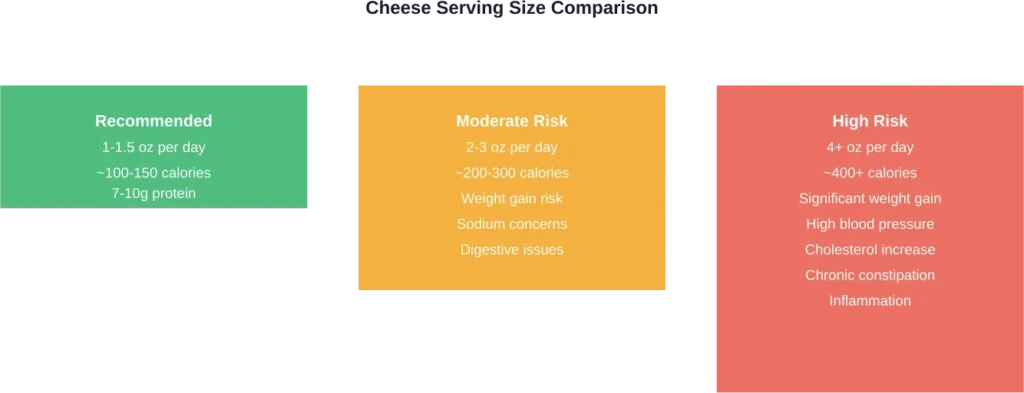
The American Heart Association recommends two to three servings of fat-free or low-fat dairy products daily for adults. For cheese specifically, this typically translates to about 1 to 1.5 ounces per day.
One ounce of cheese is roughly the size of four stacked dice or your thumb from base to tip. When you visualize that portion, you quickly realize how easy it is to overshoot recommendations.
| Cheese Type | Serving Size | Calories | Saturated Fat | Sodium |
|---|---|---|---|---|
| Cheddar | 1 oz | 114 | 6g | 176mg |
| Mozzarella | 1 oz | 85 | 3.7g | 138mg |
| Parmesan | 1 oz | 111 | 4.4g | 454mg |
| Swiss | 1 oz | 106 | 5g | 54mg |
| Feta | 1 oz | 75 | 4.2g | 316mg |
Balancing Cheese in a Healthy Diet
Look, completely eliminating cheese isn’t necessary for most people. The goal is balance.
According to CDC healthy eating guidelines, healthy eating patterns can include foods that reflect personal preferences, cultural traditions, and budgetary considerations. Comfort foods, in limited amounts, absolutely fit into healthy eating patterns.
The key is treating cheese as a flavor enhancer rather than a dietary staple. Use it strategically—a sprinkle of parmesan on roasted vegetables, a thin slice on a sandwich, or a small portion on a cheese board.
Practical Portion Control Strategies
Pre-portioning helps immensely. Instead of eating directly from a block, cut individual servings and store them separately. This creates a natural stopping point.
Opt for stronger-flavored cheeses when possible. Sharp cheddar, aged parmesan, or blue cheese deliver intense flavor in smaller amounts, satisfying cheese cravings without excessive quantity.
Pair cheese with fiber-rich foods. Adding vegetables, whole grain crackers, or fruit helps balance the low-fiber content and creates a more satisfying, nutritionally complete snack.
Signs You’re Eating Too Much Cheese
Your body sends signals when cheese consumption crosses the line. Pay attention to these indicators:
- Persistent bloating or gas, especially after meals
- Irregular bowel movements or ongoing constipation
- Unexplained weight gain despite otherwise healthy habits
- Increased puffiness or water retention
- Skin breakouts that correlate with cheese consumption
- Digestive discomfort that disrupts daily activities
Reports indicate these symptoms appear consistently among those who’ve reduced cheese intake and noticed improvements.
When to Choose Lower-Fat Options
The debate between full-fat and low-fat dairy continues, but for those consuming cheese frequently, lower-fat options make mathematical sense.
According to American Heart Association recommendations, using low-fat or fat-free dairy products reduces saturated fat and calorie intake while maintaining protein and calcium benefits. For children age 2 and older and adults, this means choosing 1% or fat-free options when possible.
That said, some research suggests full-fat dairy doesn’t increase cardiovascular risk as dramatically as once believed. The choice depends on overall dietary patterns, health status, and personal tolerance.
Frequently Asked Questions
Most health organizations recommend limiting cheese to 1-1.5 ounces daily as part of balanced dairy intake. Regularly exceeding 2-3 ounces per day increases risk for weight gain, high blood pressure, and digestive issues. Individual tolerance varies based on lactose sensitivity, overall diet quality, and activity level.
Yes, cheese is low in fiber and high in fat, which slows digestive transit. When cheese replaces fiber-rich foods in your diet, constipation becomes more likely. The binding effect intensifies with increased consumption, particularly when combined with inadequate water intake and low vegetable consumption.
Cheese contains saturated fat, which can raise LDL cholesterol levels. According to the American Heart Association, 1.7 ounces of cheddar contains 9 grams of saturated fat. However, recent research suggests the relationship between cheese and cardiovascular risk is more complex than previously thought, with some studies showing neutral or even protective effects at moderate intake levels.
Bloating after cheese consumption typically results from lactose intolerance, high fat content slowing digestion, or sodium-related water retention. Symptoms usually appear 30 minutes to two hours after eating. People with lactose intolerance experience more severe bloating due to undigested lactose fermenting in the intestines.
Absolutely. Cheese is calorie-dense, with most varieties containing 100-120 calories per ounce. When consumption exceeds daily caloric needs, weight gain follows. The combination of high calories, satisfying taste, and easy overconsumption makes cheese a common contributor to unwanted weight gain when eaten excessively.
Eating cheese daily is fine for most people when portions stay within recommended limits of 1-1.5 ounces. According to research examining all-cause mortality, moderate cheese consumption shows neutral or even beneficial health associations. The key is moderation—small daily portions as part of a varied diet rather than large quantities that displace other nutritious foods.
Lower-sodium, lower-fat options like mozzarella and Swiss tend to be healthier choices. Aged hard cheeses like parmesan deliver strong flavor in small amounts and contain minimal lactose. Cottage cheese and ricotta provide high protein with less fat. Ultimately, the healthiest cheese is one you enjoy in appropriate portions as part of a balanced eating pattern.
The Bottom Line on Cheese Consumption
Cheese isn’t the villain it’s sometimes portrayed to be, but it’s not a free-for-all food either.
The evidence shows moderate consumption fits perfectly fine into healthy eating patterns for most people. Research published in Nutrients even suggests potential benefits for type 2 diabetes and heart failure risk at appropriate intake levels.
But excessive consumption—beyond those 1-1.5 ounce daily recommendations—brings legitimate health concerns. Weight gain, digestive distress, increased sodium intake, and elevated saturated fat consumption all pose real risks when cheese dominates your diet.
The solution isn’t elimination. It’s awareness, portion control, and strategic choices that let you enjoy cheese’s flavor and nutritional benefits without the downsides.
Pay attention to your body’s signals. If you’re experiencing persistent bloating, unexplained weight gain, or digestive issues, take an honest look at your cheese consumption. Even small reductions can produce noticeable improvements.
Ready to reassess your cheese habits? Start by measuring actual portions for one week. You might be surprised at how much you’re really consuming—and how easy it is to bring things back into balance without sacrificing enjoyment.