

Quick Summary: Holding your pee overnight occasionally is generally safe for healthy adults, as the bladder can hold 16-24 ounces and the body slows urine production during sleep. However, regularly delaying urination can lead to bladder stretching, urinary tract infections, weakened pelvic floor muscles, and in rare cases, urinary retention. According to the National Institute of Diabetes and Digestive and Kidney Diseases, regularly holding urine can wear out bladder muscles and increase infection risk.
We’ve all been there. It’s the middle of the night, and the urge to pee wakes you up. But the bed is warm, the bathroom is cold, and rolling over seems like the better option.
While occasionally holding your pee overnight won’t cause immediate harm, making it a habit can lead to some surprising consequences. The bladder isn’t designed to ignore nature’s call indefinitely, and the body sends those signals for good reason.
Here’s what actually happens when someone holds their pee overnight, and when this common habit crosses the line from harmless to harmful.
How the Bladder Works During Sleep
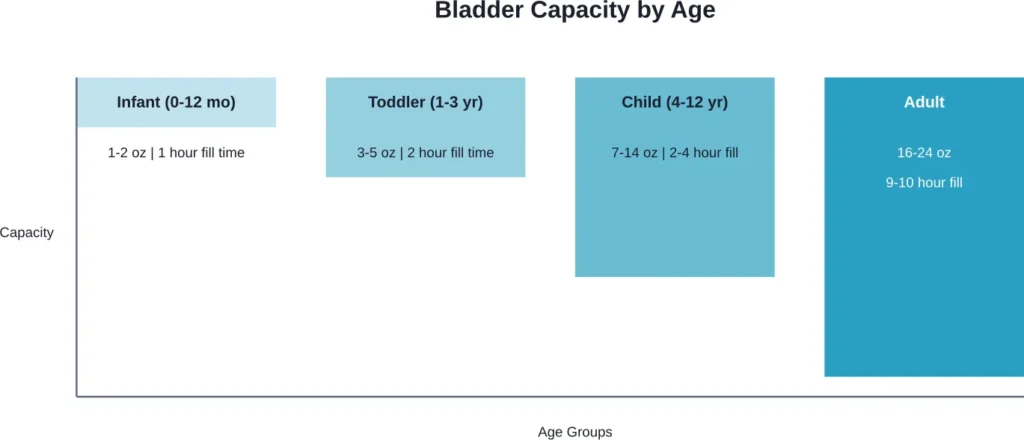
The urinary bladder is a hollow, pear-shaped organ that stores urine until it’s time to release it. The typical adult bladder can hold about one pint, or two cups (16-24 ounces) of urine before it’s considered full.
During sleep, the body undergoes several changes that affect urination. The brain releases antidiuretic hormone (ADH), which signals the kidneys to slow down urine production. This is why most healthy adults can sleep through the night without needing a bathroom break.
It takes the body 9 to 10 hours to produce 2 cups of urine. For most people, this aligns well with a full night’s sleep, meaning the bladder reaches comfortable capacity right around wake-up time.
But what happens when someone ignores that middle-of-the-night signal?
Short-Term Effects of Holding Pee Overnight
Delaying urination for one or two hours won’t pose any threat to health for most people. The bladder is designed with some flexibility, and occasional delays are perfectly normal.
Bladder Discomfort and Pressure
The most immediate effect is physical discomfort. As the bladder fills beyond its comfortable capacity, pressure builds. This sensation intensifies because the bladder wall contains stretch receptors that send increasingly urgent signals to the brain.
Some people may experience lower abdominal cramping or a feeling of fullness that makes it difficult to fall back asleep. The discomfort typically resolves immediately after urination.
Disrupted Sleep Quality
Fighting the urge to pee can actually make sleep worse, not better. The brain remains partially alert, monitoring bladder signals, which prevents deep, restorative sleep cycles.
Getting up to use the bathroom, while momentarily disruptive, often results in better overall sleep quality than lying awake trying to ignore the urge.
Long-Term Risks of Regularly Holding Urine
Here’s where things get more serious. According to the National Institute of Diabetes and Digestive and Kidney Diseases, regularly holding urine can wear out the bladder muscles and increase health risks.
Urinary Tract Infections
The Urology Care Foundation notes that people should avoid holding pee for extended periods, as it can increase the risk of urinary tract infections (UTIs).
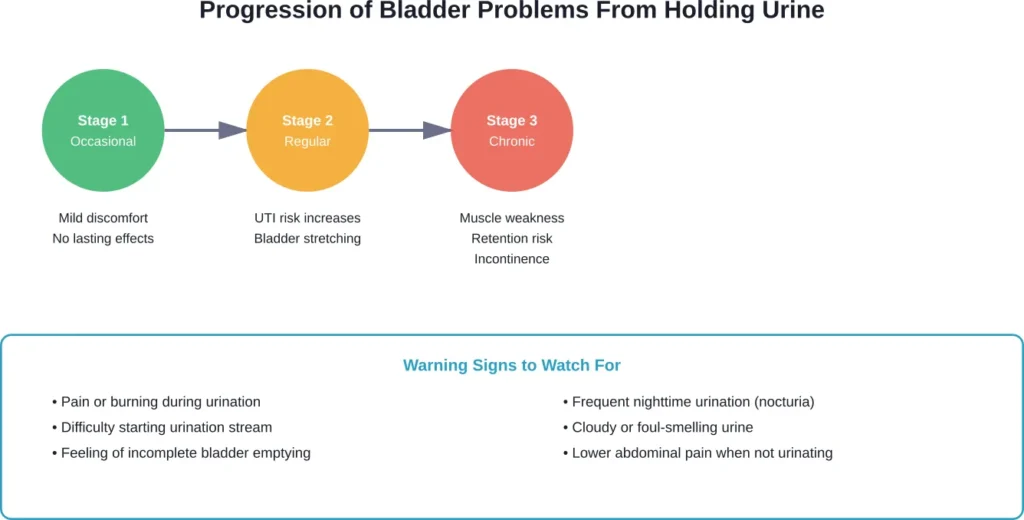
When urine sits in the bladder too long, bacteria have more time to multiply. This creates an environment where infection can develop more easily. Symptoms of a UTI may include pain or burning when urinating, cloudy or foul-smelling urine, and strong urges to urinate frequently.
Dehydration, inadequate personal hygiene, and certain medications may also increase the risk alongside urine retention.
Bladder Stretching and Muscle Damage
Over time, regularly holding urine can cause the bladder to stretch beyond its normal capacity. While the bladder has elastic properties, chronic overfilling can lead to permanent stretching.
This stretching can weaken the bladder muscles, making it harder for the bladder to contract fully during urination. The result? Incomplete emptying, which ironically can lead to more frequent urges to urinate.
Weakened Pelvic Floor Muscles
The pelvic floor muscles support the bladder and help control urination. Regularly holding pee can put extra strain on these muscles, potentially weakening them over time.
Damaged pelvic floor muscles can lead to incontinence issues later in life. Some people may develop stress incontinence, where coughing, sneezing, or laughing causes urine leakage.
Urinary Retention
When someone holds their pee for 10 hours or more regularly, they may develop urinary retention. This condition means the bladder muscles can’t relax and allow urination, even when the person wants to go.
Acute urinary retention is a medical emergency. According to NIDDK treatment guidelines, health care professionals must immediately drain the urine from the bladder using a catheter in acute cases.
Chronic urinary retention carries its own risks. The American Urological Association defines high-risk chronic urinary retention as conditions that may lead to hydronephrosis (kidney swelling), bladder stones, or stage 3 chronic kidney disease with an estimated glomerular filtration rate of 45 to 59 mL/min/1.73m².
Kidney Stones and Kidney Damage
When urine stays in the bladder too long, minerals can crystallize and potentially form kidney stones. These painful deposits can cause severe discomfort and may require medical intervention.
In extreme cases of chronic retention, urine can back up into the kidneys, causing hydronephrosis. This condition can lead to kidney damage if left untreated.
Can Your Bladder Actually Burst?
This is the question that keeps people up at night. Real talk: bladder rupture is extremely rare and typically only occurs in cases of severe trauma or underlying medical conditions.
In very rare cases, holding pee can cause the bladder to burst, but this requires extraordinary circumstances. The bladder would need to be severely overfilled, and the person would need to ignore extreme pain signals.
Long before rupture occurs, most people experience such intense discomfort that urination becomes involuntary. The body has built-in safety mechanisms.
When to Seek Medical Help
According to NIDDK guidelines, certain symptoms indicate it’s time to consult a health care professional. Don’t wait too long to address difficulty urinating.
If symptoms persist for 36 to 48 hours, it’s time to seek a professional diagnosis. Warning signs include:
- Pain or burning when urinating
- Cloudy, dark, bloody, or foul-smelling urine
- Urinating more often than usual with only small amounts
- Strong urges to urinate but difficulty starting the stream
- Fever accompanied by urinary symptoms
- Complete inability to urinate despite feeling the urge
For men over 50, urinary issues become increasingly common due to benign prostatic hyperplasia (BPH). University of Utah Health notes that about 50% of men have significant BPH symptoms by age 50, increasing with each decade of life.
Healthy Bathroom Habits for Better Bladder Health
The National Institute of Diabetes and Digestive and Kidney Diseases recommends several strategies to prevent urinary retention and maintain bladder health.
Use the Bathroom Regularly
Doctors recommend emptying your bladder regularly, about every three hours during the day. Use the bathroom whenever there’s an urge to go, rather than waiting for a more convenient time.
Often, people hold urine because it’s not a good time to use the bathroom. However, regularly holding urine in can wear out bladder muscles over time.
Don’t Train Your Body to Hold It
Some people attempt to train their bladder to hold more urine by deliberately delaying bathroom trips. This practice can backfire, leading to the complications mentioned above.
While bladder training has legitimate medical uses under professional supervision for certain conditions, casual self-training isn’t recommended for healthy individuals.
Stay Hydrated Properly
Drinking adequate water throughout the day supports healthy urinary function. However, limiting fluid intake 2-3 hours before bedtime can reduce nighttime bathroom trips without causing dehydration.
Avoid excessive caffeine and alcohol, especially in the evening, as both substances increase urine production and bladder irritation.
| Time of Day | Recommended Practice | Why It Matters |
|---|---|---|
| Morning | Empty bladder upon waking | Prevents overnight accumulation from causing retention |
| Throughout Day | Urinate every 3-4 hours | Maintains healthy bladder muscle tone |
| Before Bed | Use bathroom as part of bedtime routine | Reduces likelihood of nighttime waking |
| During Night | Go if awakened by urge | Prevents overfilling and potential complications |
Special Considerations and Risk Factors
Some individuals face higher risks from holding urine overnight. Certain medical conditions affect bladder function and urinary health.
According to the American Urological Association, approximately 795,000 people in the United States experience a stroke (CVA) every year, with 28-79% experiencing symptoms of urinary incontinence post-stroke. Neurological conditions like multiple sclerosis and spinal cord injury also commonly cause bladder control issues.
Pregnant women experience increased pressure on the bladder and should be especially attentive to regular bathroom breaks. People with diabetes may have nerve damage affecting bladder signals.
Older adults naturally experience changes in bladder capacity and muscle tone, making regular urination even more important.
Conclusion: Listen to Your Body’s Signals
The bottom line? Holding pee overnight occasionally won’t cause catastrophic harm for most healthy adults. The bladder is designed to store urine during sleep, and the body naturally reduces urine production at night.
But ignoring the urge regularly can lead to a cascade of problems, from uncomfortable UTIs to serious conditions like urinary retention and kidney complications. The bladder sends those middle-of-the-night signals for a reason.
The healthiest approach is simple: go when you need to go. Those few seconds of disrupted sleep are a small price to pay for long-term urinary health. If difficulty urinating persists or symptoms develop, consulting a healthcare professional can identify underlying issues before they become serious.
Take care of your bladder, and it’ll take care of you.
Frequently Asked Questions
Most healthy adults can safely hold urine for about 8-10 hours during sleep, as the body naturally slows urine production. However, if someone wakes up with an urge to urinate, it’s best to go rather than force holding it longer. Regularly holding urine for more than 10 hours can increase the risk of bladder problems.
If someone wakes up with a strong urge to urinate, holding it until morning isn’t recommended. The discomfort typically means the bladder is approaching or exceeding comfortable capacity. Getting up to use the bathroom usually results in better sleep quality than lying awake fighting the urge, and it reduces the risk of bladder overstretching.
According to the Urology Care Foundation, regularly holding urine can increase UTI risk because bacteria have more time to multiply in stagnant urine. Occasionally holding pee overnight won’t directly cause a UTI, but making it a habit creates conditions where infections can develop more easily, especially when combined with other risk factors like dehydration.
Warning signs include persistent difficulty starting urination, feeling like the bladder doesn’t empty completely, frequent small urinations, pain or burning when urinating, and involuntary urine leakage. If these symptoms last 36-48 hours or longer, medical evaluation is recommended to check for bladder muscle damage or urinary retention.
Bladder capacity varies between individuals, and the body’s antidiuretic hormone production differs. Younger adults typically produce more of this hormone during sleep, reducing nighttime urine production. Factors like fluid intake before bed, caffeine or alcohol consumption, medications, age, and conditions like BPH or diabetes all affect nighttime urination frequency.
In chronic cases where someone regularly holds urine for extended periods, the risk of kidney complications increases. Urine can back up into the kidneys causing hydronephrosis (kidney swelling), and minerals in stagnant urine may form kidney stones. The American Urological Association notes that chronic urinary retention can lead to stage 3 chronic kidney disease in severe cases.
Waking once per night to urinate becomes more common with age and is generally considered normal, especially for adults over 60. However, younger adults typically sleep through the night without bathroom trips. Waking more than twice per night (nocturia) may indicate an underlying condition and warrants medical evaluation, particularly if it’s a new pattern.