

Quick Summary: Leaving a tampon in longer than 8 hours increases the risk of toxic shock syndrome (TSS), a rare but life-threatening bacterial infection. While TSS is uncommon, retained tampons can also cause bacterial vaginosis, foul odor, and vaginal irritation. If you’ve left a tampon in too long, remove it immediately and watch for symptoms like sudden fever, rash, or dizziness—seek emergency care if these develop.
Most menstruating individuals have heard the warnings about not leaving tampons in too long. But what actually happens if you fall asleep with one in or forget about it entirely?
The risks range from mild irritation to life-threatening complications. Here’s what medical evidence tells us about tampon safety and when you should be concerned.
The 8-Hour Rule and Why It Exists
The standard recommendation is clear: tampons should be changed every 4-8 hours, with 8 hours being the maximum safe duration. This timeframe isn’t arbitrary.
According to the FDA, tampons are regulated as medical devices. When left in place too long, they create an environment where bacteria can multiply rapidly. The warm, moist conditions inside the vagina combined with menstrual blood provide ideal breeding grounds for certain bacterial strains.
But here’s the thing—the 8-hour guideline is a safety maximum, not a target. Most healthcare providers recommend changing tampons more frequently, especially on heavier flow days.
Toxic Shock Syndrome: The Serious Risk
TSS is the condition everyone associates with tampon use, and for good reason.
Toxic shock syndrome is a rare but potentially fatal illness caused by toxins released by bacteria, primarily Staphylococcus aureus (S. aureus) and sometimes Streptococcus pyogenes (Group A streptococcal) bacteria. According to CDC surveillance data, from 1979 to 1996, 5,296 TSS cases were reported in the United States, with 93% of all TSS cases reported during this period occurring in women.
The numbers have dropped dramatically since the 1980s. In 1980, 890 cases of TSS were reported, 812 (91%) of which were associated with menstruation. In 1989, 61 cases of TSS were reported, 45 (74%) of which were menstrual. The withdrawal of high-absorbency Rely tampons in September 1980 contributed significantly to this decline.
Sound reassuring? It should—but that doesn’t mean the risk is zero.
TSS Symptoms to Watch For
TSS develops quickly and requires immediate emergency treatment. Symptoms include:
- Sudden high fever (102°F or higher)
- Sunburn-like rash, particularly on palms and soles
- Dizziness or fainting when standing
- Muscle aches throughout the body
- Vomiting or diarrhea
- Confusion or disorientation
- Low blood pressure (hypotension)
If these symptoms appear during or just after menstruation—especially if a tampon has been in place—seek emergency care immediately. TSS can progress to organ failure within hours.

Other Complications Beyond TSS
TSS gets the headlines, but other problems can develop from retained tampons.
Bacterial Vaginosis
Leaving a tampon in too long disrupts the vagina’s natural bacterial balance. This can lead to bacterial vaginosis (BV), an overgrowth of harmful bacteria.
BV symptoms include a fishy odor, grayish discharge, and itching. While not life-threatening, BV requires antibiotic treatment and can increase susceptibility to sexually transmitted infections.
Foul Odor and Discharge
One of the first signs of a retained tampon is a distinctly unpleasant smell. The odor occurs as bacteria break down trapped menstrual blood.
The discharge may become discolored—brown, gray, or greenish—and heavier than normal. This isn’t necessarily infection, but it indicates the tampon needs immediate removal.
Vaginal Irritation and Inflammation
Extended tampon use can cause physical irritation to vaginal tissues. The absorbent material can dry out the vaginal lining, leading to discomfort, redness, and inflammation (vulvitis).
Some individuals may also experience localized pain or difficulty urinating if the tampon shifts position.
How Common Is the “Forgotten Tampon” Problem?
More common than many people realize. Healthcare providers regularly encounter patients who’ve lost track of tampons—sometimes for days or even weeks.
Community discussions reveal this happens for various reasons: falling asleep during light flow days, inserting a fresh tampon without removing the previous one, or simply losing awareness during busy periods.
The cervix prevents tampons from traveling beyond the vagina, so a “lost” tampon is always retrievable. But the longer it remains, the greater the risk.
What to Do If You’ve Left One In Too Long
First, don’t panic. Here’s what to do:
Remove it immediately. Wash hands thoroughly, sit in a comfortable position, and gently pull the string. If the tampon has been in place for an extended period, it may feel stuck due to dryness—gentle pressure and relaxation usually help.
Can’t find or remove it? Contact a healthcare provider or visit urgent care the same day. Medical professionals can safely remove retained tampons.
Watch for symptoms. Monitor for 24-48 hours after removal. If fever, rash, dizziness, or other TSS symptoms develop, seek emergency care immediately and mention the tampon situation.
Consider follow-up care. If the tampon was retained for more than 24 hours or if unusual discharge or odor persists after removal, schedule a medical appointment. Testing can rule out infection.
Prevention: Safer Tampon Practices
Reducing risk comes down to mindful habits.
| Practice | Why It Matters | Risk Level |
|---|---|---|
| Change every 4-6 hours | Prevents bacterial buildup | Lowest risk |
| Use lowest absorbency needed | Reduces TSS risk; high-absorbency tampons have higher association with TSS | Low risk |
| Never sleep longer than 8 hours with a tampon | Extended overnight wear increases exposure time | Moderate risk |
| Remove before inserting a new one | Prevents “stacking” tampons (yes, it happens) | High risk if forgotten |
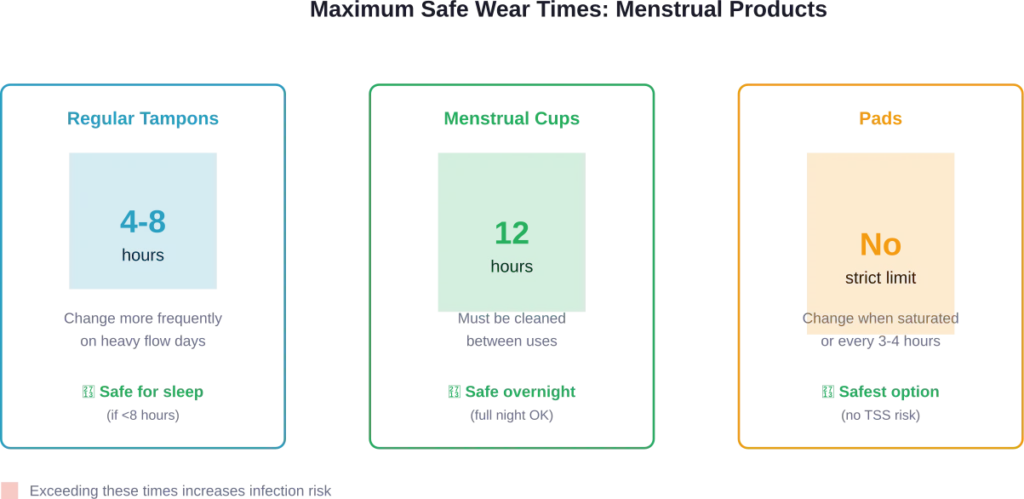
| Use alternative products overnight | Pads or menstrual cups offer safer extended wear | Lowest risk |
Some experts, including Dr. Patrick Schlievert of the University of Iowa cited in CIDRAP research, note that TSS incidence may be rising in certain regions. He reports seeing rates of 3 or 4 cases per 100,000 menstruating women in some areas, and attributes this partly to high-absorbency tampon use among young teenage athletes and the practice of using more than one tampon at a time.
When Different Products Pose Risks
While tampons get the most attention, other inserted menstrual products can carry similar risks if misused.
Menstrual cups have been associated with TSS in rare cases and should not be left in longer than recommended by manufacturers. The same bacteria that cause tampon-related TSS can proliferate in cups left in too long or not cleaned properly.
Contraceptive sponges also carry TSS warnings, as they function similarly to tampons in terms of creating a bacterial environment.
The Bottom Line on Tampon Safety
Real talk: Most people who accidentally leave a tampon in too long won’t develop TSS. The condition remains rare, though some experts report current incidence rates of 3-4 per 100,000 menstruating women in certain regions, up from previous lows.
But “rare” doesn’t mean “impossible.” And beyond TSS, other complications can still cause significant discomfort and health issues.
The key is awareness. Set phone reminders if needed. Consider alternating tampons with pads. Use the minimum absorbency for your flow. And if you realize you’ve left one in too long, remove it promptly and stay alert for symptoms.
When in doubt, contact a healthcare provider. They’ve seen it all, and getting professional guidance is always better than waiting to see if symptoms develop.
Frequently Asked Questions
The risk of TSS increases after 8 hours, though the condition can develop anytime bacteria produce sufficient toxins. Most TSS cases involve tampons left in 12+ hours, but individual susceptibility varies. The safest approach is changing tampons every 4-6 hours and never exceeding 8 hours.
Potentially, yes. While 12 hours doesn’t guarantee illness, the risk of bacterial infection, TSS, and vaginal irritation increases significantly. Remove the tampon immediately and monitor for symptoms including fever, rash, dizziness, or unusual discharge over the next 24-48 hours.
Contact a healthcare provider or visit urgent care. A medical professional can perform a speculum exam to locate and safely remove a retained tampon. Don’t wait—retained tampons can cause infection within days. If you develop fever or other concerning symptoms, seek emergency care.
No. The cervix prevents tampons from moving beyond the vagina into the uterus. However, tampons can shift position and become difficult to locate, especially if the string breaks or retracts. In these cases, the tampon is still in the vagina and can be removed by a healthcare provider.
Yes, if removed within 8 hours. For most people sleeping 7-8 hours, inserting a fresh tampon before bed and removing it upon waking is safe. For longer sleep periods, consider using a pad or menstrual cup instead. Never sleep with a tampon if unsure when you’ll wake up.
Signs include foul or fishy odor, unusual discharge (gray, green, or brown), vaginal itching or burning, and discomfort. Infection symptoms typically appear within days of the tampon being removed. TSS symptoms appear more rapidly and include sudden high fever, sunburn-like rash, and dizziness. Any concerning symptoms warrant medical evaluation.
Yes. Higher-absorbency tampons are associated with increased TSS risk. According to CDC data from the 1980s, risk increases with absorbency levels. Always use the lowest absorbency adequate for your flow, and change tampons more frequently rather than opting for super-absorbent varieties.