

Quick Summary: Pumping gas with the car on is unsafe and against regulations. A running engine can ignite fuel vapors through static discharge, hot components, or electrical sparks, potentially causing a fire. Safety authorities including NHTSA and university extensions recommend turning off the engine during refueling to eliminate ignition risks.
It’s a question that’s crossed the mind of nearly every driver at some point. The car’s still running, the tank needs filling, and shutting everything down feels like an extra hassle. But is pumping gas with the engine on actually dangerous, or just another overblown safety warning?
The short answer? It’s genuinely risky. And not because of some far-fetched movie explosion scenario.
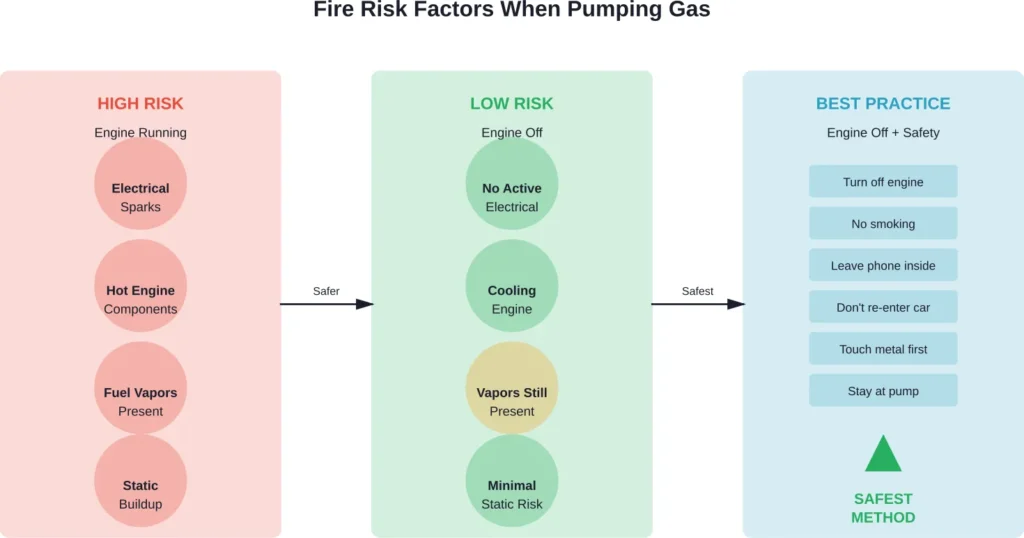
Gasoline creates vapors the moment it leaves the pump nozzle. Those vapors are highly flammable, hanging in the air around the fill point. A running engine introduces multiple potential ignition sources—electrical currents, hot exhaust components, and even increased static electricity risk. That combination creates real fire hazard conditions.
The Real Dangers of Leaving Your Engine Running
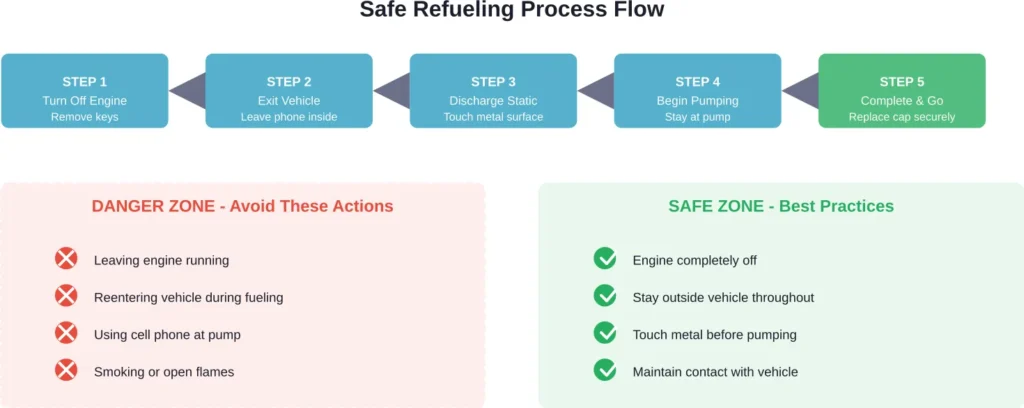
According to the University of Missouri System, safe refueling follows four critical rules: turn off the engine, don’t smoke, leave cell phones inside or turned off, and don’t reenter the vehicle during fueling. That first rule exists for solid reasons.
Running engines generate heat. Exhaust systems, catalytic converters, and engine components can reach temperatures well above gasoline’s ignition point. While these parts are typically shielded, the risk increases when fuel vapors are present in high concentrations around the vehicle.
But the heat isn’t the only concern.
Electrical systems in running vehicles create small sparks constantly. The alternator, starter motor connections, and various sensors all generate minor electrical discharges during normal operation. Most of the time, these pose zero threat. At a gas pump surrounded by fuel vapors? The calculation changes entirely.
Fuel Vapors: The Invisible Hazard
Gasoline doesn’t burn in its liquid form. The vapors do. When fuel flows from the pump into the tank, vapors escape—it’s unavoidable. These vapors spread outward from the fill point, creating a flammable cloud that dissipates over seconds to minutes depending on air movement and temperature.
A running car engine sits within this vapor zone. Any ignition source during that window can trigger combustion. It won’t necessarily explode like Hollywood suggests, but fires at gas stations do happen, and running engines increase that probability measurably.
Static Electricity: The Hidden Threat
Here’s where things get counterintuitive. Static electricity poses one of the more serious risks at gas pumps—and a running engine can contribute to this problem indirectly.
According to research from Purdue University Extension, static electricity becomes particularly hazardous at gas stations during cool, dry weather conditions. Static discharge can ignite fuel vapors just as effectively as an open flame.
Now, the engine itself doesn’t directly cause static buildup. But here’s the connection: when drivers leave their engine running, they’re more likely to get back into their vehicle while pumping. Maybe to adjust the heat, grab something from the passenger seat, or check their phone.
Sliding across a car seat generates static charge. Stepping back out to grab the pump handle creates a discharge opportunity—right in the vapor zone.
The Re-Entry Problem
The University of Missouri System explicitly warns against reentering vehicles during refueling. This isn’t arbitrary. Research indicates that static-related incidents, while unusual, occur most frequently during cold or dry conditions when drivers reenter their vehicles mid-fueling.
With the engine off, there’s less temptation to hop back in. The climate control isn’t running, the radio’s silent, and the natural inclination is to stay put at the pump. Small behavioral change, significant safety impact.
| Ignition Source | Risk Level | How It Occurs | Prevention |
|---|---|---|---|
| Running Engine Electrical | Medium | Alternator, sensors create sparks during operation | Turn engine off completely |
| Hot Exhaust Components | Medium | Catalytic converter, manifold reach 400°F+ | Allow engine to cool, turn off during refueling |
| Static Discharge | High | Reentering vehicle generates charge, discharge at nozzle | Stay outside vehicle, touch metal before handling nozzle |
| Cell Phone Use | Low-Medium | Theoretical electrical spark from device | Leave phone inside or turn off |
| Open Flame/Smoking | Very High | Direct ignition source meets vapors | Never smoke near pumps |
What Actually Happens If You Leave It Running?
Okay, so what’s the realistic outcome if someone pumps gas with their car on? Most of the time, honestly? Nothing dramatic happens. The fuel goes in, the tank fills, and the driver leaves without incident.
That’s the problem with low-probability, high-consequence risks. They create complacency.
Gas station fires occur. Not frequently, but regularly enough that safety protocols exist for good reason. When ignition does occur, the results range from small flash fires to vehicle-consuming blazes that endanger lives and property.
Anecdotal reports exist of drivers who have accidentally left their cars running while pumping without consequence. That anecdotal safety doesn’t change the underlying physics—fuel vapors remain flammable, and ignition sources remain dangerous.
Regulatory Perspective
NHTSA maintains documentation on vehicle fuel system standards, including testing procedures that account for fuel pump operation. While these regulations focus on vehicle design and crash safety rather than consumer refueling behavior, they acknowledge the importance of controlling ignition sources around fuel systems.
Gas stations themselves post clear signage: turn off your engine. This isn’t suggestion—it’s policy backed by insurance requirements, liability considerations, and decades of incident data from the petroleum industry.
But What About Modern Cars?
Here’s a common counterargument: modern vehicles have sealed fuel systems, improved safety features, and better electrical shielding. Don’t these advancements make running engines safer at the pump?
To some degree, yes. Automotive engineering has improved dramatically. Fuel system vapor recovery, sealed filler necks, and better electrical insulation all contribute to overall safety.
But these improvements don’t eliminate the fundamental risks. Vapors still escape during refueling—it’s thermodynamically unavoidable. Running engines still generate heat and electrical activity. The margin of safety has widened, but the basic physics remains unchanged.
Safety protocols don’t distinguish between old and new vehicles. The recommendation applies universally: turn off the engine before pumping gas, regardless of vehicle age or technology.
Other Reasons to Turn Off Your Engine
Fire risk aside, leaving the car running during refueling comes with other drawbacks worth considering.
Fuel efficiency takes a hit. Modern engines don’t need extended warm-up periods, and idling for several minutes during a fill-up wastes gasoline. Over time, this adds up—especially for frequent fill-ups or larger tanks that require longer pumping times.
Environmental impact matters too. Unnecessary idling contributes to emissions without providing any transportation benefit. Those few minutes per week accumulate into hours of pointless engine operation annually.
Theft and Security Concerns
A running car with keys in the ignition becomes an easy target. Vehicle thefts at gas stations happen more frequently than most drivers realize. Stepping away from a running vehicle, even briefly, creates opportunity for opportunistic criminals.
Some insurance policies include clauses about leaving vehicles unattended with engines running. In the event of theft under these circumstances, coverage might be disputed or denied. Worth checking the policy details.
Common Myths and Misconceptions
Several persistent myths surround this topic. Let’s address them directly.
Myth: Cell phones can ignite gas vapors. The evidence for cell phone-caused fires remains extremely thin. While regulatory bodies recommend turning phones off or leaving them inside, documented cases of phone-triggered ignition are virtually nonexistent. Static discharge from reentering the vehicle poses a far more credible threat.
Myth: It’s fine if the tank isn’t completely full. Vapor concentration doesn’t depend on tank fullness. The moment fuel flows from the nozzle, vapors form. The risk exists whether filling from empty or topping off.
Myth: Diesel fuel is safe because it’s less volatile. Diesel does have a higher flash point than gasoline, making it less prone to vapor ignition. But diesel vehicles should still follow the same protocol—turn off the engine during refueling. The safety margin is wider, not infinite.
Myth: Outdoor pumps are safe; only indoor parking poses risk. Open air disperses vapors more effectively than enclosed spaces, that’s true. But gas station fires occur at outdoor pumps. Ventilation reduces risk; it doesn’t eliminate it.
| Claim | Reality | Risk Level |
|---|---|---|
| Cell phones cause gas fires | No documented cases; static from re-entry is real risk | Very Low |
| Modern cars are completely safe | Improved safety doesn’t eliminate vapor ignition physics | Still Present |
| Quick fill-ups are safe with engine on | Ignition can occur instantly when conditions align | Unchanged by duration |
| Diesel is completely fire-safe | Higher flash point, but vapors still flammable | Lower but not zero |
| Outdoor pumps eliminate danger | Better ventilation helps but doesn’t remove hazard | Reduced but present |
What to Do If You Forgot and Left It Running
Real talk: it happens. Someone starts pumping and realizes the engine’s still on. What’s the move?
Stop pumping immediately. Don’t try to finish. Return the nozzle to its holder, then go turn off the engine. Once it’s off, check for any fuel spills or unusual situations before resuming.
If fuel has already been flowing for a bit, the smart play is to wait a moment after shutting off the engine. Let any accumulated vapors dissipate, particularly if it’s a calm day with little air movement. Thirty seconds makes a difference.
Then restart the pumping process with the engine off. Yes, it’s slightly awkward. But awkward beats unsafe every single time.
Industry Standards and Station Policies
Gas stations enforce engine-off policies for liability and safety reasons. Many stations display prominent signage, and some jurisdictions mandate these warnings by law.
Attendants at full-service stations won’t pump gas into a running vehicle. Period. This isn’t personal preference—it’s operational protocol backed by insurance requirements and industry best practices.
In some areas, leaving an engine running while refueling technically violates fire codes or safety ordinances. Enforcement varies widely, but the legal framework exists in many jurisdictions.
International Perspective
Safety recommendations remain consistent worldwide. European, Asian, and North American regulatory bodies all advise turning off engines during refueling. The physics doesn’t change with geography.
Some countries enforce stricter protocols. Full-service pumping remains common in places like New Jersey and Oregon partly due to safety considerations—trained attendants follow consistent procedures that minimize risk.
Frequently Asked Questions
Engine damage from pumping gas while running is unlikely. The primary concern is fire risk from vapors, not mechanical harm to the vehicle. However, certain vehicles with complex evaporative emission systems might register minor fault codes if unusual vapor conditions occur during refueling with the engine on.
Starting the engine at the pump introduces ignition risk through the starter motor’s electrical activity and initial exhaust heat. If fuel vapors are present from recent pumping, this creates a hazardous condition. Wait until the nozzle is secured and the filler cap is replaced before starting the engine.
Laws vary by location. Some jurisdictions include engine-off requirements in fire safety codes or gas station regulations. Even where not explicitly illegal, it violates station policies and creates liability issues. Gas station operators can refuse service to customers who leave engines running.
Common reasons include cold weather comfort, keeping the radio or phone charger running, or simply forgetting to turn it off. Some drivers mistakenly believe modern vehicles eliminate the safety concerns. Others are unaware of the risks or have experienced no consequences from past instances.
Yes, through multiple mechanisms. Electrical sparks from the alternator or sensors, hot exhaust components exceeding vapor ignition temperatures, and increased static electricity risk all create potential ignition sources. While the probability per instance is low, the potential consequence is severe enough to warrant precaution.
Electric vehicles don’t have the same ignition risks at fuel pumps since they don’t refuel with gasoline. However, many hybrids still have gasoline engines that should be turned off during refueling of the fuel tank. At EV charging stations, vehicles must be on or in accessory mode for charging—this is safe because no flammable vapors are present.
Cold weather actually increases static electricity risk according to university research, making the engine-off recommendation even more important. While drivers might be tempted to keep the heat running, the enhanced static hazard in cold, dry conditions makes this particularly inadvisable. Bundle up for those few minutes instead.
Final Thoughts: Small Habit, Big Impact
Turning off the engine before pumping gas takes approximately two seconds. It requires minimal effort and causes zero inconvenience beyond remembering to do it.
In exchange, this simple action eliminates multiple fire risk factors simultaneously. It removes active electrical systems from the vapor zone. It reduces the likelihood of reentering the vehicle and creating static discharge. It prevents hot exhaust components from reaching peak temperatures near fuel sources.
Are gas station fires common? No. But they’re not theoretical either. When they occur, the consequences range from property damage to serious injury or death. The few seconds spent turning a key represent insurance against a low-probability, catastrophic outcome.
Beyond safety, the practice supports environmental responsibility through reduced emissions and demonstrates respect for others sharing the station. It’s a small behavioral choice that reflects broader attention to safety protocols.
Make it automatic. Park. Turn off the engine. Pump. Simple as that.
The next time someone asks what happens if you pump gas with the car on, the answer is clear: nothing happens most of the time, but when something does happen, it’s serious. And serious risks deserve simple precautions.
Stay safe at the pump. Turn off the engine every single time.