

Quick Summary: Putting gasoline in a diesel engine causes severe damage because gasoline lacks the lubrication properties diesel provides to fuel injectors and pumps. If you haven’t started the engine, simply drain the tank and refill with diesel. If the engine was started, immediate professional draining and flushing is required to prevent thousands in repair costs from damaged fuel system components.
Misfueling happens more often than most people think. You’re distracted at the pump, grab the wrong nozzle, and suddenly realize you’ve just filled your diesel truck with regular gasoline. Panic sets in immediately.
The consequences range from a simple inconvenience to catastrophic engine damage, depending entirely on what you do next. Understanding the chemistry behind diesel combustion and why gasoline creates such havoc helps explain why this mistake ranks among the most costly fuel errors.
Here’s everything that happens when gasoline enters a diesel engine, the warning signs to watch for, and the exact steps that minimize damage.
Why Diesel and Gasoline Don’t Mix
Diesel engines operate on fundamentally different principles than gasoline engines. The distinction isn’t just about fuel type—it’s about compression, ignition timing, and lubrication.
Diesel fuel ignites through compression alone. When air compresses inside the cylinder, temperatures reach around 500-600 degrees Celsius (typical compression ignition range). Diesel fuel injected into this superheated air spontaneously combusts without any spark plug.
Gasoline requires a spark to ignite. It’s designed for lower compression ratios and won’t combust properly under diesel engine conditions.
But here’s the critical issue: diesel fuel acts as a lubricant. It coats and protects fuel injectors, pumps, and lines throughout the fuel system. Gasoline contains virtually no lubricating properties. When gasoline replaces diesel, metal components start grinding against each other without protection.
Think of it like running an engine without oil. The damage starts immediately.
The Lubrication Problem
Modern diesel fuel injection systems operate under extreme pressure—some common rail systems exceed 25,000 PSI. These precision components rely on diesel’s natural lubricity to prevent metal-on-metal contact.
Gasoline strips away this protective layer. Fuel pumps, which depend on diesel for lubrication, overheat rapidly without proper cooling. Injectors designed for diesel’s viscosity struggle with gasoline’s thinner consistency.
The fuel pump typically fails first, followed by injectors and fuel lines.
The Combustion Mismatch
Gasoline has a much lower cetane rating than diesel. Cetane measures how readily fuel ignites under compression—diesel typically rates between 40-55, while gasoline has a much lower cetane rating.
This mismatch causes erratic combustion timing. Gasoline may detonate too early or fail to ignite completely, creating incomplete combustion. The engine knocks violently as fuel ignites at the wrong point in the compression cycle.
Real talk: this isn’t just rough running. The knocking can crack pistons, damage cylinder walls, and destroy engine bearings.

Immediate Effects When Gas Enters the System
The damage timeline depends entirely on how much gasoline entered the tank and whether the engine was started.
If you catch the mistake before starting the engine, congratulations. You’ve just avoided thousands in repair bills. The fuel system hasn’t circulated the contaminated mixture yet, and damage remains minimal.
But once that key turns and the engine fires up, everything changes.
Stage One: Initial Contamination (Engine Off)
Gasoline sits in the fuel tank, beginning to mix with diesel. The concentration determines severity. A small amount of gasoline in the fuel tank begins mixing with diesel, potentially causing minimal issues if the concentration is very low.
Higher concentrations spell trouble. The gasoline-diesel mixture has already compromised the fuel’s lubricating properties before reaching any components.
Stage Two: First Start (Critical Damage Point)
Starting the engine activates the fuel pump. Contaminated fuel rushes through fuel lines toward injectors at high pressure.
Within seconds, gasoline reaches the fuel pump. Without proper lubrication, internal pump components begin grinding. Temperature spikes as friction increases without diesel’s cooling effect.
Fuel injectors receive the contaminated mixture next. These precision instruments, calibrated for diesel’s viscosity, struggle with gasoline’s different flow characteristics. Seals designed for diesel start degrading on contact with gasoline’s different chemical composition.
Stage Three: Running the Engine (Catastrophic Failure)
If the engine continues running on gasoline, symptoms escalate rapidly. Combustion becomes erratic. Power drops noticeably as gasoline fails to provide the energy density diesel delivers.
Knocking intensifies. The wrong fuel ignites at incorrect timing, sending shockwaves through pistons and connecting rods. Excessive heat builds in the combustion chamber from incomplete burning.
The fuel pump typically fails within minutes to hours of continuous operation. When it does, the engine dies completely. But by then, damage extends throughout the entire fuel system.
Warning Symptoms of Gas in a Diesel Engine
Recognizing contamination symptoms early can prevent total engine destruction. These signs appear in a specific progression.
Difficulty Starting: The engine cranks longer than normal or struggles to fire. Gasoline’s low cetane rating means it won’t ignite easily under compression.
Excessive White or Gray Smoke: Incomplete combustion produces thick smoke from the exhaust. The color indicates unburned fuel passing through the system.
Rough Idle and Misfiring: The engine shakes violently at idle. Cylinders misfire as gasoline fails to combust consistently.
Sudden Loss of Power: Acceleration becomes sluggish. The engine lacks the torque diesel normally provides because gasoline contains less energy per gallon.
Loud Knocking or Pinging: Metal-on-metal sounds from the engine compartment signal detonation at wrong timing intervals. This sound means damage is actively occurring.
Engine Stalling: The motor dies unexpectedly, especially under load. Fuel starvation results as the pump fails or injectors clog.
Strong Gasoline Smell: The distinctive odor of unburned gasoline comes from the exhaust or around the fuel system. Diesel exhaust has a completely different smell.
Community discussions on automotive forums frequently mention these symptoms appearing within the first few miles of driving after misfueling. Some users report the engine dying completely before reaching home.
Damage Assessment by Contamination Level
The severity scales with how much gasoline mixed into the diesel tank. Not all misfueling incidents cause equal damage.
| Gasoline Percentage | Likely Damage | Recommended Action |
|---|---|---|
| Less than 5% | Minimal – reduced lubrication but potentially tolerable | Top off with diesel immediately, monitor closely |
| 5-10% | Moderate – fuel pump and injector wear begins | Drain and flush system before driving further |
| 10-20% | Severe – high risk of fuel pump failure | Immediate professional drain, replace filters |
| Over 20% | Critical – fuel system damage likely, possible engine damage | Full system flush, inspect all components, expect repairs |
| 100% Gasoline | Catastrophic – complete fuel system replacement probable | Do not start engine, full drain and component inspection required |
These percentages assume the engine wasn’t operated. Running the engine on any significant gasoline contamination multiplies damage exponentially.
What to Do Immediately After Misfueling
The response in the first few minutes determines whether you face a minor inconvenience or a major repair bill.
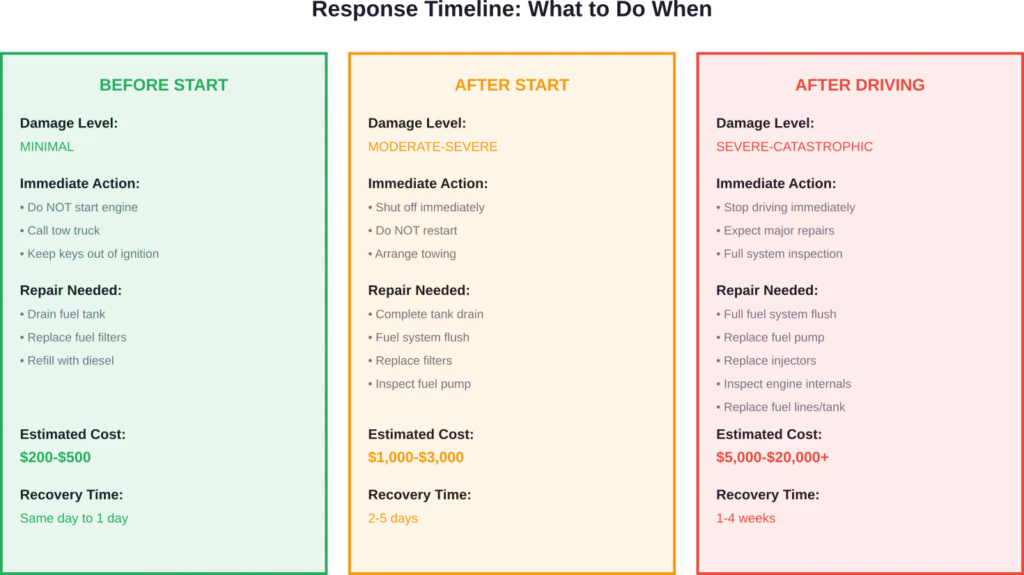
If You Haven’t Started the Engine
Do not turn the key. This single decision saves thousands of dollars.
Call for a tow truck immediately. Attempting to drive the vehicle, even a short distance, circulates contaminated fuel through the entire system.
Have the vehicle towed to a diesel specialist or dealership. They’ll drain the tank completely, flush fuel lines, and replace fuel filters. This service typically costs a few hundred dollars—cheap compared to the alternative.
Professional fuel services may offer on-site draining and correction services.
If You Already Started the Engine
Shut it off immediately. Every second of operation increases damage.
Don’t attempt to drive to a repair shop. The engine will likely die before arrival anyway, potentially leaving you stranded in traffic.
Arrange towing to a diesel repair facility. Explain the situation clearly—they need to know gasoline contamination occurred so they take appropriate measures.
Expect extensive work. The shop will need to drain the tank, flush the entire fuel system multiple times, replace all fuel filters, and inspect the fuel pump and injectors for damage. Components may need replacement even if they appear functional.
If You Drove Any Distance
The vehicle requires comprehensive inspection. Driving on gasoline-contaminated diesel almost guarantees fuel system damage.
The fuel pump likely sustained damage and may need replacement. Injectors could be scored or have damaged seals. Fuel lines might contain residual contamination.
Some engine components may also need inspection. Prolonged knocking can damage pistons, rings, and bearings. A compression test reveals if cylinder damage occurred.
Repair Costs and What Insurance Covers
Misfueling repair costs vary based on damage extent and whether the engine was started.
Basic Drain and Flush
If caught before starting, expect $200-$500 for professional service. This covers tank draining, fuel filter replacement, and refilling with clean diesel.
Some diesel shops charge flat rates for misfuel correction. Mobile fuel services sometimes cost more but provide convenience.
Fuel System Service After Running
Operating the engine on contaminated fuel increases costs to $1,000-$3,000. This range includes multiple fuel system flushes, replacement of all filters, and thorough inspection of the fuel pump and injectors.
Labor represents the largest portion. Flushing modern diesel fuel systems requires specialized equipment and takes several hours.
Component Replacement
Damaged components escalate costs quickly. Fuel pump replacement costs vary significantly depending on the vehicle model and diesel engine type. Diesel fuel injectors vary in cost depending on engine design, and different engines require different quantities of injectors.
Complete injector replacement and labor costs can be substantial, varying by vehicle. Add a fuel pump, and costs approach $6,000 before addressing any additional damage.
Worst Case Scenarios
Severe cases requiring extensive fuel system and engine repairs can result in significant repair costs. Some diesel trucks require engine removal for comprehensive repair.
At these price points, insurance companies sometimes total the vehicle rather than repair it.
Insurance Coverage
Standard auto insurance typically doesn’t cover misfueling. Most policies classify it as operator error or improper maintenance—both excluded from coverage.
Some comprehensive policies include misfueling coverage as an optional rider. Check the policy details or contact the insurance provider to verify.
Credit cards occasionally provide fuel contamination coverage as a benefit. Read the terms carefully—coverage limits and deductibles vary.
| Scenario | Typical Work Required | Cost Range |
|---|---|---|
| No start after misfuel | Drain tank, replace filter, refill diesel | $200-$500 |
| Short idle or low speed drive | Drain, flush lines, replace filters, inspect pump | $1,000-$2,500 |
| Highway driving multiple miles | Full flush, replace pump, inspect injectors | $3,000-$7,000 |
| Extended driving until failure | Replace pump, injectors, possibly tank and lines | $7,000-$15,000 |
| Catastrophic engine damage | Engine teardown, internal repairs, full fuel system | $15,000-$25,000+ |
Why Modern Diesel Engines Are More Vulnerable
Older diesel engines tolerated fuel contamination better than modern designs. The evolution toward efficiency and emissions compliance created unintended vulnerability.
Common rail direct injection systems operate at pressures older mechanical systems never reached. These extreme pressures demand precise tolerances and perfect lubrication.
High-pressure fuel pumps in modern diesels cost significantly more to replace than older designs. A single pump can exceed $2,000, whereas older mechanical pumps rarely cost more than a few hundred dollars.
Emissions equipment adds complexity. Diesel particulate filters and selective catalytic reduction systems can suffer damage from improper combustion caused by gasoline contamination.
Computer controls make modern diesels less forgiving. Electronic fuel injection timing can’t compensate for gasoline’s different combustion characteristics the way older mechanical systems sometimes could.
Common Causes of Misfueling
Understanding how misfueling happens helps prevent it. Most incidents share common factors.
Distraction: Phone calls, passengers, or rushing causes inattention at the pump. The wrong nozzle gets grabbed without thinking.
Rental or Borrowed Vehicles: Unfamiliarity with a vehicle’s fuel type leads to errors. Someone accustomed to gasoline vehicles forgets their rental uses diesel.
Multiple Vehicles: Owners with both diesel and gasoline vehicles sometimes fill the wrong one. Muscle memory from the usual vehicle overrides conscious thought.
Similar Nozzle Sizes: Some pumps lack the larger diesel nozzle design intended to prevent misfueling. Standard-sized diesel nozzles fit gasoline tanks and vice versa.
Unclear Labeling: Worn or unclear pump labels cause confusion, especially at unfamiliar stations. Green handles don’t always indicate diesel despite convention.
Language Barriers: International travelers or non-native speakers might misunderstand fuel labels at the pump.
Poor Lighting: Nighttime fueling increases error rates. Reading labels becomes difficult in dim conditions.
Prevention Strategies That Actually Work
Simple habits prevent expensive mistakes. These strategies require minimal effort but provide maximum protection.
Add a visible reminder near the fuel door to help prevent misfueling errors. Place them where they’re impossible to miss.
Create a pre-fueling ritual. Before grabbing any nozzle, consciously verify the fuel type on the pump matches the vehicle requirement. Make it automatic.
Look at the nozzle size. Diesel nozzles at truck stops and many stations are noticeably larger and won’t fit gasoline tank openings. This physical barrier prevents errors.
Read the fuel door label every time. Vehicle manufacturers include fuel type information on the fuel door. Check it before pumping.
Consider installing a misfuel prevention device that physically blocks incorrect fuel nozzles from entering the tank.
For fleet vehicles, implement color-coding. Paint fuel doors or add colored decals that match fuel type. Train all drivers on the system.
What Happens With Small Contamination Amounts
Not every gasoline drop causes catastrophe. Small contamination percentages create a gray area.
Diesel fuel specifications published by ASTM International define quality standards for various applications. These standards don’t specifically address gasoline contamination because it shouldn’t occur. But real-world tolerances exist.
Some sources suggest contamination below 5% might not cause immediate damage, though it reduces fuel system longevity. The reduced lubrication still accelerates wear even if the engine runs.
Some diesel operators have historically attempted to add small amounts of gasoline in cold weather for cold-start assistance. This practice isn’t recommended by manufacturers and voids warranties, but it demonstrates diesel engines can tolerate minor gasoline presence.
Here’s the thing though—determining exact contamination percentage requires knowing both the amount of diesel already in the tank and the gasoline added. Most people don’t have that information at the pump.
The safest approach treats any gasoline contamination as serious. The risk of guessing wrong far exceeds the cost of proper correction.
The Opposite Problem: Diesel in Gas Engines
While this article focuses on gasoline in diesel engines, the reverse mistake causes different problems worth mentioning briefly.
Diesel in a gasoline engine typically won’t cause the engine to run at all. Diesel won’t ignite from spark plugs under gasoline engine compression ratios. The engine cranks but refuses to start.
This creates less mechanical damage than gasoline in diesel. The primary issue becomes contamination cleanup rather than component failure.
Draining the tank and fuel system, replacing filters, and refilling with gasoline usually resolves the problem. Costs remain in the $300-$800 range for professional service—far less than diesel engine misfuel damage.
Long-Term Effects of Undetected Contamination
Sometimes contamination goes unnoticed initially. A small amount of gasoline mixed with mostly full diesel tank might not create obvious symptoms immediately.
The engine runs but with subtle changes. Power feels slightly reduced. Fuel economy decreases marginally. A faint knocking might appear under heavy load.
Over time, these seemingly minor symptoms indicate serious damage accumulating throughout the fuel system. Fuel pump bearings wear prematurely. Injector seals deteriorate faster than normal. Internal injector components score and scratch.
The damage manifests weeks or months later as sudden fuel system failure. By then, connecting the failure to earlier contamination becomes difficult. Warranty claims get denied because the root cause isn’t obvious.
This delayed failure pattern makes early contamination detection critical. Unusual symptoms following recent refueling deserve immediate investigation.
Professional vs. DIY Drain Procedures
Some diesel owners consider draining the tank themselves to save money. This approach carries significant risks.
Draining just the tank isn’t sufficient if the engine started. Contaminated fuel fills the lines, filter housing, and fuel rail. These components require flushing or replacement.
Improper draining can leave residual contamination that continues causing damage. Professional equipment ensures complete removal and proper disposal.
Fuel disposal presents another challenge. Gasoline-contaminated diesel can’t go down drains or into soil. Proper disposal requires hazardous waste handling. Professionals have licensed disposal access.
Safety concerns matter too. Fuel vapors create explosion and fire risks. Working with large quantities of fuel requires proper ventilation and fire suppression equipment.
The cost difference between DIY and professional service rarely justifies the risk. A few hundred dollars of labor provides insurance against incomplete repair and safety hazards.
Frequently Asked Questions
No amount of gasoline in diesel fuel is technically safe or recommended by manufacturers. However, contamination below 5% of total tank volume might not cause immediate failure, though it still accelerates fuel system wear. Contamination above 10% creates serious risk of fuel pump damage and should never be run through the engine. The safest approach is draining any contaminated fuel rather than trying to determine if the amount is tolerable.
Yes, even small amounts reduce the fuel’s lubricating properties and accelerate wear on fuel system components. While the engine might continue running on low contamination levels, fuel pump life decreases and injector wear accelerates. Over time, this premature wear causes expensive failures. The damage happens gradually rather than immediately, making it easy to underestimate the harm until components fail.
Repair costs range from $200-$500 if caught before starting the engine to over $15,000 for severe cases requiring fuel system and engine repairs. A simple drain and refill costs $200-$500. Running the engine briefly increases costs to $1,000-$3,000 for fuel system flushing. Driving any distance often requires component replacement costing $3,000-$7,000. Catastrophic damage from extended driving can exceed $15,000-$20,000 including fuel pump, injectors, and potential engine internal repairs.
Common symptoms include difficulty starting, excessive white or gray smoke from the exhaust, rough idle with misfiring, sudden power loss, loud knocking or pinging sounds, engine stalling, and strong gasoline smell from the exhaust. These symptoms appear quickly after starting the engine with contaminated fuel. The severity increases as the engine continues running. Knocking sounds indicate immediate damage occurring and require shutting off the engine immediately.
No, driving a diesel vehicle after adding gasoline causes severe damage to the fuel system and potentially the engine. Even short distances accelerate component failure. If gasoline was added but the engine hasn’t started, arrange for towing rather than driving. If already started and running, shut it off immediately and have the vehicle towed to a repair facility. Continuing to drive guarantees expensive repairs and possible complete fuel system replacement.
Standard auto insurance policies typically exclude misfueling coverage because it’s classified as operator error or improper maintenance. Some comprehensive policies offer misfueling coverage as an optional rider, but this varies by insurer and policy. Check specific policy language or contact the insurance provider directly. Some credit cards include fuel contamination coverage as a cardholder benefit. Extended warranties on diesel vehicles also rarely cover misfueling damage.
Professional fuel draining service duration varies depending on tank size and system complexity. Simple tank draining without engine operation takes less time than full fuel system flushing after the engine ran. Mobile fuel services can perform draining on-site at the gas station. If the vehicle requires towing to a shop, add transportation time to the total. Shops sometimes need to keep the vehicle overnight for thorough flushing and filter replacement.
Taking Action Before Disaster Strikes
Misfueling remains one of the most expensive fueling mistakes diesel owners face. The difference between a minor inconvenience and catastrophic damage comes down to immediate response.
Gasoline strips away the lubrication diesel fuel provides to high-pressure fuel systems. Modern diesel engines with common rail injection suffer rapid damage once contaminated fuel circulates. Fuel pumps fail, injectors score, and combustion becomes erratic.
But wait. Catching the mistake before starting the engine changes everything. A simple drain and refill costs a few hundred dollars and prevents thousands in damage.
The symptoms appear quickly—difficult starting, excessive smoke, rough running, power loss, and knocking sounds. Any of these signs after recent refueling demand immediate shutdown and professional service.
Prevention requires minimal effort. Visible reminders on the fuel door, pre-fueling verification rituals, and misfuel prevention devices all cost less than a single tank of fuel while preventing disaster.
If misfueling occurs, resist the temptation to “see if it runs okay.” That decision costs thousands. Call for professional service immediately, explain the situation clearly, and let trained technicians handle the correction properly.
Your diesel engine depends on proper fuel for lubrication, cooling, and combustion. Gasoline provides none of these. Treat any contamination as the serious threat it represents, and take immediate action to protect the investment in your diesel vehicle.