

Quick Summary: Swallowing gum won’t harm you, and it definitely won’t stay in your stomach for seven years. Your digestive system treats gum like any other food—it passes through in approximately 40 hours to a few days, even though your body can’t fully break down the synthetic gum base. Only in rare cases can swallowing large amounts cause blockages, particularly in young children.
Almost everyone has accidentally swallowed chewing gum at some point. And if you grew up hearing the old myth about gum staying in your stomach for seven years, you probably panicked a little.
Here’s the thing though—that seven-year story is completely false.
Your digestive system is remarkably efficient at processing what you consume, even when it encounters something as unusual as gum. But what actually happens when you swallow that minty wad? Let’s break down the science and separate fact from fiction.
The Seven-Year Myth: Where It Came From
The idea that swallowed gum takes seven years to digest has been passed down for generations, but there’s zero medical evidence supporting it. Research indicates the digestive system processes gum just like other swallowed objects—it moves through and exits the body.
So where did this myth originate? Most likely from concerned parents trying to discourage kids from swallowing gum. And it worked. But the reality is far less dramatic.
Research suggests swallowed gum typically passes through your system in about 40 hours—roughly the same time frame as most other foods.
What Actually Happens to Swallowed Gum
When you swallow gum, your digestive system springs into action. The process starts in your stomach and continues through your intestines, just like any meal.
Your body breaks down and absorbs the digestible components of gum—sweeteners, flavoring agents, and softeners. But here’s where gum is different: the gum base itself.
Gum base is made from synthetic rubber or latex, which your stomach acid and digestive enzymes can’t fully break down. That doesn’t mean it sits there forever, though. Your intestines keep things moving through a process called peristalsis—wave-like muscle contractions that push contents through your digestive tract.
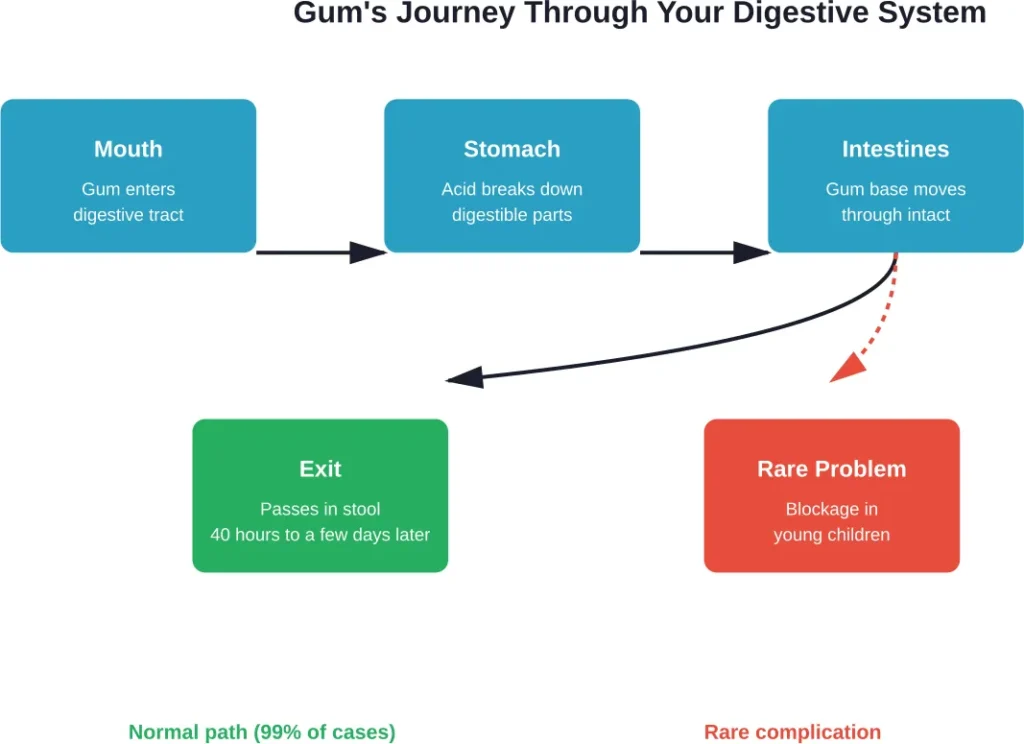
The gum base essentially hitches a ride through your system, exiting when you have a bowel movement. Research from the National Institutes of Health confirms that foreign bodies in the gastrointestinal tract typically pass without incident.
When Swallowing Gum Becomes a Problem
While one piece of gum won’t cause issues, there are exceptions. Young children face higher risks because their digestive tracts are narrower.
According to research on pediatric foreign body ingestion, approximately 10% to 15% of foreign bodies lodge in the midesophagus, where the airway structures overlap. Swallowing multiple pieces of gum in a short period can create a mass large enough to cause an intestinal blockage.
Medical literature documents rare cases where children who regularly swallowed gum experienced constipation or blockages. But these cases typically involved swallowing several pieces daily over an extended period—not a single accidental gulp.
| Age Group | Risk Level | Primary Concern |
|---|---|---|
| Adults | Very Low | Minimal risk from occasional swallowing |
| Children (5+ years) | Low | Only with frequent swallowing |
| Children (under 5) | Moderate | Narrower digestive tract increases blockage risk |
| Toddlers | Higher | Aspiration risk if gum enters airway |
Warning Signs That Require Medical Attention
Most people who swallow gum will never notice anything unusual. But watch for these red flags:
- Severe abdominal pain or cramping
- Constipation lasting more than a few days
- Vomiting
- Difficulty swallowing
- Chest pain
These symptoms could indicate that gum—or any foreign object—has become lodged in the digestive tract. The National Institutes of Health reports that objects may become trapped at anatomical narrowings, potentially causing obstruction or mechanical trauma.
If someone shows signs of choking or difficulty breathing after swallowing gum, that’s a medical emergency requiring immediate attention.
Should You Worry About Swallowing Gum?
The short answer? Not really.
For healthy adults and older children, accidentally swallowing a piece of gum now and then poses virtually no health risk. Your body handles it efficiently, and the gum passes through in a couple of days.
That said, making a habit of swallowing gum isn’t wise. While one piece won’t hurt, repeatedly swallowing gum increases the chance of complications—especially in children under five years old.
The best practice remains simple: spit out your gum when finished chewing. But if you accidentally swallow it? Don’t panic. Your digestive system has it covered.
Frequently Asked Questions
No, this is a complete myth. Swallowed gum passes through your digestive system in approximately 40 hours to a few days, similar to most other foods. While your body can’t digest the gum base, it still moves through and exits normally.
Modern chewing gum contains a synthetic gum base (rubber or latex), sweeteners, softeners, and flavoring agents. Your digestive system can break down the sweeteners and flavors but not the rubber-like base material.
Blockages are extremely rare and typically only occur when young children swallow multiple pieces of gum regularly over time. One accidentally swallowed piece won’t cause a blockage in healthy individuals.
Children under five face slightly higher risks due to narrower digestive tracts. While one piece usually passes safely, parents should discourage regular gum swallowing and supervise young children while chewing gum.
Seek medical attention if you experience severe abdominal pain, prolonged constipation, vomiting, difficulty swallowing, or chest pain. These symptoms could indicate a blockage, though this is very uncommon.
Choking occurs when gum enters the airway instead of the esophagus. According to NIH research on foreign body aspiration, this risk exists primarily in young children and requires immediate medical intervention if breathing difficulty occurs.
Regularly swallowing gum increases the risk of complications, particularly intestinal blockage. While still uncommon, daily gum swallowing—especially multiple pieces—can create a mass that may obstruct the digestive tract.