
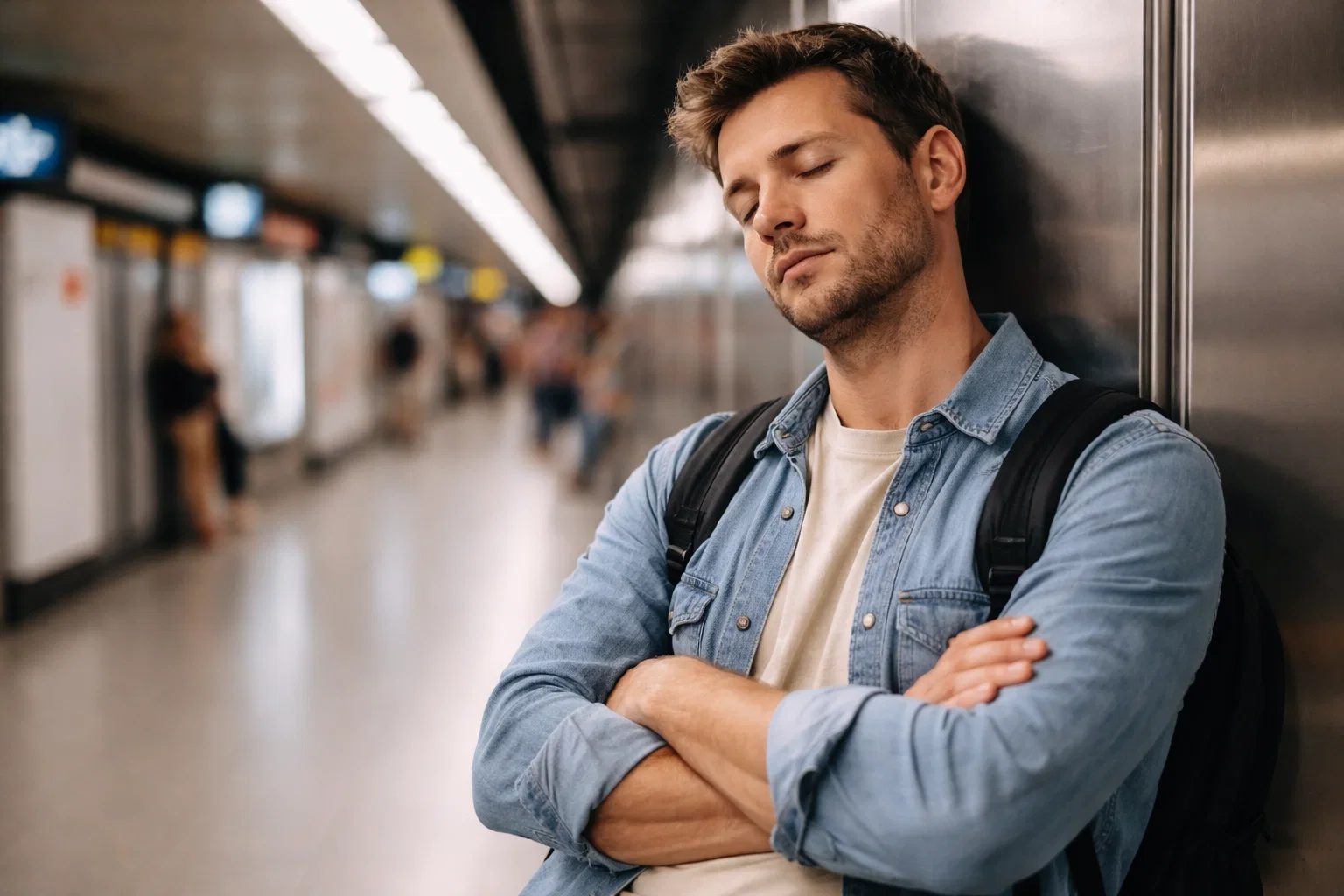
Quick Summary: While it’s technically possible for humans to fall asleep standing up, particularly in cases of extreme sleep deprivation or conditions like narcolepsy, the body’s natural mechanisms typically prevent deep, restorative sleep in this position. Unlike horses and some birds that have specialized anatomical adaptations for standing sleep, humans lack the muscle locking mechanisms needed for safe, sustained upright rest.
The idea of sleeping while standing sounds absurd at first. After all, humans are designed to lie down when they rest, right?
But the reality is more nuanced. Under certain conditions, people can and do fall asleep on their feet—though it’s far from ideal.
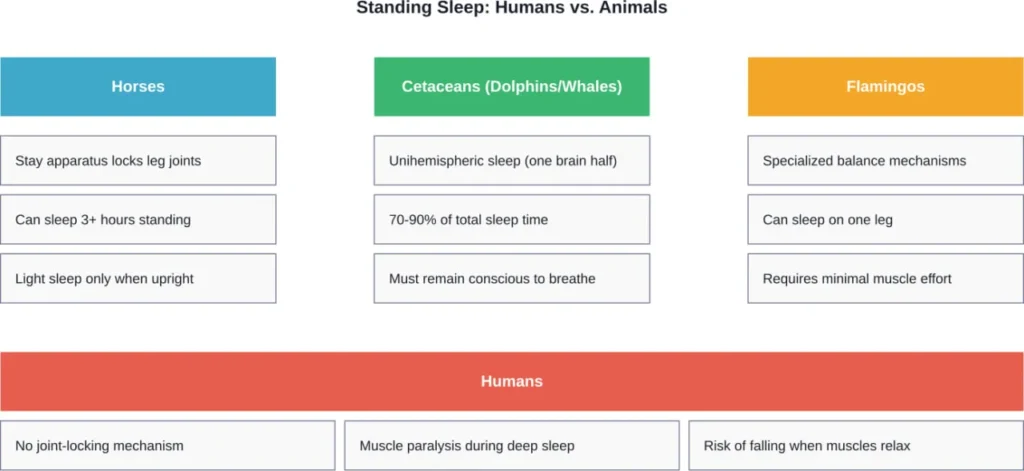
Animals like horses, flamingos, and even some marine mammals have mastered the art of upright rest. Horses possess a unique anatomical feature called the “stay apparatus” that allows their legs to lock in place, supporting their weight without muscular effort. Some cetaceans, including dolphins and whales, exhibit unihemispheric slow wave sleep (USWS), where one brain hemisphere sleeps while the other remains alert.
According to research published in Neuroscience & Biobehavioral Reviews, USWS in cetaceans represents the most extreme case of interhemispheric EEG asymmetry recorded in mammals. In different cetacean species, this form of sleep represented 70-90% of total sleep time, making it the predominant rest state for these aquatic creatures.
But what about humans? Can we pull off this biological feat?
The Science of Human Sleep Architecture
To understand whether standing sleep is possible, we need to grasp how human sleep works.
Sleep isn’t a simple on-off switch. It’s a complex biological process governed by what researchers call the two-process model of sleep regulation.
According to research from the NIH, this model consists of two key components: a homeostatic process (Process S) that builds sleep pressure the longer we’re awake, and a circadian rhythm (Process C) that regulates when we feel alert or drowsy throughout the 24-hour cycle. The thresholds for falling asleep and waking up are modulated according to circadian rhythms, which are typically entrained to 24 hours.
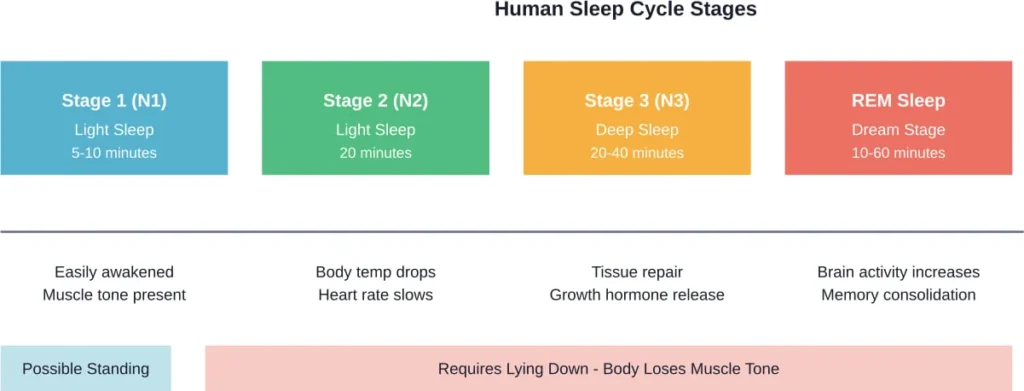
Human sleep progresses through distinct stages, each with unique characteristics and brain wave patterns.
Why Standing Sleep Is Problematic
The human body isn’t built for prolonged upright rest. Here’s why.
During deeper sleep stages—particularly Stage 3 (also called slow-wave sleep) and REM sleep—the body experiences significant muscle relaxation. In REM sleep especially, most skeletal muscles become temporarily paralyzed, a phenomenon called REM atonia.
This muscle paralysis serves an important purpose: it prevents us from physically acting out our dreams. But it also means that maintaining an upright posture becomes physiologically impossible.
If someone manages to enter Stage 1 or light Stage 2 sleep while standing, they’ll likely wake up the moment their muscles begin to relax and they start to lose balance. The body’s proprioceptive system—which monitors position and movement—triggers an awakening response to prevent falling.
When Humans Actually Do Fall Asleep Standing
So can it happen? Yes. Under specific circumstances.
Extreme Sleep Deprivation
When someone is severely sleep deprived, the brain’s need for rest can override normal safety mechanisms.
Military personnel, medical residents during long shifts, and people suffering from chronic sleep restriction have reported brief episodes of standing sleep. According to research on sleep restriction, participants studied under conditions of chronic sleep restriction (equivalent to 5.6 hours per 24-hour day) showed increased sleep inertia effects and heightened propensity to fall asleep.
But these aren’t full sleep cycles. They’re microsleeps—brief lapses lasting seconds to a few minutes where the brain essentially shuts down momentarily.
Narcolepsy and Sleep Disorders
Narcolepsy is a neurological condition characterized by excessive daytime sleepiness and sudden, uncontrollable sleep attacks.
People with narcolepsy can fall asleep suddenly in almost any situation, including while standing. This represents severe excessive daytime sleepiness (EDS) rather than typical sleep behavior.
The condition involves dysregulation of sleep-wake cycles and often includes cataplexy—sudden muscle weakness triggered by emotions—which can cause people to collapse when falling asleep.
| Condition | Can Cause Standing Sleep? | Characteristics | Safety Risk |
|---|---|---|---|
| Narcolepsy | Yes | Sudden sleep attacks, excessive daytime sleepiness | High – risk of falling |
| Severe Sleep Deprivation | Microsleeps only | Brief lapses (seconds), not full sleep cycles | High – impaired awareness |
| Sleep Inertia | No | Grogginess after waking, not falling asleep | Low to moderate |
| Normal Fatigue | No | Body naturally seeks lying position | Low |
The Concept of Vertical Sleeping Pods
In recent years, some companies have developed vertical sleeping pods designed for quick workplace naps.
These pods support the body in a slightly reclined standing position, theoretically allowing short rest periods without fully lying down. The idea is that by preventing deep sleep stages, users can take brief refreshing naps and return to work quickly without experiencing sleep inertia.
Sleep inertia, according to NIH research, refers to the grogginess and cognitive performance decrements experienced upon awakening. These effects are particularly pronounced when waking from deeper sleep stages.
Proponents suggest that standing or upright naps keep sleepers in Stage 1 or light Stage 2 sleep, allowing them to wake more easily and feel refreshed faster.
Do Vertical Naps Actually Work?
The research here is limited, but the logic has some merit.
If the goal is a brief power nap (10-20 minutes) that provides alertness without grogginess, preventing progression into deep sleep could be beneficial. Upright positioning naturally restricts sleep depth because the body’s balance mechanisms remain partially engaged.
That said, this isn’t true restorative sleep. Deep sleep stages and REM sleep are essential for physical recovery, memory consolidation, and overall health.
According to research on sleep and circadian rhythms published by the University of Oxford, sleep plays crucial roles in cellular repair, immune function, and cognitive processes. Chronic restriction to only light sleep stages would be insufficient for maintaining long-term health.
Comparing Humans to Animals That Sleep Standing
Animals that successfully sleep standing have evolved specific adaptations humans simply don’t possess.
Horses and the Stay Apparatus
Horses have a system of ligaments and tendons in their legs that lock their joints in place with minimal muscular effort.
This allows them to remain standing for extended periods without fatiguing. They can doze in light sleep stages while upright, but still need to lie down periodically for REM sleep and deeper rest.
Marine Mammals and Unihemispheric Sleep
Dolphins, whales, and other cetaceans face a unique challenge: they’re voluntary breathers who must remain conscious enough to surface for air.
Their solution? Sleep with only half their brain at a time. Research published in Neuroscience & Biobehavioral Reviews found that cetaceans display the most extreme form of unihemispheric slow wave sleep among mammals, with 70-90% of their total sleep occurring in this asymmetrical state.
One brain hemisphere sleeps while the other maintains enough awareness to control breathing and watch for threats. They alternate which hemisphere sleeps, ensuring both sides get rest over time.
Humans lack this capability entirely. Our brains are wired for bilateral sleep—both hemispheres must rest simultaneously for proper function.
The Health Implications of Sleeping Upright
Even if someone could maintain an upright position during sleep, should they?
Cardiovascular Concerns
Sleeping sitting or standing can affect circulation. Blood pools in the lower extremities when the body remains vertical for extended periods, potentially increasing the risk of deep vein thrombosis (DVT) in susceptible individuals.
Lying flat allows for better overall blood circulation and reduces strain on the cardiovascular system during rest.
Lack of Restorative Sleep
The most significant issue is the inability to achieve deep, restorative sleep stages.
According to research from the University of Surrey on sleep regulation, both slow-wave sleep (Stage 3) and REM sleep serve critical functions. Stage 3 sleep is when the body performs tissue repair, releases growth hormones, and strengthens the immune system. REM sleep is crucial for memory consolidation, emotional regulation, and cognitive function.
Restricting sleep to only light stages—as would occur in standing or vertical positions—means missing out on these restorative processes.
When Upright Sleep Might Be Beneficial
That said, some medical conditions can make sleeping slightly elevated helpful.
People with certain respiratory conditions, acid reflux, or heart problems may benefit from sleeping with the upper body elevated at an angle. But this isn’t the same as standing sleep—it’s typically a 30-45 degree incline that still allows the body to relax fully.
| Sleep Position | Advantages | Disadvantages | Best For |
|---|---|---|---|
| Lying Flat | Full sleep cycles, complete muscle relaxation, optimal circulation | May worsen reflux or breathing issues in some people | Most people, healthy sleepers |
| Slightly Elevated (30-45°) | Reduces reflux, eases breathing, supports cardiovascular function | May cause lower back discomfort | GERD, heart failure, sleep apnea |
| Sitting Upright | Quick naps without deep sleep, prevents sleep inertia | No restorative sleep, circulation issues, neck/back strain | Brief power naps only |
| Standing | Prevents progression past Stage 1 sleep | Unsafe, no restoration, high fall risk, unsustainable | Not recommended |
Practical Scenarios: When People Attempt Standing Sleep
Despite the challenges, certain situations lead people to sleep upright or standing.
Military Training and Extended Operations
Soldiers in combat zones or during intensive training sometimes experience microsleep episodes while standing guard or during brief rest periods.
These aren’t intentional or desired—they’re symptoms of extreme fatigue and sleep debt. Military sleep research focuses on preventing these dangerous lapses rather than encouraging them.
Commuters and Travelers
People sleeping on crowded trains or buses while standing hold onto poles or press against walls for support.
This typically involves only the lightest sleep stages and frequent awakenings. It’s uncomfortable and non-restorative, but sometimes necessary when no seating is available.
Medical Professionals During Long Shifts
Healthcare workers during extended shifts have reported episodes of falling asleep on their feet, particularly during overnight rotations.
Research on sleep scheduling in hospital shiftworkers, published in Nature and Science of Sleep, highlights the circadian disruption and performance impairment caused by non-standard work schedules. The solution isn’t learning to sleep standing, but rather implementing better shift scheduling and ensuring adequate rest opportunities.
Tips for Better Rest When You Can’t Lie Down
Sometimes circumstances require sleeping in less-than-ideal positions. Here’s how to make the best of it.
Find Support
If sitting upright, use neck pillows, recline as much as possible, and support your lower back. This allows better muscle relaxation than trying to remain fully upright.
Keep It Brief
Limit upright naps to 15-20 minutes. This duration allows you to benefit from light sleep without progressing into deeper stages that would leave you groggy.
Create a Comfortable Environment
Even small adjustments help: dim lighting, reducing noise with earplugs, maintaining a comfortable temperature, and removing restrictive clothing can improve rest quality.
Don’t Rely on Upright Sleep Regularly
Occasional upright naps are fine for short-term situations, but they shouldn’t replace proper horizontal sleep. Chronic sleep restriction—even if just restriction to lighter stages—has cumulative negative effects on health and cognitive function.
Frequently Asked Questions
Yes, but only under extreme circumstances like severe sleep deprivation or conditions like narcolepsy. Most people will wake up immediately when their muscles begin to relax and they lose balance. True standing sleep beyond microsleep episodes is essentially impossible for healthy humans without external support.
Horses can doze and enter light sleep stages while standing thanks to a specialized anatomical feature called the stay apparatus that locks their leg joints. However, they still need to lie down periodically to achieve REM sleep and deeper rest stages. They typically lie down for 30 minutes to 3 hours per day.
Occasional upright sleep during travel or brief naps isn’t harmful, but chronic upright sleeping prevents the deep sleep stages necessary for physical restoration, memory consolidation, and immune function. It can also lead to circulation problems and musculoskeletal discomfort. Lying flat remains the healthiest position for proper sleep.
Vertical sleeping pods are devices designed to support the body in a slightly reclined standing position for brief workplace naps. The concept is that they prevent deep sleep, allowing quick refreshing naps without sleep inertia. However, research on their effectiveness is limited, and they shouldn’t replace proper horizontal sleep.
Certain marine mammals like dolphins and whales practice unihemispheric sleep, where one brain hemisphere sleeps while the other remains awake. This adaptation allows them to maintain consciousness for breathing (they’re voluntary breathers who would drown if fully unconscious) and remain alert to predators. Research shows this represents 70-90% of their total sleep time.
Yes, narcolepsy causes sudden, uncontrollable sleep attacks that can occur in any situation, including while standing. This represents severe excessive daytime sleepiness rather than normal sleep behavior. People with narcolepsy are at high risk for falls and injuries when these sleep attacks occur in dangerous situations.
People can sleep sitting up for several hours, though sleep quality is significantly reduced compared to lying down. The seated position allows progression through some sleep stages, but typically prevents the deepest, most restorative sleep. Many people experience neck and back pain after extended periods of upright sleeping.
The Bottom Line on Standing Sleep
So is it possible to sleep standing up? Technically, yes—but practically, no.
Humans can experience brief microsleep episodes or very light Stage 1 sleep while standing, particularly when extremely sleep deprived or affected by specific medical conditions. But this isn’t true, restorative sleep.
Unlike horses with their joint-locking mechanisms or dolphins with their ability to sleep with half their brain, humans simply aren’t built for upright rest. Our sleep architecture requires full-body muscle relaxation during deeper stages, making sustained standing sleep both unsafe and physiologically improbable.
The occasional upright nap during travel or a quick workplace rest might provide temporary alertness, but it’s no substitute for proper horizontal sleep with full progression through all sleep stages.
If you’re struggling with sleep quality, excessive daytime sleepiness, or finding yourself falling asleep in inappropriate situations, consult a healthcare provider. These could be signs of underlying sleep disorders that require proper diagnosis and treatment.
Your body needs real rest—the kind that only comes from lying down and allowing your brain and body to cycle through all the essential stages of sleep. Don’t fight your biology. Give yourself permission to sleep the way humans were designed to: lying down, relaxed, and fully at rest.