

Quick Summary: Taking too much vitamin C can cause digestive issues like nausea, diarrhea, and stomach cramps. While vitamin C toxicity is rare because it’s water-soluble and excess amounts are excreted through urine, consuming more than 2,000 mg daily can lead to kidney stones in susceptible individuals and may interfere with iron absorption. Most people can safely consume up to the tolerable upper limit without serious harm, but megadoses offer no additional benefits.
Vitamin C is everywhere. From orange juice to supplements promising immune support, this essential nutrient has become a go-to for health-conscious people. But here’s the thing — just because something’s essential doesn’t mean more is better.
So what actually happens when you take too much vitamin C? Can you overdose? And what are the warning signs your body is trying to tell you to ease off?
Let’s break down what the research actually says about excessive vitamin C intake and the side effects you might experience.
Understanding Vitamin C and How Your Body Handles It
Vitamin C, also known as ascorbic acid, is a water-soluble vitamin that plays crucial roles in maintaining healthy immune function, wound healing, and collagen production. Unlike fat-soluble vitamins that get stored in your tissues, vitamin C doesn’t stick around long.
Your body absorbs what it needs and flushes out the rest through urine. According to the NIH, approximately 70% to 90% of vitamin C is absorbed at moderate intakes of 30 to 180 mg per day. However, at doses above 1 gram daily, absorption falls to less than 50%.
This water-soluble nature is why vitamin C toxicity is relatively rare compared to fat-soluble vitamins like A or D. Your kidneys work overtime to eliminate excess amounts, which is both a protective mechanism and the source of some side effects.
Recommended Daily Intake: How Much Is Enough?
The recommended daily allowances for vitamin C vary by age, sex, and life stage. Here’s what health authorities recommend:
| Age Group | Men | Women | Pregnancy | Breastfeeding |
|---|---|---|---|---|
| 19+ years | 90 mg | 75 mg | 85 mg | 120 mg |
| Smokers | 125 mg | 110 mg | — | — |
Smokers require 35 mg more per day, for a total of 125 mg (men) or 110 mg (women), because smoking depletes vitamin C levels.
The tolerable upper intake level — the maximum amount unlikely to cause adverse effects — is set at 2,000 mg (2 grams) per day for adults. Beyond this threshold, side effects become increasingly common.
Common Side Effects of Taking Too Much Vitamin C
When you exceed your body’s capacity to process vitamin C efficiently, several symptoms can emerge. Most are uncomfortable but not dangerous.
Digestive Distress
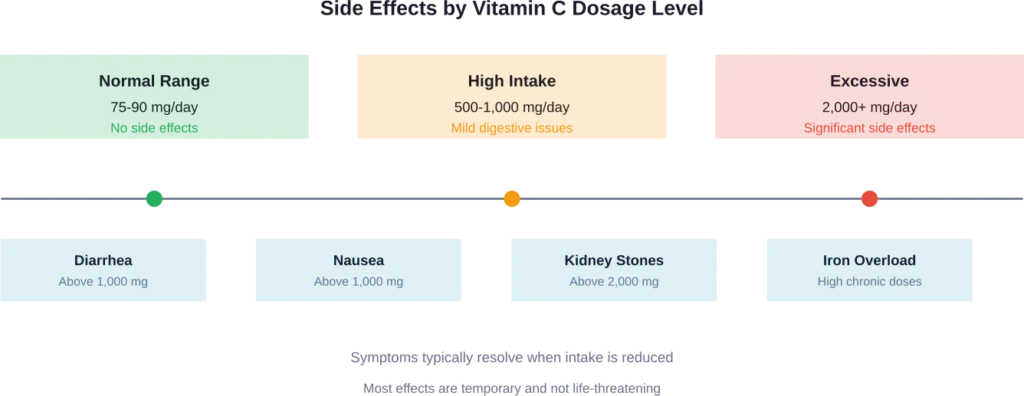
The most common side effects of excessive vitamin C are gastrointestinal. According to the Merck Manual, intake of more than 2 grams daily may cause nausea and diarrhea.
Why does this happen? When your intestines can’t absorb all that vitamin C, the excess draws water into your digestive tract through osmosis. This creates a laxative effect that leads to loose stools or outright diarrhea.
Stomach cramps, bloating, and general abdominal discomfort often accompany these digestive issues. The CDC notes that taking too much vitamin C can cause gastrointestinal distress as a primary concern.
These symptoms typically resolve once you reduce your intake or stop taking high-dose supplements.
Nausea and Upset Stomach
Beyond diarrhea, many people experience nausea when taking large doses of vitamin C, especially on an empty stomach. The acidic nature of ascorbic acid can irritate the stomach lining, leading to queasiness and discomfort.
This is particularly common with supplements that deliver concentrated doses all at once, rather than vitamin C consumed gradually through food sources.
More Serious Concerns: Kidney Stones and Iron Overload
While digestive issues are uncomfortable, some people face more serious risks from chronically high vitamin C intake.
Increased Kidney Stone Risk
Here’s where things get concerning. Excessive vitamin C can increase your risk of developing kidney stones, particularly calcium oxalate stones — the most common type.
Your body converts some vitamin C into oxalate, a waste product that exits through urine. Research published in the American Journal of Kidney Diseases found that supplemental vitamin C intake was associated with increased kidney stone risk in certain populations.
A case study in Kidney International Reports documented oxalate nephropathy in two COVID-19 patients who received excessive vitamin C administration. The connection between high-dose vitamin C and oxalate buildup is well-established in medical literature.
People with a history of kidney stones or kidney disease should be particularly cautious about high-dose vitamin C supplements. The risk increases significantly above 2,000 mg per day.
Iron Overload in Susceptible Individuals
Vitamin C enhances iron absorption, particularly non-heme iron from plant sources. This is usually beneficial, but for people with conditions like hemochromatosis — where the body stores too much iron — high vitamin C intake can worsen iron overload.
Vitamin C binds with non-heme iron and makes it much easier for the body to absorb. For most people, this helps prevent iron deficiency. But for those genetically predisposed to iron accumulation, this enhanced absorption becomes problematic.
Excess iron deposits in organs like the liver, heart, and pancreas, potentially causing serious damage over time.
Who’s Most at Risk for Vitamin C Side Effects?
Not everyone experiences problems with high vitamin C intake, but certain groups face elevated risks:
- People with kidney disease or a history of kidney stones
- Individuals with hemochromatosis or other iron overload disorders
- Those taking certain medications that interact with vitamin C
- People with glucose-6-phosphate dehydrogenase deficiency
If you fall into any of these categories, consult a healthcare professional before taking high-dose vitamin C supplements.
The Myth of Megadoses: Do High Doses Actually Help?
The controversy around megadose vitamin C began in 1970 when Nobel Prize winner Linus Pauling published his book advocating gram amounts for treating the common cold and other conditions. This debate continues today.
But what does the evidence actually show? Research has been mixed. While vitamin C plays important roles in immune function and collagen synthesis, taking amounts far beyond the recommended daily intake doesn’t appear to provide proportional benefits.
Your body’s absorption efficiency drops dramatically at high doses. Remember, absorption falls below 50% at doses above 1 gram daily. The excess just gets flushed out — often causing those unpleasant digestive symptoms along the way.
High-dose intravenous vitamin C has shown promise in certain clinical settings, including cancer treatment research conducted at the University of Iowa. However, these medical applications use controlled administration under professional supervision — very different from popping megadose supplements at home.
Food Sources vs. Supplements: A Safer Approach
Getting vitamin C from whole foods is virtually impossible to overdo. You’d have to eat enormous quantities of fruits and vegetables to reach problematic levels.
Excellent food sources include citrus fruits, strawberries, bell peppers, broccoli, Brussels sprouts, and tomatoes. These foods provide vitamin C alongside other beneficial nutrients, fiber, and antioxidants.
Supplements concentrate vitamin C into pills or powders, making it easy to consume gram amounts quickly. This rapid intake overwhelms your body’s absorption mechanisms and triggers those side effects we’ve discussed.
For most people, a balanced diet provides adequate vitamin C without any supplementation needed.
What to Do If You’ve Taken Too Much
If you’re experiencing symptoms from excessive vitamin C intake, here’s what to do:
Stop or reduce your supplement intake immediately. Most symptoms resolve within a day or two as your body clears the excess vitamin C.
Stay hydrated to help your kidneys flush out the vitamin C more efficiently. Drink plenty of water throughout the day.
If symptoms are severe or persist, contact a healthcare provider. While vitamin C toxicity is rarely life-threatening, persistent symptoms warrant medical evaluation to rule out other issues.
For future supplementation, stick to doses well below the 2,000 mg upper limit unless specifically directed otherwise by a healthcare professional for a medical reason.
Frequently Asked Questions
Death from vitamin C overdose is extremely rare. Because it’s water-soluble, your body eliminates excess amounts through urine. However, chronic megadoses can contribute to serious complications like kidney stones or exacerbate existing conditions like hemochromatosis. The digestive side effects are uncomfortable but not fatal.
The tolerable upper intake level for adults is 2,000 mg (2 grams) per day. Above this amount, side effects become increasingly likely. Most people experience digestive issues at doses above 1,000 mg daily. The recommended daily amount is just 75-90 mg for most adults, showing how little you actually need.
Diarrhea is typically the first and most common sign of excessive vitamin C intake. Nausea, stomach cramps, and bloating often follow. These digestive symptoms usually appear when intake exceeds 1,000 mg per day, though individual tolerance varies. Symptoms typically resolve quickly once you reduce your dose.
For most healthy adults, 1,000 mg daily is below the upper limit of 2,000 mg and generally considered safe, though it’s well above the recommended 75-90 mg. Some people experience mild digestive upset at this level. There’s little evidence that doses this high provide additional health benefits compared to meeting the standard recommendations through diet.
Yes, chronically high vitamin C intake can increase kidney stone risk, particularly for calcium oxalate stones. The body converts some vitamin C into oxalate, which can crystallize in the kidneys. Research shows this risk increases significantly above 2,000 mg daily, especially in people with a history of kidney stones or kidney disease.
Vitamin C can interact with certain medications, including chemotherapy drugs, blood thinners, and aluminum-containing antacids. It enhances iron absorption, which affects people taking iron supplements or those with iron overload conditions. Always inform healthcare providers about all supplements when discussing medications.
Most people don’t need daily vitamin C supplements if they consume a balanced diet with fruits and vegetables. Specific populations — including smokers, people with limited dietary variety, or those with certain medical conditions — may benefit from supplementation. Consult a healthcare provider to determine if supplementation is appropriate for your situation.
The Bottom Line on Vitamin C Safety
Vitamin C is essential for health, but more isn’t always better. While true toxicity is rare thanks to the vitamin’s water-soluble nature, exceeding 2,000 mg daily brings uncomfortable side effects and potential health risks.
Digestive distress is the most common consequence of excessive intake. But for susceptible individuals, kidney stones and iron overload pose more serious concerns.
The research is clear: most people get adequate vitamin C from food alone, and megadoses don’t provide the miracle cures sometimes promised. If you choose to supplement, staying well below the upper limit and focusing on food sources remains the safest, most effective approach.
Before starting any high-dose supplementation regimen, talk with a healthcare professional about whether it’s necessary and safe for your individual circumstances. Your body needs vitamin C — just not in excessive amounts.