

Quick Summary: Eating too many vitamin gummies can lead to vitamin overdose, causing symptoms ranging from nausea and diarrhea to serious complications like liver damage and hypercalcemia. Water-soluble vitamins are generally safer in excess, but fat-soluble vitamins (A, D, E, K) accumulate in the body and pose greater toxicity risks. If overdose occurs, contact poison control immediately—especially with children—and seek emergency care for severe symptoms.
Vitamin gummies taste like candy. That’s exactly the problem.
These colorful supplements have flooded the market—sales of dietary supplements in Australia reached AU$5.6 billion in 2019 after more than doubling over the preceding 10 years, according to research published in Australian Prescriber. With 63% of people using complementary medicines regularly according to a national survey, and dietary supplements being the most popular type, it’s no surprise that accidental overdoses happen.
But here’s the thing: what feels harmless can turn dangerous fast.
Why Gummy Vitamins Are Easy to Overeat
Gummy vitamins are designed to be appealing. They’re sweet, chewy, and come in fun shapes. That makes them particularly attractive to children—and a bit too tempting for adults who treat them like candy.
Community discussions on health forums reveal a common pattern: people eat a handful instead of the recommended dose, thinking it won’t hurt. Some parents report finding their kids with an empty bottle.
The appealing taste removes the psychological barrier that keeps people from overdoing traditional pills. Plus, research shows that gummy vitamins can contain more ingredients than listed on labels, posing additional risks beyond just taking extra doses.
Understanding Vitamin Toxicity: Fat-Soluble vs Water-Soluble
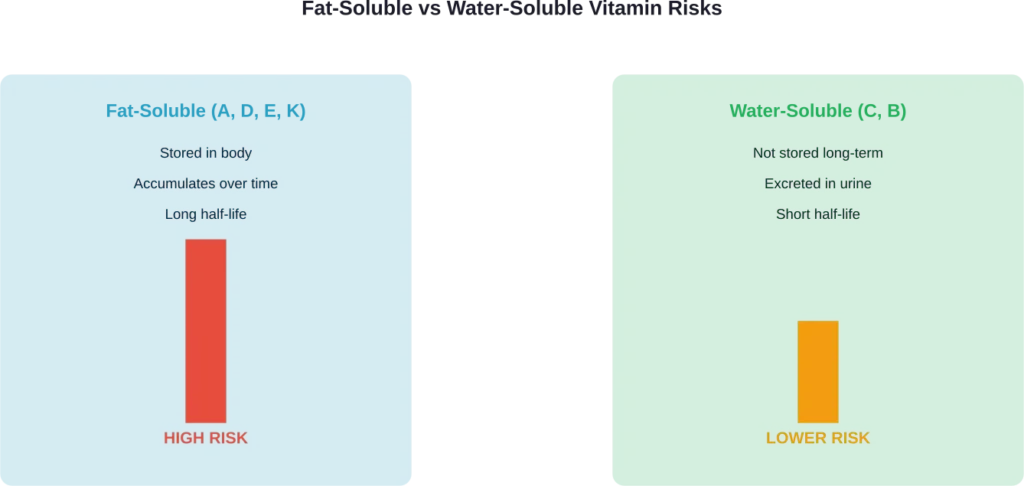
Not all vitamins pose the same risk when taken in excess. The difference comes down to how your body processes them.
Water-Soluble Vitamins
These include vitamin C and the B vitamins (B6, B12, folic acid, and others). Your body doesn’t store them long-term—excess amounts are typically excreted through urine.
That doesn’t mean they’re completely safe in megadoses, though. Vitamin B6 toxicity can affect the nervous system, and excessive folic acid intake has documented toxic effects according to research from Qingdao University published in Behavioral Neurology.
Fat-Soluble Vitamins
Vitamins A, D, E, and K are a different story. These dissolve in fat and accumulate in your liver, muscles, and fat tissues. They have longer half-lives in the body—25(OH)D has a half-life of 15 days, while 1,25(OH)2D has a half-life of 15 hours.
This accumulation creates the real danger. According to StatPearls research from the National Institutes of Health, vitamin A has high lipid solubility and can build up to toxic levels over time.
Common Symptoms of Vitamin Gummy Overdose
Symptoms vary depending on which vitamins are involved and how much was consumed. Here’s what typically happens.
Immediate Symptoms
The most common early signs include stomach upset, nausea, vomiting, and diarrhea. These gastrointestinal symptoms appear within hours of overconsumption.
Many people experience abdominal pain and loss of appetite. Children are particularly vulnerable to these effects.
Serious Complications
When vitamin toxicity progresses, things get much worse. According to research on vitamin D toxicity published in the Journal of the Brazilian Society of Nephrology, severe cases involve confusion, apathy, recurrent vomiting, polyuria (excessive urination), polydipsia (extreme thirst), and dehydration.
Vitamin A toxicity affects multiple organ systems. Research from the National Library of Medicine documents bone-related effects including bone spurs, calcinosis, and bone resorption leading to hypercalcemia, osteoporosis, and hip fractures. Central nervous system effects include headache, nausea, vomiting, and pseudotumor cerebri syndrome.
Liver failure represents one of the most severe outcomes of vitamin overdose, particularly with fat-soluble vitamins.
| Vitamin Type | Common Overdose Symptoms | Severe Complications |
|---|---|---|
| Vitamin A | Headache, nausea, vomiting | Liver damage, bone problems, hypercalcemia |
| Vitamin D | Vomiting, excessive thirst, frequent urination | Hypercalcemia, kidney damage, confusion |
| Vitamin E | Nausea, diarrhea, fatigue | Bleeding disorders, interference with clotting |
| Vitamin B6 | Nerve pain, numbness | Neurological damage, loss of muscle control |
Understanding Tolerable Upper Intake Levels
The Tolerable Upper Intake Level isn’t a recommended intake. According to the Institute of Medicine’s Dietary Reference Intakes for Calcium and Vitamin D, the UL specifies the level above which the risk for harm begins to increase.
It’s defined as the highest average daily intake of a nutrient that is likely to pose no risk of adverse health effects for nearly all persons in the general population. As intake increases above the UL, the potential risk for adverse effects increases.
Real talk: most gummy vitamins don’t provide enough context about these limits. And when something tastes good, people don’t think about recommended doses.
Special Risks for Children
Kids are at higher risk for several reasons. They’re smaller, so the same dose has a greater effect. They’re attracted to the candy-like appearance. And they can’t always read warning labels.
The FDA has documented cases where children experienced severe adverse events from dietary supplements. Some have required hospitalization.
Parents should treat vitamin gummies like medicine—not candy. Store them in child-resistant containers, keep them out of reach, and never refer to them as treats.
What to Do If Overdose Occurs
If someone consumes too many vitamin gummies, take action immediately:
- Call your local poison control center (in the U.S., call 1-800-222-1222). This line operates 24 hours a day, 7 days a week.
- Don’t wait for symptoms to appear before calling—early intervention matters.
- Have the vitamin bottle ready to provide information about ingredients and amounts.
- For severe symptoms like difficulty breathing, seizures, loss of consciousness, or severe vomiting, call emergency services immediately.
According to FDA guidance on reporting dietary supplement problems, serious reactions or illnesses should be reported even if the connection to the supplement isn’t certain. Healthcare professionals can file reports through the Safety Reporting Portal.
What Happens at the Emergency Room
Medical professionals will monitor vital signs including temperature, pulse, breathing rate, and blood pressure. They may perform blood and urine tests to check vitamin levels and assess organ function.
Treatment depends on which vitamins were consumed and symptom severity. There’s no universal antidote for vitamin overdose—care focuses on managing symptoms and preventing further absorption.

Safe Use of Vitamin Supplements
The FDA doesn’t approve dietary supplements before they’re sold to the public. That places more responsibility on consumers to use them safely.
Here’s how to minimize risks:
- Follow label instructions exactly—never exceed recommended doses
- Keep vitamins away from children in secure containers
- Talk to healthcare professionals before starting supplements, especially if taking medications
- Understand that supplements can interact with prescription drugs
- Don’t assume more is better—vitamins aren’t harmless just because they’re sold without prescriptions
According to WHO guidance on risk of excessive intake delivered through public health interventions, intakes between the recommended nutrient intake and the UL should be sufficient to prevent deficiency while avoiding toxicity.
Frequently Asked Questions
Exceeding the recommended dose on the label is too many. Most gummy vitamins recommend 1-2 per day for adults. Taking more than double this amount starts increasing overdose risk, especially with fat-soluble vitamins that accumulate in the body.
While rare, fatal outcomes are possible with severe vitamin overdose. Vitamin D toxicity can cause life-threatening hypercalcemia, and vitamin A toxicity can lead to liver failure. The FDA has documented serious adverse events requiring hospitalization. Always seek emergency care for suspected overdose.
Call poison control immediately at 1-800-222-1222. Don’t wait for symptoms. Children are at higher risk due to smaller body size. Symptoms may include vomiting, severe stomach pain, confusion, or lethargy. Bring the vitamin bottle to the emergency room if medical care is needed.
Fat-soluble vitamins (A, D, E, K) pose the greatest toxicity risk because they accumulate in body tissues. Vitamin A and D overdoses are particularly concerning. According to research from the National Institutes of Health, these can cause serious organ damage including liver failure and hypercalcemia.
Gastrointestinal symptoms like nausea and vomiting typically appear within hours. More serious symptoms from fat-soluble vitamin toxicity may develop over days or weeks as the vitamins accumulate. Vitamin D overdose can persist for weeks due to its 15-day half-life.
Gummy vitamins aren’t inherently less safe, but they’re more likely to be overconsumed because they taste like candy. Research shows they may also contain more ingredients than listed on labels. The appealing taste removes the psychological barrier that prevents people from taking excessive doses.
Yes. Chronic vitamin A toxicity can cause permanent bone damage, osteoporosis, and liver scarring. Severe vitamin B6 overdose can result in irreversible neurological damage. Vitamin D toxicity leading to hypercalcemia can cause kidney damage. Early intervention is critical to prevent permanent complications.
The Bottom Line on Vitamin Gummy Safety
Vitamin gummies fill a real need—they make supplementation easier and more palatable. But that convenience comes with risks that aren’t always obvious.
The candy-like format encourages overconsumption. The accumulation of fat-soluble vitamins creates toxicity that builds silently. And children can’t distinguish supplements from treats.
If overdose happens, time matters. Contact poison control immediately, and don’t dismiss early symptoms as minor stomach upset.
For those using vitamin supplements regularly, talk to healthcare providers about appropriate dosing. Understand the difference between water-soluble and fat-soluble vitamins. And always—always—store them safely away from children.
Health depends on getting the right nutrients. But more isn’t better when it comes to vitamins. Respect the doses, understand the risks, and treat supplements like the medicine they are.