
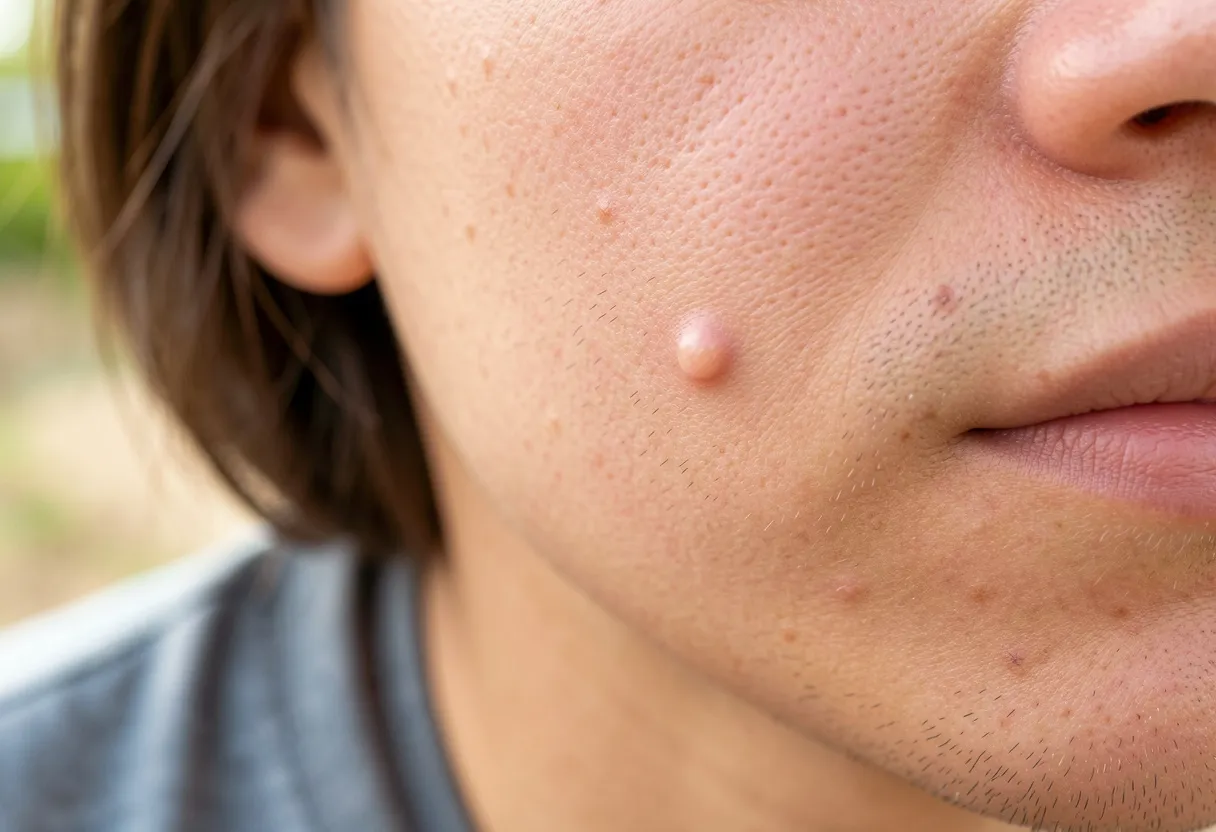
Quick Summary: When you don’t pop a pimple, it naturally heals as your immune system breaks down the bacteria and inflammation inside. The pus gets reabsorbed by the body over 3-7 days without scarring. Leaving pimples alone prevents infection, permanent scarring, and deeper inflammation that popping can cause.
The temptation is real. You wake up, look in the mirror, and there it is—a whitehead staring back at you before your big presentation or weekend plans. Your fingers are practically itching to squeeze it into oblivion.
But what if you just… didn’t? What actually happens to that pimple if you resist the urge?
The answer might surprise you. And it’s way better than the alternative.
The Natural Lifecycle of an Untouched Pimple
Here’s the thing though—your body already knows exactly what to do with that pimple. It doesn’t need your help.
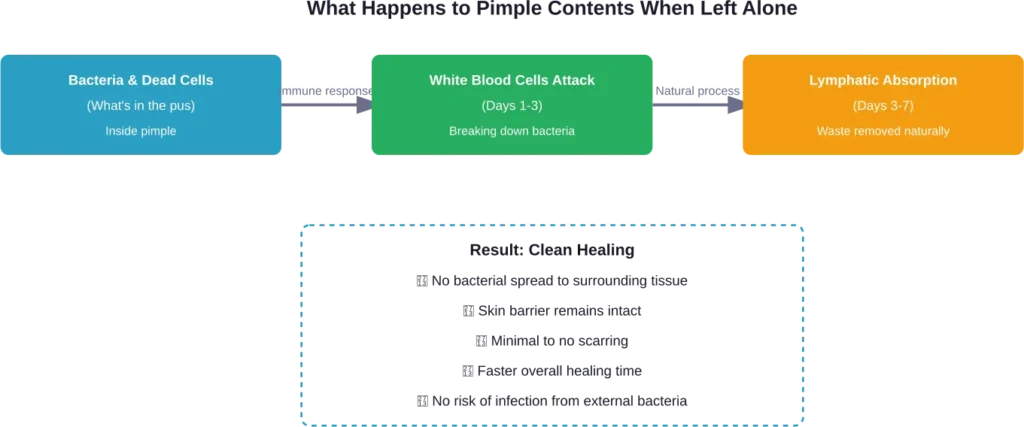
When you leave a pimple alone, your immune system goes to work. White blood cells rush to the area to fight the bacteria causing inflammation. The pus you see? That’s actually dead white blood cells, bacteria, and cellular debris—proof your body is handling the situation.
According to the American Academy of Dermatology, a typical pimple lasts about three to seven days when left undisturbed. The body naturally reabsorbs the contents as inflammation decreases. No squeezing required.
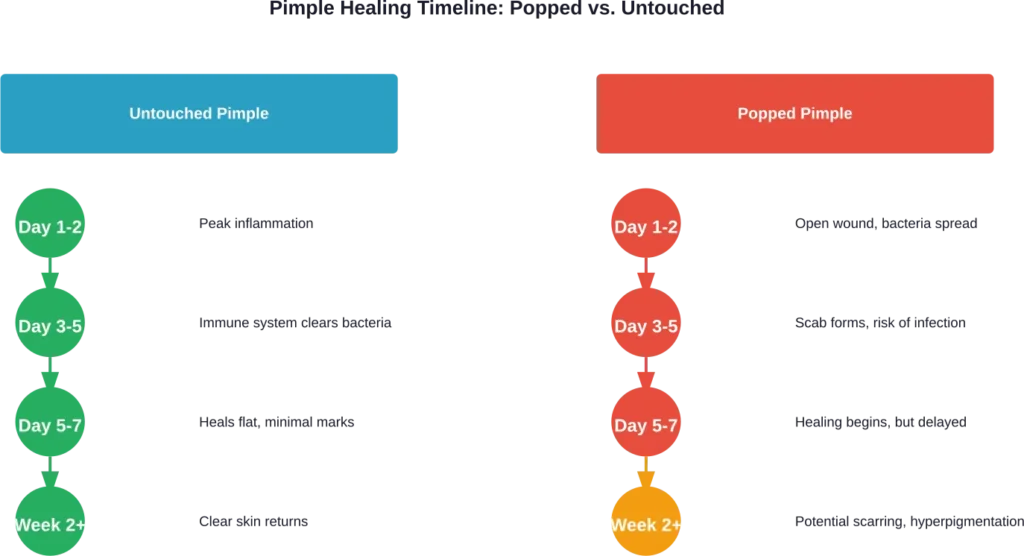
The healing process follows a predictable pattern:
- Days 1-2: The pimple reaches its peak size and redness
- Days 3-5: Inflammation begins subsiding as immune cells clear bacteria
- Days 5-7: The blemish flattens and fades, often without leaving a mark
Compare this to what happens when you pop a pimple. You’re essentially forcing bacteria deeper into the skin, breaking the follicle wall, and creating an open wound vulnerable to infection.
What Happens to the Pus Inside?
Real talk: the pus doesn’t just sit there forever.
Your body’s lymphatic system—the cleanup crew of your immune system—gradually absorbs and processes the pus. Think of it like your body taking out the trash. The white blood cells that created the pus in the first place now help break it down.
Some pimples do come to a head naturally. When this happens, the contents may drain on their own without any intervention. A gentle cleanse with lukewarm water is all you need. The key word? Gentle.
Other pimples never develop a visible whitehead. These deeper blemishes resolve completely beneath the surface as inflammation decreases. The bacteria gets neutralized, the swelling goes down, and the skin returns to normal.
The Hidden Risks of Popping Pimples
The American Academy of Dermatology warns that squeezing pimples can lead to permanent acne scars, more noticeable blemishes, increased pain, and potential infections.
But wait. There’s an even scarier risk few people know about.
The danger triangle of the face—the area from the bridge of your nose to the corners of your mouth—contains blood vessels that connect directly to your brain. Popping pimples in this zone can, in rare cases, push bacteria into these vessels.
Northwestern Medicine dermatologists note that while serious complications are uncommon, the risk isn’t worth taking. According to the American Academy of Dermatology, acne vulgaris is a ubiquitous problem affecting 80 percent of people ages 11 to 30 years, with many experiencing scarring from improper treatment.
Types of Scarring From Popping
Research in Dermatology Research and Practice identifies atrophic scars as the most common type of acne scar. These include:
- Ice pick scars: Deep, narrow pits in the skin
- Boxcar scars: Round or oval depressions with steep sides
- Rolling scars: Wide depressions with sloping edges
Post-inflammatory hyperpigmentation is another concern. This darkening of the skin can persist for months or even years after the original blemish heals.
Better Alternatives Than Popping
Okay, so what about when you absolutely need that pimple gone faster?
Dermatologists recommend several effective approaches that don’t involve your fingers:
Spot treatments with proven ingredients: The American Academy of Dermatology recommends starting with products containing 2.5% benzoyl peroxide to avoid irritation. Salicylic acid, glycolic acid, and lactic acid also help clear existing breakouts.
Hydrocolloid patches: These adhesive patches absorb fluid from pimples while protecting them from bacteria and preventing picking. Northwestern Medicine notes these as a safe alternative to popping.
Professional extraction: Board-certified dermatologists use sterile tools and proper technique to drain blemishes without causing damage. They can extract the contents of pustules, cysts, and nodules safely.
| Treatment Method | Healing Time | Scarring Risk | Infection Risk |
|---|---|---|---|
| No intervention | 3-7 days | Minimal | Very low |
| Spot treatment | 2-5 days | Minimal | Very low |
| Hydrocolloid patch | 1-4 days | Minimal | Very low |
| Professional extraction | 3-7 days | Low | Very low |
| At-home popping | 7-14+ days | High | Moderate to high |
When a Pimple Isn’t Just a Pimple
Sound familiar? You’ve got what looks like a stubborn pimple that won’t go away.
Schweiger Dermatology Group warns that several skin conditions can masquerade as acne, including:
Milia: Small, white bumps filled with keratin protein. These don’t respond to typical acne treatments and require professional removal.
Seborrheic keratosis: Benign growths that can appear as dark, raised spots. Attempting to remove these at home can cause bleeding and scarring.
Basal cell carcinoma: The most common form of skin cancer, which can initially resemble a persistent pimple.
If a blemish doesn’t heal within two weeks, grows larger, bleeds easily, or returns in the same spot repeatedly, see a dermatologist. These could indicate conditions requiring professional diagnosis and treatment.
The Long-Term Skin Benefits
Acne affects more than just your appearance. Research on acne-induced pathological scars notes that up to 95% of acne patients will develop scars depending on tissue response and management.
Keeping hands off pimples protects the skin barrier. This outer layer of skin defends against environmental damage, locks in moisture, and prevents bacterial invasion. Every time you squeeze a pimple, you compromise this barrier.
The psychological impact matters too. Studies show acne is associated with anxiety and depression, particularly in adult women. Scarring from picking and popping can intensify these effects, creating a cycle of skin damage and emotional distress.
Frequently Asked Questions
Most pimples heal naturally within three to seven days when left alone. Deeper cystic blemishes may take up to two weeks. The exact timeline depends on the type of pimple, your skin type, and overall immune function.
No. The pus gets broken down by white blood cells and absorbed through your lymphatic system. Your body has natural mechanisms for clearing this debris. The contents don’t remain trapped—they’re processed and eliminated just like other cellular waste.
Yes. Use spot treatments containing benzoyl peroxide or salicylic acid, apply hydrocolloid patches, avoid touching the area, and maintain a gentle skincare routine. Ice can reduce inflammation temporarily. These methods accelerate healing without the risks of manual extraction.
Dermatologists consistently advise against at-home popping. If a pimple absolutely must be drained, see a board-certified dermatologist who uses sterile instruments and proper technique. The risks of scarring, infection, and deeper inflammation make DIY extraction a bad idea.
Even whiteheads heal better when left alone. If the whitehead ruptures naturally, gently cleanse the area with lukewarm water. Don’t squeeze or press on it. Apply a spot treatment if desired, but resist the temptation to force anything out.
Absolutely. Squeezing pushes bacteria deeper into skin tissue and can damage the follicle wall and surrounding dermis. This trauma leads to atrophic scars, keloids, and hyperpigmentation that may last years or become permanent. Professional treatments like subcision and laser therapy may be needed to address severe scarring.
The danger triangle spans from the bridge of your nose to the corners of your mouth. Blood vessels in this area connect to the brain through the cavernous sinus. Popping pimples here can theoretically push bacteria into these vessels, though serious complications are rare. Better safe than sorry—keep hands off this zone entirely.
The Bottom Line on Leaving Pimples Alone
Your skin is smarter than you think. It has sophisticated healing mechanisms honed over millions of years of evolution. When you resist the urge to pop, squeeze, or pick at pimples, you’re letting these natural processes work.
The science is clear: untouched pimples heal faster, scar less, and pose minimal infection risk compared to those you pop yourself. Most blemishes resolve completely within a week without intervention.
If acne is a persistent concern—not just the occasional pimple—consult a board-certified dermatologist. They can create a comprehensive treatment plan tailored to your skin type and acne severity. Treatment options range from topical medications to oral therapies and professional procedures.
Your future skin will thank you for the restraint you show today. Keep those hands off, trust the process, and let your immune system handle what it does best.