

Quick Summary: Skipping oil changes leads to engine oil breakdown, sludge buildup, increased friction, and overheating. These problems cause accelerated wear on engine components, reduced fuel efficiency, and can ultimately result in catastrophic engine failure requiring thousands of dollars in repairs or complete engine replacement.
Oil changes rank among the simplest maintenance tasks for any vehicle. Yet drivers routinely push them past recommended intervals, assuming a few extra thousand miles won’t matter.
That assumption costs Americans millions in preventable engine repairs every year.
Motor oil works harder than most drivers realize. It circulates through the engine constantly, lubricating metal parts, absorbing heat, and trapping contaminants. Over time, this oil breaks down and loses its protective properties. When that happens, the engine suffers consequences that range from reduced performance to complete mechanical failure.
How Engine Oil Breaks Down Over Time
Fresh motor oil contains base oils and chemical additives designed to protect engine components. According to research published by Machinery Lubrication, these additives can account for a significant portion of the lubricant’s composition, each serving specific functions like reducing oxidation or dispersing contaminants.
But here’s the thing—those additives don’t last forever.
As oil circulates through an engine, it faces extreme temperatures and pressures. The heat causes oxidation, which thickens the oil and forms acidic compounds. Fuel dilution occurs through blow-by gases that escape past piston rings. Combustion byproducts, including soot particles and unburned fuel, contaminate the oil.
A study analyzing engine oil degradation characteristics found that iron particle concentration increases steadily during use. Silicon contamination rises as seals and gaskets age. The research noted sharp drops in anti-friction additives over extended intervals.
These changes accelerate after certain mileage thresholds. One authoritative source indicates that 12,000 kilometers represents a recommended maximum for post-warranty vehicles to reduce wear intensity.

The Cascade of Engine Damage
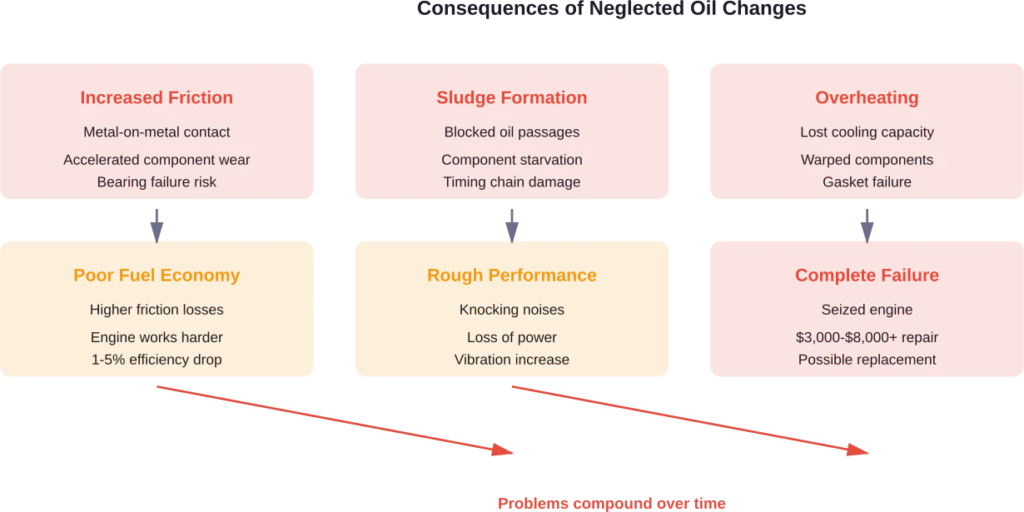
When oil loses its protective properties, several destructive processes begin simultaneously.
Increased Friction and Wear
Fresh oil creates a thin film between metal surfaces, preventing direct contact. As oil degrades, this protective barrier weakens. Metal-on-metal contact increases. Engine components like pistons, cylinders, and bearings wear down faster.
The damage accelerates exponentially. What starts as microscopic surface roughness progresses to visible scoring and eventually catastrophic failure.
Sludge Buildup
Oxidized oil thickens into a tar-like substance called sludge. This sludge accumulates in oil passages, on valve covers, and around the crankcase. It blocks narrow channels that deliver oil to critical components.
When oil can’t flow freely, certain engine parts starve for lubrication. Timing chains, camshafts, and turbochargers are particularly vulnerable. These precision components fail rapidly without adequate oil flow.
Overheating Problems
Motor oil absorbs tremendous amounts of heat from combustion and friction. Degraded oil loses this cooling capacity. Engine temperatures climb higher than designed tolerances allow.
Heat compounds other problems. It accelerates wear, warps metal components, and breaks down remaining oil even faster. The engine enters a destructive spiral.
Reduced Fuel Efficiency
Increased internal friction forces the engine to work harder for the same power output. That extra effort requires more fuel. Drivers notice declining gas mileage long before they see other warning signs.
The efficiency loss varies by driving conditions and progresses as oil degradation continues.
Real-World Case: Timing Chain Failure
According to Sanderson Auto Repair, timing chain failures illustrate the expensive consequences of extended oil change intervals. Consider a 2012 Buick Enclave with a 3.6L V-6 engine where the owner changed oil when the maintenance light appeared—or sometimes a bit after.
At approximately $65 per full synthetic oil change, it seemed reasonable to wait.
Eventually, the engine developed unusual noises. Diagnosis revealed timing chain failure. The repair quote? Substantially more than years of proper oil changes combined.
Timing chains depend on consistent oil pressure and lubrication. When sludge blocks oil passages or degraded oil can’t maintain proper hydraulic pressure, the chain and its tensioners wear rapidly. The resulting failure can destroy pistons, valves, and cylinder heads.
Warning Signs of Oil Problems
Engines communicate problems before catastrophic failure occurs. Recognizing these signs early prevents expensive repairs:
- Dashboard warning lights: The oil pressure warning or check engine light illuminates when sensors detect problems
- Unusual engine noises: Knocking, ticking, or grinding sounds indicate inadequate lubrication
- Dark, thick oil: Oil that looks like black tar has oxidized beyond usefulness
- Oil smell in the cabin: Burning oil odors suggest leaks or oil breaking down from excessive heat
- Visible exhaust smoke: Blue smoke indicates oil burning in the combustion chamber
- Declining performance: Reduced power and responsiveness signal internal friction problems
Any of these symptoms requires immediate attention. Continuing to drive risks permanent engine damage.
Oil Change Interval Guidelines
Modern engines and improved oil formulations allow varying intervals. However, intervals should follow manufacturer specifications carefully.
Commonly recommended intervals range between 5,000 and 10,000 miles depending on vehicle and oil type. The specific recommendation depends on:
| Factor | Effect on Interval | Recommendation |
|---|---|---|
| Oil type | Synthetic lasts longer than conventional | Follow manufacturer specs for oil grade |
| Driving conditions | Severe use shortens interval | Reduce by 25-50% for extreme conditions |
| Engine age | Older engines need more frequent changes | Post-warranty: max 12,000 km intervals |
| Climate | Extreme heat or cold accelerates breakdown | Monitor oil condition more frequently |
| Vehicle use | Short trips and idling are harder on oil | Change more often than highway-only driving |
One authoritative source indicates that 12,000 kilometers represents a recommended maximum for post-warranty vehicles to reduce wear from degraded oil properties.
Cost Comparison: Prevention vs. Repair
Regular oil changes cost approximately $65 for synthetic options on typical vehicles. Most drivers need 2-3 changes annually.
Compare that to repair costs from neglect:
| Repair Type | Typical Cost Range | Cause |
|---|---|---|
| Timing chain replacement | approximately $4,000 | Sludge buildup, inadequate lubrication |
| Engine bearing replacement | $2,000 – $4,000 | Excessive wear from degraded oil |
| Turbocharger replacement | $1,000 – $3,000 | Oil starvation from blocked passages |
| Engine rebuild | $3,000 – $8,000+ | Multiple component failure |
| Complete engine replacement | $4,000 – $10,000+ | Catastrophic failure from seized components |
A decade of proper oil changes costs less than one major repair.
Frequently Asked Questions
While some engines might run 15,000-20,000 miles on a single oil fill, the damage accumulates invisibly. Research shows significant increases in wear particles and additive depletion beyond 12,000 km. Pushing intervals past manufacturer recommendations accelerates wear that shortens engine life substantially.
It depends on the severity. Minor sludge buildup can sometimes be addressed with engine flushes and more frequent oil changes. Severe damage—worn bearings, scored cylinders, failed timing components—requires expensive repairs or engine replacement. Prevention costs far less than correction.
One missed change won’t cause immediate catastrophic failure in most cases. However, it begins the degradation process. Each additional delayed change compounds the problem. The damage accumulates gradually until a critical component fails suddenly.
Warning signs include engine noise, reduced fuel economy, visible exhaust smoke, dashboard warning lights, and rough idling. But these symptoms appear after significant degradation has occurred. Regular checking and scheduled changes prevent reaching this point.
Yes. Synthetic oils resist oxidation better and maintain viscosity longer under extreme conditions. They typically allow intervals 50-100% longer than conventional oils. However, even synthetic oil degrades and accumulates contaminants. Extended intervals still require monitoring and eventual service.
Low oil level causes immediate critical damage because components lose all lubrication. Old oil still provides some protection, though degraded. Both conditions are serious, but running low on oil can seize an engine within minutes while degraded oil damages gradually over thousands of miles.
Absolutely. Short trips prevent the engine from reaching full operating temperature. This allows condensation and fuel to accumulate in the oil without evaporating. These contaminants accelerate degradation. Vehicles used primarily for short trips need more frequent oil changes than those driven longer distances regularly.
Protect Your Engine Investment
Regular oil changes represent the simplest, most cost-effective maintenance task for any vehicle. The consequences of neglect—accelerated wear, sludge formation, overheating, and eventual engine failure—cost thousands of dollars to repair.
Modern engines tolerate longer intervals than previous generations, but they’re not immune to oil degradation. Research clearly shows that wear particles spike, additives deplete, and contaminants accumulate beyond recommended service intervals.
The choice is straightforward: invest $50-75 every few months in fresh oil, or risk repairs costing 50-100 times that amount.
Check your owner’s manual for manufacturer-recommended intervals. Adjust shorter for severe driving conditions. Monitor oil condition between changes. And schedule service promptly when the interval arrives.
Your engine’s lifespan depends on it.