
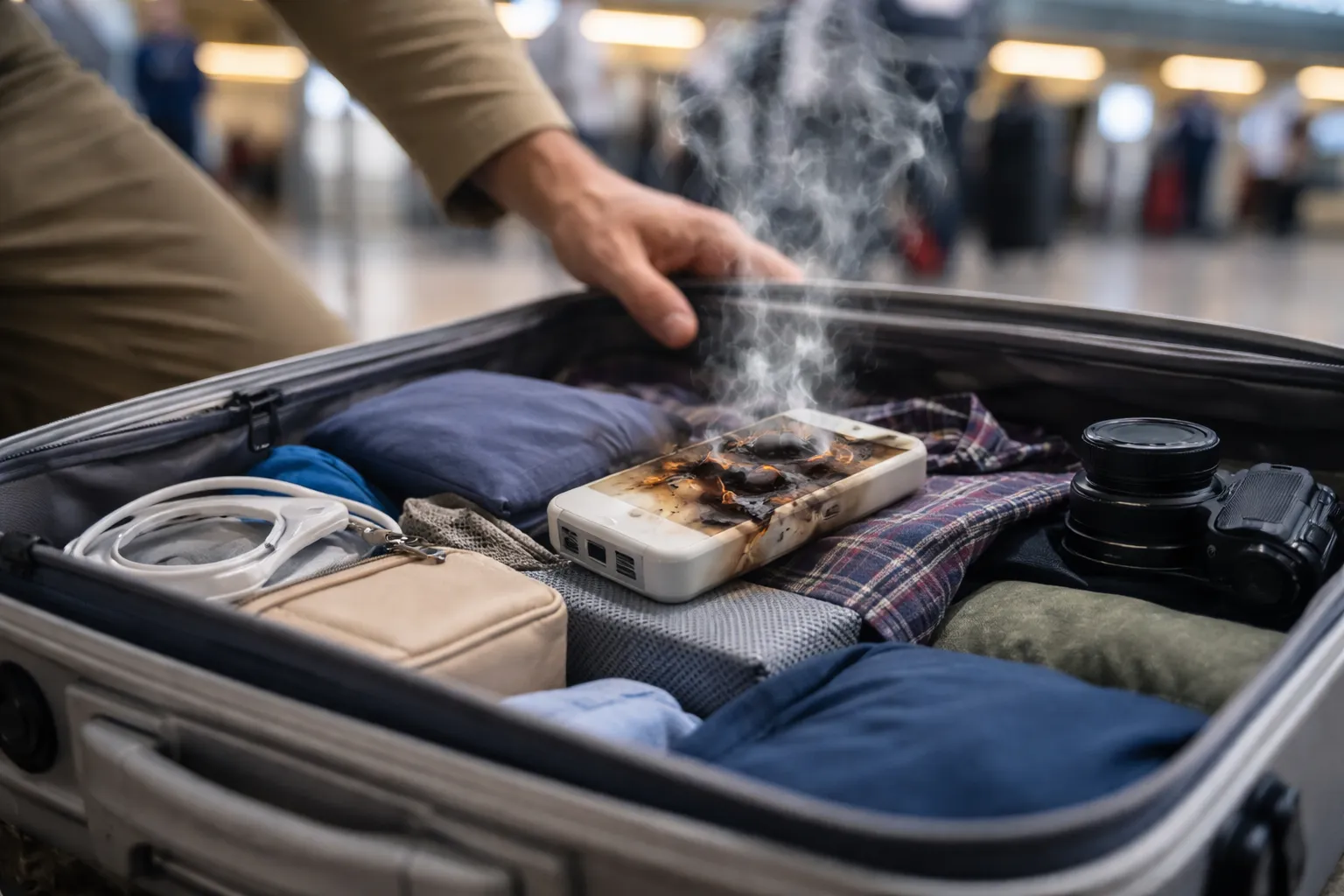
Quick Summary: If you have a lithium battery in checked luggage, the outcome depends on whether it’s installed in a device or spare. According to the FAA, devices with installed lithium batteries (like laptops and cameras) can fly in checked bags if powered off and protected, but spare batteries and power banks are prohibited and will be confiscated if discovered during screening.
Standing at the airport, watching luggage disappear down the conveyor belt, many travelers suddenly remember that power bank buried in their suitcase. That moment of panic is real.
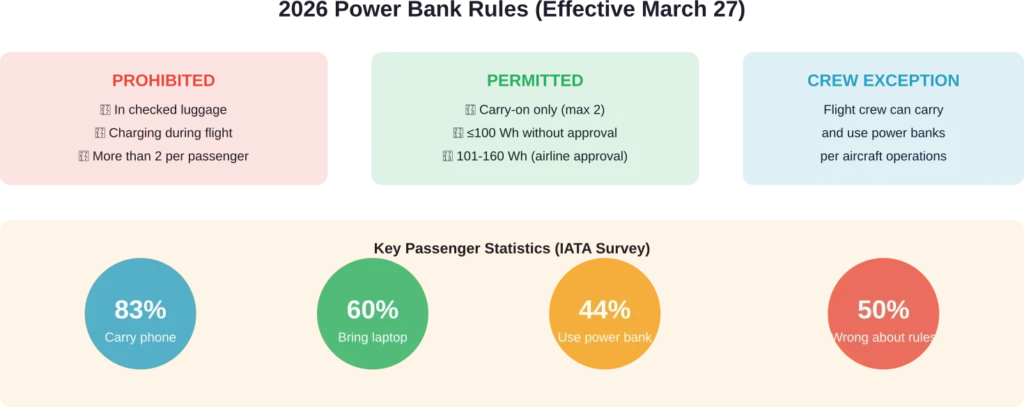
Lithium batteries power nearly every device travelers carry. According to IATA passenger surveys, 83% carry a phone, 60% bring a laptop, and 44% travel with a power bank. But not all batteries can go in checked bags.
Here’s what actually happens when lithium batteries go through baggage screening, according to Federal Aviation Administration and Transportation Security Administration regulations.
The Critical Difference: Installed vs. Spare Batteries
The outcome depends entirely on whether the battery is installed in a device or loose.
According to the FAA, devices containing lithium metal batteries or lithium-ion batteries—including smartphones, tablets, cameras, and laptops—should be kept in carry-on baggage. However, if these devices are packed in checked baggage, they must be completely powered off and protected from accidental activation.
Spare batteries tell a different story. The TSA explicitly prohibits spare (uninstalled) lithium-ion and lithium metal batteries in checked bags. This includes power banks and cell phone battery charging cases, which must be carried in carry-on baggage only.
The distinction matters because flight crews are trained to recognize and respond to lithium battery fires in the cabin. In the cargo hold? Different situation entirely.
What Counts as a Spare Battery
Spare batteries include:
- Power banks and portable chargers
- External battery packs
- Loose camera batteries
- Cell phone battery charging cases
- Any battery not installed in a device
Even if the battery appears secure in packaging, it’s still considered spare if not installed in equipment.
What TSA Actually Does During Screening
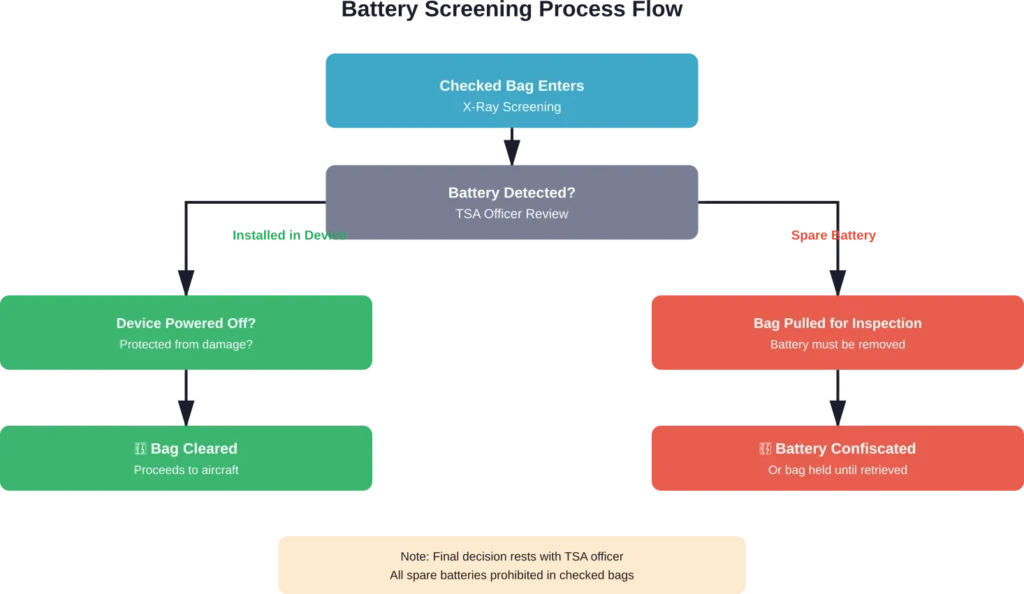
When checked luggage passes through X-ray screening, TSA officers can identify battery shapes and densities.
If officers spot what appears to be a spare lithium battery or power bank, they’ll pull the bag for physical inspection. The bag doesn’t continue to the aircraft until the issue is resolved.
For confirmed prohibited batteries, TSA has three options: remove and dispose of the battery while sending the bag forward, hold the bag until the passenger can retrieve the battery, or in some cases, contact the passenger if time permits before departure.
The final decision rests with the TSA officer on whether an item is allowed through the checkpoint. But the regulations are clear—spare lithium batteries don’t fly in cargo holds.
Why Lithium Batteries Are Restricted in Cargo Holds
The restrictions exist because lithium batteries can catch fire if damaged or if battery terminals are short-circuited.
According to the FAA, all lithium-ion batteries are capable of overheating and undergoing a process called thermal runaway. Thermal runaway can occur without warning as a result of various factors, including if the battery is damaged, overheated, or experiences an internal short circuit.
In the passenger cabin, crew can quickly detect smoke or fire and use specialized fire suppression equipment. Passengers can notify flight attendants immediately if a device overheats or emits smoke.
In the cargo hold, early detection becomes nearly impossible. A fire could spread significantly before detection systems trigger alerts.
That’s why the FAA emphasizes that devices containing lithium batteries should be carried in accessible carry-on baggage where crews can respond immediately to any thermal events.
Battery Size and Capacity Rules
Not all lithium batteries follow the same rules. Capacity determines what’s permitted and where.
| Battery Type | Capacity Limit | Carry-On | Checked (Installed) | Checked (Spare) |
|---|---|---|---|---|
| Lithium-ion in device | ≤100 Wh | Yes | Yes (powered off) | No |
| Lithium-ion spare | ≤100 Wh | Yes | No | No |
| Lithium-ion spare | 101-160 Wh | Yes (max 2, airline approval) | No | No |
| Lithium-ion spare | >160 Wh | No | No | No |
| Lithium metal | ≤2g lithium | Yes | Yes (in device only) | No |
| Power banks | Any capacity | Yes (≤100 Wh) | No | No |
According to the TSA, these limits allow for nearly all types of lithium batteries used by the average person in their electronic devices. Most consumer electronics contain batteries well under 100 watt hours.
How to Calculate Watt Hours
Battery capacity is often listed in milliamp hours (mAh). To convert to watt hours:
Wh = (mAh × V) ÷ 1000
For example, a 10,000 mAh power bank at 3.7V equals 37 Wh—well within the 100 Wh limit for carry-on.
Special Cases: Smart Luggage and Power Tools
Smart luggage creates unique challenges. According to the FAA, baggage equipped with lithium batteries intended to power features like location tracking, digital weighing, or motors must be carried as carry-on baggage unless the batteries are removed from the baggage.
Removed batteries must be carried in accordance with the provision for spare batteries—meaning carry-on only.
For power tools, the TSA permits them in checked bags, but batteries installed in devices must be protected from accidental activation. External battery chargers and spare lithium batteries must be packed in carry-on bags.
Recent Regulatory Changes for 2026
The International Civil Aviation Organization (ICAO) implemented new power bank restrictions effective March 27, 2026. According to ICAO, these devices are now limited to two per passenger, and passengers are prohibited from recharging them during flights.
These improvements reflect ICAO’s continuing commitment to enhancing aviation safety, addressing emerging risks posed by the increasing number of lithium battery-powered devices in air travel.
The restrictions came after the ICAO Dangerous Goods Panel identified emerging risks and provided expert advice to standard-setting bodies.
What to Do If Batteries Are Confiscated
If TSA discovers prohibited batteries during screening, options are limited.
The best scenario: TSA contacts the passenger before departure, allowing retrieval of the battery and transfer to carry-on luggage. This happens when time permits and staff can locate the passenger.
More commonly, TSA removes and disposes of the battery while clearing the bag to proceed. Travelers won’t get the battery back.
In some cases, the entire bag is held until the passenger can claim it, potentially causing missed flights.
Airlines don’t provide compensation for confiscated batteries. The responsibility falls entirely on passengers to know and follow regulations.
How to Properly Pack Batteries for Air Travel
According to IATA’s seven safety rules for traveling with lithium batteries, travelers should pack light and only bring devices and batteries they really need.
For carry-on packing:
- Keep all spare batteries in original packaging when possible
- If original packaging isn’t available, tape over battery terminals
- Place each battery in a separate plastic bag
- Prevent batteries from contacting metal objects like coins or keys
- Store power banks in accessible locations, not buried in bags
For devices in checked bags:
- Power off completely (not sleep mode)
- Protect from accidental activation by surrounding with soft materials
- Ensure devices won’t shift during transport and press power buttons
- Remove batteries if easily removable and pack those in carry-on
IATA emphasizes staying alert during flights. If a device overheats, emits smoke, or shows signs of damage, passengers should notify flight crew immediately. Crews are specifically trained to handle lithium battery thermal events.
Airline-Specific Variations
While FAA and TSA regulations establish baseline rules for U.S. flights, individual airlines may impose stricter requirements.
Some carriers prohibit certain high-capacity batteries even in carry-on. Others require advance notification for batteries between 101-160 watt hours.
International flights add complexity. Regulations vary by country, and passengers must comply with rules for both departure and arrival nations.
Check specific airline policies before travel, especially for international routes. The airline’s website typically provides battery guidance in the baggage or dangerous goods section.
Common Misconceptions About Battery Safety
According to IATA research, half of surveyed passengers incorrectly believe it’s acceptable to place small lithium-powered devices in checked baggage, and 45% think power banks can go in the hold.
The most common misconceptions:
Myth: Small batteries are always fine in checked bags.
Reality: Size doesn’t matter for spare batteries. All spare lithium batteries are prohibited in checked luggage regardless of capacity.
Myth: If the device is off, batteries can go in checked bags.
Reality: Devices with installed batteries can go in checked bags when off. Spare batteries cannot, even if protected.
Myth: Power banks are safer than loose batteries.
Reality: Power banks are spare batteries and face the same carry-on-only restriction.
Myth: TSA won’t notice batteries in checked bags.
Reality: X-ray screening clearly shows battery shapes and densities. Detection is routine.
Frequently Asked Questions
TSA will pull the bag for inspection and remove the power bank. The battery will be confiscated and disposed of. In some cases, the bag may be held until the passenger can retrieve it, potentially causing travel delays. According to TSA regulations, portable chargers or power banks containing lithium-ion batteries must be packed in carry-on bags and are prohibited in checked luggage.
Yes, but it’s not recommended. According to the FAA, devices containing lithium-ion batteries like laptops should be kept in carry-on baggage. If packed in checked bags, they must be completely powered off (not in sleep mode) and protected from accidental activation. The FAA emphasizes carry-on placement because flight crews can quickly respond to any battery incidents in the cabin.
Check the battery label for watt hour (Wh) rating. If only milliamp hours (mAh) and voltage (V) are listed, calculate: Wh = (mAh × V) ÷ 1000. For example, a 20,000 mAh battery at 3.7V equals 74 Wh. Most consumer electronics contain batteries well under 100 Wh, according to TSA guidance. Batteries between 101-160 Wh require airline approval for carry-on.
Rechargeable lithium-ion AA or AAA batteries follow the same rules as other spare batteries—they must be in carry-on baggage only. Regular alkaline AA or AAA batteries (non-rechargeable, non-lithium) can fly in either carry-on or checked bags. When packing any loose batteries, protect terminals by keeping them in original packaging or taping over contacts to prevent short circuits.
If still at the airport, contact airline staff immediately before the bag is loaded. They may be able to retrieve it for repacking. If the bag is already checked and you’re at the gate, inform gate agents. If TSA discovers the batteries during screening, they’ll either remove them or hold the bag. Community discussions suggest outcomes vary—some travelers report bags proceeding with batteries removed, others face delays or missed flights.
Camera batteries installed in the camera can fly in checked bags if the camera is powered off and protected. Spare camera batteries must be in carry-on only. This applies to all lithium-ion camera batteries regardless of size. Many photographers carry multiple batteries, so plan to pack all spares in accessible carry-on luggage with terminals protected.
The March 27, 2026 ICAO regulations specifically address power banks, limiting passengers to two devices and prohibiting in-flight charging. According to ICAO, these restrictions reflect emerging expertise around risks presented by passengers’ lithium batteries. The fundamental rule remains unchanged: all spare lithium batteries and power banks are prohibited in checked baggage and must be carried in the cabin.
Conclusion: Pack Smart, Travel Safe
The consequences of packing lithium batteries in checked luggage range from simple confiscation to serious travel delays. But the rules are straightforward once understood.
Devices with installed batteries can fly in checked bags when powered off and protected. Spare batteries, power banks, and external chargers must always stay in carry-on luggage. No exceptions.
These regulations exist because lithium batteries pose genuine fire risks in cargo holds where detection and suppression are severely limited. The restrictions protect everyone on the aircraft.
Before the next flight, take five minutes to verify battery locations. Move all spare batteries and power banks to carry-on bags. Power off devices completely if packing them in checked luggage. Protect battery terminals with tape or original packaging.
The FAA PackSafe website provides detailed guidance for every battery type. When in doubt, pack batteries in carry-on. Flight crews are trained to handle battery incidents in the cabin—give them that advantage.
Safe travels start with proper battery packing. Check bags the right way, and avoid the hassle of confiscation, delays, and potential safety incidents.