

Quick Summary: Taking too much creatine can cause digestive issues like bloating, nausea, and diarrhea, but serious side effects are rare. Most research shows creatine is safe when taken at recommended doses (3-5g daily), though excessive amounts may temporarily raise creatinine levels without harming kidney function in healthy individuals. Sticking to evidence-based dosing strategies helps maximize benefits while minimizing potential discomfort.
Creatine monohydrate has become one of the most popular supplements in athletic performance and bodybuilding. It’s everywhere right now, from professional training facilities to local gyms.
But popularity brings questions. And one that keeps coming up: can someone take too much?
The short answer? Yes, excessive creatine can cause problems, though they’re usually not dangerous. Most issues come down to digestive discomfort rather than serious health risks.
Here’s what actually happens when creatine intake goes beyond recommended levels.
What Is Creatine and How Much Should You Take?
Creatine is a compound made from three amino acids. The liver, kidneys, and pancreas naturally produce it, and it’s also found in foods like meat and fish.
Most creatine in the body gets stored in muscles. Smaller amounts sit in the brain. When muscles contract during intense exercise, creatine phosphate helps regenerate ATP, the energy currency cells use.
That’s why creatine supplements work—they increase total creatine stores, which enhances athletic performance, particularly during short bursts of high-intensity activity.
Recommended Dosing Strategies
Two main approaches exist for creatine supplementation:
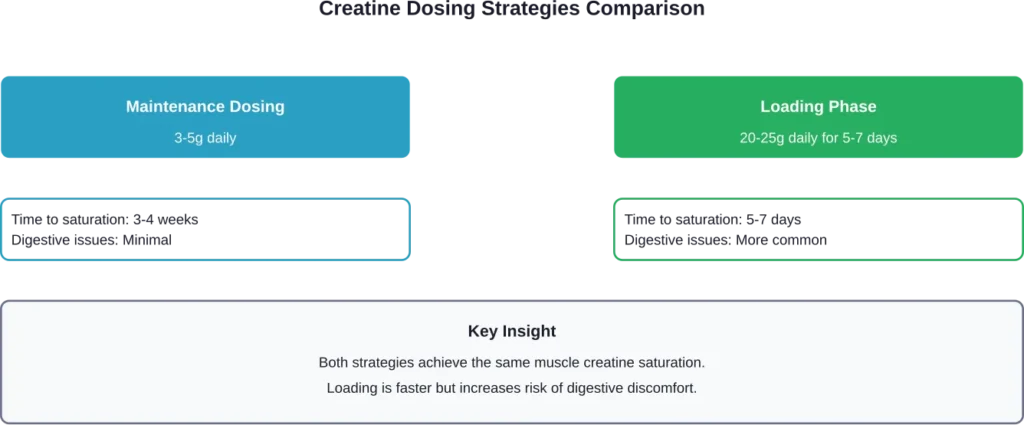
Maintenance dosing: Taking 3-5 grams daily is the most common and well-researched approach. This maintains elevated creatine stores without overwhelming the digestive system.
Loading phase: Some protocols suggest 20-25 grams daily (split into 4-5 doses) for 5-7 days, followed by a maintenance dose. Loading saturates muscle stores faster, but it’s not necessary for benefits.
Research supports both methods. Loading just speeds up results by a week or two.
What Happens When You Take Too Much Creatine
Exceeding recommended doses doesn’t necessarily boost results. Once muscle stores are saturated, extra creatine doesn’t increase performance further.
Instead, excess creatine gets broken down and excreted. But before that happens, it can cause several uncomfortable effects.
Digestive Distress
This is the most common issue with excessive creatine intake. When large amounts of creatine sit in the digestive tract, they draw water into the intestines through osmosis.
That leads to:
- Bloating and abdominal discomfort
- Nausea
- Diarrhea
- Stomach cramping
These symptoms typically occur with doses above 10 grams taken at once. Splitting doses throughout the day reduces this risk significantly.
Water Retention and Weight Gain
Creatine pulls water into muscle cells. That’s actually part of how it works—cell volumization may trigger anabolic signaling.
But higher doses mean more water retention. Some people gain 2-4 pounds of water weight during the first week of supplementation, especially during loading phases.
This isn’t fat gain, and it’s not inherently harmful. But it can feel uncomfortable and may affect athletes who compete in weight classes.
Elevated Creatinine Levels
Here’s where things get interesting—and where confusion often happens.
Creatine is spontaneously (i.e., non-enzymatically) and irreversibly degraded to creatinine at a rate of approximately 2% of the total body pool per day. Higher creatine intake means more creatinine production.
Blood tests measuring kidney function look at serum creatinine levels. Elevated creatinine typically suggests reduced kidney function. So when creatine supplements raise creatinine, it can mimic kidney disease on lab tests.
But that doesn’t mean actual kidney damage is occurring.
Does Creatine Actually Harm Kidney Function?
This concern has persisted for years. Let’s look at what research actually shows.
A 2025 systematic review and meta-analysis published in BMC Nephrology examined creatine’s effects on kidney function. The analysis included 21 studies in the systematic review, with 12 studies (177 participants in the creatine group and 263 in control) eligible for meta-analysis of serum creatinine levels.
The key findings? Creatine supplementation may temporarily raise serum creatinine levels, but this doesn’t indicate actual kidney dysfunction in healthy individuals.
According to research published in Nutrients, creatine supplementation-induced kidney failure concerns may be largely unfounded. Multiple studies of long-term creatine use—including periods exceeding several months—found no significant adverse effects on kidney function markers in healthy populations.
That said, medical research suggests more caution for specific groups. People with pre-existing kidney disease or those at risk for kidney problems should avoid creatine supplementation without medical supervision.
| Population | Creatine Safety | Considerations |
|---|---|---|
| Healthy adults | Generally safe | Stick to recommended doses; monitor hydration |
| Athletes without conditions | Well-researched, safe | May benefit from loading or maintenance dosing |
| Pre-existing kidney disease | Not recommended | Elevated creatinine complicates diagnosis |
| Dehydration risk groups | Use with caution | Ensure adequate fluid intake |
| Adolescents | Generally safe | Limited long-term data; conservative dosing advised |
Signs You’re Taking Too Much Creatine
How do you know if creatine intake has crossed into excessive territory?
Watch for these indicators:
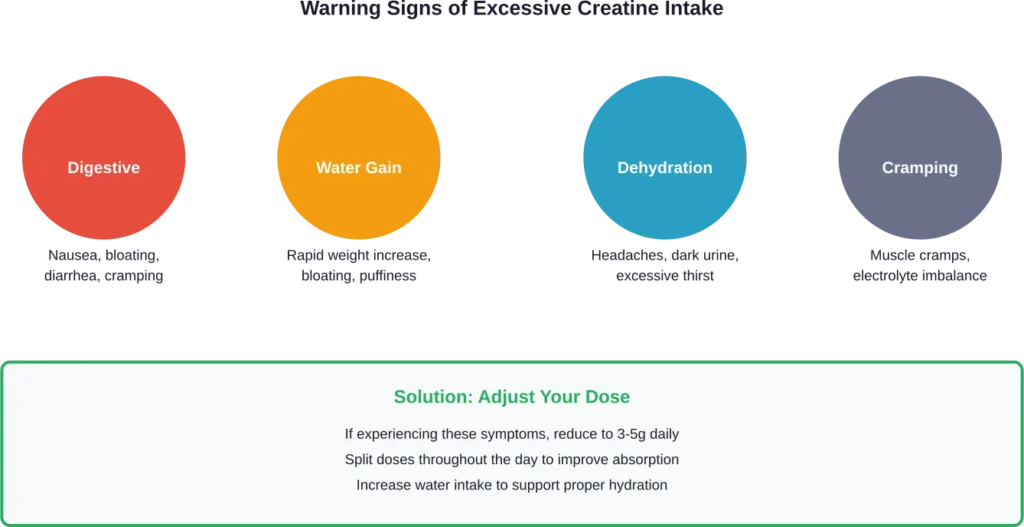
Persistent digestive issues: Occasional bloating happens. But daily nausea, diarrhea, or cramping suggests the dose is too high for your system.
Unexplained weight gain: Rapid weight increase beyond 3-4 pounds in the first week may indicate excessive water retention.
Dehydration symptoms: Headaches, dark urine, or excessive thirst can signal that creatine is pulling too much water into muscles, leaving other tissues undersupplied.
Muscle cramps: While not definitively linked to creatine, some users report increased cramping with high doses. This may relate to electrolyte imbalances from altered fluid distribution.
Is There Such Thing as a Creatine Overdose?
Can someone actually overdose on creatine in the traditional sense?
Real talk: there’s no established lethal dose of creatine in humans. Even extremely high doses in research settings haven’t produced life-threatening toxicity.
But that doesn’t mean mega-dosing is smart. Beyond 10 grams daily, the body can’t effectively use additional creatine. It simply gets broken down and excreted, stressing the digestive system in the process.
One case study published in NDT Plus documented an 18-year-old man who developed acute kidney issues (acute renal failure with nausea, vomiting and stomach ache) while taking creatine for bodybuilding. A kidney biopsy revealed focal tubular injury with dilatation of tubular lumina and flattening of the tubular epithelial cells. However, this case involved high doses combined with other factors, and kidney function improved after stopping supplementation (serum creatinine decreased to 88.4 mmol/L within 25 days).
Isolated cases like this don’t prove creatine causes kidney damage. But they do highlight that excessive supplementation—especially combined with dehydration or other stressors—can potentially cause problems.
How to Use Creatine Safely
Getting the benefits while avoiding side effects comes down to smart supplementation practices.
Start with maintenance dosing: Unless there’s a specific reason to load, beginning with 3-5 grams daily minimizes digestive issues while still building muscle creatine stores.
Stay hydrated: Creatine increases intracellular water content. Drinking adequate fluids prevents dehydration and reduces cramping risk.
Split larger doses: If using a loading protocol, divide the daily amount into 4-5 servings rather than taking it all at once.
Take with food: Consuming creatine with carbohydrates may improve absorption and reduce stomach upset.
Monitor response: Pay attention to how the body reacts. Digestive discomfort or other issues signal the need to adjust dosing.
Consider timing: While timing isn’t critical, many find taking creatine post-workout with a meal works well.
Who Should Avoid High-Dose Creatine
Certain populations should be particularly cautious about creatine supplementation:
- People with diagnosed kidney disease or reduced kidney function
- Those taking medications that affect kidney function
- Individuals with diabetes (creatine can affect blood sugar regulation)
- Anyone with a history of kidney stones
- Those who are chronically dehydrated
For these groups, medical supervision is essential before starting creatine supplementation.
Frequently Asked Questions
Taking 10 grams daily is higher than recommended maintenance doses but unlikely to cause serious harm in healthy individuals. However, it may lead to digestive issues like bloating, nausea, or diarrhea. Most research suggests 3-5 grams daily is optimal for maintaining elevated muscle creatine stores without unnecessary side effects. Doses above 5 grams don’t provide additional performance benefits once stores are saturated.
According to multiple systematic reviews and meta-analyses, including a 2025 study in BMC Nephrology, creatine doesn’t damage kidney function in healthy individuals. It may elevate serum creatinine levels, which can mimic kidney disease on lab tests, but this reflects increased creatine metabolism rather than actual kidney dysfunction. However, people with pre-existing kidney conditions should avoid creatine or use it only under medical supervision.
The earliest signs include digestive discomfort—bloating, stomach cramping, nausea, or diarrhea. These symptoms typically appear within hours of taking an excessive dose. Rapid water weight gain beyond 3-4 pounds in the first week may also indicate too much creatine. If experiencing persistent digestive issues, reducing the dose to 3-5 grams daily usually resolves symptoms.
Digestive side effects from excessive creatine typically resolve within 24-48 hours after reducing the dose or stopping supplementation. Water retention normalizes within a week of discontinuing use. In rare cases where kidney markers were elevated, research shows serum creatinine returns to normal levels within 2-4 weeks after stopping creatine supplementation.
No, loading isn’t necessary. A loading phase (20-25 grams daily for 5-7 days) saturates muscle creatine stores faster, but maintenance dosing (3-5 grams daily) achieves the same saturation in 3-4 weeks. Both approaches result in identical long-term benefits. Loading increases the risk of digestive discomfort, so many people prefer starting with maintenance doses.
The body doesn’t build a tolerance to creatine in the traditional sense. Muscle creatine stores have a saturation point—once reached, additional supplementation doesn’t increase stores further. Some people cycle creatine (taking breaks), but research doesn’t show this improves effectiveness. Continuous supplementation at maintenance doses maintains elevated creatine stores without diminishing returns.
Creatine may interact with medications that affect kidney function, including certain diuretics, NSAIDs, and nephrotoxic drugs. It may also affect blood sugar levels, potentially interacting with diabetes medications. Anyone taking prescription medications should consult a healthcare provider before starting creatine supplementation to assess potential interactions.
The Bottom Line
Taking too much creatine typically results in uncomfortable digestive symptoms rather than dangerous health effects. For most healthy individuals, creatine monohydrate is remarkably safe when used at recommended doses.
The optimal approach? Stick with 3-5 grams daily for maintenance. Skip the loading phase unless there’s a specific competitive reason for rapid saturation. Stay well-hydrated. And pay attention to how the body responds.
Creatine remains one of the most researched and effective supplements for athletic performance. But like any supplement, more isn’t better. The goal isn’t to maximize intake—it’s to find the minimum effective dose that provides benefits without side effects.
If experiencing persistent digestive issues, unexplained lab abnormalities, or concerns about kidney function, consult a healthcare provider. They can assess whether creatine is appropriate and help determine the right dosing strategy for individual needs.