

Quick Summary: Drinking gasoline is extremely dangerous and can cause severe health consequences including chemical pneumonia, organ damage, and death. Even small amounts can be fatal, as gasoline’s vapors easily enter the lungs during ingestion, causing immediate respiratory distress. If someone swallows gasoline, call Poison Control immediately at 1-800-222-1222 and do not induce vomiting, as this increases the risk of lung aspiration.
Gasoline is something most people encounter regularly at the pump. But this common petroleum product is far more dangerous than many realize when it enters the human body.
The question of what happens if someone drinks gasoline isn’t just academic curiosity. According to poison control centers, exposure cases are handled regularly. And it’s what happens after ingestion that poses the greatest threat.
This guide covers the medical facts about gasoline poisoning, the symptoms to watch for, and the critical steps that could save a life.
Why Gasoline Is Toxic to Humans
Gasoline isn’t a single chemical. It’s a complex mixture of petroleum hydrocarbons containing compounds with 5 to 18 carbon atoms, according to the CDC/ATSDR’s Medical Management Guidelines.
These include straight-chain alkanes, branched alkanes, cycloalkanes, olefins, and aromatic hydrocarbons, including benzene, toluene, and xylenes.
Here’s the thing though—each of these components carries its own toxic profile. Benzene is a known carcinogen. Toluene affects the nervous system. And the volatile nature of gasoline means it evaporates rapidly, creating dangerous vapors.
The NIH reports that gasoline and its components are only moderately to mildly toxic at acute doses. But that classification is misleading. The real danger comes from aspiration, not direct toxicity.
The Aspiration Problem
When gasoline enters the mouth, the body’s natural response is to gag and cough. That reflex, meant to protect you, actually creates the primary danger.
During gagging, tiny droplets of gasoline can enter the lungs. This process is called aspiration, and it’s where gasoline poisoning becomes life-threatening.
According to medical research, approximately 15% of hydrocarbon exposures are intentional, causing significant toxicity to essentially all body systems. The remaining 85% are accidental, often limiting exposure because gagging restricts the amount actually swallowed.
Immediate Health Effects of Drinking Gasoline
The moment gasoline touches your mouth and throat, several things happen simultaneously.
First, there’s immediate irritation. The digestive tract wasn’t designed to handle petroleum products. You’ll feel burning sensations in the mouth, throat, and esophagus.
But that’s just the beginning.
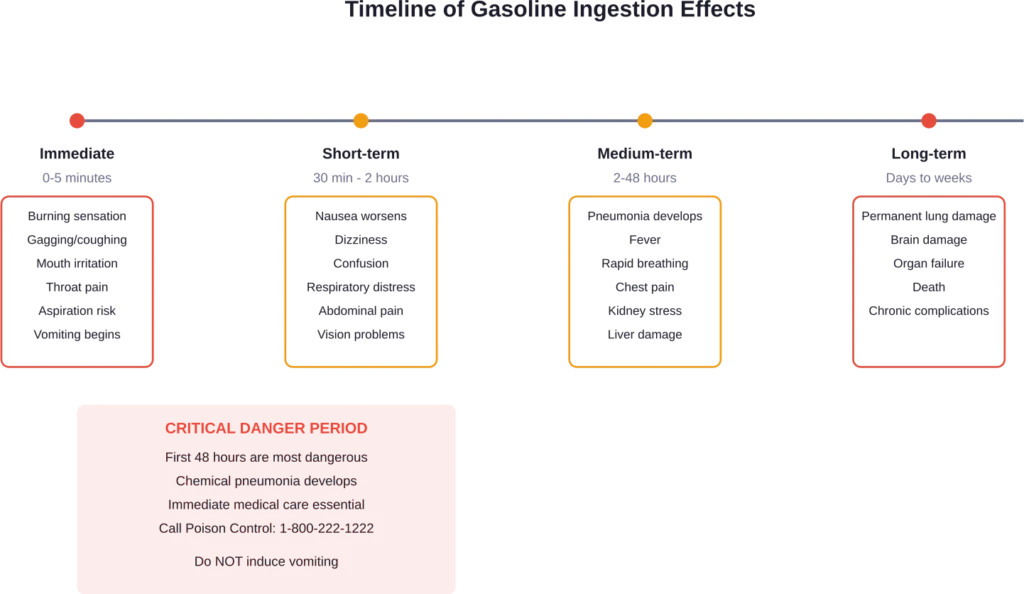
Chemical Pneumonia: The Primary Threat
Chemical pneumonia is the most serious consequence of drinking gasoline. When those aspirated droplets reach the lungs, they cause direct damage to lung tissue.
The Agency for Toxic Substances and Disease Registry explains that gasoline’s low viscosity and high volatility make it particularly prone to causing aspiration pneumonitis.
Medical case studies document this danger clearly. One published case in Cureus described a 64-year-old woman who ingested massive amounts of gasoline. According to medical research, approximately 15% of hydrocarbon exposures are intentional, causing significant toxicity to essentially all body systems.
Symptoms of chemical pneumonia include:
- Coughing and wheezing
- Chest pain and tightness
- Rapid, shallow breathing
- Fever developing within hours
- Bluish skin tone from lack of oxygen
- Confusion and altered mental state
Poison control specialists emphasize that it’s what people do after swallowing gasoline that’s most dangerous. Many instinctively try to vomit, which dramatically increases aspiration risk.
Symptoms of Gasoline Poisoning
Gasoline poisoning manifests through multiple body systems. The symptoms depend on the amount ingested, whether aspiration occurred, and how quickly treatment begins.
Respiratory Symptoms
These appear first and carry the highest mortality risk:
- Difficulty breathing or shortness of breath
- Rapid breathing rate
- Persistent coughing
- Chest pain when breathing
- Gurgling sounds in the lungs
- Blood-tinged sputum
Neurological Symptoms
Gasoline’s volatile compounds affect the nervous system rapidly:
- Dizziness and lightheadedness
- Confusion and disorientation
- Drowsiness or loss of consciousness
- Seizures in severe cases
- Slurred speech
- Loss of coordination
Research on petrol sniffing documents cases of irreversible encephalopathy from chronic gasoline exposure. Those severely affected have poor prognosis despite treatment.
Gastrointestinal Symptoms
The digestive system shows immediate distress:
- Severe nausea and vomiting
- Abdominal pain and cramping
- Diarrhea
- Burning sensation in stomach
- Blood in vomit or stool
Other Physical Symptoms
Additional signs include:
- Vision problems or temporary blindness
- Skin irritation and chemical burns
- Irregular heartbeat
- Low blood pressure
- Kidney damage markers
- Liver function disruption
How Much Gasoline Is Dangerous?
There’s no safe amount of gasoline to ingest. But the dose determines the severity.
According to poison control data, even a small mouthful creates significant risk. The primary danger comes from aspiration during the initial gagging response, not from the amount that reaches the stomach.
Children face higher risk due to their smaller body size. Children get into gasoline most often in the summertime, either through splashes at gas stations or when gasoline is improperly stored in food or drink containers.
One documented case involved a 22-month-old girl who tried to swallow tiki torch fuel that resembled apple juice. These incidents highlight the deadly consequences of improper storage.
| Exposure Amount | Risk Level | Typical Symptoms | Required Action |
|---|---|---|---|
| Splash in mouth (spit out) | Low to Moderate | Mouth irritation, minor nausea | Rinse mouth, call Poison Control |
| Small sip (1-2 mL) | Moderate to High | Gagging, burning, possible aspiration | Immediate Poison Control, monitor breathing |
| Mouthful (15-30 mL) | High | Vomiting, respiratory distress, chemical pneumonia | Emergency room immediately |
| Large amount (>50 mL) | Severe/Life-threatening | Multi-organ damage, coma, death | Call 911, emergency medical care |
What to Do If Someone Drinks Gasoline
The response to gasoline ingestion can determine survival. Quick, appropriate action is critical.
Here’s what medical experts recommend:
Immediate Steps
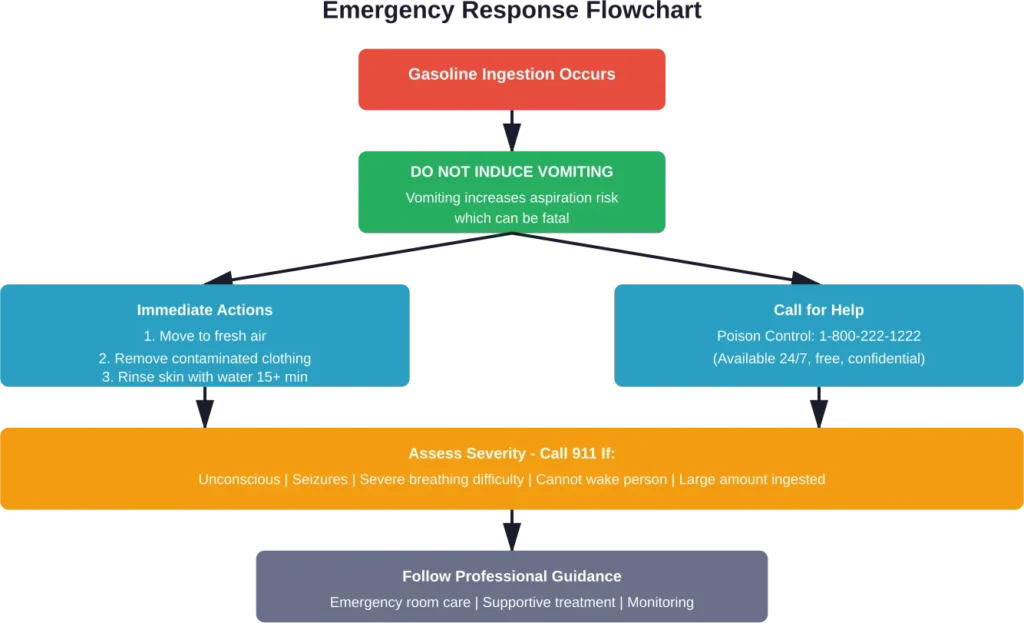
Do NOT induce vomiting. This is the most important rule. Vomiting increases the risk of aspiration, which is more dangerous than the gasoline remaining in the stomach.
Call Poison Control immediately: 1-800-222-1222. This line connects to expert guidance available 24/7, completely free and confidential.
Move to fresh air. If gasoline vapors are present, get to a well-ventilated area immediately. Vapor inhalation adds additional toxicity.
Remove contaminated clothing. If gasoline spilled on skin or clothes, remove everything and rinse the body thoroughly with running water and soap for at least 15 minutes.
Do not eat or drink anything unless specifically instructed by Poison Control or medical personnel.
When to Call 911
Some situations require emergency services rather than just Poison Control:
- The person collapses or loses consciousness
- Seizures occur
- Breathing becomes severely difficult or stops
- Skin turns blue (cyanosis)
- The person cannot be awakened
- Large amounts were ingested
What Medical Professionals Will Do
Emergency treatment for gasoline poisoning focuses on supportive care. According to the CDC/ATSDR’s Medical Management Guidelines, there’s no specific antidote for gasoline poisoning.
Treatment typically includes:
- Oxygen therapy to support breathing
- Monitoring of vital signs and oxygen levels
- Chest X-rays to check for pneumonia
- IV fluids to prevent dehydration
- Medications to control nausea
- In severe cases, mechanical ventilation
- Treatment of specific organ damage as it appears
Most exposures require only supportive care because the gagging reflex limits the amount actually ingested. However, intentional ingestions that bypass this protective response cause significantly worse outcomes.
Long-Term Health Effects
Surviving the initial poisoning doesn’t mean all dangers have passed. Gasoline exposure can cause lasting health problems.
Chronic Respiratory Issues
Chemical pneumonia can lead to permanent lung scarring. Even after recovery, some patients experience:
- Reduced lung capacity
- Chronic bronchitis
- Increased susceptibility to respiratory infections
- Persistent cough
- Exercise intolerance
Neurological Damage
Research documented in the NCBI describes irreversible encephalopathy from chronic gasoline exposure. Brain damage can manifest as:
- Memory problems
- Difficulty concentrating
- Personality changes
- Motor coordination issues
- Cognitive decline
Research on petrol sniffing shows those severely affected have poor prognosis, with many experiencing permanent disability.
Organ Damage
The kidneys and liver process and filter toxins. Heavy gasoline exposure can overwhelm these organs, causing:
- Chronic kidney disease
- Liver function impairment
- Increased cancer risk from benzene exposure
- Cardiovascular complications
Why People Drink Gasoline
Understanding the circumstances helps with prevention.
Accidental Ingestion
Most cases are unintentional. Common scenarios include:
- Siphoning gasoline with the mouth (trying to transfer fuel between containers)
- Children accessing improperly stored gasoline in beverage containers
- Mistaking gasoline for another liquid
- Splashing during refueling that enters the mouth
Poison control specialists emphasize that children encounter gasoline most often during summer months. They get splashed at gas stations or drink it when someone transfers gas to a food or drink container.
Intentional Ingestion
According to medical research, approximately 15% of hydrocarbon exposures are intentional. These include:
- Suicide attempts
- Substance abuse (gasoline sniffing/huffing)
- Psychiatric emergencies
Intentional exposures typically involve larger quantities, causing significantly worse outcomes.
Prevention: Keeping Gasoline Safe
Prevention requires understanding how exposure happens and taking specific protective measures.
Storage Safety
Proper storage prevents most accidental exposures:
- Store gasoline only in approved, clearly labeled containers
- Never use food or beverage containers for gasoline storage
- Keep gasoline in locked areas inaccessible to children
- Store in well-ventilated areas away from living spaces
- Never store gasoline in the home or attached garage
Handling Precautions
When working with gasoline:
- Never siphon gasoline by mouth—use a proper siphon pump
- Work in well-ventilated areas
- Keep children away from fueling areas
- Don’t smoke or create sparks near gasoline
- Wash hands thoroughly after handling
Education
Teaching children about gasoline dangers is critical:
- Explain that gasoline is poisonous
- Show what gasoline containers look like
- Emphasize never touching or tasting unknown liquids
- Keep emergency numbers posted (Poison Control: 1-800-222-1222)
| Prevention Strategy | Effectiveness | Implementation Difficulty | Target Group |
|---|---|---|---|
| Approved storage containers only | Very High | Low | All households |
| Locked storage areas | Very High | Low to Moderate | Families with children |
| Never siphon by mouth | High | Low | All adults |
| Child education programs | Moderate to High | Moderate | Schools, families |
| Clear labeling systems | High | Low | All storage locations |
Medical Myths About Gasoline Poisoning
Several dangerous misconceptions persist about gasoline ingestion.
Myth: Inducing Vomiting Helps
This is the most dangerous myth. Medical authorities universally advise against inducing vomiting. Poison control specialists emphasize that it’s what people do after swallowing gasoline that’s most dangerous.
Vomiting brings gasoline back up through the throat, creating another opportunity for aspiration. The cure becomes worse than the problem.
Myth: Small Amounts Are Safe
There’s no safe amount of gasoline to ingest. Even tiny quantities can cause chemical pneumonia if aspirated. The danger isn’t proportional to the dose in the same way as other toxins.
Myth: Drinking Milk or Oil Neutralizes Gasoline
No home remedy neutralizes gasoline. Adding other substances to the stomach doesn’t reduce toxicity and may complicate medical treatment. The only appropriate response is professional medical guidance.
Myth: Gasoline Poisoning Is Rare
Poison control centers handle gasoline exposure cases regularly, according to poison control data. The frequency might surprise people who assume it’s an unusual occurrence.
Special Populations at Higher Risk
Children
Children face disproportionate risk for several reasons:
- Smaller body size means smaller doses cause greater effects
- Natural curiosity leads to exploration
- Inability to read warning labels
- Higher likelihood of accessing improperly stored gasoline
Poison control data shows children’s exposures peak during summer months when families store gasoline for lawnmowers and other equipment.
Workers
Occupational Safety and Health Administration (OSHA) regulates gasoline exposure in the workplace, with maximum allowable levels of 900 milligrams of gasoline vapor per cubic meter of air (mg/m³), or 300 ppm during an 8-hour workday. Workers in these industries need particular caution:
- Gas station attendants
- Mechanics and automotive workers
- Landscaping professionals
- Industrial workers handling hydrocarbons
Individuals with Substance Abuse Issues
Gasoline huffing represents a significant public health problem in certain communities. Research documents irreversible brain damage in chronic users, with those severely affected showing poor prognosis despite treatment.
Frequently Asked Questions
Survival depends on the amount ingested and whether aspiration occurs. Small amounts with prompt medical care often result in recovery, though chemical pneumonia can develop. Large amounts or delayed treatment can be fatal. According to medical research, most exposures require only supportive care when aspiration is prevented, but 15% of intentional exposures cause severe multi-system toxicity.
Initial symptoms appear immediately—burning, gagging, and nausea start within seconds. However, chemical pneumonia may not fully develop until 2-48 hours after ingestion. This delayed progression makes early medical evaluation critical even if the person initially seems okay. Medical monitoring during the first 48 hours is essential.
Call Poison Control immediately at 1-800-222-1222. Do not induce vomiting. Move the child to fresh air and remove any contaminated clothing. If the child shows severe symptoms (unconsciousness, seizures, severe breathing difficulty), call 911 instead. Keep the child calm and still to minimize the risk of aspiration. Children get into gasoline most often in the summertime.
No, drinking water doesn’t help and may trigger vomiting, increasing aspiration risk. Do not give the person anything to eat or drink unless specifically instructed by Poison Control or emergency medical personnel. The goal is to keep the stomach contents as still as possible to prevent vomiting.
Yes, particularly with chronic exposure or large acute doses. Research documented in the NCBI describes irreversible encephalopathy from chronic gasoline exposure. The volatile compounds in gasoline—especially benzene and toluene—are neurotoxic. Those severely affected have poor prognosis with permanent cognitive impairment, motor problems, and personality changes even with treatment.
Yes, inhaling gasoline vapors can cause toxicity. Short-term inhalation causes dizziness, headaches, and nausea. Chronic exposure may lead to neurological damage. According to the Agency for Toxic Substances and Disease Registry, gasoline’s volatile nature means it releases harmful vapors continuously. Work with gasoline only in well-ventilated areas, and never intentionally inhale the fumes.
Treatment focuses on supportive care since there’s no specific antidote. Medical professionals provide oxygen therapy, monitor vital signs, conduct chest X-rays to check for pneumonia, administer IV fluids, and treat symptoms as they appear. In severe cases, mechanical ventilation may be necessary. The CDC/ATSDR’s Medical Management Guidelines emphasize that preventing aspiration through appropriate initial response is more important than hospital treatment.
Conclusion: Take Gasoline Poisoning Seriously
Gasoline poisoning isn’t something to handle alone or treat casually. The combination of immediate toxicity and delayed chemical pneumonia makes it particularly dangerous.
Remember these critical points:
- Never induce vomiting after gasoline ingestion
- Call Poison Control immediately: 1-800-222-1222
- Chemical pneumonia can develop hours after exposure
- Prevention through proper storage saves lives
- Even small amounts can be dangerous
The good news? Most accidental exposures can be prevented through simple precautions. Store gasoline properly, never use mouth siphoning, and keep children away from fuel storage areas.
If exposure happens, quick appropriate action makes the difference between recovery and tragedy. Keep Poison Control’s number accessible: 1-800-222-1222. It’s free, confidential, and available 24/7.
Gasoline belongs in engines, not bodies. Treat it with the respect its toxicity demands.