
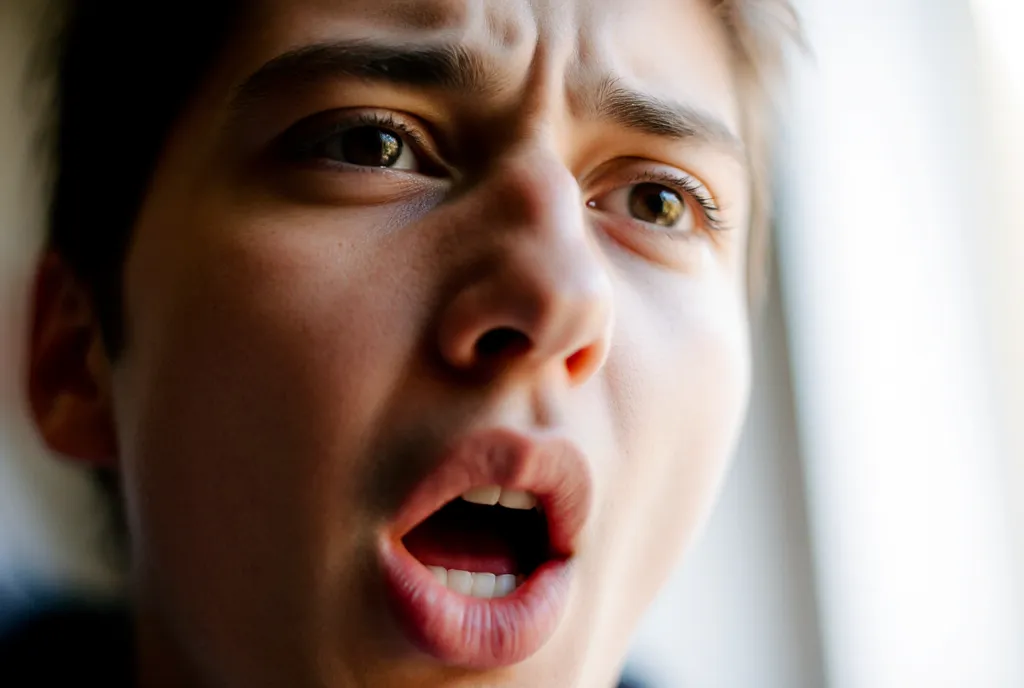
Quick Summary: Yes, you can sneeze with your eyes open, and your eyeballs won’t pop out. Closing your eyes during a sneeze is an automatic reflex that happens involuntarily, but it’s possible to override this reflex with effort. The myth about eyeballs popping out is completely false—your eyes are securely held in place by muscles and tissues.
The schoolyard legend has terrified kids for generations: sneeze with your eyes open, and your eyeballs will shoot right out of your head. It’s a vivid image that’s stuck around for decades.
But here’s the thing—it’s completely false.
While it’s true that your eyes automatically slam shut every time you sneeze, this reflex doesn’t exist to keep your eyeballs from flying across the room. The real reasons are far less dramatic, and the science behind sneezing reveals some fascinating insights about how your body protects itself.
The Autonomic Reflex Behind Eye Closure
When you sneeze, closing your eyes isn’t a conscious decision. It’s an autonomic reflex—meaning it happens automatically without any thought or control from you.
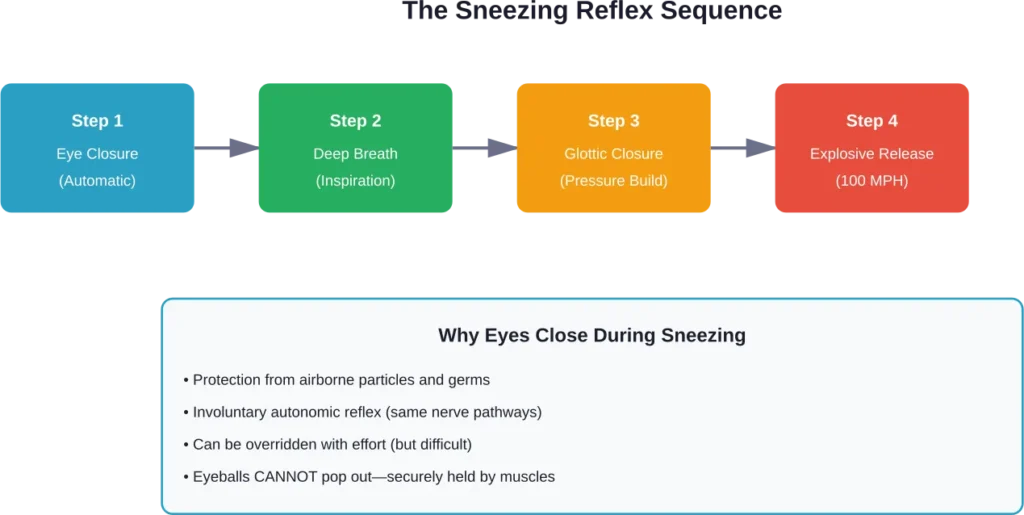
Sneezing follows a specific sequence: eye closure, inspiration, glottic closure, forced expiration with sudden glottic opening, and release of elevated intrathoracic pressure that creates explosive airflow through the nose.
This automatic response is hardwired into your nervous system. The same nerve pathways that trigger the sneeze also send signals to the muscles around your eyes, causing them to contract and close. It’s similar to how your leg kicks when a doctor taps your knee—completely involuntary.
The reflex serves as a protective mechanism. When you sneeze, your body is trying to expel irritants, germs, or particles from your nasal passages. Closing your eyes likely helps protect them from whatever is being forcefully ejected from your nose and mouth at speeds up to 100 miles per hour.
Can You Actually Sneeze With Your Eyes Open?
Yes, it’s possible—just not easy.
Some people have managed to keep their eyes open during a sneeze by physically holding their eyelids up with their fingers. Others have trained themselves to resist the reflex through repeated attempts. But for most people, fighting against this automatic response feels unnatural and requires significant effort.
The difficulty comes from the fact that the eye-closing mechanism is deeply integrated into the sneezing reflex. Your brain sends both signals simultaneously, making it challenging to suppress one while allowing the other to proceed.
That said, even when people succeed in keeping their eyes open, nothing catastrophic happens. Their eyeballs remain firmly in their sockets, completely debunking the old myth.
Why Your Eyeballs Won’t Pop Out
The anatomy of your eye socket makes the popping-out scenario physically impossible under normal circumstances.
Your eyeballs are held in place by six extraocular muscles that control eye movement. These muscles are strong, resilient, and firmly attached to both the eye and the surrounding bone structure. Additionally, connective tissue, fat, and the optic nerve keep everything anchored.
The pressure generated during a sneeze—while significant—isn’t nearly enough to overcome these anatomical safeguards. Medical experts note that even violent sneezing doesn’t create sufficient force to dislodge eyeballs from their sockets.
In extremely rare medical cases, trauma or severe injury can cause eye displacement, but a sneeze alone simply doesn’t generate that level of force.
The Photic Sneeze Reflex: A Related Phenomenon
While we’re on the topic of sneezing reflexes, there’s another fascinating one worth mentioning: the photic sneeze reflex.
Research has found that approximately 24% of people sneeze when suddenly exposed to bright light, particularly sunlight. This condition affects nearly one in four individuals, making it surprisingly common.
Scientists believe this happens due to crossed signals in the nervous system. When bright light enters your eyes, it can inadvertently trigger the nerve pathways responsible for sneezing. The exact mechanism isn’t fully understood, but genetics appear to play a role—if your parents have photic sneezing, chances are higher that you will too.
| Sneeze Myth | Reality |
|---|---|
| Eyeballs pop out if you sneeze with eyes open | False—eyes are securely held by muscles and tissue |
| You can’t sneeze with eyes open | Difficult but possible with effort |
| Your heart stops when you sneeze | False—heart rhythm may change slightly but doesn’t stop |
| Holding in a sneeze is harmless | False—can cause ear damage or ruptured blood vessels |
What Happens If You Hold In a Sneeze?
Now this is where things get genuinely dangerous.
While sneezing with your eyes open is harmless, suppressing a sneeze entirely can cause real medical problems. When you block a sneeze by pinching your nose or closing your mouth, the pressure that would normally be released has nowhere to go.
That trapped pressure can lead to ruptured blood vessels in your eyes, damaged eardrums, or even torn tissue in your throat. According to a case report published by the American Academy of Ophthalmology, a 55-year-old patient experienced a complete whiteout of vision in his right eye after an extremely forceful sneeze, with redness and pain developing the next morning.
The best approach? Let your sneezes happen naturally. Your body designed this reflex for a reason—to expel irritants and protect your airways. Fighting against it does more harm than good.
Frequently Asked Questions
No, this is a complete myth. Your eyeballs are held securely in place by muscles, connective tissue, and the optic nerve. The pressure from a sneeze isn’t nearly strong enough to dislodge them, even if your eyes remain open.
Eye closure during sneezing is an autonomic reflex controlled by the same nerve pathways that trigger the sneeze itself. This involuntary response likely protects your eyes from germs and particles being expelled at high speeds.
No, there’s no danger in sneezing with your eyes open. It’s just difficult to do because the reflex to close your eyes is so strong. Some people hold their eyelids open manually without any negative effects.
The photic sneeze reflex affects about 24% of people and occurs when bright light triggers sneezing. Scientists believe it results from crossed nerve signals in the brain, and the condition appears to have a genetic component.
Yes, suppressing a sneeze can be dangerous. Blocked pressure can cause ruptured blood vessels, damaged eardrums, or torn throat tissue. Always let sneezes happen naturally rather than trying to stop them.
No, your heart doesn’t stop during a sneeze. While the heart rhythm may change slightly due to pressure fluctuations in your chest, the heart continues beating normally throughout the entire sneezing process.
Air expelled during a sneeze can reach speeds of up to 100 miles per hour. This explosive force is why sneezing is such an effective way for your body to clear irritants from your nasal passages.
The Bottom Line
The old myth about eyeballs popping out during an eyes-open sneeze is nothing more than a persistent legend with no basis in anatomy or science. Your eyes are far too well-secured for that to happen.
While keeping your eyes open during a sneeze takes effort due to the automatic reflex, it’s completely safe to do so. The real danger lies in trying to suppress sneezes altogether, which can lead to genuine medical complications.
So the next time someone tells you this old wives’ tale, set the record straight. Sneezing with your eyes open might feel strange and take some practice, but your eyeballs will stay exactly where they belong—safely in your head.