
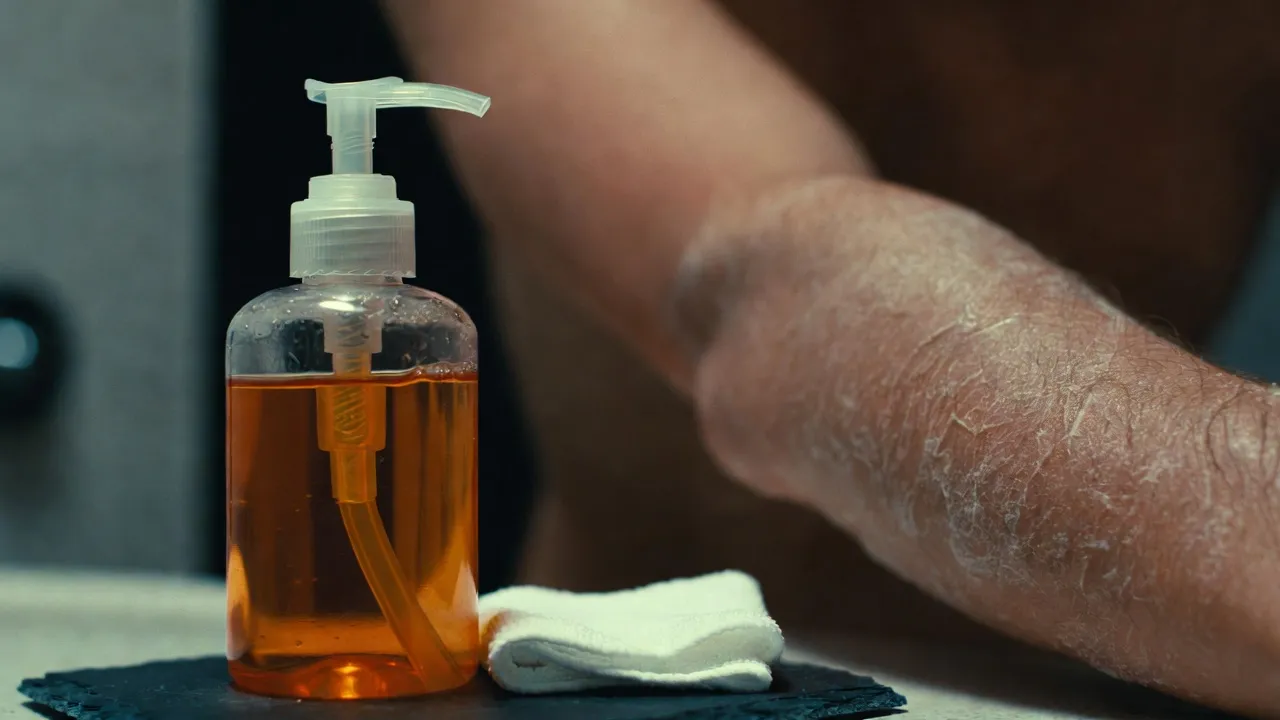
Quick Summary: Using hand soap as body wash occasionally won’t harm you, but regular use can cause dryness and irritation. Hand soaps contain higher surfactant concentrations designed for frequent hand cleaning, while body washes use milder formulas for larger skin surfaces. The skin’s natural pH (around 5) can be disrupted by alkaline hand soaps, potentially weakening the protective barrier.
The shower gel runs out mid-rinse. The only option within reach? That bottle of liquid hand soap sitting by the sink.
Sound familiar? Many people face this exact situation and wonder whether grabbing hand soap for a quick body wash will cause problems. The short answer is nuanced—it depends on frequency, formulation, and your skin type.
Both products clean skin by removing dirt and oils, but they’re engineered for different purposes. Understanding what separates them helps explain what actually happens when hand soap meets body skin.
The Core Difference Between Hand Soap and Body Wash
Hand soap and body wash share the same fundamental cleaning mechanism. According to Yale School of Medicine, soap molecules have a hydrophilic (water-loving) head and a hydrophobic (oil-loving) tail. When applied to skin, these molecules surround dirt and oils, allowing water to rinse everything away.
But the similarities end there.
Hand soaps are formulated for frequent, targeted cleaning of a small surface area. The skin on hands is thicker and more resilient than most body skin. Manufacturers design hand soaps with higher concentrations of surfactants—the active ingredients that create lather and remove oils.
Body washes take a different approach. They’re calibrated for larger surface areas and more delicate skin. The surfactant concentration is typically lower, and formulations include more moisturizing agents like glycerin or oils.
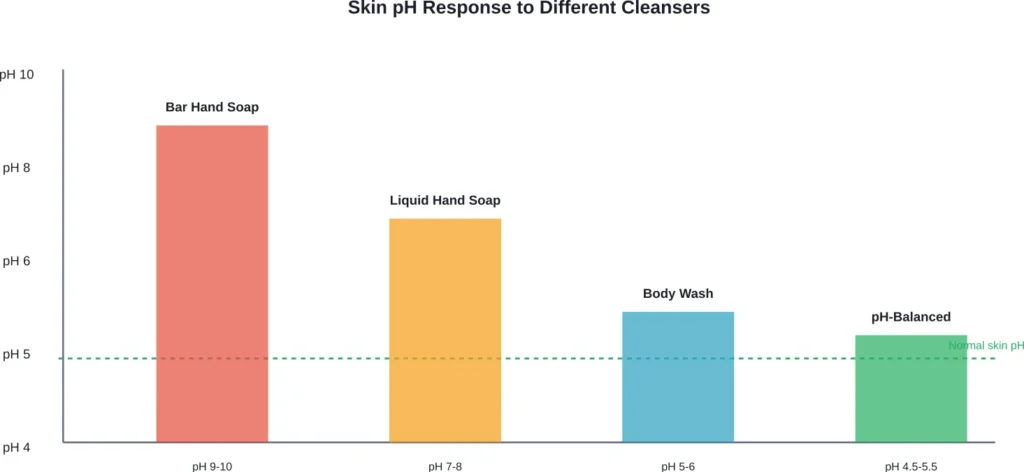
Here’s the thing though—not all hand soaps are created equal. Bar soaps, liquid soaps, and antibacterial formulations each have distinct pH levels and ingredient profiles.
What Actually Happens to Your Skin
Research shows that natural skin surface pH is on average below 5, creating a slightly acidic environment. This acidity helps maintain the skin barrier and protects against harmful bacteria.
Traditional hand soaps often have alkaline pH levels between 9 and 10. When these soaps contact skin, they temporarily raise the pH level, disrupting the protective acid mantle.
According to CDC research on skin hygiene, the stratum corneum (outermost skin layer) consists of approximately 15 layers, which are completely replaced every 2 weeks. Harsh cleansing can compromise this natural renewal process.
| Effect | Occasional Use | Regular Use |
|---|---|---|
| Skin pH disruption | Temporary (returns to normal within hours) | Prolonged elevation, weakened barrier |
| Moisture loss | Minimal, easily corrected with moisturizer | Increased transepidermal water loss (TEWL) |
| Irritation risk | Low for most skin types | Moderate to high, especially sensitive skin |
| Natural oil stripping | Moderate | Excessive, leading to dryness |
Studies on cleanser irritancy found that alkaline-based soaps can cause erythema (redness) and increase transepidermal water loss due to their strong cleansing action. These effects become more pronounced with repeated exposure.
That said, occasional use won’t cause lasting damage for most people. The skin’s natural repair mechanisms typically restore balance within 24 hours.
Formulation Differences That Matter
The ingredients tell the real story. Hand soaps typically contain:
- Higher concentrations of anionic surfactants like sodium lauryl sulfate
- Antibacterial agents (triclosan or benzalkonium chloride in some formulations)
- Minimal emollients or moisturizers
- Fragrances designed for quick dissipation
Body washes counter the drying effects of surfactants with:
- Milder surfactant blends (sodium cocoyl isethionate, disodium laureth sulfosuccinate)
- Moisturizing compounds like glycerin, oils, or butters
- Humectants that attract water to the skin
- pH adjusters to maintain skin-compatible acidity
According to FDA guidance, products marketed as antibacterial soaps are regulated as drugs rather than cosmetics or traditional soaps. These formulations undergo different safety testing protocols.
Research indicates that skin-cleansing systems with predominantly anionic surfactants like sodium lauryl sulfate can result in increased skin dryness and irritation compared to gentler alternatives.
When Hand Soap Won’t Cause Problems
Real talk: millions of people have used hand soap in the shower without incident. Context determines outcome.
Occasional substitution works fine when:
- Emergency situations leave no alternative
- Exposure time is brief (quick rinse rather than extended lathering)
- The hand soap is pH-balanced or contains moisturizing ingredients
- Skin type is normal to oily rather than dry or sensitive
The American Academy of Dermatology notes that proper moisturizing after cleansing can offset mild drying effects. Applying moisturizer within three minutes of bathing, when skin is still damp, maximizes hydration retention.
But wait. Some hand soaps actually work better than cheap body washes. A premium liquid hand soap with glycerin and balanced pH may be gentler than a budget body wash loaded with harsh sulfates.
Risks of Regular Use
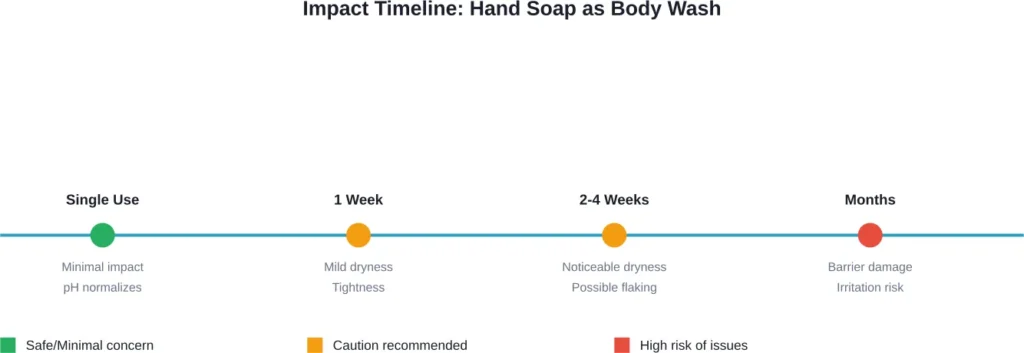
Making hand soap your daily body cleanser creates cumulative effects. The skin on the body is generally thinner and has fewer sebaceous glands than hand skin.
Dermatological research indicates that repeated use of alkaline cleansers can:
- Disrupt the skin microbiome (beneficial bacteria populations)
- Compromise barrier function, leading to increased sensitivity
- Cause excessive dryness, flaking, or itching
- Trigger or worsen conditions like eczema or dermatitis
According to the American Academy of Dermatology’s guidance on hand care, even hands—which are more resilient—can develop dryness, cracking, and irritation from frequent washing. Body skin faces similar or greater vulnerability.
Better Alternatives When Body Wash Runs Out
Several options beat straight hand soap for emergency body cleaning:
Diluted hand soap: Mixing a small amount with water reduces surfactant concentration and mimics gentler formulations.
Bar soap designed for body use: Many bar soaps are pH-balanced and contain moisturizers. Check labels for glycerin or added oils.
Shampoo: Believe it or not, gentle shampoos formulated for daily use often match body wash more closely than hand soap does. Both are designed for larger surface areas and regular contact.
Plain water with a washcloth: For areas without heavy soil, water and mechanical action remove most dirt effectively. Health authorities note that proper handwashing technique—including vigorous scrubbing and thorough rinsing—matters for effective hygiene.
Research on skin barriers indicates that moisturizing is important for maintaining skin health, particularly when the barrier has been compromised to maintain healthy barrier function—especially important after using any drying cleanser.
How to Minimize Damage If You Must Use Hand Soap
Sometimes hand soap is the only option available. Damage control strategies include:
- Limit contact time—don’t let lather sit on skin for extended periods
- Focus hand soap on areas that actually need cleaning (underarms, feet, groin)
- Rinse thoroughly with lukewarm rather than hot water
- Apply a thick moisturizer immediately after patting skin dry
- Choose liquid hand soaps over bar varieties (often less alkaline)
The American Academy of Dermatology notes that moisturizers containing mineral oil or petrolatum and labeled ‘fragrance-free’ and ‘dye-free’ tend to feel less irritating on dry and chapped skin.
Special Considerations for Specific Skin Types
Skin type dramatically affects tolerance levels.
Oily skin: Handles hand soap better than other types due to higher sebum production. May even benefit from stronger cleansing action in the short term.
Dry skin: Most vulnerable to hand soap effects. The lack of natural oils means less buffer against surfactant stripping.
Sensitive skin: Research on cleanser pH and irritation found that sensitive skin shows considerable reaction to products with elevated pH levels, even those marketed for gentle use.
Eczema-prone skin: Hand soap can trigger flares. The National Eczema Association recommends fragrance-free, pH-balanced cleansers specifically formulated for sensitive skin.
Frequently Asked Questions
No, occasional hand soap use won’t cause permanent damage. The skin barrier typically repairs itself within days once irritation stops. However, chronic use can lead to persistent dryness, increased sensitivity, and conditions that require dermatological treatment to fully resolve.
Antibacterial formulations often contain additional active ingredients that can be more irritating to body skin. The FDA has raised concerns about long-term antibacterial soap use affecting skin microbiome balance. For body washing, these extra ingredients provide minimal benefit since regular soap removes bacteria effectively through mechanical action.
It depends. The pH disruption from alkaline hand soap can alter skin conditions enough to trigger breakouts in some people. Paradoxically, the strong degreasing action might temporarily improve acne-prone skin by removing excess oil—but this typically backfires as skin overproduces sebum to compensate for dryness.
Most people notice improvement within 3-7 days of discontinuing hand soap and using appropriate moisturizers. Complete barrier restoration takes approximately 2 weeks—the time required for full stratum corneum renewal, according to CDC research on skin hygiene.
Some premium hand soaps formulated with pH balancers, glycerin, and moisturizing oils approach body wash in gentleness. Check labels for pH 5-7, glycerin in the first five ingredients, and absence of harsh sulfates. That said, these products cost more than purpose-designed body washes, making the substitution economically questionable.
Yes. Research on hard water and cleansers indicates that hard water can affect the efficacy and irritancy profile of surfactant-based cleansers on sensitive skin. Soft water allows more complete rinsing and reduces this compounding factor.
This substitution works better in reverse. Body wash is gentler, which makes it suitable for hand cleaning. The tradeoff is reduced cleaning power—body wash may require more product or scrubbing time to remove heavy soil from hands. Cost per use also tends to be higher with body wash.
The Bottom Line
Here’s what it comes down to: hand soap will clean your body, but your skin pays a price when it becomes a regular habit.
The formulation differences aren’t just marketing—they reflect real functional distinctions between products designed for different purposes. Hand soap’s higher surfactant concentration and alkaline pH serve hands well but challenge the thinner, more delicate skin covering the rest of the body.
Occasional emergency use won’t cause lasting problems for most people. But making hand soap your go-to body cleanser risks cumulative damage that manifests as dryness, irritation, and weakened skin barrier function.
The smart play? Keep body wash stocked, or choose multipurpose products specifically formulated for both hand and body use. When hand soap is the only option, minimize contact time and follow up with serious moisturizing.
Taking care of skin means matching products to their intended purpose—and understanding that “soap is soap” is an oversimplification that doesn’t hold up under scrutiny.