

Quick Summary: Taking digestive enzymes after eating can still provide benefit, though they work most effectively when taken 15-30 minutes before meals. Post-meal supplementation allows enzymes to assist with ongoing digestion in the stomach and small intestine, potentially reducing bloating, gas, and discomfort. The timing matters less than consistency for individuals with diagnosed enzyme deficiencies.
Here’s a common scenario: dinner was delicious, but halfway through, that familiar heaviness sets in. Bloating starts. Discomfort builds. Then someone remembers the bottle of digestive enzymes sitting in the cabinet.
But wait—is it too late? Does taking them after eating actually do anything?
The short answer: yes, digestive enzymes can still help even after meals. But the longer answer involves understanding how these supplements work, when they’re most effective, and what happens in the digestive system when timing varies.
Understanding How Digestive Enzymes Function
Digestive enzymes are proteins that break down food into smaller molecules the body can absorb. The pancreas naturally produces these enzymes, along with contributions from the stomach and small intestine.
Three main types handle different nutrients:
- Proteases break down proteins into amino acids
- Lipases split fats into fatty acids and glycerol
- Amylases convert carbohydrates into simple sugars
According to the FDA, dietary supplements containing enzymes are classified as dietary ingredients intended to supplement the diet. The body releases these enzymes at specific points during digestion—some in the mouth, more in the stomach, and the majority in the small intestine.
When someone takes an enzyme supplement, they’re essentially adding reinforcements to this natural process.
What Actually Happens When Taking Enzymes After Eating
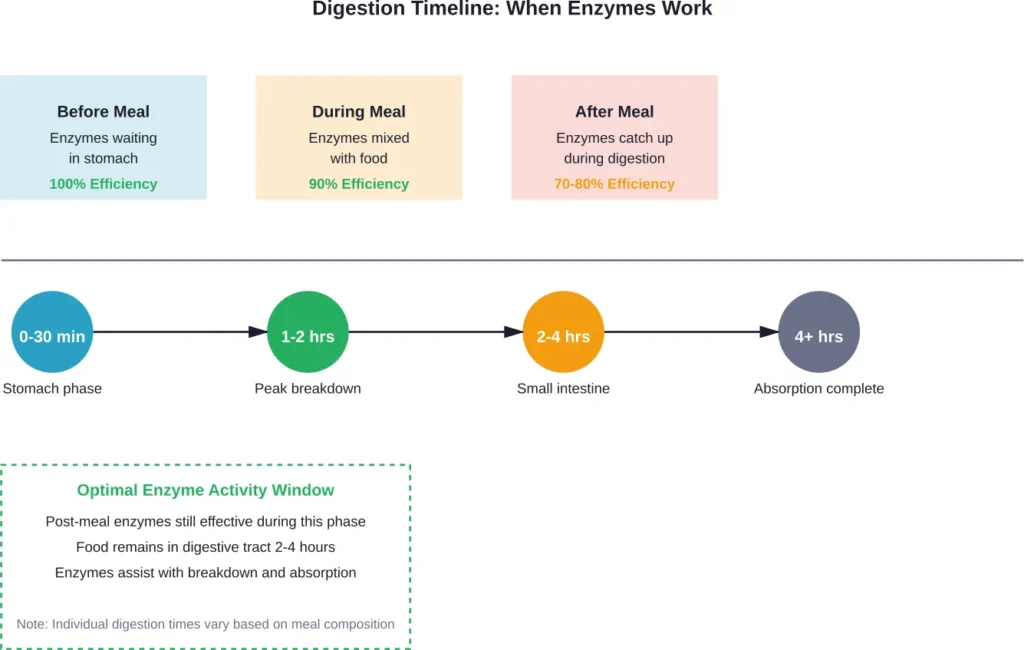
Digestion isn’t a quick process. Food typically stays in the stomach for two to four hours before moving to the small intestine, where most nutrient absorption occurs.
Taking digestive enzymes after eating means they arrive when food is already in the stomach undergoing initial breakdown. They can still join the digestive process and assist with breaking down remaining food particles.
Here’s the thing though—timing affects efficiency. Enzymes taken before meals get a head start, already present when food arrives. Post-meal enzymes need to catch up with a process already underway.
Digestive organs undergo physiological changes after meals, with enzyme secretion peaking at different times depending on food composition. Supplemental enzymes entering later still participate in this process, particularly during the small intestine phase where most digestion happens.
The Efficiency Question: Before vs. After
Does timing really make that much difference? For most people, yes—but the gap isn’t as dramatic as some marketing suggests.
Taking enzymes 15 to 30 minutes before eating provides maximum efficiency. The enzymes are ready and waiting when food arrives, immediately beginning their work on breaking down proteins, fats, and carbohydrates.
Post-meal enzymes face a different environment. Food has already started mixing with stomach acid and natural enzymes. Supplemental enzymes need to integrate into this partially-processed mixture.
That said, digestion isn’t instant. The stomach doesn’t empty immediately. For people with conditions affecting enzyme production, post-meal supplementation can still provide meaningful support during the hours food spends in the digestive tract.
Who Benefits Most from Enzyme Supplements
Not everyone needs supplemental digestive enzymes. The body produces them naturally in sufficient quantities for most people.
Certain conditions, however, create genuine enzyme deficiencies:
Exocrine pancreatic insufficiency (EPI) occurs when the pancreas fails to produce enough enzymes for proper digestion. According to gastroenterology experts, EPI causes maldigestion of nutrients, leading to symptoms like postprandial abdominal discomfort and nutrient deficiencies.
Cystic fibrosis affects pancreatic enzyme production. Research shows that patients with CF often experience steatorrhoea despite taking supraphysiological enzyme dosages, partly due to duodenal pH issues affecting enzyme function.
Chronic pancreatitis damages pancreatic tissue over time, reducing enzyme output. These patients typically require prescription-strength enzyme replacement.
For people with these diagnosed conditions, enzyme timing matters less than consistent use. The supplements provide enzymes the body can’t produce sufficiently on its own.
Temporary Digestive Discomfort vs. Medical Conditions
Many people take digestive enzymes for occasional bloating, gas, or discomfort after large meals. This differs significantly from medical enzyme deficiencies.
Occasional digestive upset usually stems from eating too quickly, consuming hard-to-digest foods, or simply overeating. Enzymes might help break down food more efficiently, potentially reducing symptoms.
But here’s the reality: for people with normal pancreatic function, the body already produces adequate enzymes. Supplementation might provide marginal benefit.
The National Center for Complementary and Integrative Health has documented that while enzymes like bromelain are promoted for various purposes, evidence supporting their use varies considerably depending on the condition and the specific enzyme.
| Condition Type | Natural Enzyme Production | Supplement Benefit | Timing Importance |
|---|---|---|---|
| Diagnosed EPI | Severely reduced | High – medically necessary | Moderate – consistency matters most |
| Chronic pancreatitis | Progressively declining | High – often prescribed | Moderate – regular use essential |
| Cystic fibrosis | Significantly impaired | High – critical for nutrition | Moderate – dosage more critical than exact timing |
| Lactose intolerance | Lactase deficiency only | Moderate – specific to dairy | High – must be present when consuming dairy |
| Occasional bloating | Normal | Low to moderate | Low – may or may not help |
| General wellness | Normal | Minimal – not typically needed | Low – questionable necessity |
Potential Benefits of Post-Meal Enzyme Supplementation
So what actually happens when someone takes enzymes after eating? Several potential benefits exist, though individual results vary.
Reduced bloating and gas. Even when taken after meals, enzymes can help break down complex carbohydrates that might otherwise ferment in the intestines, producing gas and discomfort.
Decreased heaviness. That overly-full feeling after large meals sometimes stems from slow digestion. Additional enzymes might speed the breakdown process, though the effect is typically modest for people with normal pancreatic function.
Better nutrient absorption. For individuals with genuine enzyme deficiencies, post-meal supplementation still improves nutrient breakdown and absorption compared to no supplementation at all.
Symptom relief for food intolerances. Specific enzymes targeting particular nutrients—like lactase for dairy or alpha-galactosidase for beans—can reduce symptoms when taken shortly after consuming trigger foods.
Real talk: these benefits are most pronounced in people with diagnosed deficiencies. For those with normal digestion, the effects might be subtle or negligible.
Understanding the Limitations
Digestive enzymes aren’t a cure-all for every digestive complaint. Several important limitations apply.
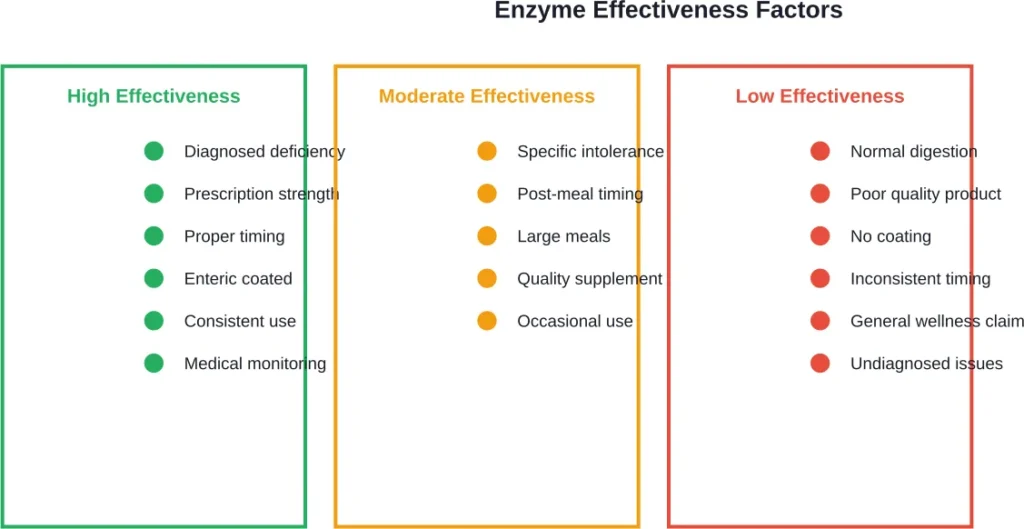
First, most people don’t need them. The pancreas produces enzymes efficiently without supplementation. Taking extra enzymes when the body already makes plenty might not provide noticeable benefit.
Second, post-meal timing reduces efficiency. While enzymes can still work after eating, they function best when present before or during meals. Someone consistently taking enzymes post-meal might not experience the same benefit as proper pre-meal timing.
Third, quality and formulation matter enormously. Enzyme supplements vary widely in potency, composition, and enteric coating. Some survive stomach acid better than others. Not all products deliver enzymes effectively to the small intestine where most digestion occurs.
Fourth, they don’t address root causes. Chronic digestive issues deserve proper medical evaluation. Relying on enzyme supplements might mask symptoms of conditions requiring different treatment.
When Enzymes Shouldn’t Be Used
Certain situations call for avoiding digestive enzyme supplements entirely.
People with acute pancreatitis should not take enzymes without medical supervision. The inflamed pancreas needs rest, and supplementation requires careful medical management.
Those with known allergies to pork or other animal products need to check enzyme sources carefully. Many supplements derive from animal pancreatic tissue.
Anyone taking medications should consult healthcare providers before adding enzyme supplements. Potential interactions exist, particularly with drugs affecting digestion or absorption.
Pregnant or nursing individuals should avoid supplements unless specifically recommended by their healthcare provider.
Supporting Digestion Naturally
Beyond supplements, several approaches support healthy digestion without enzymes.
Eating slowly allows natural enzymes time to work. Chewing thoroughly breaks food into smaller pieces, giving enzymes more surface area to act upon.
Staying hydrated helps maintain proper digestive function. Water assists with breaking down food and moving it through the digestive tract.
Including naturally enzyme-rich foods provides digestive support. Pineapple contains bromelain, papaya has papain, and fermented foods offer probiotics that aid digestion.
Managing stress matters more than many realize. Stress affects digestive function through the gut-brain connection, potentially slowing enzyme secretion and digestive motility.
Regular physical activity supports healthy digestion by promoting gut motility and reducing bloating.
Making Informed Decisions About Enzyme Supplements
For someone considering digestive enzymes, several questions deserve honest answers.
Do symptoms suggest a genuine enzyme deficiency, or are they occasional digestive upset? Chronic malabsorption, unexplained weight loss, or persistent digestive issues warrant medical evaluation before starting supplements.
Has a healthcare provider diagnosed an enzyme-related condition? Prescription enzymes differ significantly from over-the-counter supplements in potency and regulation.
What’s the timing strategy? While post-meal enzymes can help, consistent pre-meal timing provides better results for most people.
Is the supplement quality verified? Third-party testing, proper enteric coating, and reputable manufacturers matter when choosing products.
Are expectations realistic? Enzymes aren’t miracle workers. They support digestion but don’t fix poor dietary habits or underlying health conditions.
Frequently Asked Questions
Yes, enzymes can still provide some benefit when taken an hour after eating, though effectiveness decreases as time passes. Food remains in the stomach for two to four hours, so enzymes taken within that window can still assist with breakdown and absorption. However, earlier timing produces better results.
It depends on the underlying reason for taking them. People with diagnosed enzyme deficiencies like EPI typically need enzymes with every meal and snack. Those using enzymes occasionally for digestive comfort can take them as needed, though consistent timing produces more predictable results.
Digestive enzymes begin working within minutes of reaching the stomach or small intestine. Most people notice effects within 30 minutes to two hours if they’re going to experience benefit. The complete digestive process takes several hours, with enzymes working throughout that period.
Generally speaking, digestive enzymes are well-tolerated, but some people experience side effects including nausea, diarrhea, abdominal cramping, or allergic reactions. High doses might cause more pronounced effects. Anyone experiencing persistent side effects should discontinue use and consult a healthcare provider.
For people with diagnosed deficiencies, long-term enzyme supplementation under medical supervision is both safe and necessary. For those with normal pancreatic function taking enzymes for occasional symptoms, long-term use hasn’t been extensively studied. Some practitioners suggest the body might reduce natural enzyme production with prolonged unnecessary supplementation, though scientific evidence on this mechanism remains limited.
Digestive enzymes are proteins that break down food into absorbable nutrients. Probiotics are live microorganisms that support gut health by balancing intestinal bacteria. They serve different functions—enzymes aid digestion directly, while probiotics support the gut environment. Some people benefit from both, but they work through entirely different mechanisms.
Storage requirements vary by product. Most shelf-stable enzyme supplements don’t require refrigeration, but some probiotics and certain enzyme formulations maintain potency better when refrigerated. Always follow manufacturer storage instructions to ensure product effectiveness.
The Bottom Line on Post-Meal Enzyme Timing
Taking digestive enzymes after eating can still provide benefit, particularly for people with diagnosed enzyme deficiencies. The supplements join the digestive process already underway, assisting with food breakdown during the hours it spends in the stomach and small intestine.
That said, timing matters. Pre-meal supplementation—typically 15 to 30 minutes before eating—allows enzymes to be present and ready when food arrives, maximizing effectiveness.
For most people with normal pancreatic function, digestive enzyme supplements provide minimal benefit regardless of timing. The body produces adequate enzymes naturally. Persistent digestive issues deserve medical evaluation rather than self-treatment with supplements.
Those considering enzyme supplements should focus on quality products, consistent timing, and realistic expectations. And anyone with diagnosed conditions affecting enzyme production should work closely with healthcare providers to determine appropriate supplementation strategies.
So yes, taking digestive enzymes after eating can help—just not quite as effectively as taking them before. But for the right person with the right condition, even post-meal enzymes beat no enzymes at all.