
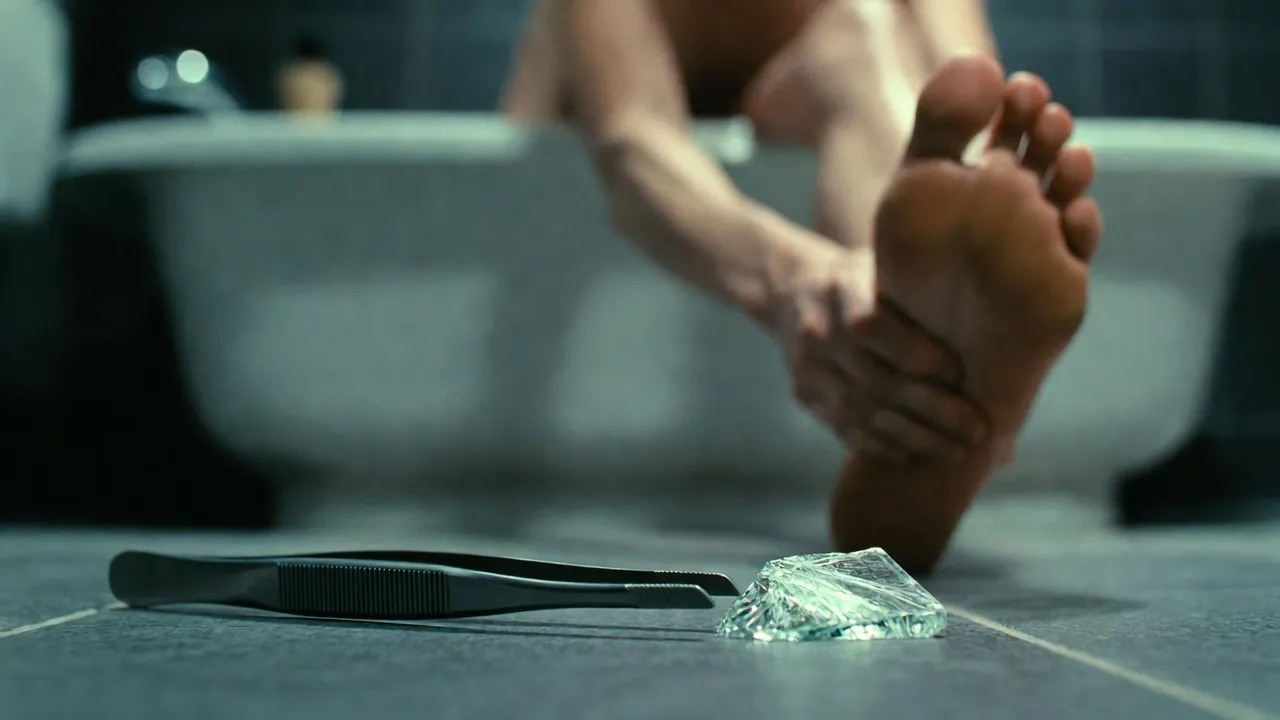
Quick Summary: Leaving glass in your foot can lead to infection, chronic pain, delayed wound healing, and complications even decades later. Medical research shows retained glass fragments occur in 7-15% of emergency department wounds and can cause symptoms after 40+ years due to migration or inflammation. Seek medical attention within 12 hours if you cannot remove the glass, experience swelling, see signs of infection, or have deep embedded fragments.
Stepping on broken glass ranks among the most common household injuries. The sharp pain hits instantly, but what happens next depends entirely on whether that glass fragment stays embedded in your foot.
According to research published on PubMed, glass-related wounds comprise 13% of traumatic wounds, and glass is the most commonly retained foreign body in the human body, accounting for 53% of foreign body-related legal claims. That’s not a statistic to ignore.
Here’s the thing though—many people assume small glass pieces will just “work their way out.” Medical evidence tells a very different story.
The Medical Reality of Retained Glass Fragments
According to medical literature, retained foreign bodies are found in 7% to 15% of wounds in emergency departments, and up to 38% are missed on initial physician evaluation. The foot is the most frequently injured body part, accounting for 39.3% of foreign body injuries in a study of 377 patients.
Glass doesn’t behave like wood splinters. It’s inert, meaning it won’t dissolve or break down naturally in your body. And unlike your immune system’s ability to push out organic materials, glass fragments tend to stay put—or worse, migrate deeper into surrounding tissue.
Medical case reports document glass fragments remaining embedded for over 40 years before causing sudden symptoms. One study published in PMC described a patient whose retained glass caused pain and complications four decades after the initial injury.
Immediate Risks: What Happens in the First 12 Hours
According to emergency medicine physicians at University of Utah Health, the infection risk increases significantly if wounds aren’t treated within 12 hours of injury. This narrow window matters.
When glass breaks the skin barrier, it creates an entry point for bacteria. The wound track—especially in the foot where pressure and movement are constant—becomes an ideal environment for bacterial growth.
Symptoms requiring immediate medical attention include:
- Inability to remove the glass after initial attempts
- Swelling around the wound site
- Increasing redness spreading from the injury
- Warmth or tenderness to touch
- Inability to move toes normally
- Visible glass embedded deep in tissue
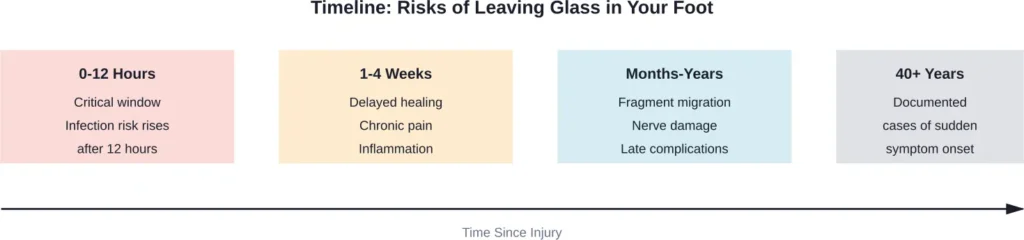
Long-Term Complications: Beyond the Initial Injury
The research is clear: retained glass fragments cause numerous complications well beyond the initial puncture wound.
Infection and Abscess Formation
Glass lodged in soft tissue creates a persistent source of inflammation. The body recognizes the foreign material and mounts an immune response, but it can’t eliminate what it can’t break down.
This ongoing inflammatory process increases infection risk. Medical case reports document instances where infections developed months after the initial injury due to retained foreign bodies.
Delayed Wound Healing
According to medical literature on foreign body injuries, retained glass interferes with normal tissue repair. The wound may appear to heal superficially while glass remains embedded beneath, preventing complete closure and proper tissue regeneration.
Chronic Pain and Nerve Damage
Glass fragments can migrate within soft tissue due to repeated pressure and movement—particularly problematic in feet that bear weight daily. This migration can damage nerves, blood vessels, and tendons.
Research published in PMC documents cases where patients experienced sudden pain onset decades after injury due to repeated microtrauma causing glass fragments to shift position.
Why Glass Is Especially Problematic
Not all foreign bodies behave the same way. Glass presents unique challenges:
| Characteristic | Impact on Body | Clinical Significance |
|---|---|---|
| Chemically inert | Won’t dissolve or degrade | Remains indefinitely if not removed |
| Sharp edges | Cuts tissue during migration | Causes ongoing trauma and pain |
| Radiopaque | Visible on X-rays | Detectable but often missed initially |
| Small size | Difficult to locate and extract | May require surgical intervention |
Studies show glass is radiopaque enough to appear on conventional X-rays, with sensitivity rates of 87.5% for detection of metal foreign bodies in porcine models. But here’s the problem: not all glass wounds get X-rayed initially, especially when fragments appear small.
When Professional Medical Care Is Non-Negotiable
Cleveland Clinic physicians emphasize specific situations requiring immediate medical attention. Don’t attempt home removal if:
- Glass is embedded deeper than surface level
- The wound is larger than a minor puncture
- Bleeding doesn’t stop with direct pressure
- The glass broke off during removal attempts
- Signs of infection develop (redness, warmth, pus, fever)
- Tetanus vaccination status is uncertain
According to University of Utah Health emergency physicians, urgent care facilities can handle most glass removal cases effectively. But wait—deep tissue involvement may require emergency department evaluation and possible surgical extraction.
The Tetanus Factor
The CDC’s clinical guidance for wound management emphasizes tetanus risk with puncture wounds. Glass injuries create the exact type of wound environment—deep, potentially contaminated—where tetanus bacteria can thrive.
Tetanus vaccination should be current. For those uncertain about vaccination status, medical evaluation becomes even more critical.
What Actually Works for Safe Removal
For superficial glass fragments visible at the skin surface, home removal is possible with proper technique:
- Wash hands thoroughly with soap and water
- Clean the wound area with soap and warm water
- Sterilize tweezers using rubbing alcohol
- Use good lighting to visualize the glass clearly
- Grasp the glass firmly and pull straight out
- Clean the wound again after removal
- Apply antibiotic ointment and bandage
Soaking the foot in warm water with 1-2 tablespoons of Epsom salts, baking soda, or hydrogen peroxide for 20 minutes may help draw glass out. This approach may be effective for superficial fragments.
Real talk: if the glass isn’t easily visible and accessible, stop trying. Repeated attempts push fragments deeper and increase tissue damage.
The Bottom Line on Leaving Glass in Your Foot
Medical evidence consistently shows that retained glass fragments don’t resolve on their own. The “wait and see” approach carries genuine risks—from infection rates of 7-15% to complications emerging decades later.
Glass won’t dissolve. It won’t be absorbed. And the body’s natural processes won’t eliminate it.
The 12-hour window matters. Infection risk climbs significantly after that point, and delayed treatment complicates outcomes.
When in doubt, seek medical evaluation. The complications from retained glass—chronic pain, infection, nerve damage, surgical intervention months or years later—far outweigh the inconvenience of proper medical assessment and removal.
Professional removal is straightforward when done early. Waiting turns a simple procedure into a complex problem.
Frequently Asked Questions
No. Glass is chemically inert and won’t dissolve or be absorbed by the body. Medical research shows glass fragments can remain embedded for 40+ years, causing complications decades after the initial injury. The body cannot naturally expel glass like it might with organic materials.
There’s no safe timeframe. While some retained glass remains asymptomatic for years, medical literature documents cases where fragments cause sudden symptoms after decades due to migration, repeated microtrauma, or inflammatory responses. Infection risk is highest in the first 12 hours but complications can emerge at any time.
Yes. Studies show conventional X-rays detect glass foreign bodies with approximately 87.5% sensitivity. Glass is radiopaque enough to appear on standard radiographs, making X-ray imaging a valuable diagnostic tool when glass retention is suspected.
Watch for increasing redness spreading from the wound, swelling, warmth to touch, persistent or worsening pain, pus or drainage, red streaks extending up the foot or leg, and fever. These signs indicate infection requiring immediate medical attention.
Soaking is safe for superficial glass near the skin surface and may help draw small fragments closer for easier removal. Use warm water with Epsom salts, baking soda, or hydrogen peroxide for 20 minutes. However, soaking won’t remove deeply embedded glass—medical intervention is necessary for deep fragments.
Yes. Glass fragments can migrate within soft tissue due to repeated pressure, movement, and weight-bearing activity. Research documents cases where glass moved from original injury sites, damaging nerves, blood vessels, and surrounding tissue during migration.
Surgical removal becomes necessary when glass is embedded deep in tissue, located near nerves or blood vessels, too small to locate without imaging guidance, or has caused infection or abscess formation. A retrospective study of 377 patients with penetrating foreign body injuries found the foot (39.3%) and hand (37.9%) were the most frequently injured body parts.