
Quick Summary: An overdose occurs when a toxic amount of a substance—drugs, alcohol, or medication—overwhelms the body’s ability to function. Opioid overdoses slow or stop breathing by depressing the central nervous system, leading to oxygen deprivation in the brain and vital organs. Naloxone can reverse opioid overdoses if administered quickly, and calling 911 immediately is critical for survival.
Overdose happens when the body encounters more of a substance than it can safely process. This can involve prescription medications, illicit drugs, alcohol, or even over-the-counter medicines like Tylenol. The consequences range from mild discomfort to life-threatening emergencies.
According to the CDC, drug overdose is now the leading cause of accidental death in the United States, with more than 1,000 emergency department visits daily related to opioid misuse alone. Understanding what happens during an overdose—and knowing how to respond—can literally save a life.
What Actually Happens During an Overdose
When someone overdoses, their body becomes overwhelmed by a toxic concentration of one or more substances. The specific effects depend on what was taken, how much, and the person’s individual physiology.
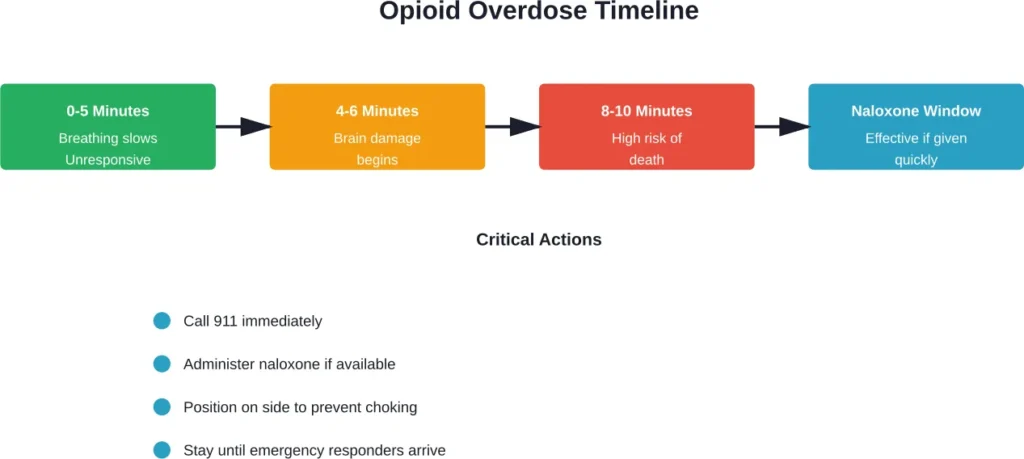
For opioid overdoses specifically, the drugs bind to receptors in the brain and central nervous system. This creates a cascade of dangerous effects. Breathing slows dramatically or stops altogether. Heart rate drops. The person loses consciousness and becomes unresponsive to stimulation.
Here’s the thing though—when breathing stops or becomes too shallow, oxygen can’t reach the brain and vital organs. Brain damage can begin within minutes of oxygen deprivation. Without intervention, death follows.
Other substances cause different reactions. Stimulant overdoses might trigger seizures, heart attacks, or stroke. Alcohol overdose can lead to vomiting while unconscious, causing choking. Paracetamol (acetaminophen) overdose might not show immediate symptoms but can cause severe liver damage within 24-48 hours.
Recognizing the Warning Signs
Spotting an overdose early dramatically increases survival chances. But the symptoms vary depending on the substance involved.
Opioid Overdose Signs
According to the National Institute on Drug Abuse, opioid overdose presents with distinctive symptoms. The person becomes unconscious or extremely difficult to wake. Their pupils constrict to pinpoints. Breathing becomes very slow, shallow, or stops completely.
Other indicators include:
- Limp body with no muscle tone
- Pale or clammy skin
- Purple or blue lips and fingernails
- Vomiting or gurgling sounds
- Faint or absent heartbeat
- Complete inability to speak or respond
Real talk: if someone won’t wake up and their breathing looks wrong, treat it as an overdose. Better to overreact than wait too long.
Other Drug Overdose Symptoms
Stimulant overdoses present differently—agitation, seizures, chest pain, elevated heart rate, and extreme body temperature. Alcohol overdose causes confusion, vomiting, seizures, slow breathing, and unconsciousness.
Medication overdoses vary widely. Some cause immediate symptoms. Others, like paracetamol, might seem minor initially but cause devastating organ damage later.
What to Do If Someone Overdoses
The CDC emphasizes that bystanders can prevent overdose deaths with the right actions. Speed matters.
Call 911 immediately. Even if someone wakes up after naloxone, they need emergency medical evaluation. Overdose symptoms can return or worsen, especially with long-acting opioids.
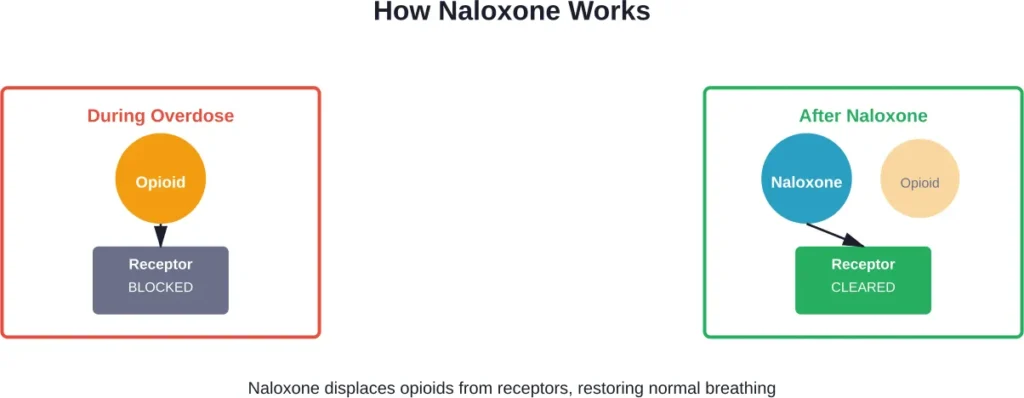
If opioid overdose is suspected and naloxone is available, administer it right away. Naloxone is an opioid antagonist that rapidly reverses overdose effects by blocking opioid receptors. It’s available as a nasal spray or injection and is safe to give—it won’t harm someone who hasn’t taken opioids.
| Action | When | Why It Matters |
|---|---|---|
| Call 911 | Immediately upon suspecting overdose | Professional care prevents death and manages complications |
| Give naloxone | As soon as available for opioid overdose | Can be administered and works to reverse overdose effects quickly |
| Position on side | If unconscious but breathing | Prevents choking on vomit |
| Tilt head back, lift chin | To keep airway open | Maintains oxygen flow to brain |
| Stay with person | Until help arrives | Monitor changes, provide repeat naloxone if needed |
Don’t try to make the person vomit. Don’t give them food, drinks, or other substances. Don’t put them in a cold shower. These actions waste precious time and can cause additional harm.
Keep the person’s airway open by tilting their head back and lifting their chin. If they’re breathing, position them on their side in the recovery position to prevent choking if they vomit.
The Role of Naloxone in Saving Lives
Naloxone has been used for over 50 years as an opioid antidote. According to research published in StatPearls, it works as a competitive antagonist at opioid receptors, essentially kicking opioids off those receptors and reversing their effects.
The medication is available over-the-counter in most states. Anyone can carry it, and no special training is required to administer the nasal spray formulation. Pharmacists can provide instructions on proper use.
Naloxone can be administered and work to reverse overdose effects quickly. But here’s what many people don’t realize: its effects are temporary. The medication’s effects last only 30 to 90 minutes, while many opioids remain in the body longer than that. That’s why emergency medical care is absolutely essential, even when naloxone successfully revives someone.
Some overdoses, particularly those involving synthetic opioids like fentanyl, may require multiple doses of naloxone. The CDC recommends having at least two packages available.
Who’s at Highest Risk
Certain factors dramatically increase overdose risk. People taking high doses of prescription opioids for chronic pain face elevated danger, particularly when combined with other medications that depress breathing.
According to medical research, mixing substances creates unpredictable interactions. Opioids combined with alcohol, benzodiazepines, or other sedatives amplify respiratory depression. Illicit drug users face additional risks because street drugs increasingly contain fentanyl—a synthetic opioid significantly more potent than morphine.
Research shows rural communities experience higher per-capita overdose rates than urban areas. West Virginia has the highest rate in the country, with over 50% of its population residing in rural areas where access to emergency care may be delayed.
People who’ve recently completed detox or left treatment programs are particularly vulnerable. Their tolerance has dropped, making previously manageable doses potentially fatal.
Prevention Strategies That Work
SAMHSA’s Overdose Prevention and Response Toolkit emphasizes multiple prevention layers. Safe medication storage prevents accidental pediatric exposures. Following prescription instructions exactly reduces unintentional overdose from legitimate medications.
For people who use drugs, harm reduction strategies include never using alone, starting with small amounts when trying new supplies, and keeping naloxone accessible. Many communities offer naloxone training and distribution programs.
Proper disposal of unused medications prevents both accidental exposure and diversion. Most pharmacies and police departments accept expired or unwanted medications.
Frequently Asked Questions
Survival depends on the substance and dose. Mild overdoses might resolve without intervention, but severe overdoses—particularly opioid overdoses—are frequently fatal without naloxone and emergency care. Brain damage from oxygen deprivation can occur within minutes.
Duration varies by substance. Opioid overdoses continue until naloxone is administered or the drug is metabolized, which can take hours. Effects may return after naloxone wears off if long-acting opioids are involved, requiring continued medical monitoring.
Never induce vomiting, give the person food or drinks, or put them in a cold shower. Don’t inject them with anything other than naloxone. These actions waste critical time and can cause aspiration, injury, or worsen the overdose.
Naloxone specifically reverses opioid overdoses. It won’t help with stimulant, alcohol, benzodiazepine, or other non-opioid overdoses. However, it’s safe to give if uncertain—it won’t harm someone who hasn’t taken opioids.
Yes, in people who are opioid-dependent, naloxone can precipitate acute withdrawal symptoms including agitation, nausea, and pain. While uncomfortable, these symptoms aren’t life-threatening and are far preferable to overdose death.
Most states have Good Samaritan laws protecting people who call 911 or administer naloxone during overdoses. These laws provide legal immunity to encourage bystander intervention and reduce overdose deaths.
If the person doesn’t respond within 2-3 minutes of the first dose—if breathing doesn’t improve or they remain unconscious—administer a second dose. Synthetic opioids often require multiple doses due to their potency.
Taking Action Saves Lives
Overdose deaths are preventable tragedies. Understanding the signs, knowing how to respond, and having naloxone available creates a safety net that can reverse what would otherwise be a fatal outcome.
The CDC reports that with the right tools, bystanders can prevent overdose deaths. Anyone can carry naloxone and potentially save a life. Don’t wait for an emergency to learn these skills.
If someone in your life uses opioids—whether prescribed or otherwise—get naloxone today. Ask your pharmacist about availability and proper use. Share this information with family and friends. Minutes matter, and being prepared means being ready to act when every second counts.