

Quick Summary: Holding in a sneeze can cause serious health complications by creating dangerous pressure in your body. While rare, documented cases include ruptured blood vessels, torn throat tissue, damaged eardrums, and even aortic dissection. Medical research shows men are particularly at risk for sneeze-related injuries, and most occur in people with no known risk factors.
That tickle in your nose arrives at the worst possible moment. You’re in a quiet meeting, a crowded elevator, or watching a tense movie scene. The urge to sneeze builds, and your first instinct might be to hold it in.
But here’s the thing—that seemingly harmless decision can trigger a cascade of pressure-related injuries throughout your body. And the medical literature contains some genuinely alarming case studies.
Why Your Body Forces You to Sneeze
Sneezing is your body’s defense mechanism against irritants. When bacteria, dirt, dust, mold, pollen, or smoke enters your nose, your body triggers an automatic response to expel the invader.
Scientists have discovered that sneezing helps “reset” the settings in your nose, clearing out unwanted particles and protecting your respiratory system from potential threats. It’s not just a random reflex—it’s a precisely calibrated protective response.
Your nose detects the irritant, sends signals to your brain, and initiates a powerful expulsion mechanism. The problem starts when you interrupt this natural process.
The Dangerous Pressure Build-Up
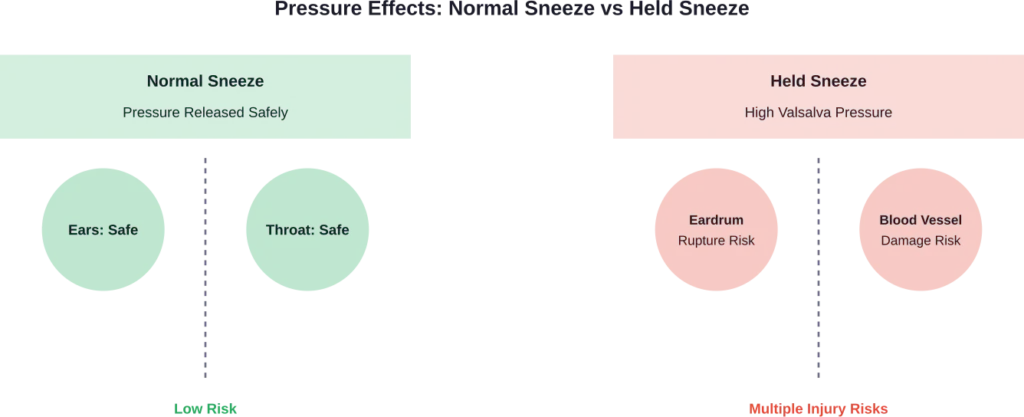
When you hold in a sneeze by pinching your nose and closing your mouth, you’re attempting what medical professionals call a “closed-airway sneeze.” This creates what’s known as high Valsalva pressure throughout your body.
Research published in medical journals shows that during this maneuver, intrathoracic pressure spikes dramatically. Research on the Valsalva maneuver indicates the blood volume of the heart can decrease by 25–30%, disrupting venous return and altering stroke volume.
That pressure doesn’t just disappear. It transmits to other systems in your body, seeking any point of weakness to release.
Documented Injuries From Holding in Sneezes
Medical research has catalogued a disturbing variety of injuries that can occur during a sneeze, especially when attempted with closed airways. According to studies published on PubMed, men are more at risk for these injuries, with the majority occurring in patients with no known risk factors.
Ruptured Eardrums
The eardrum is a thin membrane that’s particularly vulnerable to sudden pressure changes. When you hold in a sneeze, the pressure can’t escape through your nose and mouth, so it redirects to your ear canals.
This can cause your eardrums to rupture, leading to hearing loss, pain, and potential infections. While most ruptured eardrums heal on their own, some cases require surgical intervention.
Torn Throat Tissue
One of the most frequently cited cases in medical literature involves a man who ruptured the back of his throat by holding in a sneeze. The pressure was so intense that it tore the soft tissue in his pharynx.
He experienced immediate pain, swelling, and his voice changed completely. The injury required hospitalization and careful monitoring to prevent complications.
Ruptured Blood Vessels
The sudden spike in pressure can cause blood vessels in your eyes, nose, or even brain to rupture. While broken blood vessels in the eye typically heal without intervention, they’re a visible reminder of the forces involved.
More serious cases involve blood vessels in the brain. The medical literature contains case reports of brain aneurysms rupturing during forceful sneezes. According to Healthline content in the source material, ruptured brain aneurysms are deadly in about 40 percent of cases.
Aortic Dissection
A case documented in medical literature involves a 57-year-old man who suffered a type B thoracic aortic dissection from a forceful sneeze. This is a life-threatening condition where the inner layer of the aorta tears.
The patient presented with pleuritic chest pain and breathlessness. His blood pressure on admission was 150/80 mm Hg in both arms, and he was being followed up with surveillance MR aortographies annually. This case demonstrates that even people without obvious risk factors can suffer catastrophic injuries.
Chest and Rib Injuries
The force of a held sneeze can cause chest pain and, in some cases, fractured ribs. The Valsalva pressure compresses the chest cavity, and when combined with the muscular force of trying to suppress the sneeze, it creates a perfect storm for skeletal injury.
| Injury Type | Severity | Common Symptoms | Recovery Time |
|---|---|---|---|
| Ruptured Eardrum | Moderate | Hearing loss, pain, drainage | Weeks to months |
| Torn Throat Tissue | Serious | Severe pain, swelling, voice changes | Days to weeks |
| Ruptured Blood Vessels (eye) | Minor | Red spot in eye, no pain | 1-2 weeks |
| Brain Aneurysm Rupture | Life-threatening | Severe headache, loss of consciousness | Potentially fatal |
| Aortic Dissection | Life-threatening | Chest pain, breathlessness | Requires emergency care |
Who’s Most at Risk?
Research on sneeze-related injuries reveals some surprising patterns. Men appear more susceptible to serious complications, though the exact mechanism isn’t fully understood.
Here’s what makes this particularly concerning: most documented cases occurred in people with no known risk factors. You don’t need to have a pre-existing condition to suffer an injury from holding in a sneeze.
That said, certain groups should exercise extra caution. People with hypertension, vascular abnormalities, or connective tissue disorders face elevated risks. But the presence of these conditions isn’t required for injury to occur.
The Proper Way to Sneeze
So what should you do when that tickle arrives at an inconvenient moment?
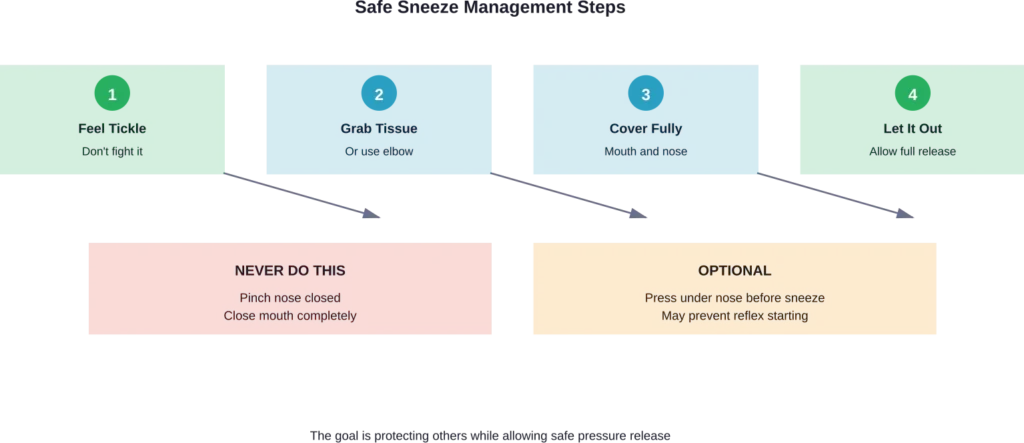
The safest approach is to let the sneeze happen naturally. Cover your nose and mouth with a tissue or the inside of your elbow—not your hands. This protects others from respiratory droplets while allowing the pressure to release safely.
If you absolutely must minimize the sound or force, you can slightly reduce it by keeping your mouth open while covering it. This provides an escape route for the air pressure without creating the dangerous closed-airway situation.
Can You Stop a Sneeze Safely?
There are methods to potentially prevent a sneeze before it fully develops, though results vary by person.
Some people find that pressing firmly on the area right under the nose can interrupt the sneeze reflex. Others report success with breathing techniques—taking a deep breath through the nose at the first sign of the tickle.
These methods work by interrupting the neural pathway before the sneeze fully initiates. The key difference is you’re preventing the sneeze from starting, not suppressing it once it’s already in motion.
When to Seek Medical Attention
Most people who hold in a sneeze won’t experience serious complications. But certain symptoms warrant immediate medical evaluation.
Seek emergency care if you experience severe headache, vision changes, chest pain, difficulty breathing, or significant swelling in your neck or throat after suppressing a sneeze. These could indicate serious internal injuries.
Persistent ear pain, hearing loss, or drainage from the ear after holding in a sneeze suggests potential eardrum damage. While not always an emergency, these symptoms require prompt evaluation by a healthcare provider.
Frequently Asked Questions
While extremely rare, holding in a sneeze can potentially be fatal. Medical literature documents cases of aortic dissection and ruptured brain aneurysms triggered by the pressure from suppressed sneezes. According to Healthline content in the source material, ruptured brain aneurysms are deadly in about 40 percent of cases. However, most sneeze-related injuries are non-fatal.
The popping sensation occurs because the pressure from the held sneeze forces air through your Eustachian tubes, which connect your throat to your middle ear. This sudden pressure change can cause temporary discomfort and, in severe cases, can rupture your eardrum.
The safest approach is allowing the sneeze to release through both your nose and mouth naturally while covering them with a tissue or your elbow. Blocking either route increases internal pressure and raises the risk of injury. The body designed the sneeze reflex to use both pathways simultaneously.
There’s no direct evidence linking held sneezes to heart attacks in otherwise healthy individuals. However, the Valsalva pressure created can temporarily affect heart function, and research on the Valsalva maneuver indicates the blood volume of the heart can decrease by 25–30%, altering stroke volume. People with existing cardiovascular conditions should avoid suppressing sneezes.
Preventing a sneeze means interrupting the reflex before it fully initiates, such as by pressing under your nose at the first tickle. Holding in a sneeze means suppressing it after the reflex has already triggered, creating dangerous pressure. Prevention is generally safe; suppression is not.
Serious injuries are rare but well-documented in medical literature. Most people who occasionally suppress a sneeze won’t experience catastrophic complications. However, research shows that men are more at risk, and most documented cases occurred in people with no known predisposing conditions, making it impossible to predict who might be vulnerable.
Yes, the pressure from a suppressed sneeze can damage throat tissue, including vocal cords. One documented case involved a man who ruptured the back of his throat, experiencing immediate voice changes. The soft tissues in the throat and larynx are particularly vulnerable to sudden pressure spikes.
The Bottom Line on Sneeze Safety
The evidence is clear: holding in a sneeze carries real risks. From ruptured eardrums to torn throat tissue to life-threatening aortic dissection, the potential complications far outweigh any social awkwardness from sneezing publicly.
Your body triggers the sneeze reflex for a reason. It’s a precisely calibrated defense mechanism designed to protect your respiratory system. When you interfere with this process by creating a closed-airway situation, you redirect dangerous levels of pressure to vulnerable structures throughout your body.
The next time you feel that familiar tickle, grab a tissue and let it happen. Your eardrums, blood vessels, and throat will thank you.