

Quick Summary: Accidentally inhaling Freon can cause symptoms ranging from mild dizziness and nausea to severe respiratory distress, irregular heartbeat, and loss of consciousness. Most accidental exposures from small refrigerant leaks produce minor symptoms that resolve with fresh air, but concentrated exposure requires immediate medical attention. According to NIOSH (CDC), dichlorodifluoromethane (Freon-12) becomes immediately dangerous to life and health (IDLH) at 50,000 ppm.
Refrigerant leaks happen. An air conditioner repair goes wrong, a fridge develops a problem, or someone accidentally punctures a cooling line. Within seconds, the question becomes urgent: what exactly did I just breathe in?
Freon—the brand name that’s become shorthand for various refrigerant chemicals—poses real health risks despite being colorless and nearly odorless at low concentrations. The effects range from barely noticeable to life-threatening, depending on exposure levels and duration.
Here’s what actually happens when refrigerant enters the lungs, and when that brief exposure becomes a medical emergency.
Understanding Refrigerant Chemicals and Toxicity
Freon isn’t a single substance. The term covers multiple fluorinated hydrocarbons used in cooling systems, each with different chemical formulas and toxicity profiles.
Common refrigerants include dichlorodifluoromethane (Freon-12), chlorodifluoromethane (Freon-22), and various newer formulations. According to OSHA data, these appear as colorless gases with faint, sweet or ether-like odors only at extremely high concentrations—meaning dangerous levels can accumulate before anyone notices.
NIOSH establishes that dichlorodifluoromethane becomes immediately dangerous to life and health at 50,000 ppm according to the Original (SCP) IDLH standard. The threshold limit value for safe workplace exposure sits much lower at 1,000 ppm as an eight-hour time-weighted average.
That gap matters. Brief accidental exposure near a small leak typically falls well below dangerous levels. Concentrated exposure in confined spaces crosses into medical emergency territory fast.
Immediate Physical Effects of Freon Inhalation
When refrigerant enters the respiratory system, effects depend entirely on concentration and exposure duration.
Mild to Moderate Exposure Symptoms
Brief contact with low concentrations produces symptoms that most people describe as uncomfortable but manageable:
- Mild headache and dizziness
- Nausea without vomiting
- Throat irritation or coughing
- Eye watering and irritation
- Temporary breathing difficulty
These symptoms typically resolve within minutes to hours after moving to fresh air. The chemicals dissipate from lung tissue relatively quickly at low doses.
Severe Exposure Effects
Higher concentrations trigger more serious physiological responses. According to CDC research, exposure to 50,000-100,000 ppm causes bronchoconstriction and tachycardia—the airways narrow while heart rate spikes dangerously.
Severe symptoms include:
- Irregular heartbeat (cardiac arrhythmia)
- Chest pain and difficulty breathing
- Loss of consciousness
- Seizures or convulsions
- Chemical pneumonitis (lung inflammation)
- Frostbite burns to respiratory tissue from liquid contact
Real talk: if someone collapses after refrigerant exposure, that’s an immediate 911 call. The chemical depresses the central nervous system, and cardiac effects can be fatal.

How Refrigerant Affects Different Body Systems
Freon doesn’t just irritate airways. The chemicals interact with multiple physiological systems simultaneously.
Respiratory System Impact
Inhaled refrigerant displaces oxygen in the lungs, creating an asphyxiation risk even before chemical toxicity becomes the primary concern. In confined spaces, this oxygen displacement can cause unconsciousness within minutes.
Liquid refrigerant that contacts lung tissue causes chemical burns and frostbite. The rapid evaporation of pressurized refrigerant creates temperatures well below freezing—cold enough to freeze tissue on contact.
Cardiovascular Effects
Fluorinated hydrocarbons sensitize the heart to adrenaline, triggering potentially fatal arrhythmias. This cardiac sensitization explains sudden deaths from intentional inhalant abuse, where physical exertion or fright releases adrenaline that triggers heart failure.
According to CDC data, human volunteers exposed to 40,000 ppm for 14 minutes experienced measurable cardiovascular changes. At 60,000 ppm for 80 minutes, effects became more pronounced but remained survivable with immediate treatment.
Neurological Consequences
Central nervous system depression starts with mild symptoms like confusion and drowsiness. Higher doses progress to loss of coordination, slurred speech, and eventually unconsciousness.
Chronic exposure produces different patterns. Regular contact may result in persistent headaches, memory problems, and mood changes that outlast the exposure period.
Acute vs. Chronic Refrigerant Poisoning
The distinction between one-time accidents and repeated exposure matters for treatment and prognosis.
| Exposure Type | Common Scenarios | Primary Symptoms | Recovery Timeline |
|---|---|---|---|
| Acute (Single Event) | Accidental leak during repair, system failure | Immediate respiratory distress, dizziness, nausea | Hours to days with fresh air |
| Chronic (Repeated) | Slow leaks, workplace exposure, intentional abuse | Weight loss, nerve damage, cognitive impairment | Weeks to months, potential permanent effects |
Long-term misuse creates cumulative damage. Brain injury, nerve damage, and lung scarring develop gradually with repeated exposure. The National Institute on Drug Abuse reports that 7.8% of people getting high from inhalants were teens—a group particularly vulnerable to these long-term consequences.
Emergency Response and Treatment Protocol
Speed determines outcomes when refrigerant exposure becomes serious.
Immediate Actions for Accidental Exposure
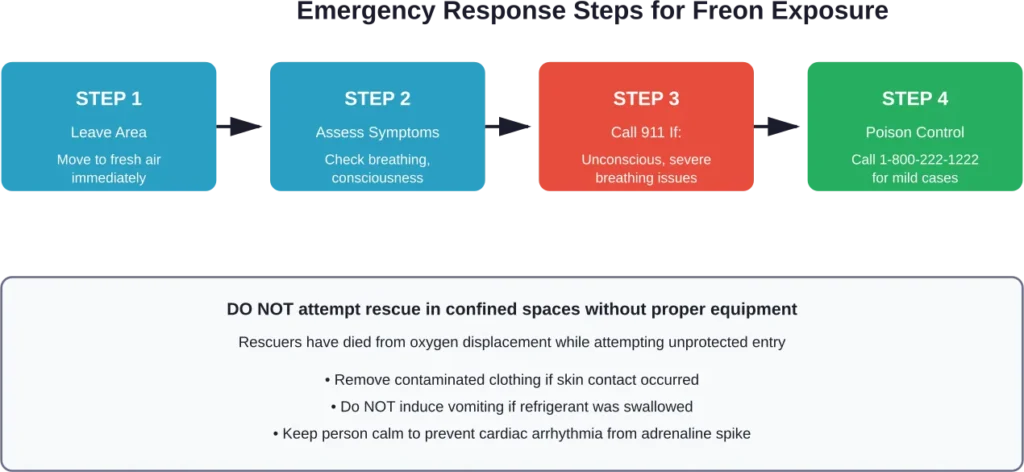
First priority: get to fresh air immediately. Leave the contaminated area and move outdoors or to well-ventilated space. Don’t wait to see if symptoms develop—oxygen displacement happens fast.
If someone collapses or shows severe symptoms, call emergency services. Provide information about the specific refrigerant if known, though treatment protocols remain similar across refrigerant types.
For skin contact with liquid refrigerant, remove contaminated clothing carefully and flush the affected area with lukewarm water. Cold water intensifies frostbite damage.
Medical Treatment Approaches
Healthcare providers treat refrigerant poisoning supportively since no specific antidote exists. Treatment focuses on:
- Oxygen supplementation to counter asphyxiation
- Cardiac monitoring for arrhythmia detection
- Bronchodilators for airway constriction
- IV fluids for circulatory support
- Observation for delayed pneumonitis development
Most accidental exposures resolve without lasting effects if treated promptly. The body eliminates refrigerant chemicals relatively quickly once exposure stops.
Preventing Accidental Refrigerant Exposure
Most refrigerant poisoning cases are entirely preventable with basic precautions.
Leave professional repair work to licensed HVAC technicians. They have proper ventilation equipment, leak detectors, and training to handle refrigerants safely. DIY air conditioner repairs account for a disproportionate number of accidental exposures.
For refrigerant leaks at home, evacuate the area immediately and call professionals. Small leaks rarely produce dangerous concentrations in well-ventilated spaces, but enclosed rooms allow buildup to hazardous levels.
Warning signs of refrigerant leaks include:
- Hissing sounds near cooling equipment
- Ice buildup on refrigerant lines
- Reduced cooling performance
- Unexplained chemical odors
- Oil residue near connections
Store appliances properly during disposal. Refrigerators and air conditioners retain refrigerant even when not running. Puncturing refrigerant lines during demolition or appliance disposal creates sudden concentrated exposure.
Special Risks: Intentional Inhalation and Abuse
The deliberate misuse of refrigerants as inhalants represents a separate category of poisoning with far higher mortality rates.
Intentional abuse involves concentrated exposure that overwhelms the body’s compensatory mechanisms. Deaths occur from cardiac arrest, asphyxiation, or trauma during impaired states. Community discussions reveal that users often underestimate the cardiac sensitization risk—sudden movements or fear can trigger fatal arrhythmias even after the initial high passes.
Teenagers comprise a significant portion of inhalant users, with nearly 40,000 adolescents reported to misuse inhalants on any given day according to 2014 data. Educational interventions focus on the immediate death risk rather than long-term health consequences, since “sudden sniffing death” can occur on first use.
Long-Term Health Outlook After Exposure
Prognosis depends almost entirely on exposure severity and promptness of treatment.
Brief accidental exposure to low concentrations typically produces no lasting effects. Symptoms resolve completely within hours to days as the body eliminates the chemicals.
Moderate exposure with prompt treatment similarly shows good recovery rates. Respiratory symptoms may persist for several days, but permanent lung damage remains uncommon unless chemical pneumonitis develops.
Severe exposure carries risks of permanent complications including chronic respiratory problems, cardiac damage, and neurological impairment. The extent of lasting damage correlates with how long tissues were deprived of oxygen and exposed to toxic concentrations.
When to Contact Poison Control
Poison control centers provide free, confidential expert guidance 24/7 for any refrigerant exposure concern.
Call 1-800-222-1222 for situations like:
- Brief exposure with mild symptoms that persist beyond 30 minutes
- Uncertainty about exposure levels or refrigerant type
- Skin contact with liquid refrigerant
- Children or elderly individuals exposed to any amount
- Questions about whether medical evaluation is necessary
Emergency services become necessary when symptoms include difficulty breathing, chest pain, irregular heartbeat, loss of consciousness, or seizures. Those situations need 911, not poison control.
Frequently Asked Questions
Symptoms typically appear within seconds to minutes of exposure. Mild effects like dizziness and nausea manifest almost immediately. More serious respiratory and cardiac symptoms develop within the first few minutes of significant exposure. Delayed effects like chemical pneumonitis can appear 12-24 hours after exposure in severe cases.
Minor exposure to low concentrations usually resolves on its own with fresh air and rest. Most accidental exposures from small leaks fall into this category. However, any symptoms beyond mild, brief dizziness warrant poison control consultation. Moderate to severe exposure requires medical evaluation even if symptoms seem to improve, as delayed complications can develop.
Freon is a brand name for specific chlorofluorocarbon refrigerants, though people commonly use the term for any refrigerant chemical. Modern systems use different refrigerants like R-410A or R-134a due to environmental regulations. All refrigerants pose similar inhalation risks—asphyxiation, cardiac effects, and respiratory irritation—regardless of specific chemical composition.
According to CDC data, concentrations below 1,000 ppm are considered safe for eight-hour workplace exposure. Immediate danger to life and health (IDLH) begins at 50,000 ppm for dichlorodifluoromethane according to NIOSH standards. Severe symptoms including cardiac arrhythmia occur at 50,000-100,000 ppm. Brief exposure to small leaks rarely reaches dangerous concentrations in ventilated spaces, but confined areas allow rapid buildup.
Brief, low-level exposure typically causes no permanent lung damage. Concentrated exposure can cause chemical pneumonitis and long-term respiratory impairment if not treated promptly. Liquid refrigerant contact with lung tissue causes frostbite burns that may result in scarring. Chronic exposure over months or years produces cumulative damage including reduced lung capacity and increased susceptibility to respiratory infections.
Turn off and unplug the refrigerator immediately. Open windows and doors to ventilate the area. Evacuate the room, especially children and pets. Don’t attempt to locate or repair the leak yourself. Call a licensed appliance repair technician or HVAC professional. If anyone develops symptoms like dizziness, nausea, or breathing difficulty, move them to fresh air and contact poison control or emergency services based on symptom severity.
Refrigerant chemicals don’t appear on standard blood tests or drug screens. Diagnosis relies primarily on exposure history and clinical symptoms. Chest X-rays may show lung inflammation or fluid buildup from severe exposure. EKG monitoring detects cardiac arrhythmias. Specialized toxicology testing can detect fluorinated hydrocarbons in blood or breath samples, but these tests are rarely necessary since treatment remains supportive regardless of confirmation.
Conclusion
Accidental Freon inhalation ranges from minor annoyance to medical emergency depending on concentration and duration. Most brief exposures produce temporary symptoms that resolve with fresh air, but severe cases require immediate medical intervention.
The key lies in recognizing when symptoms cross from mild to dangerous. Respiratory distress, chest pain, irregular heartbeat, or loss of consciousness demand emergency services without delay.
Prevention remains straightforward: leave refrigerant work to professionals, evacuate areas with suspected leaks, and ensure proper ventilation during any HVAC maintenance. Those simple steps eliminate most accidental exposure risks entirely.
If exposure occurs, don’t hesitate to contact poison control at 1-800-222-1222 for expert guidance. Quick action and appropriate medical care ensure the best possible outcomes even when accidents happen.