
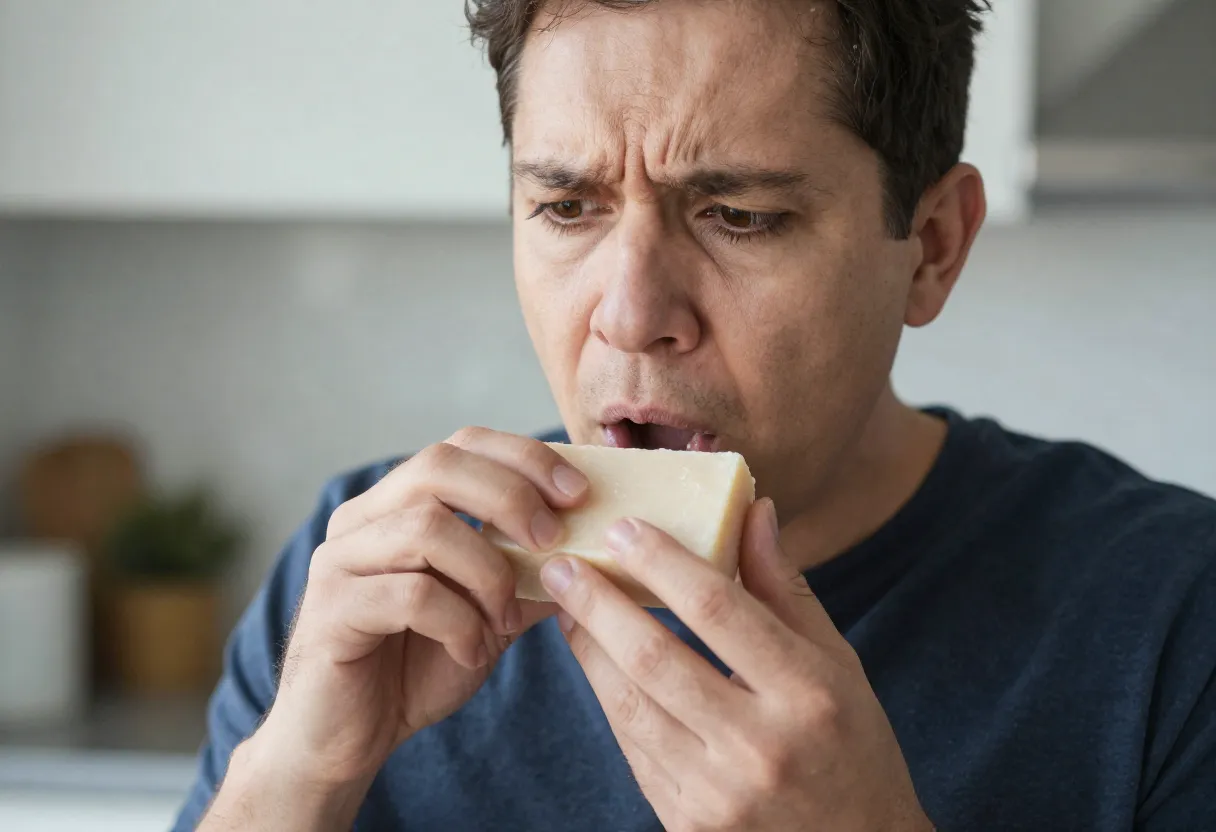
Quick Summary: Eating or swallowing small amounts of soap typically causes mild symptoms like nausea, vomiting, and diarrhea, but is rarely dangerous. Most hand and body soaps are minimally toxic, though they can irritate the mouth, throat, and digestive system. If someone swallows soap, rinse their mouth with water and contact poison control at 1-800-222-1222 for guidance.
Soap ingestion happens more often than most people realize. Whether it’s a curious toddler taking a bite of a colorful bar or an accidental swallow of dish soap mixed with water, thousands contact poison control centers annually about soap exposure.
But here’s the thing—not all soap ingestion scenarios are created equal. The type of soap, the amount swallowed, and the person’s age all factor into what happens next.
According to Poison Control, soaps are anionic surfactants designed for washing and cleaning. While they’re not meant for consumption, swallowing a small amount is usually not harmful. That said, understanding the potential effects can help you respond appropriately if it happens.
Is Soap Actually Toxic?
Most hand soaps, body soaps, and bar soaps are classified as minimally toxic. This means they won’t cause serious harm in small quantities.
The Illinois Poison Center confirms that if a child ate soap, they are unlikely to experience serious symptoms. However, soap can still irritate tissues it wasn’t designed to contact—namely your mouth, throat, and digestive tract.
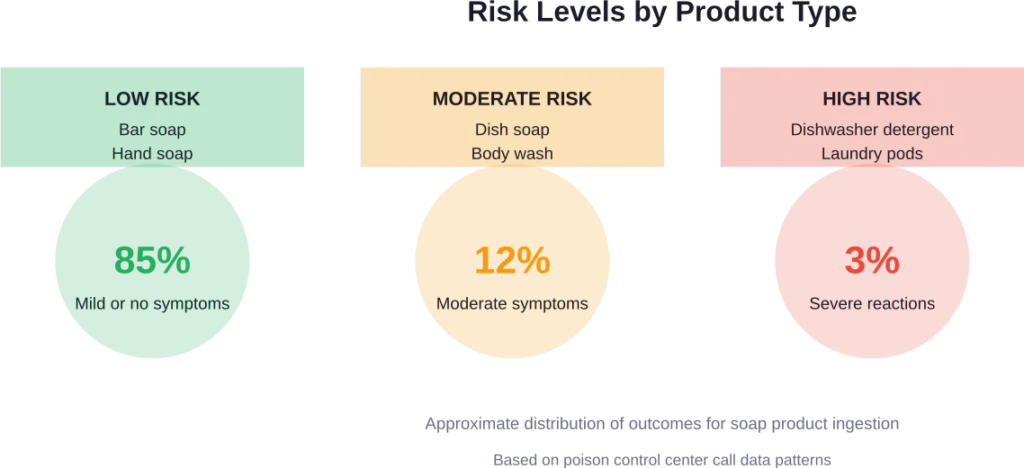
The toxicity level depends heavily on the type of soap product involved. Regular hand soap and body wash contain gentle surfactants that cause minimal issues. But certain cleaning products marketed as “soap” can be far more dangerous.
Types of Soap Products and Their Risks
| Soap Type | Toxicity Level | Common Effects |
|---|---|---|
| Hand soap (liquid/bar) | Minimally toxic | Mild irritation, possible nausea |
| Body wash/shower gel | Minimally toxic | Mouth irritation, upset stomach |
| Dish soap (hand-washing) | Low to moderate | Nausea, vomiting, diarrhea |
| Automatic dishwasher detergent | Moderate to high | Burns, tissue damage possible |
| Laundry detergent (pods) | High | Severe burns, breathing difficulty |
Automatic dishwashing detergents deserve special attention. According to Poison Control, these products contain alkaline builders that can cause burns and tissue damage depending on the amount and duration of exposure. They’re significantly more hazardous than regular hand soap.
What Symptoms Can You Expect?
When someone swallows soap, symptoms typically appear quickly—often within minutes to an hour.
Poison Control identifies these common symptoms following soap ingestion:
- Nausea and stomach discomfort
- Vomiting (sometimes with bubbles or foam)
- Diarrhea or loose stools
- Mouth and throat irritation
- Excessive drooling
Most symptoms are mild and resolve on their own within a few hours. The body naturally works to expel the irritating substance.
However, some people may experience allergic reactions to specific soap ingredients. According to Poison Control, allergic responses can include difficulty breathing, skin irritation, and rashes—symptoms that require immediate medical attention.
When Symptoms Indicate Serious Problems
While most soap ingestion cases remain minor, certain warning signs demand urgent care:
- Difficulty breathing or swallowing
- Severe abdominal pain
- Blood in vomit or stool
- Burns or blisters in or around the mouth
- Confusion or altered consciousness
- Persistent vomiting lasting more than two hours
These symptoms could indicate a severe reaction or that the product involved was more caustic than typical soap.
What to Do If Someone Swallows Soap
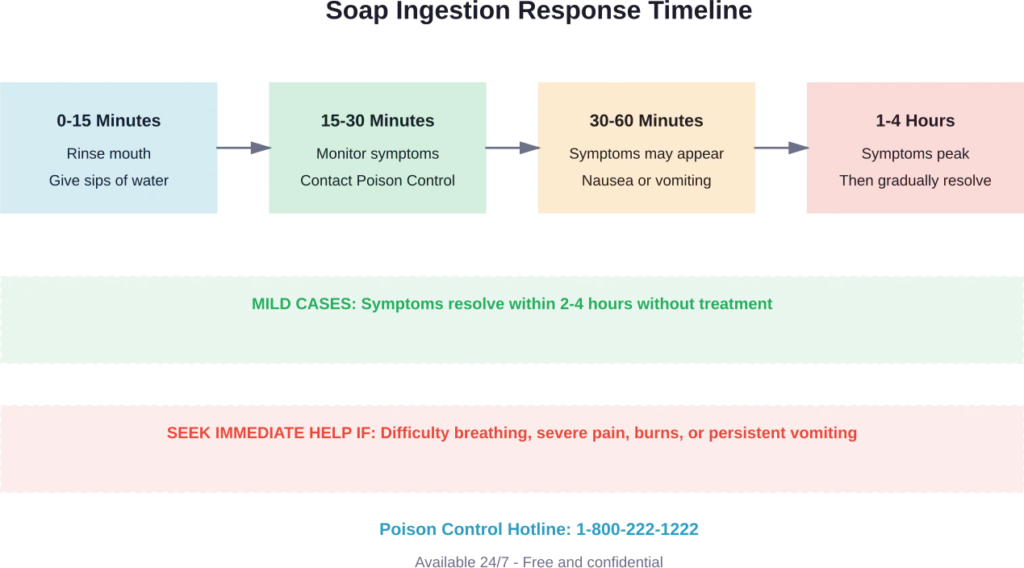
Quick action matters, but the right action matters more. Here’s what Poison Control recommends:
Immediate steps:
- Stay calm and remove any remaining soap from the mouth
- Rinse the mouth with water
- Give small sips of water to drink (not large amounts)
- Do NOT induce vomiting
- Do NOT give anything to neutralize the soap
The most important step? Contact your poison control center at 1-800-222-1222. This line connects you to expert guidance that’s free, confidential, and available 24 hours a day.
You can also use the webPOISONCONTROL online tool for immediate help. Specialists will assess the situation based on the specific soap product, amount swallowed, and the person’s symptoms.
Why You Shouldn’t Induce Vomiting
This bears repeating: do not make someone vomit after swallowing soap.
When soap comes back up through the esophagus and throat, it creates additional irritation and can potentially cause aspiration—getting soap into the lungs. This creates far more serious complications than the original ingestion.
Let the body handle elimination naturally through the digestive system.
The Intentional Soap Eating Phenomenon
Not all soap consumption is accidental. Some people experience persistent cravings to eat soap, a condition called pica.
According to Cleveland Clinic, pica is a mental health condition where people compulsively swallow non-food items. It’s especially common in children and individuals with certain developmental conditions.
Community discussions reveal that some individuals specifically crave bar soap, particularly natural or handmade varieties. One person described nibbling small chunks when stressed, noting they preferred the taste of all-natural bars.
One German study from 2018 found that 12 percent of children participating in the study experienced pica, suggesting it may be relatively common in that age group. Nutritional deficiencies, particularly iron deficiency, can play a role in these compulsions.
When Soap Eating Becomes a Concern
Occasional accidental ingestion differs significantly from habitual soap eating. Regular consumption can lead to:
- Chronic digestive irritation
- Nutritional problems from appetite displacement
- Potential exposure to harmful ingredients over time
- Underlying health issues going unaddressed
Anyone experiencing persistent cravings for soap should consult a healthcare provider. Treatment may involve nutritional assessment, behavioral therapy, or addressing underlying mental health conditions.
Children and Soap Ingestion
Young children account for the majority of accidental soap ingestion cases. Colorful bars, fruity-scented body washes, and bubble solutions all attract curious toddlers.
According to Poison Control, prevention starts with proper storage. Store all soap products up, away, and out of sight of children. This simple step dramatically reduces exposure risk.
During the coronavirus pandemic, poison control centers saw a whopping 20% jump in calls related to cleaning products as households increased their cleaning routines. More products in use meant more opportunities for accidental exposure.
Special Concerns with Certain Products
Some products pose significantly higher risks than others when it comes to children:
Laundry pods: These concentrated detergent packets can cause severe burns, breathing difficulty, and have even resulted in deaths. Their candy-like appearance makes them particularly dangerous.
Automatic dishwasher detergent: Far more caustic than hand soap, these can cause tissue damage and burns.
Concentrated products: Higher concentrations mean greater potential for harm in smaller amounts.
If a child swallows any of these products, contact poison control immediately and follow their guidance about whether emergency room care is needed.
Long-Term Effects and Complications
For most people who swallow a small amount of soap once, long-term effects are nonexistent. The body processes and eliminates the soap without lasting consequences.
However, certain scenarios can lead to ongoing issues:
Repeated exposure: Habitual soap eating can cause chronic gastrointestinal irritation and may mask nutritional deficiencies or mental health conditions that need treatment.
Large amounts: Swallowing large quantities of soap, especially caustic varieties, can potentially cause esophageal or stomach damage that requires medical intervention.
Allergic reactions: Some individuals develop sensitivities to specific soap ingredients, making future exposures increasingly problematic.
Medical literature documents rare cases where bar soap ingestion produced serious injury, though these typically involve concentrated products or unusually large amounts. The vast majority of cases resolve without complications.
Prevention Strategies
Preventing soap ingestion, especially in households with children, requires a few simple precautions:
- Store all cleaning products and soaps in locked cabinets or on high shelves
- Never transfer soap or cleaning products into food or drink containers
- Keep products in their original packaging with labels intact
- Teach children that soap is for cleaning, not eating
- Choose products with child-resistant packaging when available
- Supervise young children during handwashing and bathing
The Children’s Hospital of Philadelphia emphasizes that many poisoning incidents occur when products are in active use—left on counters, washing machines, or bathroom sinks while someone steps away briefly.
Developing consistent storage habits prevents most accidental exposures.
Frequently Asked Questions
Small amounts of regular hand or bar soap—a lick or small bite—are typically not dangerous and cause only mild symptoms if any. According to Poison Control, the concern increases with larger amounts, more caustic products like automatic dishwasher detergent, or concentrated formulations. The specific amount that becomes dangerous varies by product type and individual factors like age and weight. Contact poison control at 1-800-222-1222 for guidance on specific situations.
Death from eating typical hand or bar soap is extremely rare. However, certain cleaning products labeled as soap—particularly laundry pods, automatic dishwasher detergents, and industrial cleaning agents—can cause severe burns and tissue damage that may be life-threatening. Poison Control notes that a few laundry products can cause burns or even death. The type of product matters significantly more than the general category of “soap.”
Immediately rinse the affected eye with clean, lukewarm water for at least 15 minutes. Remove contact lenses first if wearing them. Hold the eyelid open and allow water to flow across the eye surface. According to poison control guidance, this reduces the risk of vision problems. If irritation persists after thorough rinsing, contact a healthcare provider or poison control center.
Persistent cravings to eat soap typically indicate pica, a mental health condition involving compulsions to consume non-food items. Cleveland Clinic identifies pica as especially common in children and people with certain developmental conditions. Nutritional deficiencies, particularly iron deficiency, may contribute to these cravings. Anyone experiencing ongoing urges to eat soap should consult a healthcare provider for evaluation and treatment.
No soap is safe to eat intentionally, regardless of whether it’s natural, handmade, or commercial. While natural soaps may contain fewer synthetic chemicals, they still contain surfactants and alkaline ingredients that irritate the digestive system. The “natural” label doesn’t make a product safe for consumption. All soaps are designed for external cleaning, not internal consumption.
For mild cases involving small amounts of regular soap, symptoms typically resolve within two to four hours without treatment. Nausea, vomiting, and diarrhea generally peak within the first one to two hours and then gradually improve. However, symptoms from more caustic products or larger amounts may persist longer and require medical treatment. Contact poison control if symptoms last beyond a few hours or worsen over time.
Not necessarily. Most soap ingestion cases can be managed at home with guidance from poison control. Call 1-800-222-1222 first—specialists will assess the situation and advise whether emergency room care is needed. Go to the ER immediately if someone experiences difficulty breathing, severe abdominal pain, burns in or around the mouth, persistent vomiting, or altered consciousness. These symptoms indicate serious complications requiring urgent medical attention.
Conclusion
Swallowing soap happens—and in most cases, it’s not a medical emergency. Small amounts of regular hand or bar soap typically cause only mild, temporary symptoms that resolve on their own.
That said, the type of product matters enormously. Automatic dishwasher detergents, laundry pods, and other concentrated cleaning products pose far greater risks than a lick of hand soap.
The best response? Stay calm, rinse the mouth, provide small sips of water, and contact poison control at 1-800-222-1222 for expert guidance. These specialists can assess your specific situation and provide personalized recommendations—free, confidentially, and around the clock.
Prevention remains the ideal approach. Store cleaning products safely, supervise children during washing activities, and never transfer soap into food or beverage containers. These simple habits prevent the vast majority of accidental exposures.
If you or someone you know experiences persistent cravings to eat soap, seek evaluation from a healthcare provider. Underlying conditions like pica or nutritional deficiencies need proper assessment and treatment.