

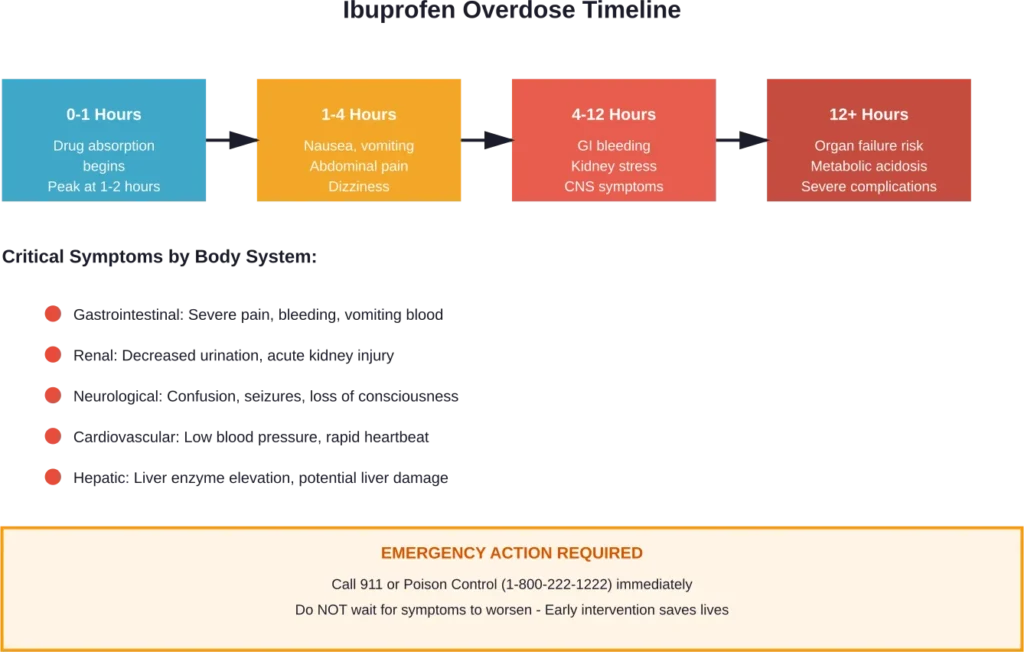
Quick Summary: Taking 20 ibuprofen tablets at once constitutes a severe overdose that requires immediate emergency medical attention. This amount far exceeds the maximum safe daily dose and can cause life-threatening complications including gastrointestinal bleeding, kidney failure, liver damage, and central nervous system effects. Symptoms typically appear within 4 hours and may include severe abdominal pain, vomiting blood, confusion, seizures, and loss of consciousness.
Ibuprofen sits in most medicine cabinets as a trusted pain reliever. But here’s the thing—what seems harmless at recommended doses becomes extremely dangerous when someone takes 20 tablets at once.
This represents a severe overdose that triggers multiple organ systems to fail simultaneously. The body simply wasn’t designed to process such massive amounts of nonsteroidal anti-inflammatory drugs (NSAIDs) in one sitting.
Understanding what happens during an ibuprofen overdose could save a life. Let’s break down the medical emergency that unfolds when someone ingests this dangerous amount.
Understanding Ibuprofen and Safe Dosing Limits
Ibuprofen belongs to the NSAID class of medications. According to the National Institutes of Health, these drugs work by inhibiting cyclooxygenase (COX) enzymes that convert arachidonic acid into inflammatory compounds.
The maximum safe over-the-counter dose is 1,200 mg in 24 hours—that’s six 200mg tablets. Prescription-strength ibuprofen tops out at 3,200 mg daily under medical supervision.
Taking 20 tablets means ingesting 4,000 mg if they’re standard 200mg pills, or 8,000 mg if they’re prescription-strength 400mg tablets. Either scenario creates a medical crisis.
| Ibuprofen Type | Single Dose | Frequency | Maximum Daily Dose |
|---|---|---|---|
| Over-the-Counter (Adult) | 200-400 mg | Every 4-6 hours | 1,200 mg |
| Prescription (Adult) | 400-800 mg | Every 6-8 hours | 3,200 mg |
| Overdose Threshold | — | — | >3,200 mg |
The drug undergoes extensive hepatic metabolism through cytochrome P450 2C9 enzymes, according to StatPearls research published by the National Library of Medicine. It’s eliminated through renal excretion involving glomerular filtration and tubular secretion.
When you flood this system with 20 tablets, both the liver and kidneys become overwhelmed.
Immediate Physical Effects of Massive Ibuprofen Overdose
Symptoms typically emerge within 4 hours of ingestion. The body responds to the toxic load with multiple distress signals.
Gastrointestinal System Collapse
The digestive tract takes the first hit. Ibuprofen damages the protective mucus lining of the stomach and intestines by blocking prostaglandin production.
At overdose levels, this protection vanishes almost immediately. Severe abdominal pain strikes first, followed by nausea and vomiting.
But here’s where it gets truly dangerous—gastrointestinal bleeding starts. Vomiting blood or passing black, tarry stools signals active internal bleeding that can become life-threatening within hours.
Kidney Damage and Failure
NSAIDs reduce blood flow to the kidneys by inhibiting prostaglandins that normally keep renal blood vessels dilated. At toxic doses, this effect intensifies dramatically.
According to MedlinePlus, analgesic nephropathy involves damage to internal kidney structures from overexposure to pain medications. Twenty tablets consumed at once accelerates this process from chronic condition to acute crisis.
The kidneys struggle to filter the massive drug load while simultaneously being starved of adequate blood flow. Acute kidney injury develops, potentially progressing to complete renal failure.
Central Nervous System Effects
Research published in EudraVigilance reports shows that nervous system disorders comprised 13.9% of ibuprofen adverse event reports, while psychiatric disorders accounted for 10.7%.
At overdose levels, neurological symptoms intensify. Dizziness and drowsiness give way to confusion and disorientation. Some patients experience seizures, though this is more common with certain NSAIDs like mefenamic acid.
Loss of consciousness can occur as the overdose progresses. Respiratory depression—dangerously slow breathing—represents one of the most critical complications requiring immediate ventilatory support.
Liver Damage and Hepatotoxicity Risks
According to the National Institute of Diabetes and Digestive and Kidney Diseases LiverTox database, ibuprofen is considered among the safest NSAIDs and generally well tolerated. However, it can cause clinically apparent and serious acute liver injury, particularly at high therapeutic doses.
Twenty tablets overwhelm the cytochrome P450 system responsible for metabolizing ibuprofen. The liver cells become saturated with toxic metabolites.
Hepatocellular injury patterns emerge, with dramatic elevations in liver enzymes. In severe cases documented in LiverTox, patients developed jaundice, required hospitalization, and some progressed to hepatic failure requiring liver transplantation.
Recent research suggests liver damage from ibuprofen may be more common than previously thought. The latency period can be as short as 5 days, with acute recovery possible if medical intervention occurs promptly.
Emergency Medical Response and Treatment
When someone takes 20 ibuprofen tablets, every minute counts. The FDA’s MedWatch program encourages reporting serious reactions to medical products, but the immediate priority is emergency care.
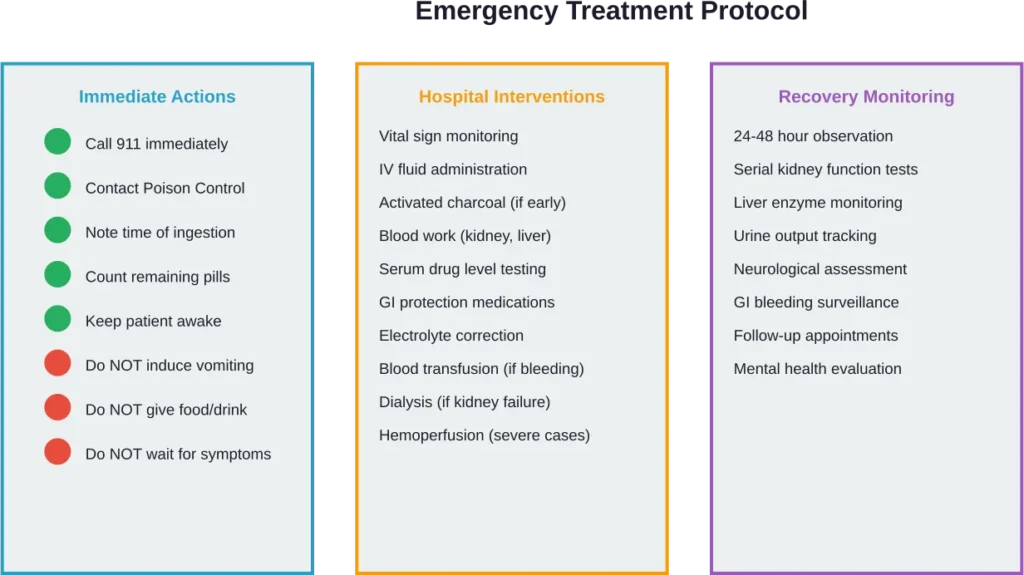
Call 911 or Poison Control (1-800-222-1222) immediately. These calls are free, confidential, and available 24/7.
What Happens at the Emergency Room
Healthcare providers will measure vital signs including temperature, pulse, breathing rate, and blood pressure. They’ll establish IV access for fluids and medications.
If the patient arrives within 1-2 hours of ingestion, activated charcoal may be administered to bind the drug and prevent further absorption. This window is critical but brief.
Blood tests will assess kidney function, liver enzymes, and electrolyte balance. A complete blood count checks for internal bleeding. Serum ibuprofen concentration can be measured using high-performance liquid chromatography.
In one documented veterinary case published in the Journal of Veterinary Medical Science (2026 Jan 23), hemoperfusion using porous polymeric adsorbents successfully treated ibuprofen intoxication in a toy poodle. The serum ibuprofen concentration dropped from 61.9 mg/L to 20.5 mg/L after 2 hours—a 66.8% reduction with a half-life of 1.4 hours—in the treated animal.
While this involved an animal patient, similar extracorporeal blood purification techniques may be considered for severe human overdoses.
Supportive Care Measures
Treatment focuses on supporting organ function while the body eliminates the drug. IV fluids maintain blood pressure and kidney perfusion.
Proton pump inhibitors or H2 blockers protect the stomach lining and reduce bleeding risk. If gastrointestinal bleeding occurs, blood transfusions may become necessary.
Monitoring continues for at least 24 hours, often longer. Patients with significant kidney injury may require temporary dialysis.
Long-Term Health Consequences
Surviving an ibuprofen overdose doesn’t mean all risks have passed. Organ damage can persist or develop complications weeks later.
Chronic Kidney Disease Risk
According to MedlinePlus, analgesic nephropathy causes permanent damage to kidney structures. Even after acute recovery, some patients develop chronic kidney disease requiring ongoing management.
Kidney function may never return to baseline. Regular monitoring becomes necessary, and patients must avoid NSAIDs entirely moving forward.
Gastrointestinal Complications
Stomach ulcers and erosive gastritis can become chronic problems. The protective mucus lining may remain compromised, increasing susceptibility to future GI issues.
Some patients develop strictures or scarring that affects digestive function. Ongoing treatment with proton pump inhibitors becomes necessary for years.
Cardiovascular Impact
Research documented in StatPearls shows NSAIDs affect cardiovascular function. High-dose exposure can trigger events that increase long-term heart disease risk.
Blood pressure regulation may be permanently affected. Increased monitoring and lifestyle modifications become essential.
Why Ibuprofen Overdoses Happen
Understanding the circumstances that lead to taking 20 tablets helps with prevention.
Intentional overdoses in suicide attempts represent one category. These cases require psychiatric evaluation and mental health support alongside medical treatment.
But accidental overdoses occur too. Someone in severe pain might take additional doses without realizing they’re exceeding safe limits. Confusion about dosing schedules leads to doubling up.
Children represent a high-risk group for accidental ingestion. Colorful pills stored in accessible locations attract curious toddlers.
Proper medication storage and child-resistant caps are essential preventive measures to prevent pediatric accidental ingestion.
Comparing Ibuprofen to Other OTC Pain Medication Overdoses
Different over-the-counter pain relievers create distinct overdose patterns.
| Medication | Primary Organ Damage | Lethal Dose Range | Specific Complications |
|---|---|---|---|
| Ibuprofen | Kidneys, GI tract | Very high (>400mg/kg) | GI bleeding, renal failure |
| Acetaminophen | Liver | Lower (>7.5g adult) | Acute liver failure, death |
| Aspirin | Multiple systems | Moderate (10-30g) | Metabolic acidosis, tinnitus |
| Naproxen | Kidneys, GI tract | High (similar to ibuprofen) | Similar to ibuprofen but longer-acting |
The FDA emphasizes that acetaminophen carries particular danger. According to their consumer webpage, taking too much acetaminophen can cause liver failure and death. Severe liver damage may occur if someone has three or more alcoholic drinks per day while using acetaminophen.
In September 2025, the FDA initiated a label change process for acetaminophen to reflect evidence suggesting its use by pregnant women may be associated with increased risk of autism and ADHD in children.
While ibuprofen overdoses are serious, acetaminophen creates a more direct pathway to fatal liver failure at lower doses.
Special Populations at Higher Risk
Certain groups face amplified danger from ibuprofen overdose.
People with Pre-Existing Conditions
Those with liver disease, kidney disease, or cardiovascular problems have less physiological reserve. According to StatPearls, NSAIDs are generally contraindicated in patients with significant hepatic dysfunction.
A 20-tablet overdose in someone with compromised kidney function can trigger complete renal shutdown much faster than in healthy individuals.
Elderly Patients
Older adults metabolize drugs more slowly. They’re more likely to have multiple medications creating drug interactions. Their baseline organ function is typically lower, leaving less margin for error.
Children and Infants
Pediatric ibuprofen overdoses require weight-based calculations. A 20-tablet dose designed for adults could be catastrophic in a small child.
Body weight determines toxicity levels. Even a few tablets can constitute a dangerous overdose in toddlers.
Prevention and Safe Medication Practices
Most overdoses are preventable through simple safety measures.
Store all medications in locked cabinets out of children’s reach. Use child-resistant caps consistently.
Never take more than the label recommends without medical supervision. Track doses in a medication log if memory issues exist.
Read labels carefully—many combination products contain ibuprofen alongside other active ingredients. Taking multiple medications simultaneously can create accidental overdoses.
If pain persists despite maximum recommended doses, seek medical attention rather than exceeding limits. Persistent pain signals underlying problems that require proper diagnosis.
For those struggling with mental health issues, proper medication storage becomes even more critical. Family members should control access during crisis periods.
What Medical Professionals Want You to Know
Healthcare providers emphasize several key points about ibuprofen safety.
First, over-the-counter doesn’t mean risk-free. The accessibility of ibuprofen creates a false sense of security. People assume it’s harmless because it doesn’t require a prescription.
Second, more isn’t better. Pain relief doesn’t increase proportionally with dose once you exceed the therapeutic range. You’re just adding toxicity without additional benefit.
Third, mixing medications amplifies risks. Taking ibuprofen with other NSAIDs, blood thinners, or certain supplements creates dangerous interactions.
Fourth, chronic use differs from acute overdose but carries its own dangers. Regular daily use even at recommended doses can cause cumulative kidney damage over years.
Medical guidance recommends limiting ibuprofen use: do not take more than 1,200 milligrams of ibuprofen a day, unless directed by a provider, and if you need it longer than 10 days, seek medical attention.
When to Seek Medical Attention
Any suspected overdose requires immediate medical evaluation. Don’t wait for symptoms to appear.
If someone has taken 20 ibuprofen tablets, call 911 immediately—even if they feel fine initially. The absence of immediate symptoms doesn’t indicate safety.
Watch for these warning signs that require emergency care:
- Severe abdominal pain or cramping
- Vomiting blood or material that looks like coffee grounds
- Black, tarry stools or bloody stools
- Extreme drowsiness or difficulty staying awake
- Confusion or disorientation
- Rapid breathing or difficulty breathing
- Seizures or convulsions
- Significantly decreased urination
- Yellowing of skin or eyes (jaundice)
Time matters critically. Early intervention dramatically improves outcomes and reduces permanent organ damage risk.
Frequently Asked Questions
Fatal ibuprofen overdoses are rare but possible. Toxicity depends on body weight—doses exceeding 400mg per kilogram of body weight create serious risk. For a 70kg adult, this means roughly 28,000mg or 140 standard 200mg tablets, though severe complications occur at much lower amounts. Twenty tablets (4,000mg) causes serious organ damage requiring emergency treatment but isn’t typically immediately fatal with prompt medical care.
Stomach recovery depends on damage severity. Mild to moderate gastric irritation typically heals within weeks to months with proper treatment including proton pump inhibitors and dietary modifications. Severe ulceration or bleeding may cause permanent scarring, strictures, or chronic gastritis requiring long-term management. Some patients develop lasting sensitivity to NSAIDs and must avoid them permanently.
Call 911 or Poison Control at 1-800-222-1222 immediately—don’t wait for symptoms. Note the time of ingestion and count remaining pills to determine the amount taken. Do not induce vomiting unless specifically instructed by medical professionals. Keep the person awake and comfortable. If within 1-2 hours of ingestion and medical help hasn’t arrived, activated charcoal may be administered at the emergency room to reduce absorption.
Ibuprofen has a half-life of approximately 2-4 hours in healthy individuals, meaning half the dose is eliminated in that timeframe. Complete elimination typically takes 10-20 hours. However, at overdose levels, metabolic pathways become saturated and elimination slows. Organ damage caused by the overdose persists far longer—kidney injury, liver damage, and gastrointestinal effects can last weeks to months or become permanent.
Standard drug screenings don’t test for ibuprofen. However, hospital toxicology panels ordered during overdose treatment will measure serum ibuprofen concentration to guide clinical management. Some immunoassay drug tests may show false positives for marijuana or barbiturates when ibuprofen is present at high concentrations, though confirmatory testing will clarify the actual substance.
Direct neurotoxic effects from ibuprofen are less common than with some other drugs. However, severe complications like prolonged seizures, extreme hypotension reducing brain blood flow, or hypoxia from respiratory depression can cause secondary brain injury. According to pharmacovigilance data, nervous system disorders comprised 13.9% of ibuprofen adverse events, though most resolve with treatment. Permanent neurological damage is rare but possible in severe untreated overdoses.
Acute overdose means taking a massive single dose (like 20 tablets at once), causing immediate toxic effects requiring emergency treatment. Chronic overuse involves regularly exceeding recommended doses over weeks or months, causing cumulative organ damage—particularly analgesic nephropathy and gastrointestinal problems. Both are dangerous, but acute overdose creates a medical emergency while chronic overuse causes gradual deterioration that may go unnoticed until significant damage occurs.
Conclusion
Taking 20 ibuprofen tablets at once creates a medical emergency with potentially life-threatening consequences. The massive dose overwhelms the body’s ability to safely metabolize and eliminate the drug, triggering cascading organ failures.
Gastrointestinal bleeding, acute kidney injury, liver damage, and neurological effects represent the primary dangers. Without immediate medical intervention, these complications can progress to organ failure and death.
But here’s the critical point—survival and recovery are possible with prompt treatment. Early emergency care dramatically improves outcomes.
If you or someone you know has taken 20 ibuprofen tablets, call 911 or Poison Control immediately at 1-800-222-1222. Don’t wait for symptoms to appear. Every minute counts in preventing permanent organ damage.
Prevention remains the best strategy. Store medications safely, follow dosing instructions precisely, and seek medical attention for persistent pain rather than exceeding recommended limits.
Your health and safety depend on treating all medications—even over-the-counter ones—with appropriate respect for their potential dangers.