

Quick Summary: Taking too much Advil (ibuprofen) can lead to serious health complications including stomach damage, kidney injury, and in rare cases, central nervous system effects. Adults should never exceed 3,200 mg per day (prescription dose) or 1,200 mg daily for over-the-counter use. Symptoms of overdose include severe nausea, vomiting, abdominal pain, drowsiness, and breathing difficulties.
Advil has become one of the most widely used pain relievers in America, with more than 30 billion doses of nonsteroidal anti-inflammatory drugs (NSAIDs) taken annually across the country. But here’s the thing—just because it’s available over-the-counter doesn’t mean it’s risk-free.
According to the FDA, ibuprofen can cause severe allergic reactions and serious complications when taken improperly. An overdose occurs when someone accidentally or intentionally takes more than the recommended amount of this medicine.
So what actually happens when you exceed safe limits? The consequences range from mild gastrointestinal discomfort to life-threatening organ damage.
Understanding Safe Advil Dosage Limits
According to MedlinePlus, adults and children older than 12 years of age may usually take nonprescription ibuprofen every 4 to 6 hours as needed for pain or fever. But there’s a critical maximum that shouldn’t be crossed.
The standard over-the-counter dose is 200-400 mg per tablet. Most people can safely take one to two tablets every four to six hours. The absolute maximum for OTC use is 1,200 mg per day, which equals six 200 mg tablets without medical supervision.
Prescription-strength ibuprofen can go higher—up to 3,200 mg daily—but only under direct physician oversight. Research shows that people using prescription NSAIDs comply significantly better with maximum dosage limits, with only 2 percent exceeding the daily limit.
| Type | Single Dose | Maximum Daily Dose | Frequency |
|---|---|---|---|
| OTC Ibuprofen | 200-400 mg | 1,200 mg | Every 4-6 hours |
| Prescription Ibuprofen | 400-800 mg | 3,200 mg | As directed by physician |
| Children (under 12) | Weight-based | Varies by weight | Every 6-8 hours |
The problem? Many people don’t realize they’re taking multiple medications containing ibuprofen simultaneously. Cold remedies, flu medications, and pain relievers often combine different active ingredients, making it dangerously easy to accidentally overdose.
What Happens to Your Body During an Ibuprofen Overdose
When ibuprofen floods your system beyond therapeutic levels, several physiological mechanisms go haywire. NSAIDs work by inhibiting cyclooxygenase enzymes (COX-1 and COX-2) in the arachidonic acid cycle. These enzymes play crucial roles in maintaining kidney function, stomach lining protection, and inflammatory responses.
Gastrointestinal Damage
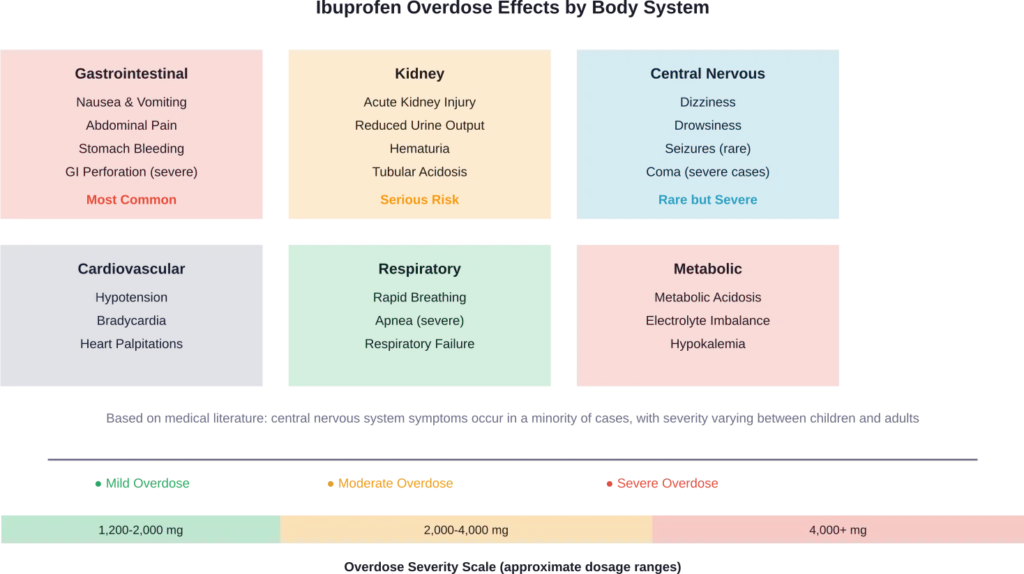
The stomach and intestines take the first hit. According to medical research, ibuprofen overdose is usually characterized by GI upset as the primary symptom. The drug disrupts the protective mucus layer in your stomach, leading to inflammation and potential bleeding.
Severe cases can result in perforations—literal holes in the stomach or intestinal wall. These medical emergencies require immediate surgical intervention.
Kidney Complications
Research published in Pharmacological Research & Perspectives examined kidney damage from NSAIDs across multiple studies. The kidneys receive approximately 25 percent of cardiac output and serve as the major organ for drug excretion.
Post-marketing surveillance data identified 2,453 reports of ibuprofen-associated kidney injury and 1,288 reports of acetaminophen-associated kidney injury. The study found that ibuprofen affected more middle-aged patients (27.76 percent) than elderly ones (16.53 percent).
Acute kidney injury (AKI) can develop rapidly. In population studies of people over 65 years old, NSAID usage significantly increased AKI risk. Some cases progress to acute interstitial nephritis, requiring dialysis for recovery.
Central Nervous System Effects
Research on ibuprofen overdose symptoms shows that central nervous system manifestations occur in severe cases. Medical literature on ibuprofen overdose indicates central nervous system symptoms occur in a minority of cases, with symptom severity varying between children and adults.
These neurological effects include dizziness, drowsiness, and in rare instances, seizures. Medical literature documents cases of fatal ibuprofen overdose, typically involving very large doses, particularly sustained-release formulations.
Recognizing Overdose Symptoms
Early recognition saves lives. But what should someone actually watch for?
Most ibuprofen overdoses result in benign outcomes when caught early. Poison center data indicates that most ibuprofen overdose cases are managed successfully with appropriate intervention.
Common symptoms include severe nausea, vomiting, and intense abdominal pain. Drowsiness and dizziness frequently occur. Some people experience ringing in the ears (tinnitus) or blurred vision.
More serious warning signs demand immediate emergency care. These include blood in vomit or stool, severe headache, confusion or disorientation, difficulty breathing, and decreased or bloody urination.
Emergency Response Protocol
According to MedlinePlus, if overdose is suspected, call the local emergency number immediately. Don’t wait to see if symptoms develop.
The United States poison control center can be reached 24/7 at 1-800-222-1222. This service provides free, confidential expert medical advice. Online poison help is also available at Poisonhelp.org.
When calling for help, have the following information ready: the person’s age, height, weight, and gender; how much ibuprofen was ingested; when the last dose was taken; and whether the person has any underlying medical conditions.
Do not induce vomiting unless specifically instructed by medical professionals. The poison control center will provide specific guidance based on the individual situation.
Medical Treatment Options
Emergency departments treat ibuprofen overdose based on severity and timing. If the person arrives within an hour of ingestion, activated charcoal may be administered to prevent further absorption.
For significant overdoses, treatment focuses on supportive care. This includes IV fluids to maintain kidney function, medications to protect the stomach lining, and monitoring of vital signs. Severe cases may require dialysis, particularly when kidney function becomes compromised.
Medical case reports document successful recovery even from severe overdoses when treatment begins promptly. One pediatric case involving acute kidney injury required steroid treatment and temporary dialysis, but the patient recovered fully.
Risk Factors That Increase Danger
Certain conditions amplify ibuprofen’s risks dramatically. According to FDA labeling, people with existing kidney disease face heightened danger. The NIDDK warns that NSAIDs can harm kidneys, especially in vulnerable populations.
Age matters significantly. Research shows elderly patients experience different risk patterns than younger adults. Dehydration compounds toxicity—the kidneys need adequate fluid to process and eliminate the drug safely.
Combining ibuprofen with other NSAIDs or certain medications creates dangerous interactions. Aspirin, blood thinners, corticosteroids, and some antidepressants all increase bleeding risk when taken with ibuprofen.
| Risk Factor | Why It Matters | Precaution Needed |
|---|---|---|
| Kidney Disease | Reduced drug clearance | Consult physician before use |
| Age 65+ | Decreased organ function | Use lowest effective dose |
| Dehydration | Concentrated drug levels | Maintain hydration |
| Multiple NSAIDs | Cumulative toxicity | Check all medication labels |
| Alcohol Use | Increased GI bleeding risk | Avoid alcohol while taking |
Long-Term Consequences of Chronic Overuse
Single overdoses aren’t the only concern. Chronic excessive use creates its own set of problems.
Regular high-dose NSAID use damages the stomach lining progressively. Ulcers develop silently, sometimes bleeding without obvious symptoms until the situation becomes critical. Research on drug-induced liver injury shows that while less common than kidney damage, hepatotoxicity can occur with prolonged NSAID use.
Cardiovascular risks increase with long-term high-dose use. Studies indicate elevated risks of heart attack and stroke, particularly in people with existing cardiovascular conditions.
The kidneys suffer cumulative damage from chronic overuse. What starts as reversible acute injury can progress to chronic kidney disease requiring permanent intervention.
Prevention Strategies
Avoiding overdose isn’t complicated, but it requires attention. Read labels carefully—every single time. Check the active ingredients in all medications being taken simultaneously.
Set phone reminders for dosing schedules. This prevents accidental double-dosing when pain makes it difficult to remember whether medication was already taken. Never exceed the recommended dose thinking it’ll work faster or better—it won’t, but it will increase danger.
Store medications safely, especially in households with children or elderly individuals who might become confused about dosing. Keep a written medication log if managing multiple drugs.
For chronic pain requiring regular medication, work with healthcare providers to develop safer long-term strategies. Alternative pain management approaches often reduce dependence on NSAIDs.
Frequently Asked Questions
For over-the-counter use, exceeding 1,200 mg (six 200 mg tablets) per day constitutes excessive use. Any single dose above 800 mg or total daily intake above prescription limits (3,200 mg under medical supervision) represents a potential overdose. Children’s dosing is weight-based and follows different guidelines.
Yes, though death from ibuprofen overdose remains rare. Medical literature documents cases of fatal ibuprofen overdose, typically involving very large doses, often sustained-release formulations, or vulnerable individuals with pre-existing conditions. Most overdoses result in manageable symptoms when treated promptly.
Symptoms typically develop within four to six hours of ingestion, though this varies by amount consumed and individual factors. Sustained-release formulations may delay symptom onset. Any suspected overdose warrants immediate medical consultation regardless of symptom timing.
If the total amount remains within safe daily limits (under 1,200 mg for OTC use), monitor for unusual symptoms but serious harm is unlikely. If you’ve significantly exceeded recommended doses, contact poison control at 1-800-222-1222 for personalized guidance. Don’t take additional doses until cleared by medical professionals.
Both carry serious overdose risks affecting different organs. Ibuprofen primarily threatens kidneys and stomach; acetaminophen damages the liver. Post-marketing surveillance data identified 2,453 reports of ibuprofen-associated kidney injury and 1,288 reports of acetaminophen-associated kidney injury, though comparison is complicated by different usage patterns and affected organ systems.
Food reduces stomach irritation but doesn’t prevent overdose toxicity. Taking ibuprofen with food or milk helps protect the GI tract from normal therapeutic doses but won’t eliminate kidney damage, metabolic acidosis, or other systemic effects from excessive amounts.
Blood tests measure serum ibuprofen levels, kidney function (creatinine and BUN), liver enzymes, and electrolyte balance. Urinalysis checks for blood or protein indicating kidney damage. In severe cases, additional tests assess acid-base balance and cardiac function. Testing guides treatment intensity and monitoring duration.
Moving Forward Safely
Advil remains an effective, generally safe medication when used correctly. The key is respecting dosage limits and recognizing that over-the-counter availability doesn’t mean unlimited safety.
If pain persists despite maximum OTC dosing, that’s a signal to consult healthcare providers—not to exceed recommendations. Underlying conditions causing chronic pain often need different treatment approaches beyond NSAIDs.
When in doubt about dosing, medication interactions, or concerning symptoms, reach out to medical professionals or poison control. These resources exist precisely to answer questions before situations become emergencies. Taking control of medication safety starts with informed, careful use every single time.