

Quick Summary: Leaving head lice untreated for too long can lead to severe scalp itching, secondary bacterial infections from constant scratching, possible hair loss, and rapid spread to others. According to the CDC, adult lice lay up to 10 eggs daily, causing infestations to multiply quickly. While head lice don’t transmit diseases directly, untreated infestations create health complications that worsen over time.
Head lice are parasitic insects that feed on human blood from the scalp. According to the CDC, these sesame seed-sized pests are roughly 2-3 mm long and can quickly become a serious problem when left untreated.
Most people assume lice are just a minor nuisance. But what actually happens when an infestation goes unchecked for weeks or months?
The consequences extend far beyond simple itching. Untreated head lice create a cascade of health complications that worsen progressively. Understanding these risks helps explain why prompt treatment isn’t optional.
How Quickly Head Lice Multiply
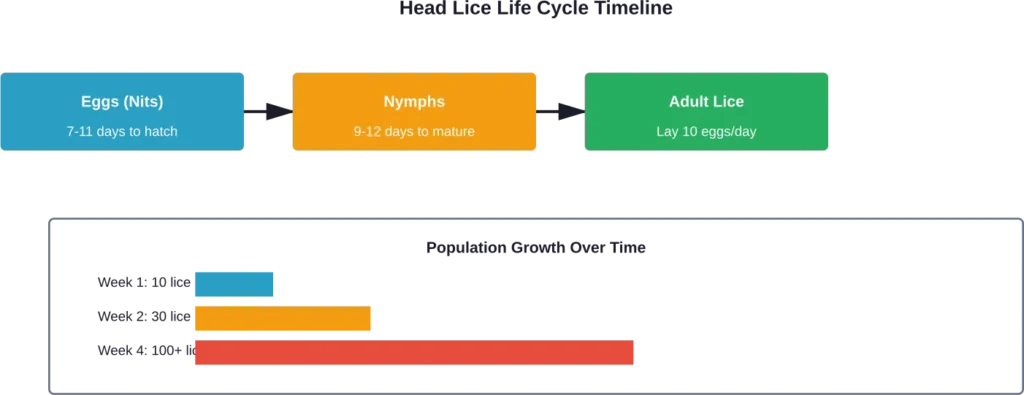
Here’s the thing though—head lice reproduce at alarming speed. Competitor data shows that lice eggs, or nits, take 7 to 11 days to hatch. The newly hatched lice then mature into breeding adults within 9 to 12 days.
Once mature, female lice lay their first eggs just 24 hours after mating. The female only needs to mate once, then produces up to 10 eggs daily for the rest of her life.
That exponential growth means a small infestation becomes severe remarkably fast. Within weeks, dozens of lice can turn into hundreds.
Severe Scalp Itching and Discomfort
The most immediate consequence of untreated lice is relentless itching. This isn’t mild discomfort—it’s intense, distracting, and constant.
According to the CDC, itching (pruritus) is caused by an allergic reaction to louse bites. The more lice present, the more bites, and the worse the reaction becomes.
Many people experience a tickling sensation from lice moving through hair. Combined with severe itching, this creates significant distress, especially for children trying to concentrate at school.
Sleep disruption is common. The itching often intensifies at night when lice are most active, leading to exhaustion and decreased quality of life.
Secondary Bacterial Infections
Now, this is where it gets serious. Constant scratching damages the scalp’s protective barrier, creating open wounds vulnerable to bacterial infection.
Research published in medical literature shows that secondary bacterial infections are a documented complication of prolonged head lice infestations. Scratched areas can become infected with common skin bacteria, leading to conditions like impetigo.
Symptoms of secondary infection include:
- Red, swollen, tender areas on the scalp
- Crusting or oozing from scratch marks
- Increased pain beyond typical itching
- Swollen lymph nodes in the neck
- Fever in severe cases
These infections require medical treatment with antibiotics. What started as a simple lice problem becomes a more serious health issue requiring professional intervention.
Possible Hair Loss and Scalp Damage
Can untreated head lice cause hair loss? The short answer is yes, though it’s typically not permanent.
Hair loss from lice occurs through several mechanisms. Aggressive scratching can physically damage hair follicles and break hair shafts. Inflammation from allergic reactions may weaken hair roots.
In severe, long-standing infestations, the combination of scratching trauma, infection, and inflammation creates conditions where hair falls out more easily. Bald patches may develop in heavily affected areas.
That said, the hair loss is usually temporary. Once the infestation is treated and the scalp heals, normal hair growth typically resumes. But recovery takes time, and the psychological impact shouldn’t be underestimated.
Rapid Spread to Family and Contacts
According to the CDC, head lice spread primarily through direct head-to-head contact. They can also spread through shared items like hats, brushes, or bedding, though this is less common.
An untreated infestation acts as a constant source of transmission. Family members, classmates, and close contacts face repeated exposure, creating cycles of reinfection.
Schools often have no-nit policies requiring children to stay home until lice-free. Prolonged infestations mean extended absences, affecting education and creating social stigma.
| Timeframe Untreated | Likely Consequences | Transmission Risk |
|---|---|---|
| 1-2 weeks | Moderate itching, growing population | Low to Moderate |
| 3-4 weeks | Severe itching, visible lice, sleep disruption | High |
| 1-2 months | Scalp damage, possible infection, significant spread | Very High |
| 3+ months | Chronic infection, hair loss, psychological impact | Extremely High |
Psychological and Social Impact
Real talk: the emotional toll of prolonged lice infestations can be devastating, especially for children.
Kids with untreated lice often face teasing, social isolation, and embarrassment. The visible scratching, coupled with the stigma around lice, can damage self-esteem and peer relationships.
Parents experience stress, frustration, and sometimes shame. The perception that lice indicate poor hygiene (which isn’t true) adds to the psychological burden.
Sleep deprivation from nighttime itching compounds these effects, creating irritability and difficulty concentrating during the day.
Do Head Lice Eventually Die Off on Their Own?
Here’s a critical misconception: lice won’t just disappear without intervention.
Head lice are parasitic insects that require human blood to survive and will continue living as long as they have access to the scalp. The reproductive cycle ensures continuous population renewal, with new lice hatching from eggs constantly.
Waiting for lice to die off naturally simply doesn’t work. Active treatment is essential for elimination.
Treatment Options and Effectiveness
The CDC notes that both over-the-counter and prescription treatments are available for head lice. Treatment effectiveness varies based on the product and proper application.
Over-the-counter options include permethrin 1% and pyrethrins. According to research, dimethicone-based treatments show 97% efficacy, making them highly effective first-line options.
Prescription medications include stronger formulations like malathion, benzyl alcohol, ivermectin, and spinosad. These are typically reserved for resistant cases or treatment failures.
But here’s the catch—resistance to neurotoxic treatments like permethrin has increased globally. According to research, reported efficacy of permethrin fell from 97% in the 1990s to 30% in 2010.
The Importance of Prompt Treatment
Given everything above, prompt treatment isn’t just recommended—it’s essential. The longer lice remain untreated, the worse every consequence becomes.
Early intervention means:
- Smaller lice populations that are easier to eliminate
- Less scalp damage and reduced infection risk
- Minimal spread to family and contacts
- Faster return to school and normal activities
- Lower overall treatment costs and effort
The CDC recommends checking all household members when lice are discovered and treating everyone with active infestations simultaneously. This synchronous approach breaks the transmission cycle.
Environmental cleaning helps but isn’t the priority. Lice can’t survive more than 1-2 days off the human head. Focus treatment efforts on the people, not extensive home decontamination.
Frequently Asked Questions
Individual adult lice live for about 30 days on the human scalp. However, because they reproduce continuously, an untreated infestation can persist indefinitely as new lice hatch from eggs to replace dying adults.
Head lice themselves don’t transmit serious diseases. However, secondary bacterial infections from scratching can develop, requiring antibiotic treatment. In rare cases documented in medical literature, body lice (not head lice) can transmit diseases like epidemic typhus, but head lice are not known to spread such illnesses.
Hair loss from head lice is typically temporary. Once the infestation is treated and the scalp heals from scratching and inflammation, normal hair growth usually resumes. Permanent hair loss from lice alone is extremely rare.
Most infestations involve 10-20 live lice, which is already significant given their reproduction rate. Severe infestations may have 100 or more lice, though exact numbers vary. Even small numbers warrant immediate treatment given how quickly populations grow.
No, head lice will not go away on their own. They require human blood to survive and will continue living, feeding, and reproducing as long as they have access to the scalp. Active treatment is necessary for elimination.
Ignoring head lice for months leads to severe scalp damage, high risk of secondary bacterial infection, significant hair loss, massive lice populations, and extensive spread to others. Chronic infestations also cause sleep disruption, psychological distress, and social isolation.
See a doctor if over-the-counter treatments fail after two applications, if signs of infection develop (increased redness, swelling, oozing, fever), if the infestation affects very young children (under 2 months), or if lice appear in eyebrows or eyelashes.
Conclusion
Leaving head lice untreated creates a cascade of worsening problems—from intense itching and sleep loss to bacterial infections, hair loss, and psychological distress. The exponential reproduction rate means small infestations become severe rapidly.
According to authoritative health sources like the CDC and NIH, head lice won’t resolve without active intervention. Treatment options are widely available, with modern dimethicone-based products showing 97% effectiveness.
The bottom line? Don’t wait. If head lice are discovered, treat immediately to prevent complications and stop transmission. Early action means faster resolution, less discomfort, and better outcomes for everyone involved.
Check all household members, use effective treatments as directed, and consult healthcare providers if standard treatments fail or complications develop.