
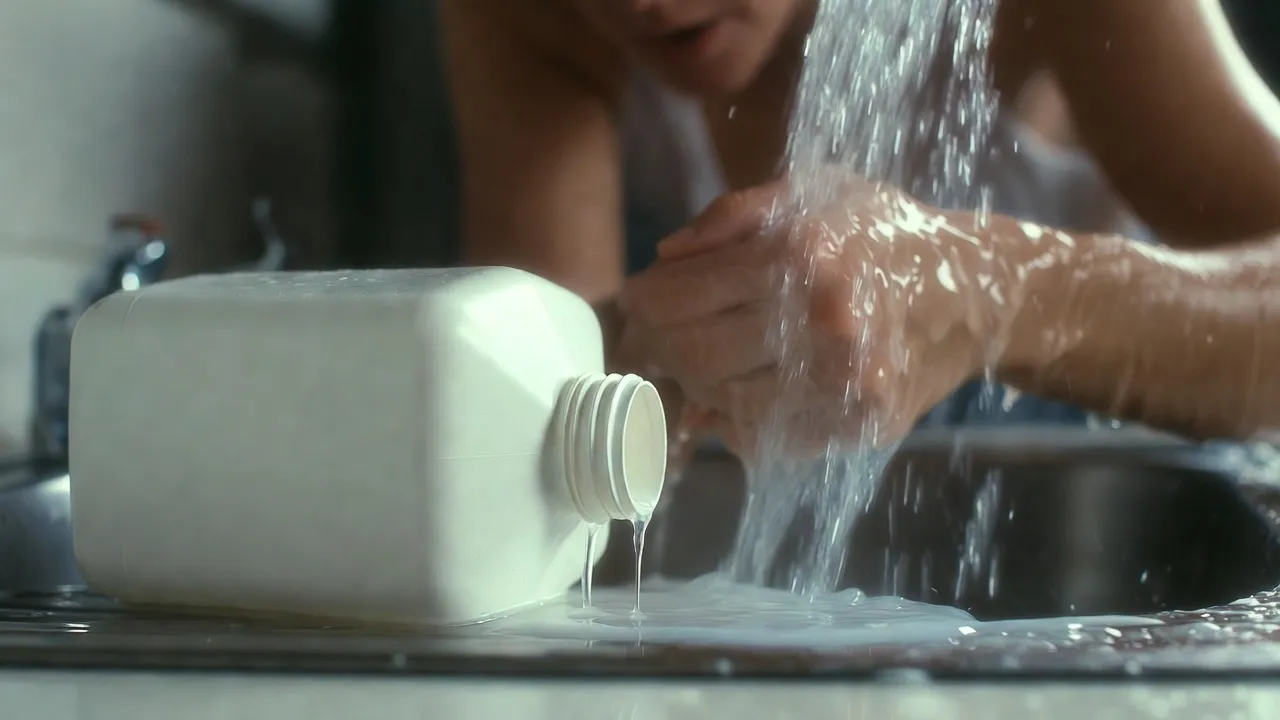
Quick Summary: If bleach gets on your skin, immediately rinse the affected area with cool running water for at least 10-15 minutes. Household bleach (3-6% sodium hypochlorite) can cause chemical burns, irritation, and tissue damage upon contact. Remove contaminated clothing, monitor for signs of burns or allergic reactions, and seek medical attention if pain persists, blistering occurs, or if a large area is affected.
Bleach is one of the most common household cleaning agents, sitting under kitchen sinks and in laundry rooms across the country. But this powerful disinfectant can turn dangerous the moment it touches your skin.
According to Poison Control, household bleach products typically contain 3-6% sodium hypochlorite, though some concentrated formulations sold for home use can reach higher concentrations. When this corrosive substance contacts skin, it doesn’t just sit there. It immediately begins reacting with your tissue.
Understanding what happens during bleach exposure and knowing the right response can prevent minor accidents from becoming serious medical emergencies.
Understanding Bleach and How It Affects Your Skin
Sodium hypochlorite is the active ingredient responsible for bleach’s cleaning power. This chemical works by breaking down proteins and organic matter, which makes it excellent at killing bacteria and removing stains.
The problem? Your skin is made of organic tissue and proteins.
When bleach contacts skin, it begins a corrosive process. According to the CDC, caustic products like bleach cause burns on contact with skin, eyes, and other tissues. More concerning is that caustic substances do their damage instantly—the injury cannot be reversed, only treated.
The severity of damage depends on several factors: the concentration of bleach, how long it remains on the skin, and the sensitivity of the exposed area. Commercial bleach products containing 10% or higher concentrations pose significantly greater risks than standard household formulations.
Immediate Effects of Bleach Contact
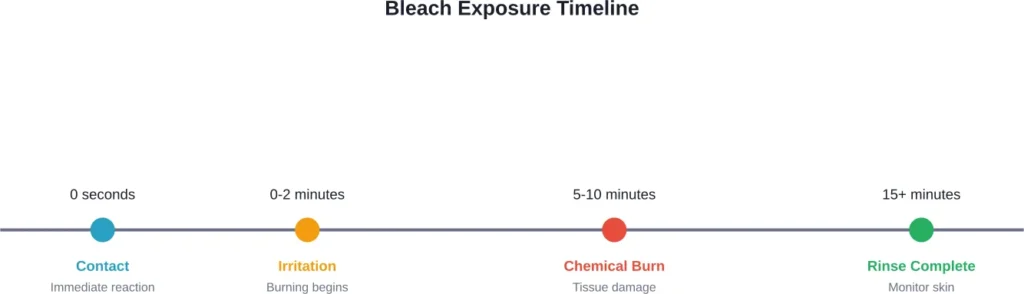
The moment bleach touches your skin, you might experience:
- A slippery or slimy sensation (caused by bleach breaking down skin proteins)
- Redness and irritation in the affected area
- Stinging or burning sensations
- White or lightened patches where skin has been chemically altered
- Pain that intensifies if the bleach isn’t removed quickly
Some people develop allergic reactions to sodium hypochlorite. Medical research has documented cases where healthcare workers experienced urticarial rash occurring approximately 5-10 minutes after contact with even diluted 0.1% sodium hypochlorite cleaning solutions.
Immediate First Aid Steps
Time matters when bleach contacts your skin. Here’s exactly what to do:
Step 1: Rinse Immediately and Thoroughly
Flush the affected area with cool running water for at least 10-15 minutes. Medical guidance emphasizes that plain running water is the best initial treatment. Don’t use hot water, as heat can increase tissue damage and worsen burns.
The slippery feeling will gradually decrease as you rinse away the bleach. Keep rinsing even after this sensation disappears to ensure all traces are removed.
Step 2: Remove Contaminated Clothing
While rinsing, carefully remove any clothing or jewelry that came into contact with bleach. These items can trap the chemical against your skin, prolonging exposure and deepening the burn.
Handle contaminated clothing carefully to avoid spreading bleach to unaffected areas.
Step 3: Apply Cool Compresses
After thorough rinsing, apply cool, wet compresses to relieve pain and reduce inflammation. Avoid ice directly on the skin, which can cause additional damage to already compromised tissue.
Step 4: Monitor the Affected Area
Watch for developing symptoms over the next 24 hours. Chemical burns from bleach can continue causing damage even after the initial exposure ends.
| Symptom Severity | Signs | Action Required |
|---|---|---|
| Mild | Minor redness, slight irritation | Home care, monitor closely |
| Moderate | Persistent pain, white patches, swelling | Contact healthcare provider |
| Severe | Blistering, intense pain, large affected area | Seek emergency care immediately |
When Medical Attention Is Necessary
Not every bleach exposure requires an emergency room visit. But certain situations demand professional medical evaluation.
Seek immediate medical care if:
- The affected area is large
- Blistering develops or skin appears charred
- Pain intensifies rather than improving after rinsing
- Bleach contacted sensitive areas like the face, hands, feet, groin, or joints
- Signs of infection appear (increased redness, warmth, pus, fever)
- Allergic reaction symptoms develop (widespread rash, difficulty breathing, swelling beyond the contact area)
If bleach splashes in your eyes, flush immediately with water for at least 15 minutes and get to an emergency room or eye doctor right away. According to medical guidance, it may take up to 24 hours after initial contact to determine if permanent eye damage has occurred.
For assistance with poison exposure, contact Poison Control at 1-800-222-1222 or use the webPOISONCONTROL online tool for free, expert guidance.
Long-Term Effects and Healing
Minor bleach burns typically heal within a few days to a week with proper care. The affected skin might peel as it regenerates, similar to a mild sunburn.
More severe chemical burns can result in:
- Scarring or permanent skin discoloration
- Increased sensitivity in the affected area
- Developed contact dermatitis or chemical sensitivity
- In cases of deep tissue damage, potential for infection
Severe bleach exposure can cause rapid formation of ulcerations with necrotic tissue and surrounding erythematous skin.
Prevention: Working Safely With Bleach
The best treatment for bleach burns is preventing them in the first place.
Essential Safety Measures
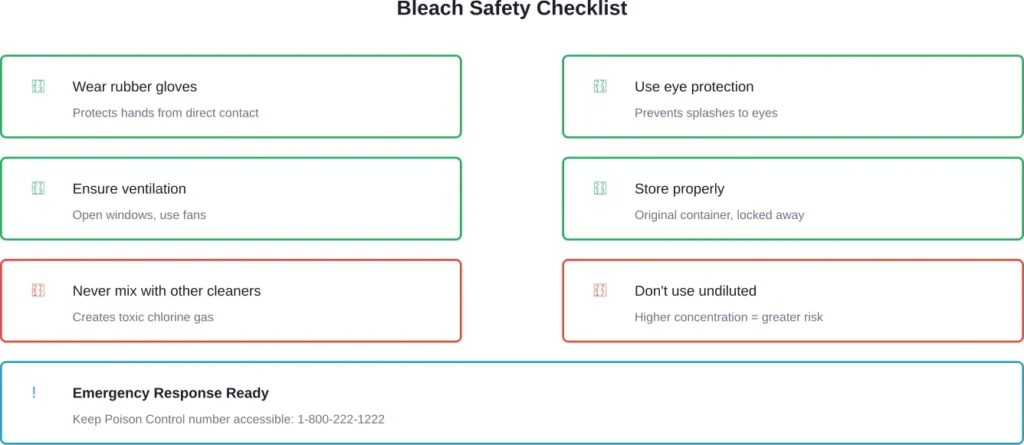
Always wear protective equipment when working with bleach. Rubber gloves and eye protection are non-negotiable, especially when cleaning with concentrated solutions.
Ensure adequate ventilation. Open windows and use fans to prevent chlorine gas buildup, which can cause respiratory irritation alongside skin exposure risks.
Never mix bleach with other cleaning products. According to Poison Control, mixing bleach with acids forms chlorine gas, which causes burning and irritation of the eyes, nose, and throat, and can lead to coughing or lung injury.
Proper Dilution Matters
Follow label directions exactly. The CDC notes that household bleach should be diluted according to manufacturer instructions for specific cleaning tasks. More isn’t better—it’s just more dangerous.
Store bleach in its original container with child-resistant caps tightly secured. Keep it locked out of sight and reach of children and pets.
Frequently Asked Questions
Rinse the affected area with cool running water for at least 10-15 minutes. Continue rinsing until the slippery sensation completely disappears and no bleach odor remains on the skin.
The slippery sensation occurs because bleach breaks down the proteins and fats in your skin cells through a process called saponification. Essentially, bleach is converting your skin tissue into a soap-like substance, which feels slippery to the touch.
Yes, concentrated bleach or prolonged exposure can cause permanent damage including scarring, discoloration, and increased sensitivity. According to Poison Control, caustic products like bleach do their damage instantly, and the injury cannot be reversed, only treated.
All concentrations can cause irritation, but household bleach typically contains 3-6% sodium hypochlorite. Commercial bleach formulations with 10% or higher concentrations pose significantly greater risks and can cause severe chemical burns more rapidly.
After thorough rinsing, applying cool compresses can help relieve pain. Avoid putting lotions, oils, or ointments on the affected area unless directed by a healthcare provider, as these can trap heat and potentially worsen the burn.
Yes, some individuals develop type I hypersensitivity reactions to sodium hypochlorite. Medical research documents cases where urticarial rash appeared 5-10 minutes after exposure to even diluted bleach solutions, typically lasting less than 24 hours.
Seek emergency care if the affected area is large, blistering develops, pain intensifies after rinsing, bleach contacted eyes or sensitive areas, or signs of allergic reaction appear. For eye exposure, rinse for 15 minutes and go to the emergency room immediately.
Taking Bleach Safety Seriously
Household bleach is incredibly effective for cleaning and disinfecting, but it demands respect and careful handling. The chemical burns it causes are not minor inconveniences—they represent actual tissue damage that begins the instant contact occurs.
The good news? Most bleach exposures can be managed effectively with immediate action. Rinse thoroughly, monitor carefully, and don’t hesitate to seek professional medical advice when symptoms warrant concern.
Keep Poison Control’s number accessible (1-800-222-1222) whenever working with cleaning chemicals. Prevention through proper protective equipment and safe handling practices remains the best approach, but knowing how to respond when accidents happen can make the difference between minor irritation and serious injury.