
Quick Summary: Drinking expired soda is generally safe since carbonated soft drinks don’t spoil in a way that causes foodborne illness. The dates on soda products are quality markers, not safety warnings. While an expired soda won’t make you sick if the container is intact, it will likely taste flat and less flavorful due to carbonation loss and ingredient degradation over time.
You’ve just discovered a dusty can of cola in the back of your pantry, and the date stamped on the bottom was six months ago. Before tossing it out, you wonder: is this actually dangerous, or just not as good?
The answer might surprise you. Unlike perishable foods that harbor bacteria and cause illness, soda operates under completely different rules when it comes to expiration.
Understanding What “Expired” Really Means for Soda
According to the USDA, the dates printed on soda containers aren’t expiration dates in the traditional sense. They’re quality indicators. The Food and Drug Administration ensures that carbonated soft drinks are safe, sanitary, and honestly labeled through Current Good Manufacturing Practices.
Here’s the thing though—soda doesn’t expire the way milk or meat does. The term “best-by” or “best if used by” tells you when the manufacturer believes the product will taste its best, not when it becomes unsafe.
The USDA estimates that 30 percent of the food supply is lost or wasted at the retail and consumer levels, often because of confusion about date labels. That cola sitting in your cupboard probably falls into this category.
The Difference Between Safety and Quality
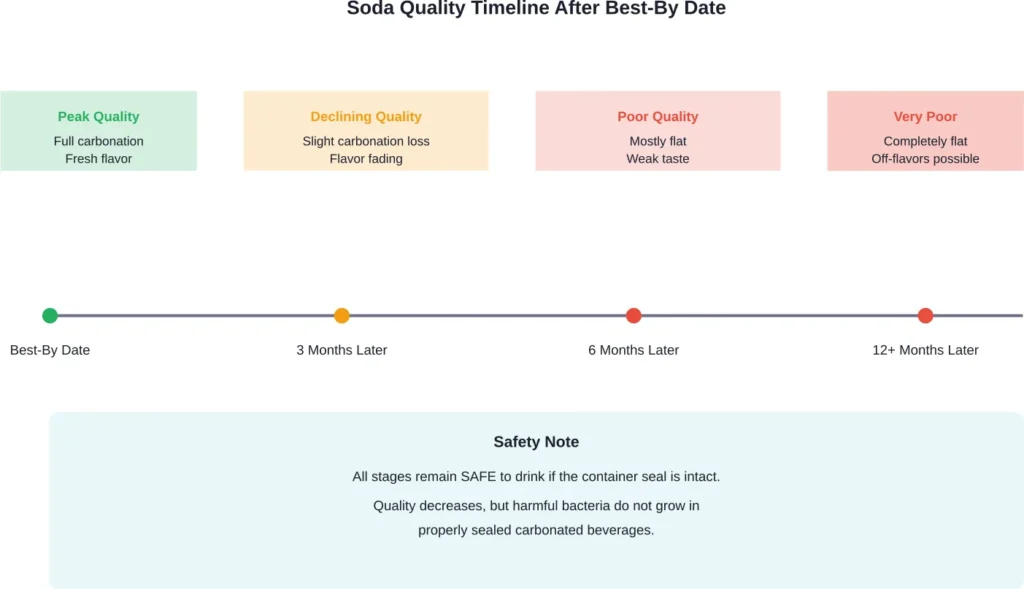
Carbonated beverages remain safe to drink indefinitely if the seal is intact. But safe doesn’t mean enjoyable.
Over time, three main things happen to soda:
- Carbonation escapes through the container seal
- Artificial sweeteners break down (especially in diet sodas)
- Flavoring compounds degrade
None of these processes create harmful bacteria or toxins. The beverage just becomes flat, bland, and disappointing.
What Actually Happens When You Drink Expired Soda
So you’ve decided to crack open that old can. What should you expect?
Generally speaking, the experience will be underwhelming rather than dangerous. The soda will likely taste flat because carbon dioxide has escaped. The flavor will be weaker, and sweetness might seem off.
Diet sodas fare worse than regular ones. Artificial sweeteners like aspartame break down faster than sugar, especially when exposed to heat. A diet cola that’s a year past its best-by date might taste noticeably different or even slightly bitter.
Regular Soda vs. Diet Soda Shelf Life
| Soda Type | Quality Period (Unopened) | Quality Period (Opened) | Main Degradation Factor |
|---|---|---|---|
| Regular Soda | 6-9 months past date | 2-4 days refrigerated | Carbonation loss |
| Diet Soda | 3 months past date | 2-4 days refrigerated | Sweetener breakdown |
| Fountain Soda | N/A (made fresh) | 1-2 days refrigerated | Rapid carbonation loss |
The container type matters too. Glass bottles hold carbonation longer than plastic, and cans fall somewhere in between. Plastic is permeable to carbon dioxide over time, which is why that two-liter bottle goes flat faster.
When Expired Soda Could Be a Problem
Real talk: there are scenarios where you shouldn’t drink that old soda.
If the can is bulging, dented severely, or shows signs of rust, toss it. Improper storage or damaged containers can potentially allow contamination. While extremely rare in commercial sodas, botulism can occur in improperly sealed beverages—the FDA recalled Good Brain Tonic due to botulism potential (announced April 6, 2026, published April 14, 2026).
Look for these warning signs:
- Bulging or swollen containers
- Hissing sound when opening (not the normal carbonation release)
- Unusual odors
- Visible mold or particles floating inside
- Containers stored in extreme heat or direct sunlight
If any of these are present, don’t taste it. Just throw it away.
Storage Conditions Make a Difference
Research published in Environmental Analysis and Health Toxicology examined carbonated beverages stored under different conditions. Storage temperature and sunlight exposure significantly affected beverage properties over time.
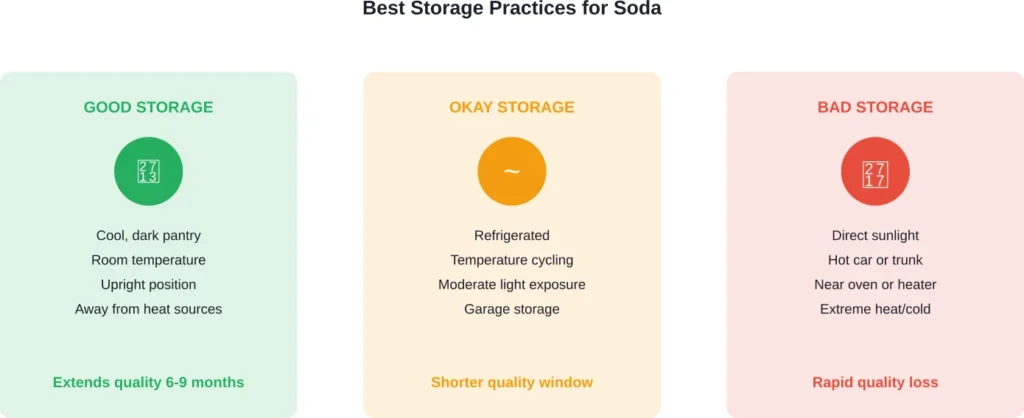
Sodas stored at room temperature maintain quality longer than those exposed to heat cycling or direct sunlight. Heat accelerates both carbonation loss and chemical degradation.
How to Maximize Soda Freshness
Want that soda to stay drinkable as long as possible? Storage is everything.
Keep unopened sodas in a cool, dark place. Room temperature is fine—refrigeration isn’t necessary until you’re ready to drink. Extreme temperature changes are the enemy.
Once opened, the clock starts ticking fast. Even refrigerated, an opened soda loses carbonation within 2-4 days. Those clip-on soda savers help a bit, but physics eventually wins.
The Science Behind Carbonation Loss
Why does soda go flat in the first place? It’s all about pressure and permeability.
Carbon dioxide is forced into the liquid under pressure during manufacturing. The sealed container maintains that pressure. But container materials aren’t perfectly impermeable—gas molecules slowly escape over time, even through sealed containers.
Temperature accelerates this process. Heat increases molecular movement, helping CO2 escape faster. That’s why a warm soda tastes flatter than a cold one with the same age and storage history.
Common Questions About Expired Soda
No, expired soda won’t make you sick if the container seal is intact and shows no signs of damage. According to the FDA, carbonated soft drinks are manufactured under strict safety standards. The worst outcome is poor taste, not illness.
Unopened regular soda maintains good quality for 6-9 months past the printed date when stored properly. Diet sodas have a shorter window of about 3 months due to artificial sweetener degradation. After these periods, the soda remains safe but tastes increasingly flat and stale.
Yes, diet soda loses quality faster because artificial sweeteners break down more quickly than natural sugar. Aspartame, commonly used in diet sodas, is particularly susceptible to degradation from heat and time, creating off-flavors within months past the best-by date.
Expired soda typically tastes flat, weak, and less sweet than fresh soda. The carbonation fizzle is gone or minimal, and the flavor seems muted. Diet sodas may develop a slightly bitter or chemical aftertaste as artificial sweeteners break down.
Refrigeration isn’t necessary for unopened soda and doesn’t significantly extend shelf life for quality purposes. Cool, stable temperatures matter more than cold storage. However, refrigeration does slow chemical processes slightly and ensures the soda is ready to drink cold when opened.
You can drink it if the container isn’t damaged, but the quality will be compromised. Heat accelerates carbonation loss and flavor degradation. If the can is bulging or the plastic bottle is misshapen from heat expansion, discard it rather than risk contamination from a compromised seal.
Check for bulging containers, unusual hissing when opening, strange odors, visible particles or mold, or significant discoloration. If the soda smells fermented or “off” in any way, don’t drink it. When in doubt, throw it out—these visual and olfactory cues trump any printed date.
The Bottom Line on Drinking Expired Soda
Drinking soda past its best-by date won’t send you to the emergency room. The dates on these beverages are quality markers, not safety deadlines.
That said, the experience won’t be great. Flat soda with muted flavor isn’t dangerous—just disappointing. If you’re considering whether to drink that old can, ask yourself if mediocre taste is worth it when fresh soda is readily available.
For businesses managing inventory, proper rotation prevents waste while ensuring customer satisfaction. For home consumers, buying quantities you’ll actually consume within a few months means you’ll always enjoy soda at its best.
When that container shows any signs of damage or the contents smell wrong, trust your instincts over the calendar. Food safety isn’t about arbitrary dates—it’s about recognizing when something has genuinely gone wrong.
Keep your sodas cool, store them properly, and consume them within reasonable timeframes. Your taste buds will thank you, even if the expiration police won’t come knocking either way.