

Quick Summary: Swallowing small amounts of toothpaste occasionally is generally harmless, though it may cause minor stomach upset. Large ingestions of fluoride-containing toothpaste can lead to symptoms like nausea, vomiting, and diarrhea. According to the CDC, approximately 5 grams of sodium fluoride is considered a probable lethal oral dose, but typical toothpaste swallowing incidents involve far smaller amounts and rarely cause serious harm.
Most people have accidentally swallowed a bit of toothpaste while brushing. It happens. But what about those times when a child squeezes half a tube into their mouth, or someone genuinely ingests a significant amount?
The answer depends largely on how much was consumed and what ingredients the toothpaste contains. While small, unintentional ingestions rarely cause problems, larger amounts can trigger uncomfortable symptoms and, in extreme cases, pose serious health risks.
Why Swallowing Toothpaste Can Be Harmful
The primary concern with toothpaste ingestion centers on fluoride. According to the American Dental Association, fluoride is nature’s cavity fighter and plays an essential role in preventing tooth decay. But fluoride is also a substance that can be toxic when consumed in large quantities.
The CDC notes that approximately 5 grams of sodium fluoride represents a probable lethal oral dose. For context, that’s roughly equivalent to consuming an entire tube or more of standard fluoride toothpaste at once. Most accidental ingestions involve far smaller amounts.
Here’s the thing though—toothpaste contains other ingredients beyond fluoride that can cause issues when swallowed. Detergents, abrasives, and flavorings aren’t meant for internal consumption. Even fluoride-free varieties can cause stomach upset if eaten in quantity.
Common Symptoms of Toothpaste Ingestion
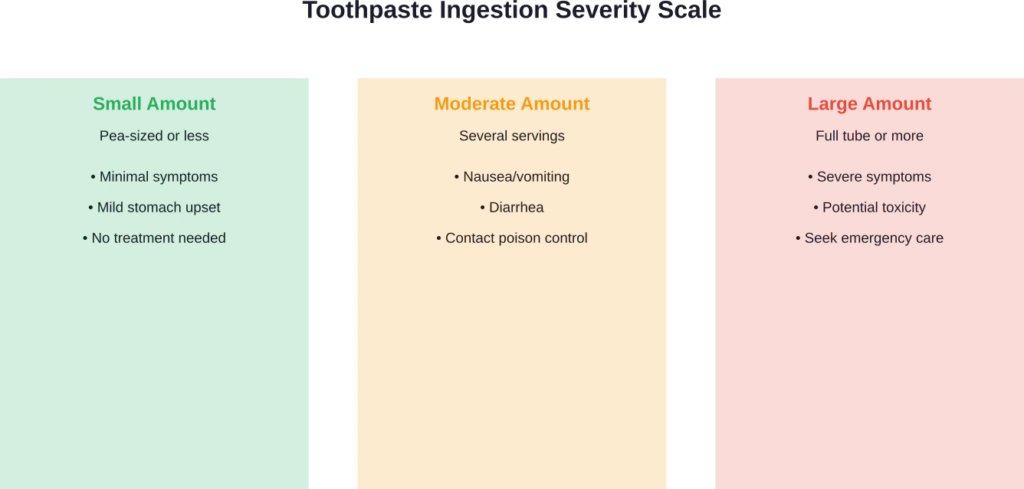
When someone swallows toothpaste, symptoms vary based on the amount consumed. Small amounts typically cause minimal issues, if any.
Mild Symptoms (Small Amounts)
Most accidental ingestions produce only minor effects:
- Upset stomach or mild nausea
- Slight stomach discomfort
- Temporary loose stools
These symptoms usually resolve on their own within a few hours without medical intervention.
Moderate to Severe Symptoms (Larger Amounts)
Consuming larger quantities of fluoride toothpaste can trigger more significant reactions:
- Nausea and vomiting
- Diarrhea
- Abdominal pain and cramping
- Increased salivation
- Excessive thirst
In rare cases involving massive fluoride ingestion, serious complications can occur, including muscle weakness, seizures, or cardiac issues. But again, these scenarios typically require consuming extraordinary amounts.
What Toothpaste Contains That Causes Problems
Understanding what’s inside toothpaste helps explain why swallowing it causes issues.
| Ingredient | Purpose | Risk When Swallowed |
|---|---|---|
| Fluoride (sodium fluoride or stannous fluoride) | Prevents cavities, strengthens enamel | Stomach upset, potential toxicity in large amounts |
| Detergents (sodium lauryl sulfate) | Creates foam, helps clean | Gastrointestinal irritation |
| Abrasives (silica, calcium carbonate) | Removes stains, polishes teeth | Stomach discomfort |
| Flavorings and sweeteners | Improves taste | Generally minimal risk, may contain xylitol |
Worth noting: some toothpastes contain xylitol as a sweetener. While safe for humans, the FDA warns that xylitol is extremely dangerous for dogs and can cause rapid insulin release and liver damage in canines.
Children and Toothpaste Ingestion
Research shows that children commonly swallow toothpaste during brushing, with studies finding varying percentages of toothpaste ingestion.
That’s significant. Research suggests that when dental care items contribute approximately 39-51% of total fluoride intake, the optimal daily dietary fluoride intake might be half of the recommended amount.
Young children are particularly vulnerable because they haven’t fully developed the ability to spit effectively. They also find flavored toothpaste appealing and may intentionally eat it.
The American Dental Association recommends using only a pea-sized amount of fluoride toothpaste for children ages 3-6, and just a rice grain-sized smear for children under 3. This minimizes fluoride exposure while still providing cavity protection.
What to Do If Someone Eats Toothpaste
Real talk: most toothpaste ingestions don’t require emergency intervention. But knowing when to seek help matters.
For Small Amounts
If someone swallows a pea-sized amount or less during normal brushing:
- No treatment is typically necessary
- Give them water to drink
- Monitor for any unusual symptoms
For Larger Amounts
If a child eats a significant quantity of toothpaste (more than what would be used for brushing):
- Do not induce vomiting
- Contact Poison Control immediately at 1-800-222-1222 or use the webPOISONCONTROL online tool
- Have the toothpaste package available to provide ingredient information
- Follow the guidance provided by poison control experts
Poison control services are free, confidential, and available 24/7. They can assess the situation and recommend appropriate next steps.
When to Seek Emergency Care
Go to the emergency room or call 911 if someone experiences:
- Severe or persistent vomiting
- Difficulty breathing
- Seizures or convulsions
- Loss of consciousness
- Irregular heartbeat
Preventing Toothpaste Ingestion
Prevention is straightforward. Store toothpaste out of children’s reach, just like medications. Supervise young children during brushing and teach them to spit, not swallow.
Use appropriate amounts—more toothpaste doesn’t mean cleaner teeth. A pea-sized portion provides adequate cleaning and fluoride benefits.
Consider fluoride-free toothpaste for very young children who consistently swallow during brushing, though according to the ADA, fluoride is essential for dental health and helps prevent cavities and strengthen tooth enamel.
Frequently Asked Questions
Swallowing a small amount of toothpaste once is generally not harmful. It may cause mild stomach upset, but serious symptoms are unlikely from a single incident involving normal brushing amounts.
According to the CDC, approximately 5 grams of sodium fluoride represents a probable lethal dose. This equals roughly one full tube or more of standard fluoride toothpaste. Smaller amounts can still cause symptoms but are rarely life-threatening.
Yes, adults can experience stomach upset, nausea, and diarrhea from swallowing toothpaste, though they typically tolerate larger amounts better than children due to their higher body weight.
Contact Poison Control at 1-800-222-1222 immediately. Do not induce vomiting. Have the toothpaste packaging available and follow the guidance provided by poison control experts.
Fluoride-free toothpaste typically causes fewer concerns when swallowed, though the detergents and other ingredients can still irritate the stomach and cause discomfort.
Watch for nausea, vomiting, diarrhea, abdominal pain, increased salivation, or excessive thirst. If these symptoms appear after toothpaste ingestion, contact a healthcare provider or poison control.
Yes. Use a rice grain-sized amount for children under 3 and a pea-sized amount for children 3-6 years old. This provides adequate cleaning while minimizing fluoride exposure if swallowed.
The Bottom Line on Eating Toothpaste
Accidentally swallowing small amounts of toothpaste during brushing won’t cause lasting harm. Most incidents result in no symptoms or minor stomach upset that resolves quickly.
But toothpaste isn’t food. The fluoride and other ingredients can cause significant symptoms when consumed in larger quantities. Children face particular risk because they swallow more frequently during brushing and may find flavored toothpaste tempting.
Simple prevention measures—appropriate portions, supervision, and proper storage—eliminate most risks. And if someone does ingest a concerning amount, poison control stands ready to help with expert guidance 24 hours a day.
Keep toothpaste where it belongs: on the brush, not in the stomach.