

Quick Summary: This guide reviews 15 leading web design agencies in 2026 that deliver professional, scalable design services through outsourcing models. Each company brings specialized expertise in UI/UX, branding, and custom web development, helping businesses of all sizes build effective online experiences without the overhead of in-house teams.
Building a polished, conversion-focused website doesn’t require hiring a twenty-person design department. Many growing companies hit a wall trying to juggle marketing campaigns, product development, and maintaining an attractive web presence simultaneously. That’s where outsourcing web design makes sense.
According to Skillademia’s 2025 statistics, 41% of businesses rely on in-house graphic designers, 35% edit their own images, and 24% outsource their digital design needs. These the flexibility of outsourcing their digital design needs—a number that continues climbing as subscription-based and project-based design models mature.
The right outsource partner becomes an extension of your marketing or product team. They bring specialized talent, fresh perspectives, and the ability to scale up or down without the friction of hiring, onboarding, or layoffs.
But how do you choose? The market offers everything from boutique studios to enterprise-scale creative agencies. Some excel at SaaS product interfaces. Others nail eCommerce or nonprofit storytelling.
This article breaks down 15 standout web design companies in 2026—covering what they do best, who they serve, and what makes each one different. No fluff. Just the details you need to match your project with the right team.
Why Outsource Web Design in 2026?
Here’s the thing—most businesses don’t need full-time design staff. Projects come in waves. A website redesign might take three months, then you’re back to maintenance mode for a year. Keeping designers on payroll during slow periods burns budget.
Outsourcing flips that model. You get access to senior-level talent exactly when you need it, without the overhead of salaries, benefits, software licenses, and management time. External teams with subscription models can turn around assets overnight, especially critical when According to Deloitte’s 2024 survey, 80% of organizations prioritize design capabilities as essential for competitive advantage..
The Business Case for External Design Teams
Speed matters. In-house hiring takes weeks or months. Outsourced agencies start delivering within days. They’ve already assembled their teams, refined their workflows, and solved the problems you’re about to encounter.
Specialization matters too. A boutique agency focused exclusively on SaaS products understands user onboarding flows, freemium conversion funnels, and dashboard design patterns in ways a generalist in-house designer might not.
And then there’s cost predictability. Many modern design services operate on fixed monthly subscriptions or clearly scoped project fees. You know what you’re paying upfront—no surprise invoices, no scope creep.
How We Evaluated These Web Design Companies
We didn’t just compile a random list. Each agency here was assessed across several dimensions: depth of services, client feedback from platforms like Clutch, portfolio quality, team size and structure, communication practices, and industry specialization.
Real talk: some agencies are brilliant at branding but weak on technical implementation. Others ship pixel-perfect interfaces but struggle with strategy. The best fit depends entirely on where you are in your product lifecycle and what gaps you need to fill.
We prioritized companies with verifiable case studies, transparent processes, and a track record of delivering results—not just pretty mockups.
Top 15 Outsource Web Design Companies in 2026
Here’s the breakdown. Each company brings something distinct to the table.
1. Mobian
Mobian builds dedicated engineering teams that deliver production-ready digital products with strong full-stack web development capabilities. They create scalable web solutions from wireframes to deployment, emphasizing clean architecture, intuitive interfaces, and documented code for long-term maintainability.
Their approach covers end-to-end delivery including responsive design, backend integration, and post-launch support, ensuring websites and web applications perform reliably at scale.
Best for: Companies in IT, healthcare, fintech, and logistics needing reliable outsourced web and digital product development with senior expertise.
Model: Dedicated teams or embedded engineers with full delivery ownership and ongoing partnership.
Approach: Full-stack delivery, scalable architecture, legacy integration, and continuous support.
Contact Information:
- Website: mobian.studio
- Phone: [email protected]
- Address: Harju maakond, Tallinn, Kesklinnalinnaosa, Masina tn 22, 10113
- LinkedIn: www.linkedin.com/company/mobian-studio
2. Oski
Oski designs, develops, and maintains well-engineered web solutions for tech-forward enterprises and ambitious startups. They focus on frontend excellence, intuitive UI/UX design, and seamless integration using modern frameworks alongside robust CMS platforms.
Their projects combine innovative, conversion-focused design with strong performance and scalability, helping businesses build digital experiences that drive operations forward.
Best for: Tech-forward enterprises and startups in travel, logistics, e-commerce, education, fintech, and insurance needing high-quality outsourced web development.
Services: Frontend solutions, CMS development, cloud integration, and full software delivery with maintenance.
Model: Turnkey outsourced web and software development with fast team ramp-up.
Contact Information:
- Website: oski.site
- Phone: +48571282759
- Email: [email protected]
- Address: Kaupmehe tn 7, 10114 Tallinn, Estonia
- LinkedIn: www.linkedin.com/company/oski-solutions
3. Lengreo
Lengreo serves as a complete marketing and tech partner, delivering conversion-optimized websites and landing pages backed by full-funnel B2B strategy. They combine website development with SEO, paid ads, and lead generation to create digital assets that actively drive qualified leads and measurable business growth.
Their process includes discovery, business analysis, prototyping, design, implementation, and ongoing support — ensuring websites evolve with marketing goals.
Best for: B2B companies, SaaS, tech service providers, and international businesses seeking websites that generate leads and support full marketing performance.
Model: Full-service outsourced partnership integrating design, development, and performance marketing.
Client feedback: Clients highlight initiative, dedication, high-quality execution, and strong results in lead generation and conversion growth.
Contact Information:
- Website: Lengreo.com
- Phone: +31 686 147 566
- Email: [email protected]
- Address: Vrijstraat 9 C/D, 5611 AT Eindhoven, Netherlands
- LinkedIn: Lengreo
- Twitter: @Lengreo
- Instagram: @lengreo
4. Gilzor
Gilzor builds custom digital products from idea validation to launch, with a sharp focus on user-centric web development and UI/UX design that improves conversion rates. They provide full-cycle services including business analysis, prototyping, development, QA, and go-to-market support.
Their strength is creating functional, attractive web applications that connect effectively with target audiences while reducing risk through structured validation and refinement.
Best for: Startups launching MVPs, SMBs adding web sales channels, and product companies needing scalable web solutions with excellent user experience.
Approach: Idea validation, user-centric design, full-stack development, and post-launch support.
Notable work: Web platforms for airlines, e-commerce grocery solutions, and industry-specific digital products.
Contact Information:
- Website: www.gilzor.com
- Email: [email protected]
- Address: Poland, Warsaw, Office 58, street Adama Mickiewicza 37, 01-625
- LinkedIn: www.linkedin.com/company/gilzor-softwaredevelopment
5. A-listware

A-listware delivers outsourced software development with dedicated expertise in UX/UI design and responsive web solutions. They create user-engaged interfaces for web applications, SaaS platforms, and enterprise systems while maintaining brand excellence and conversion focus.
Their teams function as seamless extensions of client organizations, providing custom web development and full product engineering through managed outsourcing or team augmentation.
Best for: Enterprises, SMBs, and startups requiring scalable web platforms, UI/UX improvements, or dedicated development teams for digital products.
Services: UX/UI design, custom software development, dedicated teams, application services, and QA.
Approach: End-to-end management with emphasis on quality, seamless integration, and business-aligned design.
Contact Information:
- Website: a-listware.com
- Phone: +1 (888) 337 93 73
- Email: [email protected]
- Address: North Bergen, NJ 07047, USA
- LinkedIn: www.linkedin.com/company/a-listware
- Facebook: www.facebook.com/alistware
6. Fantasy
Fantasy builds digital products and brand experiences for companies at the intersection of culture and technology. Their work spans web design, mobile apps, and experiential installations.
They’re particularly strong with brands targeting younger, digitally native audiences. Projects often push creative boundaries—expect unconventional layouts, experimental interactions, and designs that feel more like art installations than traditional corporate websites.
That said, Fantasy doesn’t sacrifice usability for aesthetics. Their UX foundations remain solid. They just wrap those foundations in presentations that stand out in crowded markets.
Best for: Brands targeting Gen Z and millennial audiences, culture-driven companies, entertainment and media.
Style: Bold, experimental, culturally relevant.
Services: Web design, mobile apps, brand strategy, experiential design.
7. Ueno
Ueno operates as a full-service digital agency with offices across multiple continents. They’ve worked with major tech platforms, financial services companies, and retail brands on everything from website redesigns to complete digital ecosystems.
Their strength lies in versatility. Whether you need a simple marketing site or a complex web application with custom functionality, Ueno has the talent and infrastructure to deliver. Their teams include designers, developers, content strategists, and project managers working in tight coordination.
Communication is a priority. Clients consistently mention transparency, regular updates, and a collaborative approach that makes them feel like partners rather than vendors.
Best for: Companies needing a reliable, full-service partner for diverse digital projects.
Global reach: Offices in North America, Europe, and Asia.
Services: Web design, app development, branding, content strategy.
8. Basic Agency (DEPT)
Basic Agency, now part of DEPT, brings together brand design, digital marketing, and web development into integrated campaigns. They’re especially skilled at connecting creative concepts to measurable business outcomes.
Their projects often include launch campaigns, content strategies, and ongoing optimization programs alongside the core web design work. That holistic approach ensures your new website doesn’t just look good—it attracts traffic and converts visitors.
The DEPT network provides additional resources for larger initiatives, including media buying, SEO services, and international market expansion support.
Best for: Companies launching new products or entering new markets who need web design integrated with marketing execution.
Capabilities: Web design, digital marketing, brand strategy, performance optimization.
Network advantage: Access to broader DEPT resources for scaling campaigns.
9. Build in Amsterdam
Build in Amsterdam focuses on digital products and services that improve how businesses operate. Their client list includes B2B SaaS platforms, fintech products, and enterprise software companies.
They excel at making complex products feel simple. Dashboard design, data visualization, multi-step workflows—these are their comfort zones. They understand how to present dense information hierarchies in ways that don’t overwhelm users.
Projects typically involve detailed user research phases. Build in Amsterdam maps user journeys, identifies pain points, and designs solutions grounded in real user behavior rather than assumptions.
Best for: B2B SaaS, fintech, and enterprise software companies needing user-friendly interfaces for complex products.
Expertise: Product design, UX research, web applications, design systems.
Location: Based in Amsterdam with clients across Europe and North America.
10. Eleken
Eleken specializes exclusively in SaaS product design. They’re not trying to be everything to everyone. Instead, they’ve built deep expertise in making web applications feel simple, fast, and usable.
Founded in 2015, Eleken has grown to over 100 designers and SaaS product experts. Their track record includes helping clients raise significant funding—their designs contributed to clients securing millions in venture capital.
The focus on SaaS means they understand specific challenges: user onboarding flows, feature discovery, freemium conversion optimization, and designing for different user roles within a single application. That specialization translates to faster project timelines and fewer costly revisions.
Best for: SaaS companies at any stage, from pre-launch MVPs to mature platforms needing redesigns.
Track record: Clients have raised significant funding after launching Eleken-designed products.
11. Excited Agency

Excited approaches web design through a product-first lens. Their focus isn’t surface-level aesthetics—it’s clarity, structure, and conversion. They combine UX research, web design, branding, and motion design into a cohesive service that scales with your product.
Their portfolio includes work for tech companies, SaaS platforms, and digital products where user experience directly impacts revenue. They’re particularly strong with startups that need to establish credibility fast and iterate based on user feedback.
What sets them apart is their emphasis on long-term growth. They don’t just hand off a Figma file and disappear. Their websites are built to evolve alongside your business, with design systems that support future feature rollouts without requiring a full redesign.
Best for: SaaS companies and tech startups needing scalable, conversion-focused web design.
Team structure: Mid-sized agency with dedicated project teams.
Clutch reviews: Clients highlight fast turnaround, clear communication, and strategic thinking beyond pure design execution.
12. Clay
Clay has built a reputation for high-end UI/UX and branding work. They’ve created iconography for Stripe and redesigned websites for companies like Xero and Descript. Their case studies document improvements such as 30% increases in customer engagement metrics after redesigns.
This isn’t a production-line agency. Clay takes on a limited number of projects at a time, ensuring senior designers stay deeply involved from kickoff through launch. Their process includes extensive discovery phases, user testing, and iterative refinement.
Expect a collaborative partnership. Clay’s teams integrate closely with client product and marketing departments, often participating in strategy discussions that extend beyond the immediate design brief.
Best for: Mid-market and enterprise companies looking for premium, research-backed design.
Notable work: Complex web applications, design systems, and brand identity projects.
Approach: Discovery-heavy, iterative, highly collaborative.
13. Superside

Superside operates as an AI-powered creative service built for enterprise teams that need high-quality design delivered at scale. Their subscription model provides a fully-managed, dedicated team that functions as an extension of your marketing or creative department.
The platform combines top-tier design talent with project management infrastructure. You get flexibility to match workload fluctuations—scale up for a product launch, scale down during maintenance cycles—without hiring or firing.
Superside’s strength is consistency. Whether you need web design, social assets, presentation decks, or video edits, the same team handles everything. Brand guidelines stay intact. Quality remains stable.
Best for: Marketing teams with ongoing, high-volume creative needs.
Model: Subscription-based with dedicated teams.
Specialties: Web design, digital marketing assets, brand consistency at scale.
14. Code and Theory
Code and Theory blends strategic thinking with technical execution. They don’t just design websites—they architect digital experiences that tie into broader business transformation initiatives.
Their client roster includes Fortune 500 companies, major media brands, and well-funded startups. Projects often involve custom web applications, content management systems, and integrations with complex back-end infrastructure.
What makes them stand out is their ability to handle the full stack. Strategy, UX design, front-end development, back-end engineering, and ongoing optimization all happen under one roof. That integration eliminates handoff friction and keeps projects moving.
Best for: Large organizations with complex technical requirements and ambitious digital transformation goals.
Services: Web design, custom development, platform engineering, digital strategy.
Client profile: Enterprise and high-growth companies.
15. Instrument

Instrument specializes in brand-driven web experiences. They work primarily with consumer-facing companies where storytelling, emotion, and visual impact matter as much as usability.
Their projects feel cinematic. Scroll animations, immersive layouts, and thoughtful typography create memorable first impressions. But it’s not style over substance—everything serves a strategic purpose, guiding visitors toward specific actions.
Instrument’s process starts with brand positioning and narrative development before any pixels get pushed. That foundation ensures the final website reflects not just what you do, but why it matters.
Best for: Consumer brands, lifestyle products, and companies where brand storytelling drives conversion.
Approach: Brand-first, narrative-driven, visually bold.
Notable work: High-impact launches for well-known consumer and tech brands.
Comparing Agency Models: Subscriptions vs. Projects vs. Retainers
Not all outsourcing relationships look the same. Understanding the business models helps you pick the right structure for your needs.
Subscription-Based Design Services
Companies like Superside operate on monthly subscriptions. You pay a fixed fee and get access to a dedicated team with a certain number of hours or requests per month. Need more capacity? Upgrade your plan. Slow month? Downgrade.
This model works best when you have ongoing design needs—regular website updates, landing pages for campaigns, asset production for social media. The predictability helps with budgeting, and the continuity means the team learns your brand deeply over time.
Project-Based Engagements
Most boutique agencies work project-by-project. You brief them on a website redesign, they scope it, provide a fixed quote, and deliver the completed work by a deadline.
This structure suits companies with defined, one-time needs. You’re building a new site for a product launch. You’re rebranding and need everything updated. You know exactly what you want and when you need it.
The trade-off: less flexibility for scope changes mid-project, and you’ll need to re-negotiate or start fresh if additional work comes up later.
Retainer Arrangements
Some agencies offer retainer agreements—a hybrid between subscriptions and projects. You commit to a certain number of hours per month, and the agency reserves capacity for you. Unused hours might roll over or expire depending on the contract.
Retainers work well for ongoing relationships where needs fluctuate but never disappear completely. Maybe you’re iterating on a live product and regularly need design support for new features, A/B tests, and seasonal updates.
| Model | Best For | Flexibility | Commitment |
|---|---|---|---|
| Subscription | Ongoing, high-volume creative needs | High – scale up/down monthly | Monthly or annual contracts |
| Project-Based | One-time redesigns or launches | Low – fixed scope | Project duration only |
| Retainer | Regular but fluctuating needs | Medium – reserved capacity | 3-12 month agreements |
What to Look for When Choosing a Web Design Partner
Picking the wrong agency costs more than money. It burns time, damages morale, and can set your product back months. Here’s what separates good partnerships from disasters.
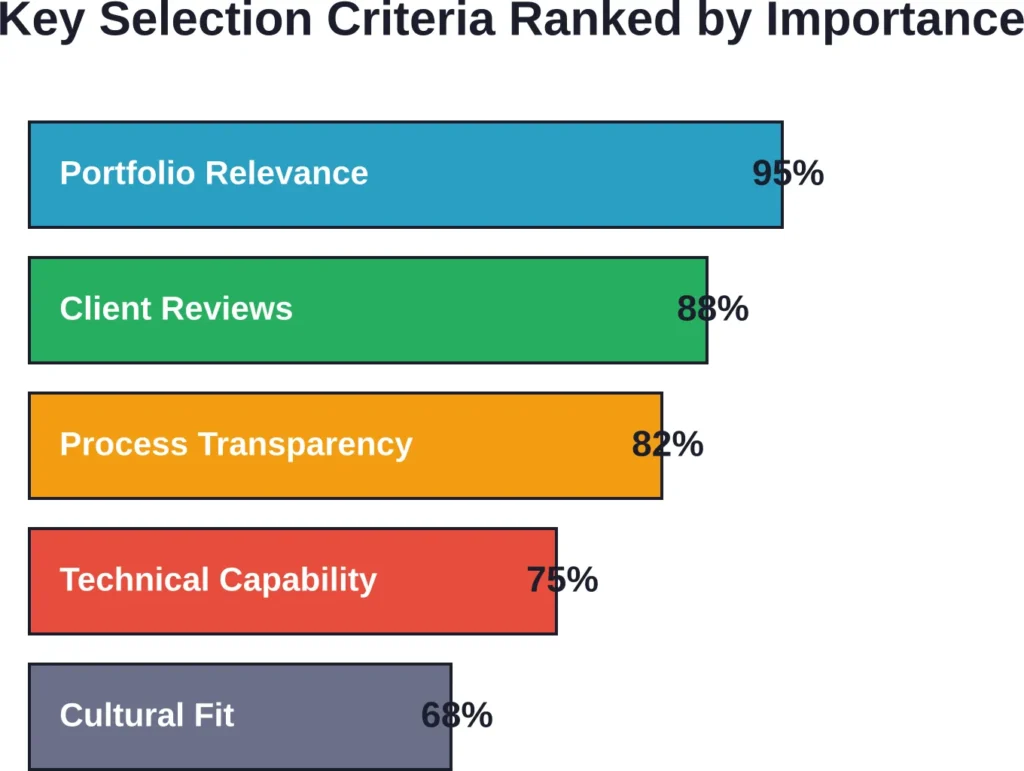
Portfolio Relevance
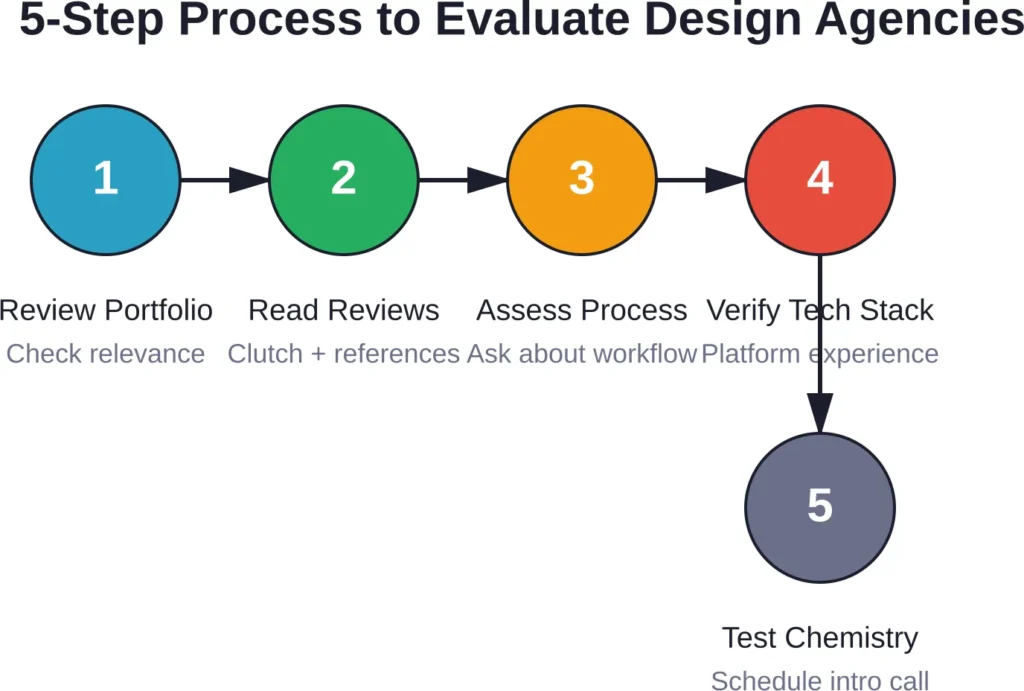
Look beyond pretty screenshots. Does their portfolio include projects similar to yours? If you’re building a SaaS dashboard, an agency whose portfolio is all eCommerce landing pages might not be your best bet.
Pay attention to problem-solving. Good case studies explain the challenge, the approach, and the outcome. If they only show mockups without context, that’s a red flag.
Communication and Process Transparency
Ask about their process upfront. How do they handle feedback? What tools do they use for collaboration? How often will you meet?
Agencies with mature processes document everything—briefs, milestones, revision rounds, approval workflows. That structure prevents misunderstandings and keeps projects on track.
Technical Capabilities
Will they just hand you Figma files, or do they also handle front-end development? If you need the site built, make sure they either do implementation in-house or have trusted development partners.
Check their familiarity with your tech stack. If you’re on WordPress, Webflow, or a custom React setup, confirm they’ve worked with those platforms before.
Client Reviews and References
Platforms like Clutch aggregate verified client reviews. Read them carefully. Look for patterns—not just star ratings, but specific comments about communication, deadline adherence, and post-launch support.
Don’t hesitate to ask the agency for references you can contact directly. A confident agency will happily connect you with past clients.
Cultural Fit
This sounds soft, but it matters. Do their communication style and work pace match yours? A fast-moving startup might clash with an agency that operates on long timelines with formal approval gates. Conversely, an enterprise client might find a scrappy boutique too informal.
Schedule a call before committing. You’ll quickly sense whether the chemistry works.
Common Mistakes When Outsourcing Web Design
Even experienced teams make avoidable mistakes when working with external agencies. Here are the big ones.
Unclear Project Scope
Vague briefs lead to missed expectations. “We need a new website” isn’t a brief. How many pages? What’s the goal—lead generation, eCommerce, brand awareness? Who’s the target audience?
The more specific you are upfront, the more accurate the agency’s proposal will be. Document everything: target launch date, required features, content migration needs, integrations with other tools.
Choosing Based on Cost Alone
The cheapest bid is rarely the best value. Low cost often means junior designers, offshore teams with communication barriers, or corners cut on research and testing.
Evaluate cost relative to deliverables. An agency might charge more but include user testing, multiple revision rounds, and post-launch optimization—services that cheaper competitors omit.
Ignoring Maintenance and Updates
Launch day isn’t the finish line. Websites need updates, bug fixes, content changes, and performance monitoring. Clarify upfront whether the agency provides ongoing support or if you’ll need to handle that internally.
Some agencies include a maintenance window in their contracts. Others charge separately. Know what you’re getting before you sign.
Poor Feedback Processes
Design by committee kills projects. Too many stakeholders providing conflicting feedback creates chaos. Establish a single point of contact on your side—someone empowered to make decisions and consolidate feedback from internal teams.
The agency should receive one unified set of notes per review cycle, not a barrage of disconnected comments from ten different people.
Skipping Discovery Phases
Rushing into design without proper research is like building a house without blueprints. Good agencies insist on discovery—user research, competitive analysis, stakeholder interviews—before starting visual work.
Don’t see this as a waste of time. It’s the foundation that prevents costly redesigns later when you realize the design doesn’t match user needs.
Industry-Specific Considerations
Different industries have unique design requirements. Here’s what to prioritize based on your sector.
SaaS and Software Companies
User onboarding is critical. Your website needs to explain complex functionality clearly and guide users toward activation. Agencies with SaaS experience understand freemium conversion optimization, feature comparison layouts, and designing for different user roles.
Look for portfolios showing dashboard interfaces, multi-step workflows, and data visualization. These signal the agency can handle product complexity, not just marketing pages.
eCommerce and Retail
Conversion optimization drives everything. Product page layouts, checkout flows, mobile responsiveness, site speed—all directly impact revenue. Agencies specializing in eCommerce bring expertise in A/B testing, cart abandonment reduction, and integrations with platforms like Shopify or WooCommerce.
Check whether they have experience with your eCommerce platform and whether they understand inventory management, payment gateway integrations, and shipping logic.
Professional Services and B2B
Trust and credibility matter more than flashy design. B2B buyers research extensively before contacting sales. Your website needs clear value propositions, detailed service descriptions, case studies, and easy contact options.
Agencies experienced in B2B understand longer sales cycles, multiple decision-makers, and the importance of SEO for organic lead generation. They’ll prioritize content strategy and lead capture mechanisms.
Nonprofits and Social Impact
Storytelling drives donations and volunteer signups. Nonprofit websites need emotional resonance, clear calls to action, transparent financials, and donation flows optimized for conversion.
Look for agencies that understand nonprofit constraints—often limited budgets—and can deliver high-impact designs efficiently. Some agencies offer discounted rates for nonprofits; ask about this upfront.
Questions to Ask Before Hiring an Agency
Here’s a practical checklist. Run through these during your first conversations.
- Can you share case studies from projects similar to ours?
- What does your typical project timeline look like?
- Who will be on our team, and what are their roles?
- How do you handle revisions and feedback?
- What happens if we need changes after launch?
- Do you provide development, or just design files?
- What platforms and tools do you typically work with?
- How do you approach user research and testing?
- What metrics do you use to measure project success?
- Can you provide references we can contact?
The quality of their answers tells you a lot. Confident, experienced agencies respond clearly and specifically. Evasive or generic answers suggest less maturity.
Trends Shaping Web Design Outsourcing in 2026
The industry keeps evolving. Here’s what’s changing right now.
AI-Assisted Design Workflows
Many agencies now use AI tools for rapid prototyping, asset generation, and layout exploration. This doesn’t replace human designers—it accelerates iteration and reduces time spent on routine tasks.
The result: faster turnarounds and lower costs for certain project types, especially landing pages and marketing sites that follow established patterns.
Subscription Models Gaining Ground
The shift toward subscription-based design services continues. Companies prefer predictable monthly costs over lumpy project invoices. Agencies offering flexible subscriptions are winning business from traditional project-based competitors.
Deeper Specialization
Generalist agencies face increasing competition from specialists. Companies now seek partners who deeply understand their specific industry, whether that’s SaaS onboarding, eCommerce checkout optimization, or healthcare compliance.
This trend makes choosing easier—you can find agencies laser-focused on exactly what you need—but it also requires more research upfront to identify the right specialist.
Remote Collaboration as Default
Geography matters less. Tools like Figma, Notion, and Loom enable seamless remote collaboration. Companies routinely hire agencies on different continents without friction.
That global access expands your options significantly but also demands strong project management and clear communication protocols to keep remote teams aligned.
Measuring Success After Launch
How do you know if the investment paid off? Track these metrics.
Traffic and Engagement
Monitor sessions, page views, and time on site using Google Analytics. A well-designed website should increase engagement—visitors stay longer, view more pages, and bounce less frequently.
Set baselines before the redesign so you can measure the delta. Expect traffic patterns to fluctuate for a few weeks post-launch as search engines re-index your site.
Conversion Rates
This is the big one. Are more visitors signing up, requesting demos, making purchases, or completing contact forms? Define your key conversion actions upfront and track them rigorously.
Even small percentage improvements compound significantly at scale. A 2% lift in conversion rate might translate to hundreds of additional leads monthly.
Page Speed and Technical Performance
Use tools like Google PageSpeed Insights or GTmetrix to measure load times. Site speed directly impacts both user experience and SEO rankings. A good agency delivers not just visually appealing designs, but technically optimized implementations.
Aim for sub-three-second load times on mobile. Anything slower costs you visitors.
SEO Rankings
Track keyword positions and organic traffic over time. A redesign done right preserves or improves your search visibility through proper redirects, optimized page structures, and clean technical implementations.
Warning: rankings might temporarily dip immediately after launch as search engines adjust. Give it four to six weeks before drawing conclusions.
User Feedback
Don’t overlook qualitative data. Run user testing sessions, deploy on-site surveys, or conduct customer interviews. Direct feedback reveals usability issues metrics might miss.
Tools like Hotjar or Microsoft Clarity provide session recordings and heatmaps showing exactly how visitors interact with your new design.
Frequently Asked Questions
Timelines vary based on complexity. A simple marketing site with five to ten pages might take four to eight weeks. A complex web application or eCommerce platform could require three to six months. Discovery phases, revision rounds, and content creation all extend timelines. Agencies working on subscription models often deliver iteratively, shipping updates continuously rather than in one big launch.
Web design focuses on visual appearance, user experience, and interface layouts—the look and feel. Web development handles the technical implementation—writing code, connecting databases, and making designs functional. Many agencies offer both services. Others specialize in design and partner with developers, or deliver design files for your internal team to build.
Location matters less than quality and fit. Remote collaboration tools have eliminated most friction from working with distant agencies. That said, some companies prefer local partners for easier in-person meetings and shared time zones. Evaluate based on portfolio, process, and communication style rather than geography alone. Excellent agencies operate globally.
Check the agency’s official website for current plans and scope-specific quotes. Quality varies widely, and pricing reflects team seniority, project complexity, and service scope. Simple sites might be scoped affordably, while custom platforms with advanced functionality require larger investments. Request detailed proposals from multiple agencies to compare value relative to deliverables, not just bottom-line cost.
Reputable agencies include revision rounds in their contracts—typically two to four rounds of feedback and refinement. Communicate concerns clearly and specifically. Good agencies want you satisfied and will iterate until the design meets your goals. If the relationship isn’t working after multiple attempts, review your contract for exit clauses. This rarely happens when you’ve done proper vetting upfront.
Many agencies offer post-launch maintenance agreements covering updates, bug fixes, security patches, and content changes. Others focus purely on design and development, handing off the finished site for you to maintain. Clarify this during initial conversations and factor ongoing support into your decision. Some subscription services include maintenance as part of the monthly fee.
Include clear IP ownership clauses in your contract. Typically, you should own all design files, code, and assets upon final payment. Reputable agencies provide standard agreements addressing this. Have your legal team review contracts before signing, especially for high-value or sensitive projects. Non-disclosure agreements are common and reasonable to request.
Making Your Decision
At this point, you’ve got 15 strong options and a framework for evaluation. So where do you go from here?
Start by clarifying your own needs. Write a detailed brief covering goals, audience, budget range, timeline, and technical requirements. The more specific you are, the more accurate proposals you’ll receive.
Narrow your list to three or four agencies whose portfolios align closely with your project. Reach out to each, share your brief, and schedule intro calls. Pay attention not just to what they say, but how they ask questions. Great agencies probe deeply to understand your business, not just take orders.
Request detailed proposals. Compare scope, deliverables, timelines, and terms—not just headline numbers. The lowest bid might exclude critical services the higher quotes include.
Check references. Talk to past clients about communication, deadline adherence, flexibility with changes, and overall satisfaction. One reference call can reveal more than hours of website research.
Trust your gut on cultural fit. If something feels off during early conversations, it probably won’t improve once money and deadlines enter the picture. Choose a partner you genuinely want to work with.
Conclusion
Outsourcing web design makes sense for most companies. You gain access to specialized expertise, avoid hiring overhead, and ship better products faster. But success depends entirely on choosing the right partner.
The 15 agencies covered here represent some of the strongest options available in 2026. Each brings distinct strengths—whether that’s SaaS product design, brand storytelling, enterprise-scale platforms, or subscription-based creative services.
No single agency is perfect for everyone. The best choice depends on your specific needs, budget, timeline, and industry. Use the evaluation framework and questions provided to assess candidates systematically.
Take time with this decision. A great agency becomes a strategic partner driving real business results. A poor choice costs time, money, and opportunity.
Ready to move forward? Start reaching out to agencies whose work resonates with your vision. Share your project details, ask tough questions, and build relationships before you sign contracts. The right partner is out there—finding them just requires diligence and clear criteria.
Your website represents your business to the world. Make sure the team building it understands what’s at stake and has the expertise to deliver excellence.