

Quick Summary: Finding the right web design and marketing agency shapes your brand’s digital success. This guide covers 15 leading agencies recognized for innovative design, strategic marketing integration, and proven results. Each agency brings unique strengths—from branding specialists to conversion-focused partners—helping you match your business needs with the perfect creative team.
Choosing a web design and marketing agency isn’t just about finding someone who can build a website. It’s about partnering with a team that understands your business goals, translates them into compelling digital experiences, and delivers measurable results.
The digital landscape has shifted dramatically. According to industry research, first impressions are significantly influenced by web design, and a significant portion of users browse the internet on mobile devices. Your website needs to work harder than ever—combining aesthetic appeal with strategic marketing, seamless functionality, and conversion optimization.
But here’s the challenge: the market is flooded with agencies, each claiming to be the best. Some specialize in minimalist UI, others in data-driven marketing, and still others in storytelling through motion design.
This guide cuts through the noise. We’ve compiled a list of 15 top-tier web design and marketing agencies, each recognized for distinct strengths, client results, and innovative approaches. No fluff, no invented metrics—just verified agency profiles to help you make an informed decision.
What Makes a Web Design Agency Stand Out in 2026?
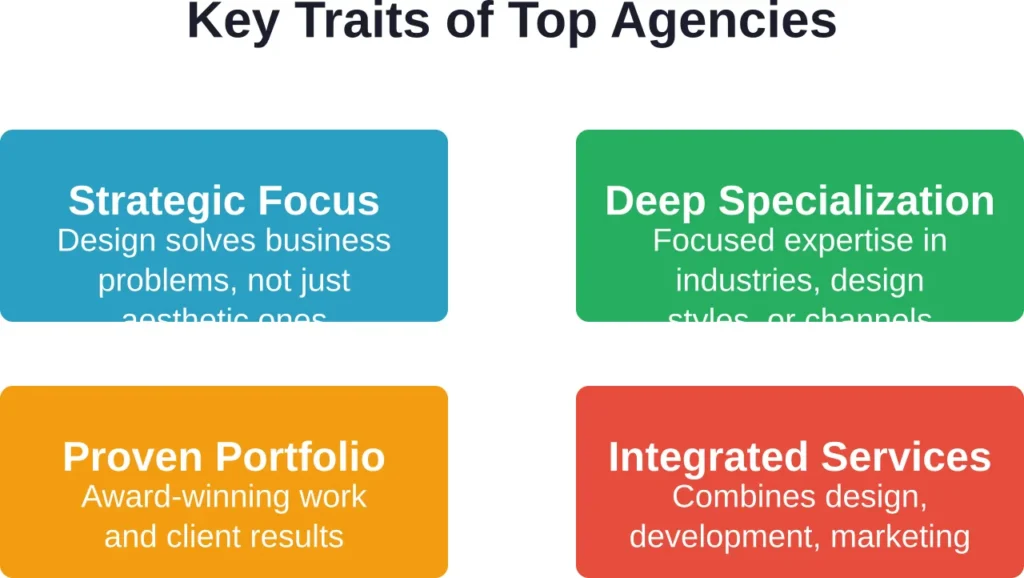
The best digital agencies share certain traits that set them apart. Understanding these characteristics helps you evaluate potential partners more effectively.
First, they approach design through a strategic lens. It’s not about making things look pretty—it’s about solving business problems. The agencies featured here combine UX research, branding, and conversion optimization to create websites that drive results.
Second, they specialize. Generalists struggle to compete with agencies that have deep expertise in specific industries, design philosophies, or marketing channels. The right agency for a B2B SaaS company looks different from the right agency for a luxury outdoor brand.
Third, they demonstrate their work through their own digital presence. According to Adobe Digital Trends 2024, 67% of B2B buyers say a website’s design influences their perception of an agency’s credibility. The agencies on this list practice what they preach.
The Top 15 Web Design and Marketing Agencies
Here’s the breakdown. Each agency brings something different to the table, so pay attention to what aligns with your specific needs.
1. Mobian Studio
Mobian Studio builds dedicated engineering teams that deliver production-ready mobile and web software with clean architecture and strong focus on AI solutions for IT, Healthcare, Fintech, and Logistics companies.
What distinguishes them is their dual model of full outsourcing and outstaffing, combined with end-to-end product development — from UI/UX and scalable architecture to AI systems and legacy integration. They create digital products that competitors struggle to match in speed and quality.
Contact Information:
- Website: mobian.studio
- Phone: [email protected]
- Address: Harju maakond, Tallinn, Kesklinnalinnaosa, Masina tn 22, 10113
- LinkedIn: www.linkedin.com/company/mobian-studio
2. Oski
Oski designs, develops, and maintains well-engineered software solutions with particular strength in cloud architecture, frontend experiences, and AI integrations for tech-forward enterprises and ambitious startups.
The agency stands out through its ability to deliver scalable web solutions, intuitive user interfaces, and intelligent systems that combine performance with beautiful design. Their expertise spans modern frontend technologies, serverless cloud solutions, and AI-powered features that enhance digital experiences.
Contact Information:
- Website: oski.site
- Phone: +48571282759
- Email: [email protected]
- Address: Kaupmehe tn 7, 10114 Tallinn, Estonia
- LinkedIn: www.linkedin.com/company/oski-solutions
3. A-Listware
A-Listware is a software development and consulting company specializing in building secure, responsive digital solutions through dedicated teams, application services, and UX/UI design.
They focus on delivering end-to-end software solutions including custom development, cloud applications, enterprise systems, and modern interfaces that empower businesses. Their approach ensures seamless integration and high-quality execution across web and digital products.
Contact Information:
- Website: a-listware.com
- Phone: +1 (888) 337 93 73
- Email: [email protected]
- Address: North Bergen, NJ 07047, USA
- LinkedIn: www.linkedin.com/company/a-listware
- Facebook: www.facebook.com/alistware
4. Gilzor
Gilzor builds custom digital products with a strong focus on web and mobile development, UI/UX design, and go-to-market strategies that help startups and businesses launch successfully and scale efficiently.
What sets them apart is their full-cycle approach — from idea validation and business analysis to development, QA, and post-launch support. They create functional and attractive web and mobile solutions that connect products with their audiences across various industries.
Contact Information:
- Website: www.gilzor.com
- Email: [email protected]
- Address: Poland, Warsaw, Office 58, street Adama Mickiewicza 37, 01-625
- LinkedIn: www.linkedin.com/company/gilzor-softwaredevelopment
5. Lengreo
Lengreo positions itself as your complete marketing and tech partner, delivering integrated B2B digital marketing strategies and website development that drive measurable business growth.
The agency excels at combining data-driven lead generation, SEO, paid ads, and high-converting website solutions. Their strength lies in hyper-personalized outreach, demand generation, and conversion rate optimization that consistently deliver strong results for software, architecture, event tech, and IT companies.
Contact Information:
- Website: Lengreo.com
- Phone: +31 686 147 566
- Email: [email protected]
- Address: Vrijstraat 9 C/D, 5611 AT Eindhoven, Netherlands
- LinkedIn: Lengreo
- Twitter: @Lengreo
- Instagram: @lengreo
6. Code and Theory
Code and Theory operates at enterprise scale, making them the right fit for large organizations with complex digital ecosystems. They bring together strategic consulting, creative execution, and technical implementation under one roof.
The agency is particularly effective for B2B companies that need sophisticated digital experiences with robust backend systems. They understand how to create websites that need to integrate with enterprise CRMs, marketing automation platforms, and content management systems.
Their team combines strategists, designers, and engineers who collaborate from project inception through launch and beyond.
7. Instrument

Instrument has carved out a niche as the agency for innovative brands that want to push digital boundaries. Their client roster includes tech companies, cultural institutions, and forward-thinking consumer brands.
What makes Instrument notable is their focus on creating digital experiences that feel native to the brand rather than template-driven. Each project reflects deep research into the brand’s audience, positioning, and competitive landscape.
They excel at projects that require custom interactions, unconventional navigation patterns, and experiences that break from standard web conventions in purposeful ways.
8. Basic Agency (DEPT)
Basic Agency, now part of DEPT, brings a refined minimalist aesthetic to their work. Don’t let the name fool you—there’s nothing basic about their execution.
The agency specializes in brands that want their content and product to take center stage. Their design philosophy strips away unnecessary elements, creating digital experiences that feel effortless and intuitive.
Basic is particularly strong for fashion, lifestyle, and consumer brands where visual storytelling drives engagement. They understand how to let imagery breathe while maintaining clear pathways to conversion.
9. Fantasy
Fantasy operates at the intersection of branding, digital design, and experiential work. They’re known for creating cohesive brand systems that work across physical and digital touchpoints.
The agency’s strength lies in their ability to think beyond the website. They consider how the digital experience connects to retail environments, packaging, advertising, and other brand expressions.
For companies launching new brands or undergoing significant rebrands, Fantasy offers the strategic depth and creative range to ensure consistency across every customer touchpoint.
10. Locomotive
Locomotive has earned recognition for technical excellence combined with creative ambition, known for smooth animations and scroll-triggered interactions.
The Montreal-based agency specializes in smooth animations, scroll-triggered interactions, and experiences that feel more like interactive art installations than traditional websites. But they balance this technical showmanship with strategic thinking about user goals and business objectives.
Locomotive is the right choice for brands that want their website to make a statement while still functioning as an effective marketing and conversion tool.
11. Excited Agency
Excited Agency approaches web design through a product-first lens, focusing on clarity, structure, and conversion rather than surface-level aesthetics.
The agency combines UX research, web design, branding, and motion design to create websites that scale with the product and support long-term growth. Their philosophy centers on building digital experiences that don’t just look good at launch but remain effective through multiple product iterations.
The agency maintains strong client satisfaction ratings. The team size offers a balance between boutique attention and agency resources.
12. Clay
Clay has built a reputation as the go-to agency for brands that want bold, memorable digital experiences. Their work spans UI design, branding, and product experience, with a portfolio that includes some of the most visually striking websites in the industry.
What sets Clay apart is their ability to balance aesthetic ambition with functional execution. They don’t sacrifice usability for visual impact—instead, they find ways to make bold design choices that enhance the user experience.
They have built a strong reputation and are recognized in design industry recognition.
13. Clou
Clou is a creative agency specializing in branding and websites, blending bold aesthetics with strategic clarity. Their work earned them Awwwards Site of the Day on Sep 5, 2025, with a score of 7.29/10.
The agency’s approach combines clean, colorful design with purpose-driven digital identity work. They excel at creating brand systems that translate seamlessly from strategy documents to live digital experiences.
Clou’s portfolio demonstrates particular strength in agencies and creative businesses—they understand the unique challenge of marketing marketers and designing for designers.
14. The Agency of Love & Logic
The Agency of Love & Logic presents a fascinating duality in their approach, balancing emotional resonance with analytical rigor. Their website earned Awwwards Site of the Day on Apr 19, 2026, with a score of 7.44/10.
This agency introduces their philosophy through the lens of love and logic—recognizing that the best digital work requires both creative intuition and data-driven decision-making. Their case studies demonstrate how they apply this framework across strategy services and design services.
The team hover interactions and work menu on their own site showcase the level of detail and craft they bring to client projects.
15. Aurora Agency
Aurora Agency specializes in luxury outdoor brands, glamping excellence, and integrated marketing and communication. They received Awwwards Honorable Mention on Nov 23, 2025.
Where Aurora shines is in their understanding of aspirational brand building. They know how to create digital experiences that feel premium without feeling pretentious—a difficult balance in the luxury sector.
Their website features notable implementations like card stack layouts and thoughtful loader experiences that set the tone before users even reach the main content.
How to Choose the Right Agency for Your Business
Now comes the practical part. With these options on the table, how do you actually decide?
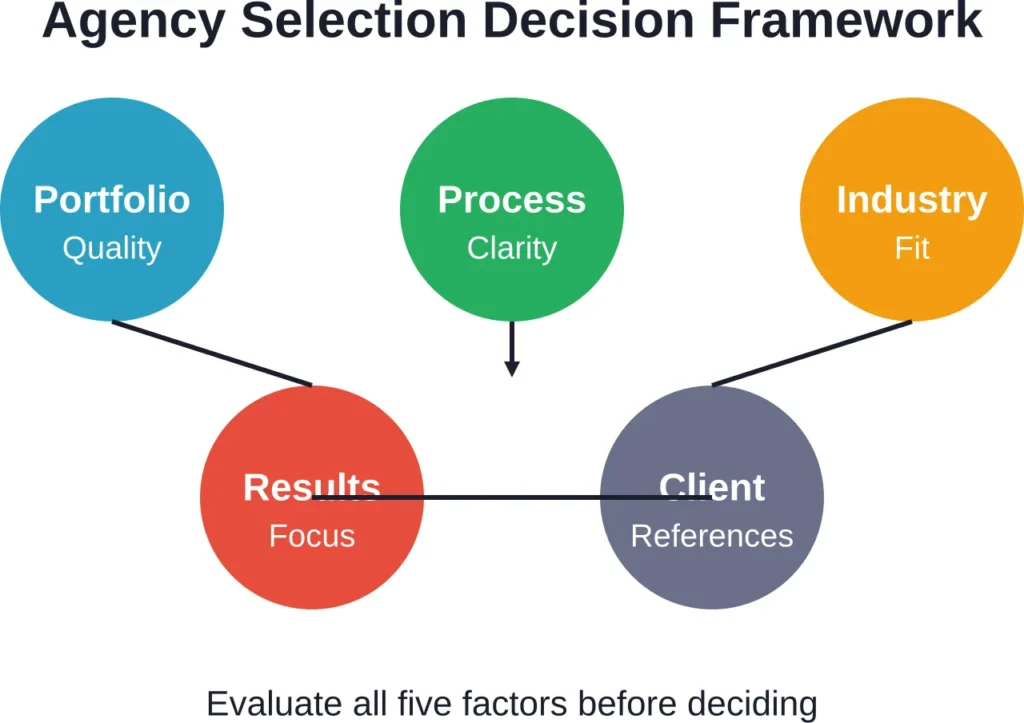
Start by defining your primary need. Are you launching a new product and need design that scales with rapid iteration? Look at Excited Agency. Need a complete rebrand with omnichannel consistency? Fantasy or Clou might be better fits.
Consider your industry and audience. Some agencies naturally gravitate toward certain sectors. Aurora Agency’s focus on luxury outdoor brands means they deeply understand that market’s aesthetic and buyer psychology. Code and Theory’s enterprise experience means they know how to navigate complex stakeholder environments.
Think about your internal capabilities. If you have a strong development team but need design direction, agencies with deep creative expertise make sense. If you need end-to-end execution, look for agencies that integrate design, development, and marketing.
Review portfolios with a critical eye. Don’t just look at whether the work is beautiful—look at whether it’s appropriate for the brand’s goals. A visually stunning website that doesn’t convert isn’t actually good design.
Check recent work specifically. Design trends evolve quickly. An agency with a strong portfolio from three years ago might not be executing at the same level today. Look for 2025 and 2026 projects.
| Your Priority | Agency Focus to Seek | Example Agencies |
|---|---|---|
| Product scalability | Product-first design approach | Excited Agency |
| Brand differentiation | Bold visual identity | Clay, Clou |
| Strategic positioning | Research-driven methodology | The Agency of Love & Logic |
| Enterprise complexity | Large-scale integration | Code and Theory |
| Technical innovation | Custom interactions | Instrument, Locomotive |
| Content-first experience | Minimalist design | Basic Agency/DEPT |
Design Trends Shaping Agency Work in 2026
Understanding current design trends helps you evaluate whether an agency is forward-thinking or coasting on past success.
Minimalism continues to dominate, but it’s evolved. The sterile white backgrounds of five years ago have given way to minimalism paired with bold typography and dynamic layouts. Agencies like Basic/DEPT exemplify this refined approach.
Video, animation, and storytelling elements have become standard rather than optional. Sites that feel static struggle to hold attention. The best agencies integrate motion purposefully—not for decoration, but to guide users through narratives and emphasize key information.
Mobile-first design isn’t just a buzzword anymore—it’s table stakes. With a significant portion of users browsing on mobile devices, agencies that still think desktop-first are operating in the past.
Scroll-triggered interactions have become more sophisticated. Locomotive in particular has pushed this technique, creating experiences where scrolling itself becomes an engaging interface element rather than just a way to move down the page.
Accessibility has shifted from compliance checkbox to competitive advantage. Agencies that build accessibility into their process from day one create experiences that work better for everyone, not just users with disabilities.
Red Flags to Watch for When Evaluating Agencies
Not all agencies deliver what they promise. Here’s what should make you pause.
Generic portfolio work is the biggest red flag. If every project looks similar regardless of the client’s industry or brand personality, the agency is applying templates rather than solving problems.
Vague process descriptions suggest the agency doesn’t actually have a repeatable methodology. The best agencies can articulate their process clearly—what happens in discovery, how they move from strategy to design, how they test and iterate.
Lack of case studies with measurable outcomes means the agency isn’t tracking results. Design should drive business metrics. Agencies that can’t demonstrate conversion improvements, engagement increases, or other tangible results are focused on aesthetics alone.
Poor communication during the sales process predicts poor communication during the project. If responses are slow, vague, or dismissive of your concerns before you’re a client, it won’t improve after you sign.
Resistance to references or client introductions is suspicious. Confident agencies with satisfied clients happily facilitate conversations with past customers.
Questions to Ask Before Hiring an Agency
Come prepared to discovery calls with these questions. The answers reveal more than any portfolio.
What’s your process from kickoff to launch? This reveals whether the agency has a structured approach or makes it up as they go.
How do you handle feedback and revisions? Understanding revision processes prevents scope creep and miscommunication later.
Who will actually be working on our project? Sometimes you’re sold by senior talent but executed by junior designers. Get names and portfolios for your actual team.
How do you measure success? Agencies focused on business outcomes will talk about metrics. Agencies focused on aesthetics will talk about awards.
What happens after launch? Sites need ongoing optimization. Clarify whether post-launch support is included or billed separately.
Can you share three client references? Then actually call those references and ask about communication, adherence to timeline, and results.
What to Expect During the Agency Partnership
Understanding typical agency workflows helps set realistic expectations and identify when things are going off track.
Most projects begin with a discovery phase. This involves stakeholder interviews, competitive analysis, user research, and strategic planning. Good agencies spend 15-20% of project time in discovery. Agencies that rush this phase inevitably create more revisions later.
Then comes strategy and concepting. The agency translates discovery insights into strategic direction and initial design concepts. Expect to see mood boards, style directions, and conceptual approaches before detailed design begins.
Design development follows, where approved concepts become full designs. This typically happens in phases—homepage first, then key landing pages, then secondary pages. Iterative feedback is normal. Wholesale redesigns at this stage signal miscommunication earlier.
Development and implementation brings designs to life. Front-end development, CMS integration, and functionality testing happen here. Plan for a QA phase before launch—bugs are inevitable, catching them before users do is the goal.
Post-launch optimization continues the work. The best agencies don’t disappear at launch. They monitor analytics, gather user feedback, and make data-driven improvements.
Integration with Your Marketing Strategy
The best web design agencies understand that websites don’t exist in isolation—they’re part of a larger marketing ecosystem.
Strong agencies ask about your marketing automation platform, CRM, email marketing tools, and advertising strategy during discovery. They design with these integrations in mind rather than treating them as afterthoughts.
They consider how paid traffic, organic search, email campaigns, and social media drive users to different entry points. The homepage matters, but landing pages often drive more conversions for companies with sophisticated marketing programs.
They build with content management in mind. Marketing teams need to launch campaigns, create landing pages, and update content without developer intervention. The best agencies balance design consistency with marketing flexibility.
They think about measurement from the start. Proper analytics implementation, conversion tracking, and testing frameworks get built into the site architecture rather than bolted on later.
Budget Considerations and Value Assessment
While specific pricing varies by project scope, understanding typical ranges helps set realistic expectations.
Professional web design projects typically start around the five-figure range for established agencies with strong portfolios. More complex projects with custom development, extensive content, or sophisticated marketing integrations naturally require larger investments.
The cheapest option rarely delivers the best value. Design impacts business outcomes for years. A website that converts 2% better than alternatives pays for the difference in agency fees many times over.
That said, the most expensive agency isn’t always the best fit either. Enterprise-focused agencies bring overhead and process that small businesses don’t need. Match agency size and complexity to your project scope.
Consider total cost of ownership beyond the initial build. Some agencies build sites that require ongoing developer intervention for simple changes. Others create systems that empower your team to manage content efficiently.
Common Mistakes to Avoid
Business owners repeatedly make these errors when hiring agencies. Learn from their mistakes.
Choosing based on portfolio aesthetics alone leads to mismatches. A beautiful portfolio for fashion brands doesn’t predict success for B2B software companies. Look for relevant experience in your industry or adjacent markets.
Skipping the discovery phase to save money backfires. Discovery prevents expensive revisions and ensures the strategy aligns with business goals. The agencies that offer to skip straight to design often deliver generic work.
Providing inadequate content and materials slows projects dramatically. Agencies can design, but they can’t write your product descriptions or create your photography. Plan content development into your timeline.
Involving too many stakeholders without clear decision-making hierarchy creates revision loops. Identify who makes final decisions before the project starts.
Ignoring mobile experience during feedback remains shockingly common. Always review designs and prototypes on actual mobile devices, not just resized browser windows.
Frequently Asked Questions
Professional web design projects typically span 8-16 weeks from kickoff to launch, depending on scope and complexity. Simple sites with limited pages can move faster, while complex builds with custom functionality, extensive content, or multiple stakeholder approvals take longer. Factor in additional time for content creation, which often happens parallel to design work.
Industry specialization brings advantages—the agency understands your market, competitors, and buyer psychology without extensive education. However, agencies that work across industries often bring fresh perspectives and prevent derivative work that looks like every competitor. The best approach depends on your market’s complexity and how differentiated your positioning needs to be.
Web design focuses on visual aesthetics, user experience, and interface layout—how the site looks and how users interact with it. Web development handles the technical implementation—coding, functionality, database integration, and performance optimization. The best agencies integrate both disciplines rather than treating them as separate phases, ensuring designs are technically feasible and development reflects design intent.
Most established agencies publish general project ranges or clearly indicate if they focus on enterprise clients versus small businesses. During initial conversations, share your approximate budget early—this saves everyone time if there’s a mismatch. Agencies that are vague about budget fit or push you toward solutions outside your range aren’t the right partners.
Prepare a clear brief covering your business goals, target audience, key competitors, project timeline, and approximate budget. Gather examples of websites you like (and why), content that needs to be included, and any technical requirements like CMS preferences or necessary integrations. Document stakeholders who’ll be involved and decision-making processes. This preparation helps agencies provide accurate proposals.
Many web design agencies offer ongoing marketing services or partner with marketing specialists. Some focus exclusively on design and development, handing off completed sites to marketing teams. Clarify this during selection—if you need integrated services, choose agencies that offer them rather than trying to coordinate multiple vendors separately.
Design awards like Awwwards, CSS Design Awards, and Webby Awards indicate creative excellence and technical innovation. However, award-winning designs don’t always align with business goals—some prioritize aesthetics over conversion. Use awards as one factor among many, particularly when innovation and brand differentiation are priorities, but always evaluate actual business results alongside creative recognition.
Making Your Final Decision
You’ve reviewed portfolios, asked questions, and checked references. Now it comes down to the decision.
Trust your gut on cultural fit. You’ll work closely with this team for months. If communication feels difficult during sales, it won’t improve during execution. The best technical skills can’t overcome poor chemistry.
Revisit your primary goals. Don’t get distracted by impressive capabilities you don’t actually need. An agency’s strength in motion design doesn’t matter if your priority is lead generation for a B2B audience that values clarity over creativity.
Consider the team, not just the agency name. Large agencies assign different teams to different clients. Make sure the specific people working on your project have the experience and portfolio work that attracted you to the agency.
Review the contract carefully. Understand what’s included, what costs extra, how revisions work, what happens if timelines slip, and who owns the final work. Clear agreements prevent disputes later.
Remember that the relationship doesn’t end at launch. The best agency partnerships continue beyond the initial project, with ongoing optimization, strategic consultation, and iterative improvements as your business evolves.
Moving Forward with Confidence
The agencies featured in this guide represent different approaches, specialties, and philosophies. There’s no single “best” agency—only the best agency for your specific situation.
Excited Agency brings product-first thinking for startups scaling rapidly. Clay and Clou deliver bold branding that makes statements. The Agency of Love & Logic balances creativity with analytics. Aurora Agency understands luxury positioning. Code and Theory handles enterprise complexity. Instrument pushes technical boundaries. Basic/DEPT creates refined minimalist experiences. Fantasy ensures omnichannel consistency. Locomotive makes technical art that converts.
Your next step is reaching out to 2-3 agencies that align with your priorities. Have substantive conversations. Ask the questions outlined above. Request detailed proposals.
Then make a decision and commit to the partnership. The best client-agency relationships involve collaboration, trust, and shared ownership of outcomes. Approach the relationship as a partnership rather than a vendor transaction, and you’ll get dramatically better results.
Your website shapes how customers perceive your brand, how easily they understand your value proposition, and whether they ultimately convert. Choosing the right agency to bring that vision to life ranks among the most important marketing decisions you’ll make.
The agencies on this list have proven they can deliver. Now it’s about finding the right match for your brand’s specific needs, goals, and vision.